Tag Archives: mexican herbal remedies

Natural Healing — Chicalote

Chicalote (Argemone mexicana) grows in abundance in La Yacata during the dry season. I discovered that it has medicinal value quite by chance. I was looking for another plant, and found a picture of this one, which I could positively identify, having seen it year after year by my house. 

Mexican prickly poppy has several names, leading to some confusion. Chicalote is the name I am most familiar with, however in Mexico, it is also known as cardo, cardo santo, adormidera, adormidera espinosa, amapolilla, and Amapola montés. Cardo santo was the name given to this plant by the Spaniards when they cataloged medicinal plants they found, not to be confused with Cnicus benedictus which is also known as cardo santo. 

In Nahuatl, it was known as chicálotl, chillazotl, or xicólotl. In Zapoteca spoken in Oaxaca, the same plant is called guechinichi. In Maya, it is k`iix-k`anlol or k`iix-saklol. In the language spoken by the Tarascans centered in Michoacan, it was shate or xaté. And in Huasteca, the indigenous language of San Luis Potosí, it was known as tzólich.

The fact that so many different indigenous groups identified this plant so specifically shows its importance both culturally and medically. Chicalote was believed to be sacred to the Aztec rain god Tlaloc, the fact that it grows abundantly in the dry season notwithstanding. It was used to treat water related diseases like palsy. Most indigenous groups in Mexico believed that diseases could be classified into four categories, hot, cold, wet and dry. And that sometimes gods punished their subjects with specific diseases that must be treated with appeasement of the angry god, who would then send a cure. Thus, near drownings or lighting strikes (signs of Tlaloc’s displeasure) were also treated with chicalote. 

You should exercise caution when using this plant as the seeds are toxic to humans and animals that accidentally ingest them while grazing. On the other hand, a pinch of ground seeds mixed with water makes an effective laxative. 

The sap is an orange-yellow color and contains berberine and protopine. It has been used medicinally in Mexico as a topical analgesic. The seeds are also crushed and mixed with petroleum jelly for an ointment to treat burns and skin infections. 

The leaves when smoked have a slightly narcotic effect, however vomiting and diarrhea are common side effects. This hypnotic effect is the reason the chicalote was used traditionally as a sedative, for migraines and coughs, and for epilepsy. The Seri in Sonora use chicalote leaves to treat kidney pain and expel afterbirth. 

An infusion of leaves is used to treat nervios (nerves). Insomnia can be relieved with an infusion of 14 grams of the flowers in ¼ liter of water drunk before bed. 

For migraines, a spoonful of leaves is steeped in a cup of boiling water and drunk. For a severe cough, drink 1 cup of tea made from 50 grams of ground seeds and leaves that have been boiled for 15 minutes in a liter of water before bed. 

Traditional medicine also uses chicalote to treat diarrhea. The leaves are boiled with ground, browned rice and drunk throughout the day. 

Quite a bit of scientific study has been done on the Argemone mexicana. Not surprisingly, most of the traditional uses have merit and some new applications have been discovered. The leaves and stem are antibacterial, antifungal and anti-parasitic. They also contain anti-cancer, antioxidant, and anti-inflammatory properties. 

The leaves are also useful in reducing side effects experienced from synthetic medicines and are effective in the treatment of epileptic disorders. And finally, Malaria, HIV and morphine withdrawal have been successfully treated with decoctions made from the Argemone mexicana. 

Who would have believed that this scrubby thistle would have so many medicinal benefits?

***

Interested in natural remedies? Uncover herbal remedies from traditional Mexican sources for healing and wellness in the Exploring Traditional Herbal Remedies in Mexico series.
Leave a comment

Filed under Health, Native fauna and flora, Natural Healing

Natural Healing — Calabaza

Calabaza was a ritual offering presented in honor of the dead during the month of Miccailhuitontli by the Aztecs and is still considered an appropriate addition to the altar during El Dia de Los Muertos celebration in Mexico in the form of calabaza en tacha (candied squash).

In addition to a delightful culinary treat, calabaza has been used medicinally to treat intestinal parasites, gastric disorders, obesity, diabetes, and nervios (nerves). 

Cooked squash of any variety is good anytime to calm the nerves. If you’d like to find a way to incorporate more squash in your diet, horchata de semillas de calabaza is a refreshing beverage. Take 100 grams of squash seeds (pepitos) and 5 grams of hierbabuena fresca (fresh spearmint leaves). Add ¼ liter of milk and piloncillo (cone brown sugar) to taste. If you are using it medicinally, drink for three days in a row for stomach ailments. 

Domesticated Calabaza

There are five varieties of calabaza cultivated in Mexico today. 

Cucurbita moschata (including butternut squash) is referred to by a variety of other names including calabaza de Castilla, calabaza de casco, calabaza de pellejo, calabaza cuaresmeña, calabaza caliente, calabaza de pepita menuda, támala, calabaza de camote, calabaza torpe, ayote, Xnuk kuum, Nujuch kuum, and Xmejen kuum (Maya). The seeds, roots, flowers, and squash from the cucurbita moschata variety are used to treat urinary tract infections and skin ailments. The extracted oil has antioxidant properties. 

For parasites, one remedy calls for a concoction of 30 grams of aceite de ricino (castor oil) and a pinch of salt. This is paired with calabaza en tacha made from C. moschata without the skin served in ½ cup of milk. 

Another parasite treatment consists of a handful of toasted or raw seeds known as pepitas also from the cucurbita moschata variety of calabaza (pumpkins) and a few hierbabuena (spearmint) leaves eaten on an empty stomach. 

The flowers of the cucurbita pepo are eaten seasonally with blue or yellow corn tortillas, most often in quesadillas. To prepare the flowers, they are boiled and the water is discarded so that any toxins are eliminated. The flowers are also served as part of salads or stuffed with cheese. The roots, leaves, squash, and seeds of this variety are used to stimulate the appetite. 

Cucurbita pepo is also known as calabaza de comer, calabaza de manteca, calabaza de carrizo, calabaza mediana, Tsol, Tsool, Tzol (Maya) tempranilla, and mensejo. The grated raw peel from the cucurbita pepo is applied to burns and hemorrhoids as it is effective in wound healing. This variety, from root to fruit, is used in several areas of Mexico to improve health in general. It has a pancreatic lipase inhibition effect.

Cucurbita argyrosperma is also known as calabaza caliente, calabaza de las aguas, calabaza pinta, calabaza de casco, calabaza criolla, calabaza pipiana, calabaza tapona, calabaza rayada, pipián, or calabaza guajolota. The seeds, flowers, young stems, and tender squash are eaten. The squash is made into a pulp and applied externally to treat skin ailments. 

Cucurbita ficifolia is known as chilacayote, chilacayo, or chilaca. In Nahuatl, this variety was chilicayotli from the word tzilacayotli originally which translates to “smooth squash”. The young stems are eaten as a vegetable. When this squash is fully mature, it is fibrous and is used to make the sweet cabellos de ángel (angel’s hair) treat. Other candied squash made from this variety are dulce de alcayota, cayote en hebras, mermelada de calabaza, mazamorra de calabaza. 

In Chiapas, the seeds are toasted and set in honey to make palanquetas (a candy bar). C. ficifolia has a marked hypoglycemic effect. It also has antioxidant and anti-inflammatory properties. Extract from C. ficifolia has been shown to be promising in the treatment of obesity. 

Cucurbita maxima is also known as zapallo. Its seeds are the snack pepita rusa (Russian pumpkin seeds), eaten salted and toasted. This variety includes the red or orange pumpkin most people associate with Halloween. It is native to South America. In Chiapas, this variety is called malayota because it resembles tamale dough when pulped.

C. maxima has been shown to quickly decrease high blood glucose levels. C. maxima seed oil is useful in treating an overactive bladder. Ayo-nelhuatl (cucurbita maxima) root is mentioned in Libellus de Medicinalibus Indorum Herbis as part of a concoction used as an after-birth vaginal wash. 

Wild Calabaza

These five are the most commonly cultivated calabazas found in Mexico. However, there are other wild calabazas that are used medicinally as well. 

Cucurbita foetidissima (Buffalo Gourd) is a wild calabaza whose sour fruit is used medicinally after being cooked. The seed sprouts and roots are toxic and should never be ingested. The leaves and roots are used medicinally in Chihuahua.  In other states, the roots are used to make soap because of its saponin content. 

This variety is also known as calabacilla amarga, cohombro, hierba de la víbora, calabaza amargosa, calabacilla loca, calabacilla silvestre, calabaza de burro, chili coyote, calabaza hedionda, calabaza silvestre, calabaza del diablo, calabacilla de burro, Cua-cua (Chontal), chichic-amole and guelto-lana (Zapotec).

Apodanthera undulata (AKA calabaza hedionda or melon loco) is made into a pulp and used topically in the state of Guanajuato. The seeds are used to stimulate appetite in Jalisco and Zacatecas where it is known as calabaza amarga or calabaza loca.

In addition to the medicinal applications already mentioned, all calabazas varieties have antifungal and antibacterial properties. One more interesting cucurbita is the Cayaponia tayuya. The roots of this squash, native to the Amazon, have been useful in treating rheumatoid arthritis and also been proven helpful in the treatment of Epstein-Barr and skin tumors

It just goes to show that a plant we may overlook may be full of beneficial properties.

***

Interested in natural remedies? Uncover herbal remedies from traditional Mexican sources for healing and wellness in the Exploring Traditional Herbal Remedies in Mexico series.

3 Comments

Filed under Alternative Farming, Health, Mexican Food and Drink, Native fauna and flora, Natural Healing

Natural Healing — Geranio

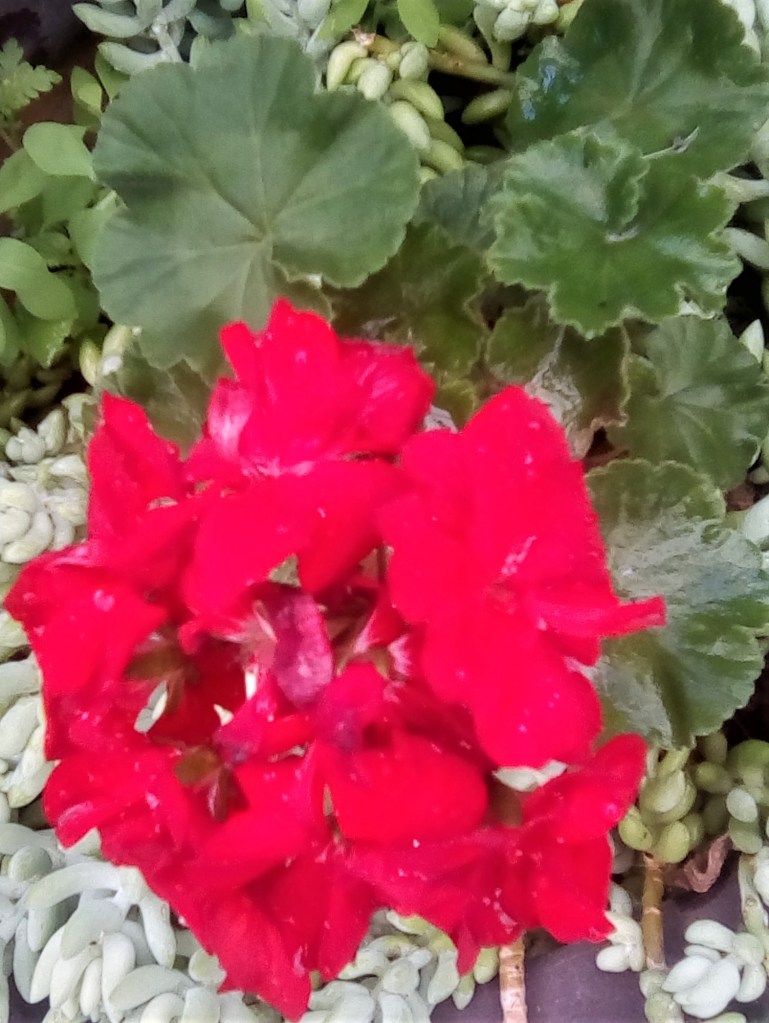
Every so often, my husband will head out to my garden and come back chewing something or other. Sometimes it’s an actual fruit or vegetable. Sometimes it is a leaf off my Wandering jew plant and sometimes he’s salted and eaten a leaf from my geranium plant. He swears that it was the remedy Mama Sofia (his grandmother) would prescribe when he had a bit of a stomach ache. 

Not one to let unexamined herbal remedies slide by, I set about to find more on this plant. The genus for this plant is pelargonium spp and there are nearly 300 varieties. It is native to South Africa but was brought to Mexico in the seventeenth century. 

Although a favorite of certain species of butterflies, the Japanese beetle becomes paralyzed after eating geranium flowers. It seems that they contain quisqualic acid which causes excitotoxicity (nerve cell death).

In Mexico, geranio leaves are mashed with vinegar and salt and applied to the forehead to alleviate headaches. A decoction made from red geranium flowers is used to treat diarrhea. Another diarrhea remedy calls for a rounded spoonful of ground geranio root boiled in ½ cup of water drunk every hour until the ailment ceases.  

An upset stomach can be treated with a tea made from geranio, manzanilla (chamomile) and yerba buena (spearmint). Pelargonium sidoides and Pelargonium endlicherianum have been shown to have anti-inflammatory properties that will indeed calm your stomach. Pelargonium roseum Willd. is antiparasitic and thus another variety that can soothe your digestive system if you have intestinal parasites. 

The leaves are also applied topically to treat sores and wounds. Pelargonium graveolens has antifungal properties and is effective in healing diabetic foot ulcers. Pelargonium asperum and Pelargonium peltatum are antibacterial in nature. 

Scented geraniums have long been used in perfumes. Pelargonium quercifolium smells like incense. The Prince Rupert variety has a lemon scent. P. radula has a lemon-rose smell. P. odoratissimum has an apple scent. P. capitatum smells like attar of roses. The aroma of the Reunion Geranium (Pelargonium roseum Willd) has an antidepressant effect.

Pelargonium sidoides is an effective treatment for acute respiratory tract infections. Extracts from the root of this same plant can calm a cough.  Rose geranium (Pelargonium graveolens) essential oil has anticancer components

Not all varieties have been studied scientifically, but there is more than enough evidence to say that geranio belongs in a curandera’s garden after all.

***

Interested in natural remedies? Uncover herbal remedies from traditional Mexican sources for healing and wellness in the Exploring Traditional Herbal Remedies in Mexico series.

Leave a comment

Filed under Natural Healing