Just because my husband decided not to plant this year, didn’t mean we had to go without organic, home-grown goodies. Now that the roof was up, I thought I might fill it with potted plants, maybe hang a hammock and create my own tropical, and edible, paradise.

I started seeds indoors in toilet paper tubes during Spring break. My husband came home with egg cartons he picked up somewhere, and I used them too. I used the plastic tops to cakes we bought over the past year to keep water from getting all over. Obviously, I’d been planning my planting smorgasbord for some time.
We have rich, black dirt in La Yacata, so I didn’t need to buy any potting soil or fertilizer. However, using natural, unprocessed dirt, left me open to surprises. While readying the dirt for yet another cake pan full of toilet paper tubes, I discovered a snake. No sir, it wasn’t a wriggly worm. It was a little black snake. After some hollering and hopping around, I managed to trap it in a cake pan and run it outside.

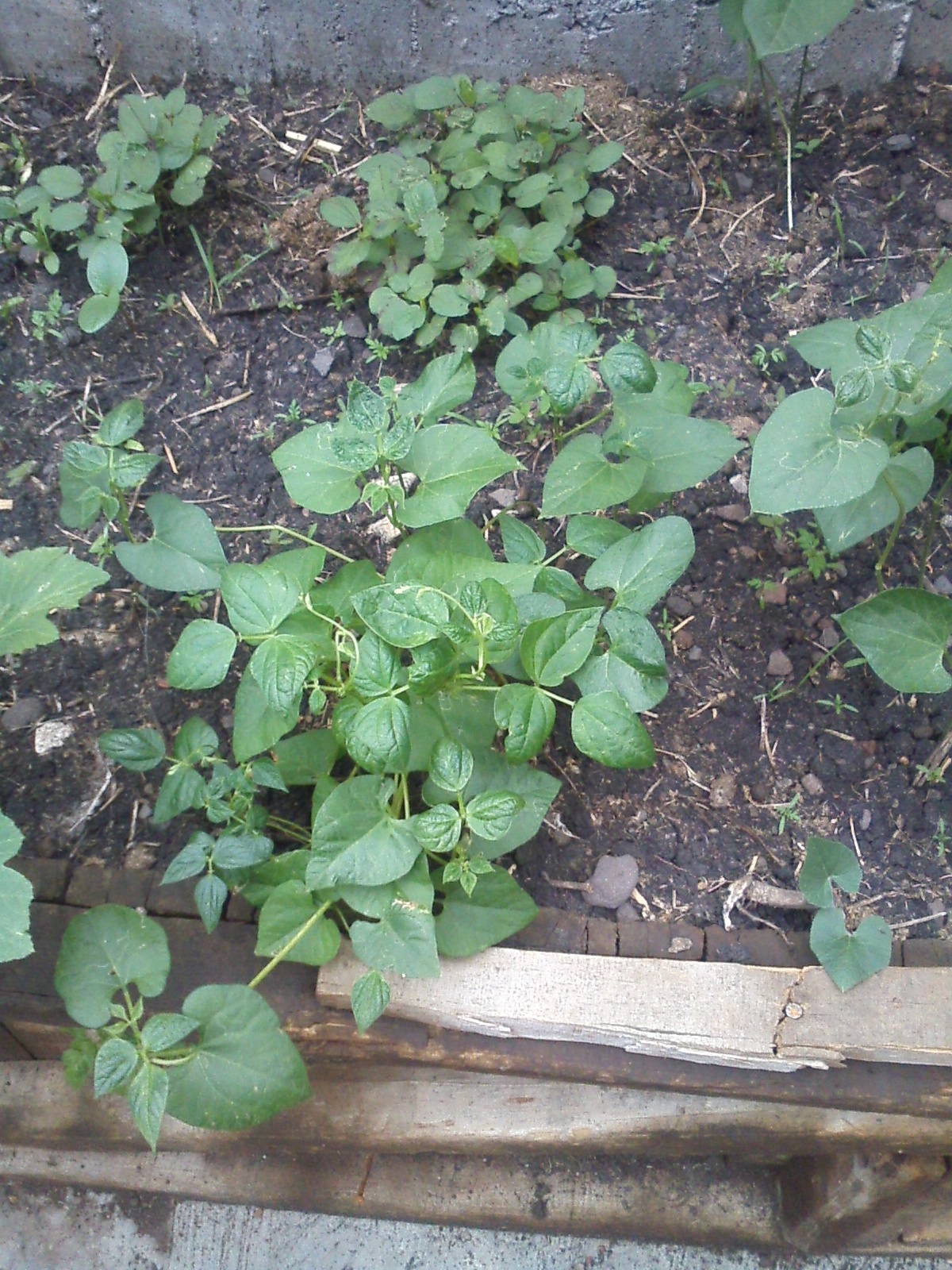
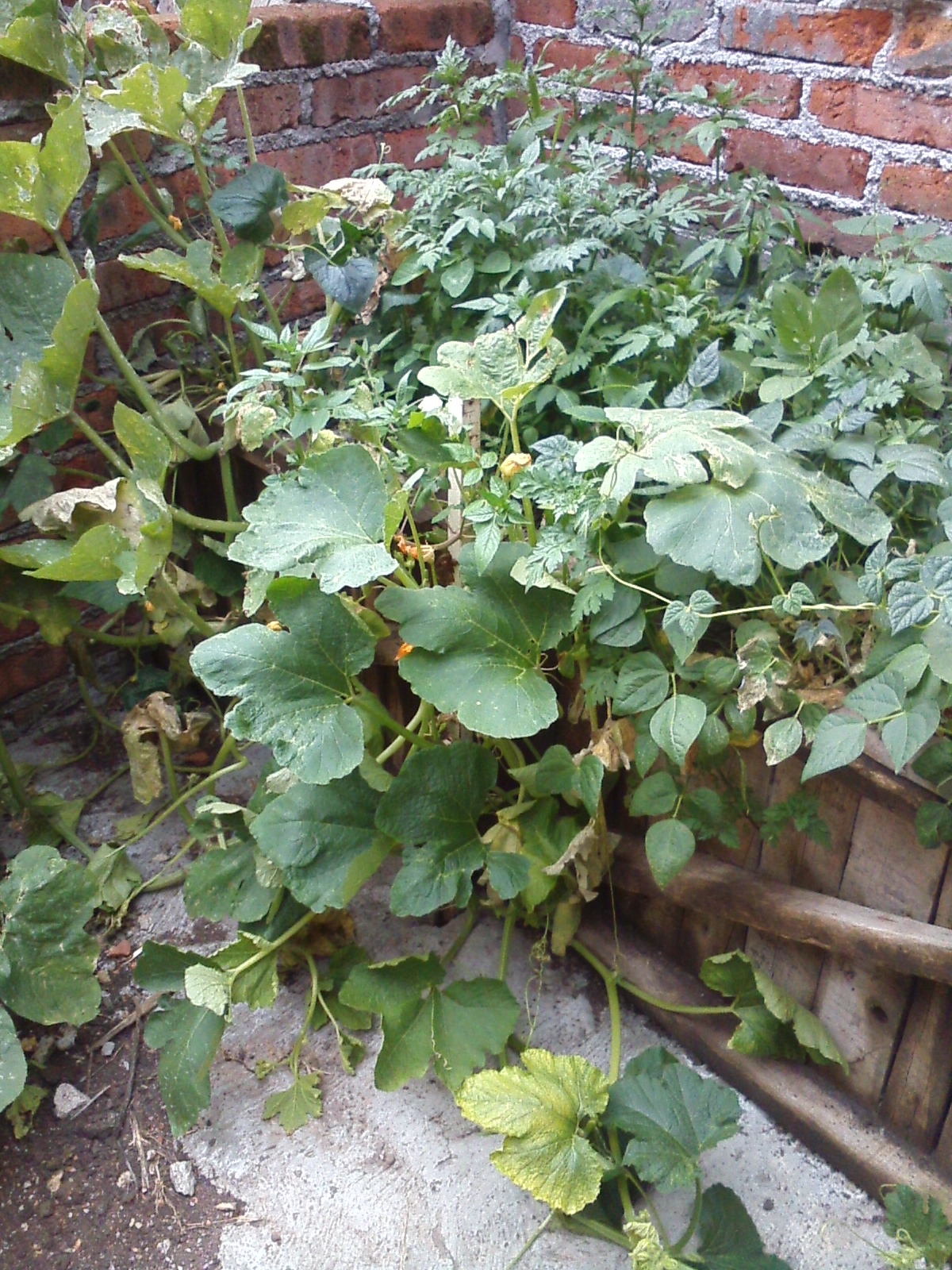
Seeing my plant buffet inspired my husband to create a raised bed in the former pig pen. (See Miss Piggy didn’t bring home the bacon) I was delighted. I planted cucumbers, squash, beans, tomatoes, carrots, and jamaica (hibiscus). As the rainy season started in full force, my garden looked great.

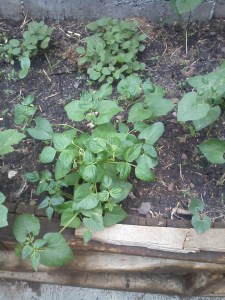


I bought more pots for container gardening and more plants to fill the containers. I hauled them upstairs to the porch area and put them into the sunniest location I could find. Unfortunately, I put several of them directly under the downspout and the first rain washed the pots clean, seeds, dirt and all.


I bought some eucalyptus too, to go with my lavender plant. I’d like to have a full-fledged herb garden eventually. The lavender is still going strong, but the eucalyptus dried out. I gathered the dried leaves anyway and stored them alongside my feverfew from last year. (See Feverfew Tea)

Will you look at that? Mama hen and chicks caught in the vegetables!
One day, I went outside to check on the plants in the raised bed and found it nearly completely destroyed. At first, I thought it might have been the rain. Then, I thought maybe the destruction had been caused by the cats. Devil has been sighted lounging among the plants enjoying his afternoon cucumber rub. My husband insists that all three cats have been using the area as a litter box, but I haven’t seen that. I think the more likely culprits are Mama Hen and the Red Rooster. Mama Hen and her pollitos (chicks) are allowed free-range in the backyard. Being outside the animal compound reduces the chance of a little one being accidentally trampled by goats or horses and adds variety to their diets. Red Rooster is subordinate to Speckled Rooster in the pecking order and flees before him, right out of the compound and into the backyard. However, neither chicken had been given permission to forage in the area set aside for the garden. So much for cultivation.
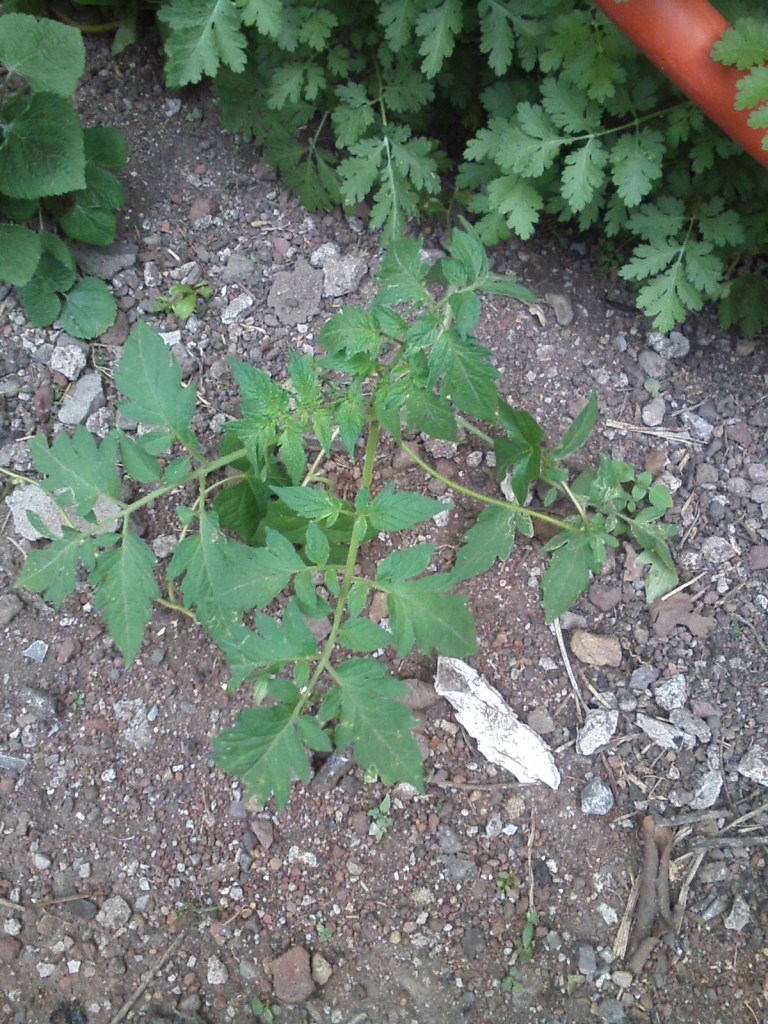

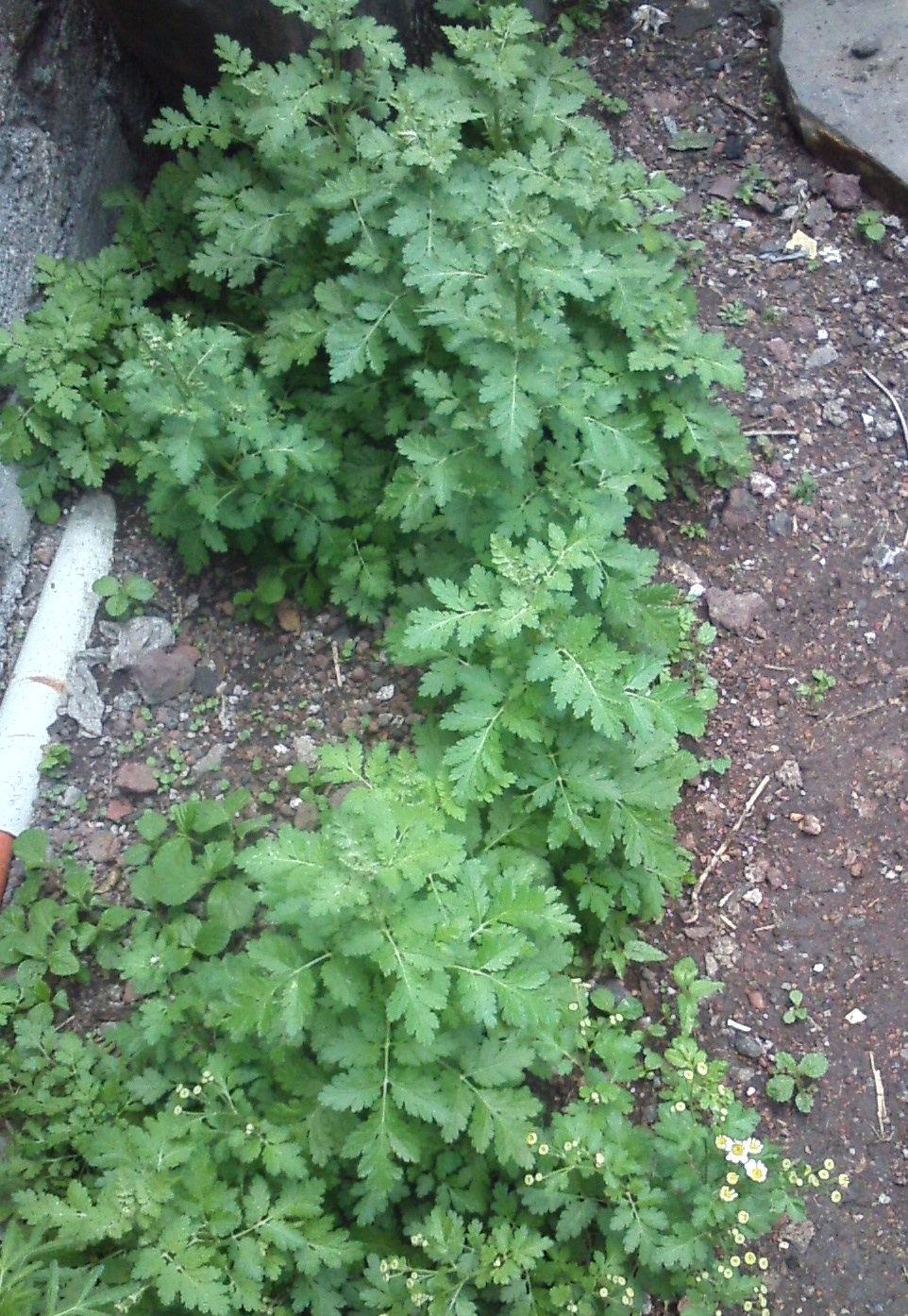

On the other hand, several plants sprouted without being cultivated. So far, the backyard has random tomato, squash, bean and tomatillo plants, along with the regular yearly explosion of feverfew. Neither the chickens nor the cats seem interested in any of these plants, so I hope they will be allowed to grow to fruit or flower-bearing stage.
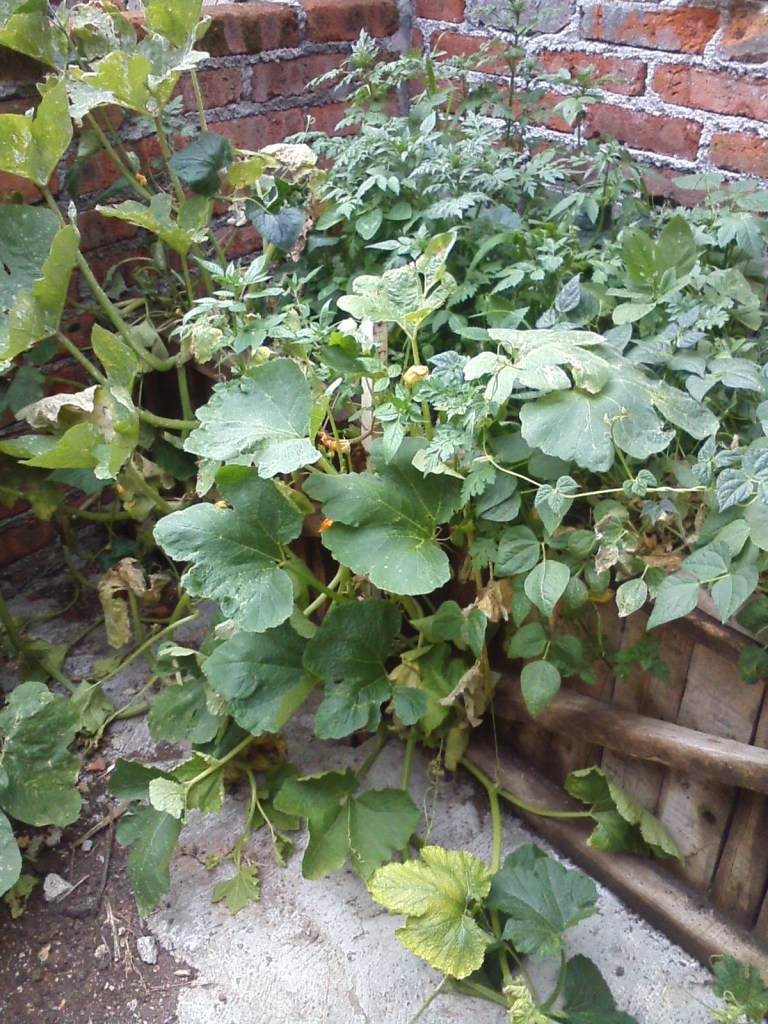
As for my container pots, the onion sprouts seem to be doing well, although nothing else has survived germination. I haven’t given up hope. I have a sprouted potato all ready to plant this week. I’ve also started some more jamaica (hibiscus) seeds. I’ve saved enough toilet paper tubes to fill another cake pan. Maybe I’ll try the cucumbers again, this time planting them upstairs. Although they are not necessarily safe there. Devil climbs the walls to his private bachelor sanctuary on the second floor. I think he likes the echo when he meows for food. He’s muy macho that way, despite his perchance for herbal rubs.
***************************************










 Surviving Mexico
