Tag Archives: herbal remedies

Natural Healing — Ocalito

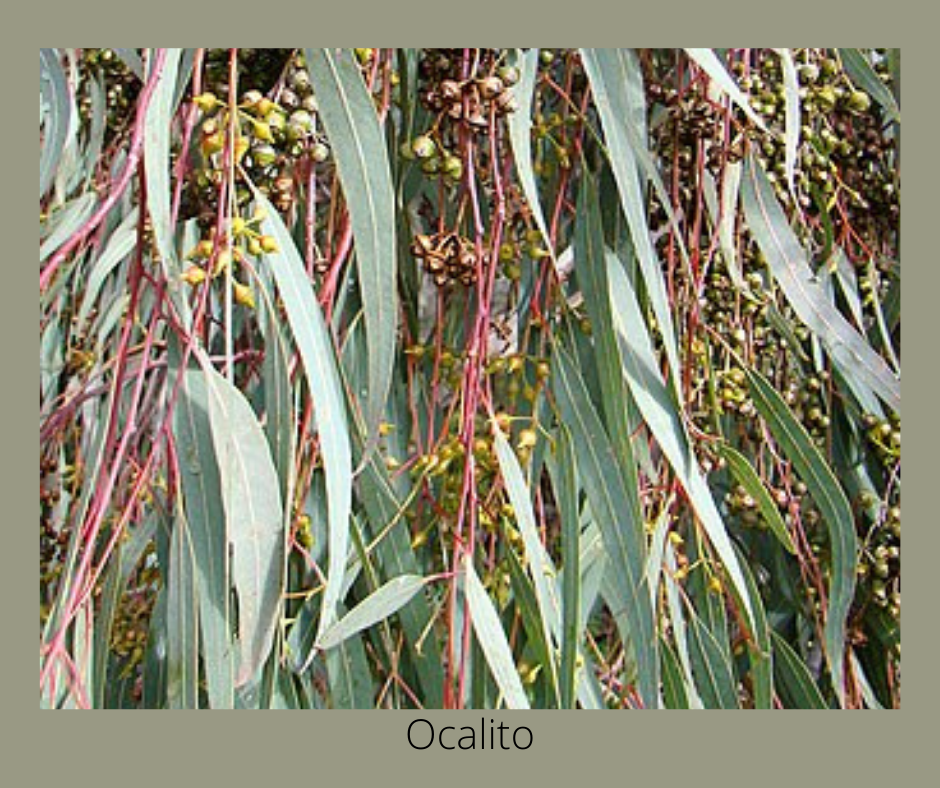
One day, my husband and I were cruising around Cerano looking for, I forget what, and suddenly he stopped the motorcycle, hopped off, and pulled some leaves off a shrubby tree, saying they were ocalito leaves and he needed them for seasoning. Well, all righty then. I really couldn’t identify the leaves, and he didn’t have any more information on them, so time went by.

Then another day, I was perusing the herb section in one of the herb stores in town and saw a bag of leaves like the ones my husband had picked, but they were labeled “eucalipto.” Eucalyptus? But surely, eucalyptus wasn’t a tree that grew in Mexico. Time for some research. 

It turns out that eucalyptus trees were brought into Mexico in the late 1800s/early 1900s, predominately the Eucalyptus camaldulensis (rojo) and Eucalyptus tereticornis (azul) varieties. Commercial plantations were established but not well regulated. The trees escaped their growing confines and are now considered invasive species. Other varieties found in Mexico include Dólar de plata (Eucalyptus cinerea) and Eucalipto blanco (Eucalyptus globulus).

While ocalito is the name used in central Mexico, other common names are alcanfor, calipto, árbol de la fiebre, gigante ócalo, calistro, tzon tzko nasi in Oaxaca, ntajine in popoloca, an indigineous language spoken in Puebla. 

Ocalito is commonly used in Mexican herbalism for fever reduction, colds, asthma, and respiratory ailments

Eucalyptus camaldulensis bark extract is antiviral, antibacterial, antifungal, antioxidant, and insecticidal. It is also effective against atherosclerosis and hyperlipidemia. Leaf extracts contain antimicrobial,  antimalarial, anticancer, antibacterial, and antimutagenic properties. The essential oil reduces tooth biofilm formation and effectively reduces tooth decay and cavities. Vaginal cream that contains the essential oil has been shown to prevent and treat Trichomoniasis because of its anti-parasitic activity.

Both Eucalyptus torelliana and Eucalyptus camaldulensis effectively treat tuberculosis and the persistent cough associated with that illness and other respiratory issues. 

Eucalyptus globulus demonstrates strong antimicrobial activity. Eucalyptus tereticornis leaf extracts are antimicrobial, antioxidant, hypoglycemic, and may be beneficial in combating obesity.

Ocalito leaf infusions are given for resfriado (colds), bronquitis, and asthma. A stronger infusion is used for a mouth rinse. Steam inhalations are prescribed for respiratory congestion and cough. A wash from the bark is made for vaginitis, urinary tract infections, and wounds.

As a rub for colds and flu, combine ocalito, ruda (Ruta graveolens), and romero (Salvia rosmarinus) in a liter of arguardiente (alcohol). Allow it to infuse the alcohol. Before using, warm it, then shake. Apply over the entire body in the evening. Drink the following hot infusion and send the sick person to bed.

Ocalito and Ocote Infusion for the Flu

  • 1 stick of canela (Cinnamomum zeylanicum)
  • 1 ocote twig (Pinus montezumae)

Equal parts:

  • ocalito leaves (Eucalyptus camaldulensis)
  • malva leaves (Malva sylvestris)
  • bugambilia morada bracts (Bougainvillea glabra)

Boil in one liter of water for five minutes. Allow to steep for another 5 minutes. Serve with miel (honey) and limón (Citrus aurantifolia).

***

Interested in natural remedies? Uncover herbal remedies from traditional Mexican sources for healing and wellness in the Exploring Traditional Herbal Remedies in Mexico series.
Leave a comment

Filed under Health, Natural Healing

Magazine Feature

So would you believe that the Exploring Traditional Herbal Remedies in Mexico Series was featured in the April/May 2023 issue of The Edge Magazine? This is the cover. 

And my series is featured on this page, towards the back. See it there? EEEKK! How exciting!

If you’d like to take a closer look, you can read this issue and past issues in the digital archives HERE

The publisher is going to send me a copy of the issue so I can add it to my My Shelf Of High Achievements! (where all my author copies of my books are stored). 

My Shelf Of High Achievements!

Will the publicity sell more books? I can only hope! The Edge Magazine has a distribution of over 15,000 in the midwest US, so it’s no sneezing matter. Will books on Mexican herbalism appeal to the midwesterners? Well, I guess I’ll find out!

****

Haven’t picked up your copy yet? Go ahead and order the Exploring Traditional Herbal Remedies in Mexico series and see what all the fuss is about!

1 Comment

Filed under Inspirational Writers in Mexico

Natural Healing — Vainilla

Photo credit: Michael Doss

Not everyone is aware that vainilla (Vanilla planifolia) is a gift from Mexico first cultivated by the Totonacs. When the Aztecs conquered the Totonacs, they paid their tributes in vanilla, which they called Xanath, meaning “hidden flower.” In Totonac myth, Tzacopontziza was a young girl in love with a poor farmer named Zcatan-oxga. Tzacopontziza’s beauty was noticed by the god of happiness, who tried to woo her. Tzacopontziza refused his advances. Angered by his rejection, the god of happiness made a deal with Tzacopontziza’s father for her hand in marriage. Tzacopontziza refused the marriage and ran away with her beloved. They were captured and executed, their hearts thrown into a ravine. Her heart grew into the orchid that gives us the vainilla pod and his became a bush that supported its viney weight. In other versions of the myth, the lovely Tzacopontziza had been given into temple service by her parents, and by running away with her poor farmer she committed sacrilege which ended in death for both.

Xanath was considered sacred and used as a fragrance in temples by the Totonacs. The flowers were stored in amulets as a protective force. The Aztecs, too, revered this extract. The bitter drink xocolatl was flavored with a dash of vanilla as recorded by Bernal Díaz del Castillo, a Spanish soldier. The Spanish name for this flavoring comes from the word for pod “vaina.” So “vainilla” is little pod, not very original at all. In Nahuatl, cuauhmecaexotl is the vanilla plant. The Zoque-Popoluca, who live in the southern part of Veracruz, call this plant tlilxóchitl, and the Mexicas use the term tich moya which means “black flower.” 

Hernán Cortés is given credit for taking this flavoring to Europe in the 1500s. However, the transplanted seeds never produced vanilla beans due to a lack of pollinators. 

Vanilla is one of the most expensive spices in the world because extraction is so labor-intensive. The orchid plant vanilla planifolia is a clinging vine that can get up to 300 feet long. It can take up to three years for the plant to mature enough to flower. Melipona bees, orchid bees (Euglossini), and hummingbirds are the primary pollinators of the greenish-yellow flower that only blooms for 24 hours. Cultivated vanilla planifolia is pollinated by hand. Vanilla beans are also harvested by hand as they ripen and then cured. From pollination to harvest, it takes 9 months. Some species of the orchid vanilla planifolia are found in remote areas of Oaxaca, Puebla, and Veracruz and in danger of extinction. 

Traditionally, vainilla is used as a gastro-intestinal anti-inflammatory and to treat diarrhea. The aroma is believed to reduce anxiety and depression and is prescribed in cases of susto (sudden fear), up to 25 drops a day in coffee, tea, or milk. The Cruz-Badiano codex has the first recorded illustration of the vanilla planifolia plant. The Florentine Codex records a remedy for cough made from vainilla, cacao(Theobroma cacao), and mecaxóchitl (Piper auritum).

Vanilla has between 250 and 500 different fragrance and flavor components. The most prominent is vanillin. This extract has been used to treat muscle inflammation and has been shown to inhibit cancer cell growth and useful as an alternative treatment for lung cancer

Té de Vainilla y Alhucema para el estrés

  • 2 sprigs of fresh alhucema (Lavandula angustifolia)
  • ¼ teaspoon of vainilla extract (Vanilla planifolia)

Boil 2 cups of water. Add the alhucema and allow to steep covered for no more than 5 minutes. Strain. Add the vainilla. Take the time to inhale the aroma as you enjoy the tea.

***

Interested in natural remedies? Uncover herbal remedies from traditional Mexican sources for healing and wellness in the Exploring Traditional Herbal Remedies in Mexico series.

Leave a comment

Filed under Health, Native fauna and flora, Natural Healing