Tag Archives: herbal remedies

Natural Healing — Vainilla

Photo credit: Michael Doss

Not everyone is aware that vainilla (Vanilla planifolia) is a gift from Mexico first cultivated by the Totonacs. When the Aztecs conquered the Totonacs, they paid their tributes in vanilla, which they called Xanath, meaning “hidden flower.” In Totonac myth, Tzacopontziza was a young girl in love with a poor farmer named Zcatan-oxga. Tzacopontziza’s beauty was noticed by the god of happiness, who tried to woo her. Tzacopontziza refused his advances. Angered by his rejection, the god of happiness made a deal with Tzacopontziza’s father for her hand in marriage. Tzacopontziza refused the marriage and ran away with her beloved. They were captured and executed, their hearts thrown into a ravine. Her heart grew into the orchid that gives us the vainilla pod and his became a bush that supported its viney weight. In other versions of the myth, the lovely Tzacopontziza had been given into temple service by her parents, and by running away with her poor farmer she committed sacrilege which ended in death for both.

Xanath was considered sacred and used as a fragrance in temples by the Totonacs. The flowers were stored in amulets as a protective force. The Aztecs, too, revered this extract. The bitter drink xocolatl was flavored with a dash of vanilla as recorded by Bernal Díaz del Castillo, a Spanish soldier. The Spanish name for this flavoring comes from the word for pod “vaina.” So “vainilla” is little pod, not very original at all. In Nahuatl, cuauhmecaexotl is the vanilla plant. The Zoque-Popoluca, who live in the southern part of Veracruz, call this plant tlilxóchitl, and the Mexicas use the term tich moya which means “black flower.” 

Hernán Cortés is given credit for taking this flavoring to Europe in the 1500s. However, the transplanted seeds never produced vanilla beans due to a lack of pollinators. 

Vanilla is one of the most expensive spices in the world because extraction is so labor-intensive. The orchid plant vanilla planifolia is a clinging vine that can get up to 300 feet long. It can take up to three years for the plant to mature enough to flower. Melipona bees, orchid bees (Euglossini), and hummingbirds are the primary pollinators of the greenish-yellow flower that only blooms for 24 hours. Cultivated vanilla planifolia is pollinated by hand. Vanilla beans are also harvested by hand as they ripen and then cured. From pollination to harvest, it takes 9 months. Some species of the orchid vanilla planifolia are found in remote areas of Oaxaca, Puebla, and Veracruz and in danger of extinction. 

Traditionally, vainilla is used as a gastro-intestinal anti-inflammatory and to treat diarrhea. The aroma is believed to reduce anxiety and depression and is prescribed in cases of susto (sudden fear), up to 25 drops a day in coffee, tea, or milk. The Cruz-Badiano codex has the first recorded illustration of the vanilla planifolia plant. The Florentine Codex records a remedy for cough made from vainilla, cacao(Theobroma cacao), and mecaxóchitl (Piper auritum).

Vanilla has between 250 and 500 different fragrance and flavor components. The most prominent is vanillin. This extract has been used to treat muscle inflammation and has been shown to inhibit cancer cell growth and useful as an alternative treatment for lung cancer

Té de Vainilla y Alhucema para el estrés

  • 2 sprigs of fresh alhucema (Lavandula angustifolia)
  • ¼ teaspoon of vainilla extract (Vanilla planifolia)

Boil 2 cups of water. Add the alhucema and allow to steep covered for no more than 5 minutes. Strain. Add the vainilla. Take the time to inhale the aroma as you enjoy the tea.

***

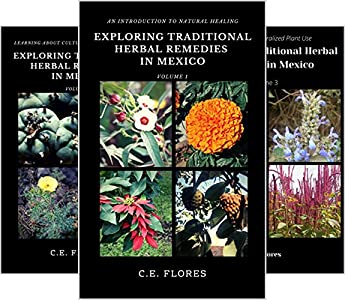
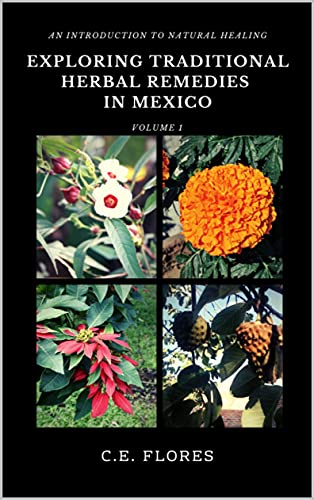
Interested in natural remedies? Uncover herbal remedies from traditional Mexican sources for healing and wellness in the Exploring Traditional Herbal Remedies in Mexico series.
Leave a comment

Filed under Health, Native fauna and flora, Natural Healing

New Herb Book in Spanish

February has another COMPLETE writing project! I’m tickled pink, well maybe green, that El boticario mexicano: Remedios herbales tradicionales para el resfriado y la gripe has been released! 

It took some time between the English and Spanish versions because, of course, it had to be translated! My son was the lead on that! He even signed up for a Spanish spelling course online of his own volition during the months he spent hammering away at the translation. 

Then the formatting took a bit of time because the program I previously used went to a monthly plan rather than a one-time fee per book, and as I have, well, I don’t know exactly how many books I have out now, but a lot of books, and paying for that would break the bank. So I had to learn how to format using another program. 

Anyway, it’s ready now, and in celebration, both the English and Spanish ebook versions are FREE for the next few days.

***

Don’t forget about the Exploring Traditional Herbal Remedies in Mexico series.

Leave a comment

Filed under Health, Natural Healing

Natural Healing — Colima Sal de Mar

I recently discovered that Mexico has its own sea salt production in Colima. These salt flats have been in use since pre-Hispanic times. Hueytlatoani Colimotl, the king, paid his tributes to the Aztec emperor with salt. In fact, the salt flats were the cause of the 30-year La Guerra del Salitre (Saltpeter War) between Colimotl and the leader of the Purépechas Cazonci Tangáxoan II, both factions vying for control of this valuable mineral.

After the Spanish conquest, salt increased even more in value because it was used in the extraction of silver. At one point, the salt flats were producing 3,600 tons each year. In the 1890s, cyanide replaced salt in the mining process and production dropped off.

Mexican sea salt is from the La Laguna de Cuyutlán. It is still harvested using the traditional processes. Microplastics are filtered out through the black volcanic sand that surrounds the estuary. The salinated water is dehydrated in the sun and the salt crystals are collected by hand. Because the process is organic, it is only done 16 weeks per year.

According to experts, you can distinguish sal de mar from Colima from other sea salt varieties by its color, bright white, size, smaller than most sea salt, and humidity. When you crush a grain between your fingers, your fingers will be damp.

Sal de mar is high in trace minerals not found in processed table salt. It has medicinal properties that you shouldn’t miss out on. Bathing in sal de mar helps reduce pain associated with rheumatoid arthritis and psoriasis outbreaks.

Those trace minerals provide immunostimulatory activity and enhance the electrical signals in the cells of the heart, brain, and nervous system. Sal de mar can be used as an inhalant to improve nasal congestion, runny nose, and sleep quality. Regular consumption is renal protective and works as a natural anti-cancer compound. It is also anti-bacterial.

Note: Sal de mar does not have added iodine, which means those that have thyroid issues should not use it to the exclusion of regular table salt. 

Jugo de Limón & Sal de Mar Inhalation for Stuffy Nose

  • 4 limónes (Citrus aurantifolia)
  • 1 teaspoon Colima sal de mar (sea salt)

Squeeze the juice from the limónes. Add ½ cup boiling water and salt. Inhale the steam to help with stuffy nose and congestion.

***

Interested in discovering a path to wellness through traditional medicine? Discover Mexican herbalism with common remedies used today in the Exploring Traditional Herbal Remedies in Mexico series.

Leave a comment

Filed under Health, Native fauna and flora