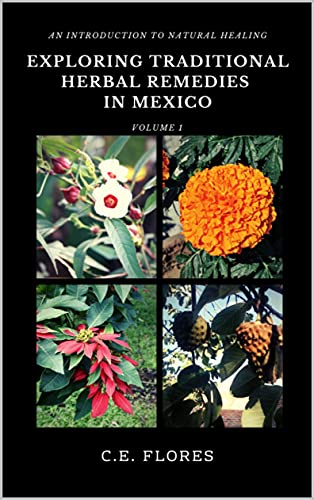
I have been waiting all year for the 2019 Herbs and Essential Oils Super Bundle! And as I mentioned last week, my own herb book, Exploring Traditional Herbal Remedies in Mexico is included! Can you tell how excited I am?
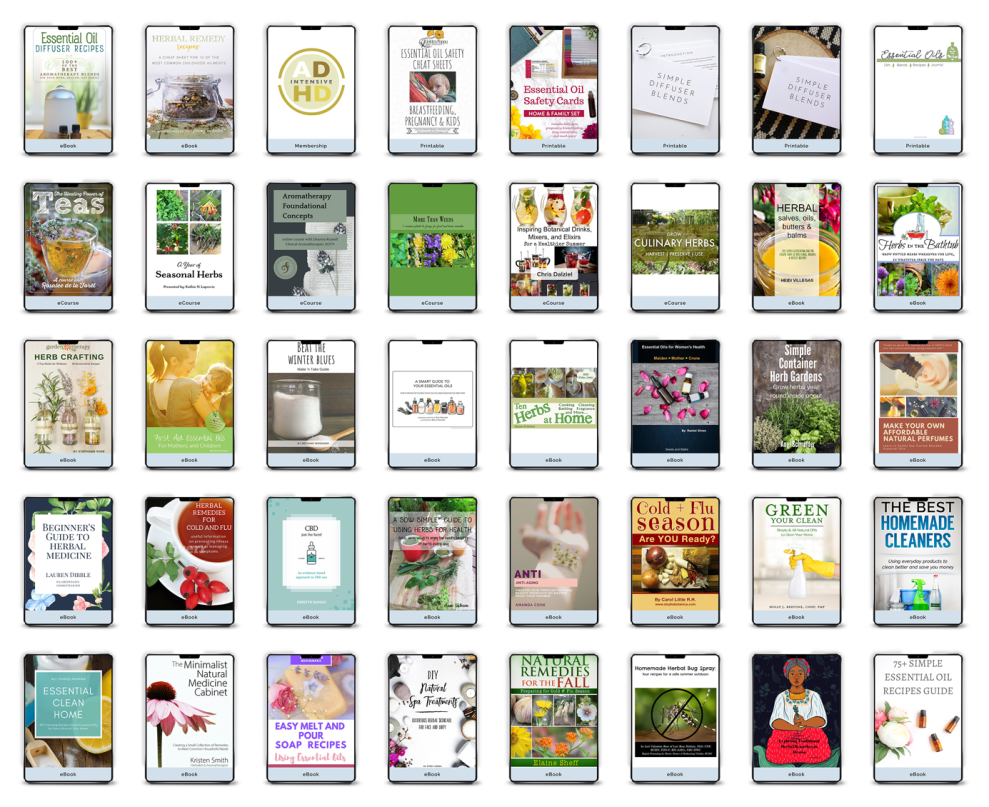
That’s me! Top right.
From June 5 to 10, you can get your copy of this incredible bundle for $37. That’s 29 eBooks, 7 eCourses & membership sites and 4 printable packs with a grand total of over $760 dollars for less than the price that my herb book costs on Amazon.
There I am again–bottom row next to last!
Let me also mention that Herbal Academy’s Herbs for ADHD, Cognition, and Focus: 6 Month Intensive Course is also in the bundle. You KNOW how I love Herbal Academy! You just can’t beat the price!
You also get these amazing products!
FREE Summer Bundle from Puro co, $24.00 value
**Get a free bug repellent and skin relief salve
FREE 3 Color Gelatinized Maca from The Maca Team, $15.12 value
FREE Perfume Rollerball from MadeOn Skin Care, $16.75 value
FREE Essential Oil Diffuser Earrings from The Oil Collection, $24.00 value
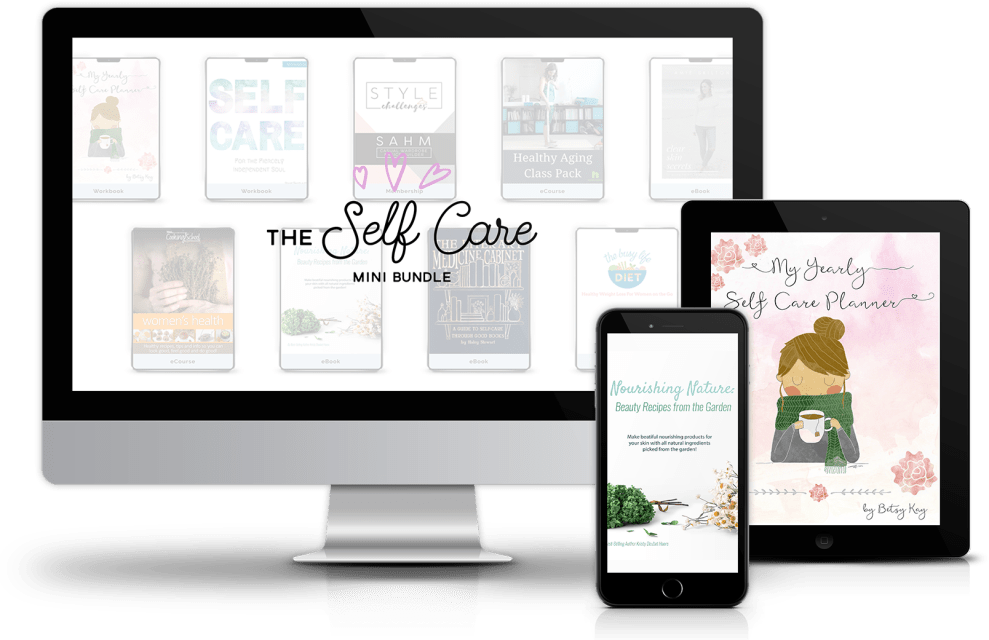
Plus, with just a few dollars more you can get the Self-Care Mini-bundle too! Two workbooks, four ebooks, two ecourses, a webinar, and a free membership to Alison LUmbati’s SAHM Casual Wardrobe Basics Builder site.
I’m positive you will just ADORE this latest Herbal Bundle! I know I do!
I don’t know about you, but it sure has been HOT this month in Mexico. I’ve been sheltering indoors in the afternoons and lazing about in front of a fan in the evenings. Even then, the heat is getting to me.
In the mornings, I’ve been feverishly working on getting my ebook Exploring Herbal Remedies in Mexico ready for release next week with the next Herbs and Essential Oils Super Bundle from Ultimate Bundles so stay tuned for that!
This week, Ultimate Bundles teamed up with Stacy Karen, the founder of NoFussNatural to bring you the Natural Summer Care Kit to help you manage this summertime weather.
Here’s what you’ll get when you register for this free kit:
5 summer-friendly recipes using herbs and essential oils
a simple checklist for all your ingredients
a tutorial video where Stacy will demonstrate exactly how to make each recipe
This summer kit has recipes for after-sun spray, bug bite balm, cucumber cooling mist, summer lotion bars, and fresh berry facial masks.
It’s FREE so go ahead and pick up Your Natural Summer Care Kit right here. And keep your eyes peeled for the Herbs and Essential Oils Super Bundle coming next week!
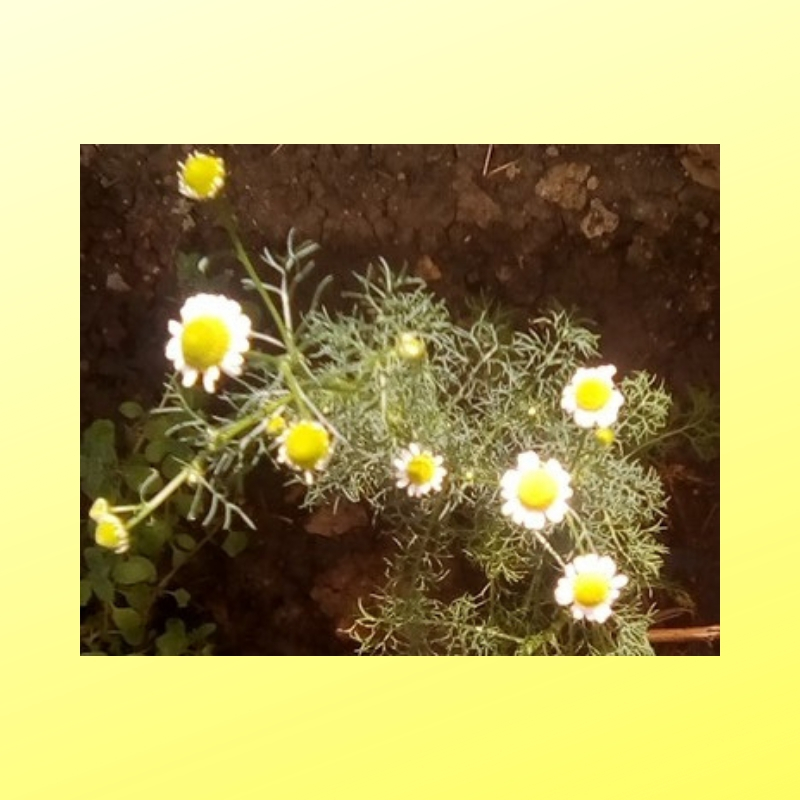
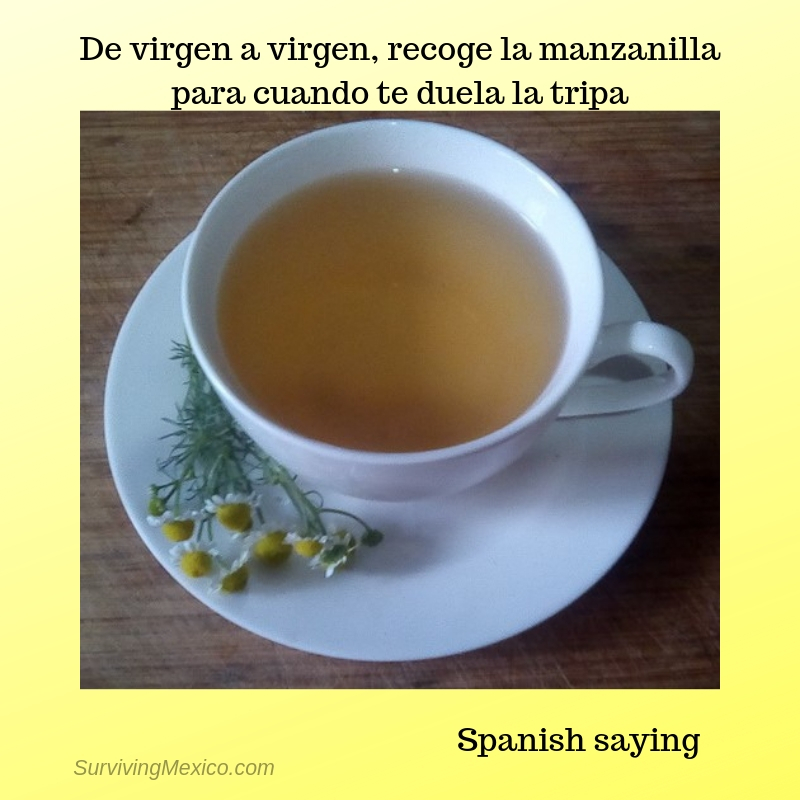
Matricaria chamomilla (German Chamomile) has long been used to treat menstrual cramps. In fact, Matricaria comes from the Latin word for womb (matriz). It is an herb that didn’t originate in Mexico but has become a fast favorite since it was brought from Europe by the Spanish in the 1500s.
In Spanish, manzana means “apple,” so it’s only natural that chamomile (which also means apple), is called “little apple” in Mexico, not for its appearance but its apple-like scent.
Manzanilla is digestive, sedative, anti-inflammatory and antispasmodic. Breast pain associated with premenstrual syndrome (mastalgia) has been effectively treated with regular doses of chamomile extract. To make a traditional Mexican PMS tea, use 10 grams of manzanilla (flowers and leaves) for every half liter 3 times a day as needed.
Matricaria chamomilla has antifungal properties as well. To treat a yeast infection in the Mexican way, use 20 grams of flowers for every half liter of water for a vaginal wash. Allow to the infusion to steep for 15 minutes before use.
Manzanilla is given to laboring mothers as well as prescribed after delivery in Mexico. Some midwives (parteras) use an ointment from manzanilla leaves and onions fried in manteca (lard) to lessen labor pains. For postpartum discomfort, an infusion of canela (cinnamon) rosa de castilla (Rosa gallica) and manzanilla is made from equal parts of each herb.
Studies have shown that manzanilla has been helpful for women in returning to regular digestive patterns after a cesarean section. It has also been used successfully to treat parasitic infections of the stomach.
Manzanilla is often used to treat eye infections. To make an eyewash, add a pinch of salt before boiling the herb. Make sure the infusion is freshly made for each application. Although care should be taken with topical application. Some people have a sensitivity to manzanilla on the skin. Applying it to the skin may cause a rash or allergic reaction.
Colicky babies are often given a weak tea made with manzanilla in Mexico. Young children are given manzanilla to help with dehydration caused by diarrhea. The Tzeltal Maya of Chiapas, Mexico make a manzanilla tea with an orange and lime leaf added to improve the drinker’s mood.






 Surviving Mexico