And to top it off, I was interviewed on a podcast, Rediscovering Your Passion and Purpose with Patti.
As an introvert, I always find podcast appearances agonizing, but I thought this one went pretty well. I opted to wear my huge earmuffers (headset) and not risk the issues I had with earbuds falling out onto the floor and rolling behind my desk that I had in my last interview.
Whew! That was a LOT of attention and should last me for quite some time! Back to other matters at hand, like that pesky little insurrection in La Yacata.
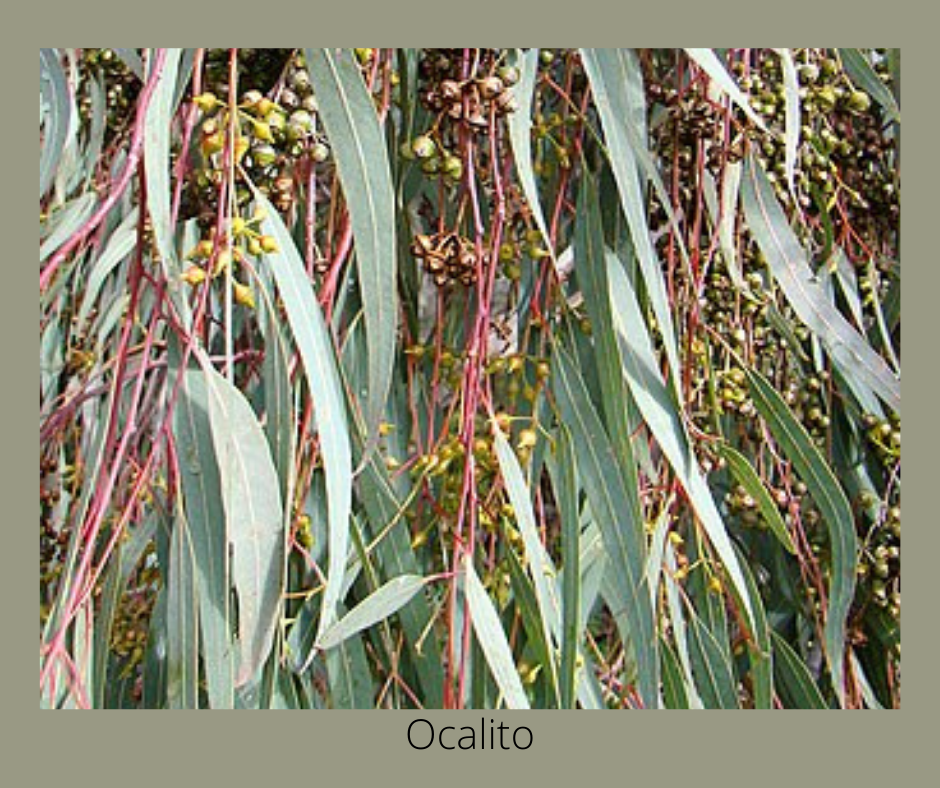
One day, my husband and I were cruising around Cerano looking for, I forget what, and suddenly he stopped the motorcycle, hopped off, and pulled some leaves off a shrubby tree, saying they were ocalito leaves and he needed them for seasoning. Well, all righty then. I really couldn’t identify the leaves, and he didn’t have any more information on them, so time went by.
Then another day, I was perusing the herb section in one of the herb stores in town and saw a bag of leaves like the ones my husband had picked, but they were labeled “eucalipto.” Eucalyptus? But surely, eucalyptus wasn’t a tree that grew in Mexico. Time for some research.
It turns out that eucalyptus trees were brought into Mexico in the late 1800s/early 1900s, predominately the Eucalyptus camaldulensis (rojo) and Eucalyptus tereticornis (azul) varieties. Commercial plantations were established but not well regulated. The trees escaped their growing confines and are now considered invasive species. Other varieties found in Mexico include Dólar de plata (Eucalyptus cinerea) and Eucalipto blanco (Eucalyptus globulus).
While ocalito is the name used in central Mexico, other common names are alcanfor, calipto, árbol de la fiebre, gigante ócalo, calistro, tzon tzko nasi in Oaxaca, ntajine in popoloca, an indigineous language spoken in Puebla.
Both Eucalyptus torelliana and Eucalyptus camaldulensis effectively treat tuberculosis and the persistent cough associated with that illness and other respiratory issues.
Ocalito leaf infusions are given for resfriado (colds), bronquitis, and asthma. A stronger infusion is used for a mouth rinse. Steam inhalations are prescribed for respiratory congestion and cough. A wash from the bark is made for vaginitis, urinary tract infections, and wounds.
As a rub for colds and flu, combine ocalito, ruda (Ruta graveolens), and romero (Salvia rosmarinus) in a liter of arguardiente (alcohol). Allow it to infuse the alcohol. Before using, warm it, then shake. Apply over the entire body in the evening. Drink the following hot infusion and send the sick person to bed.
Ocalito and Ocote Infusion for the Flu
1 stick of canela (Cinnamomum zeylanicum)
1 ocote twig (Pinus montezumae)
Equal parts:
ocalito leaves (Eucalyptus camaldulensis)
malva leaves (Malva sylvestris)
bugambilia morada bracts (Bougainvillea glabra)
Boil in one liter of water for five minutes. Allow to steep for another 5 minutes. Serve with miel (honey) and limón (Citrus aurantifolia).
I don’t know about you, but there’s nothing better than Café de olla in the morning! But did you know coffee is medicinal as well? WhooHoo!
The genus Coffea is made up of at least 80 species and originated in Africa. Café arrived in Mexico in the late 1700s. Nowadays, Mexico is one of the world’s largest exporters of organic-certified coffee, mostly grown by small cooperatives of indigenous laborers. About 90% comes from the states of Chiapas, Veracruz, Puebla, and Oaxaca.
The majority of the coffee produced in the country is the shade-grown Arabica variety. Robusta only makes up about 4% of the total coffee produced. At least three varieties have been given the denominaciones de origen mexicanas from the el Instituto Mexicano de la Propiedad Industrial (IMPI), meaning they are recognized as being an original product of Mexico. These are the hybrid Garnica, its mutation Garien, and Oro Azteca, another hybrid.
In Mexican traditional medicine, coffee is prescribed for la gripa (cold), fever, headache, to improve digestion, as a mental stimulant, and increase a mother’s milk production. However, generally, coffee is not recommended for nursing mothers as the caffeine can be passed to the baby through the milk, and then the baby is awake all night!
Five grams of unroasted coffee beans are boiled in ½ liter of water for fever reduction. Add the juice from one limón (Citrus aurantifolia) and sweeten it with miel (honey). To treat a headache, coffee grounds and manteca (lard) are spread on leaves of the maravilla plant (Mirabilis jalapa) and then applied to the temples.
Regular café consumption has been shown to lower the risk of type 2 diabetes, kidney, liver, premenopausal breast, and colon cancers, and chronic liver disease. The seeds are antioxidant, hepatoprotective, antiviral, antifungal, anti-ulcer, antibacterial, and anti-inflammatory. They also have hypolipidemic effects.
One cup of coffee has 1 mg of vitamin PP which lowers cholesterol, eases arthritis, and boosts brain function. Three cups provide up to 50% of the daily requirement. Coffea also contains mangiferin which has anti-inflammatory, antidiabetic, antihyperlipidemic, and neuroprotective activities.
Topically, seed extracts reduce fine lines, wrinkles, and pigmentation discoloration. The caffeine content creates diuretic and temporary hypertensive effects. It also increases stomach acid and stimulates kidney and liver function.
Coffee seeds can reduce gallbladder disorders and may be beneficial in reducing acute gout inflammation. Roasted coffee brews demonstrate a stronger hepatoprotective effect when compared to green coffee brews. Some studies suggest that regular coffee consumption can reduce the risk of developing Parkinson’s disease by stimulating the central nervous system. In small concentrations, coffee may aid in sleeping and reduce the intensity of migraines when used in conjunction with ergotamine. As a stimulant, it can increase blood pressure, body temperature, blood circulation, and respiratory processes.
If you’d like to incorporate some coffee into your morning, definitely try Café de Olla.
Café de Olla
2 piloncillo cones (brown sugar)
1 stick of canela (Cinnamomum Zeylanicum)
100 grams of ground café (Coffea)
Boil 2 liters of water with the canela and piloncillo cones. Boil until the cones dissolve. Then add the coffee grounds, stir, and remove from heat. Cover and allow to steep between 5-10 minutes, depending on how strong you like your coffee. Strain and serve.
Traditionally, this drink is made in a clay pot, una olla de barro, and served in clay mugs.




 Surviving Mexico
