I’ve already written about how foraging is part of our lifestyle. (See Gleaning) Our animals are taken out of their corrals and allowed free foraging daily. Recently this mass exodus has not just been limited to the goats, sheep, and horse, but also the chickens, ducks, and rabbits delightedly head out to the tall grass for vittles.
When the Earth provides such abundance, it really is a sin against nature not to harvest its bounty (See Tunas, Pitayas, and Cactus) both man and beast. Of course, each season brings its own flavors. This past month, we did some rainy season foraging.
Not edible!
Lots of rain mean lots of mushrooms. This year was hardly a bumper crop, but we did get a meal or two out of the mushrooms. I always let my husband harvest these as I’m still a little unsure of choosing the right ones. Both types of mushrooms that grow in droves during the rainy season look like partially opened umbrellas. The edible mushrooms are pink underneath. The poisonous ones are brown or white underneath.
Then there is this plant that my husband called toritos (little bulls). I’m pretty sure that’s not its name. The interior of the seed pods before it hardens up is edible. It tastes, well, beany. Once the pods harden, they darken to an almost black color and two pointy prongs pop out at the end. My husband and his brothers used these mature seed pods as bulls in their play way back when.
Another edible plant is what my husband calls quesitos (little cheeses) because once peeled it resembles a cheese wheel. These are bitter in taste. I’ll pass.
This pretty flower turns into tiny metallic colored berries. They sort of taste like blueberries. Apparently, there are several varieties of this plant differentiated by the flower color but all giving the same sort of berry. Anyone know the name of this plant?
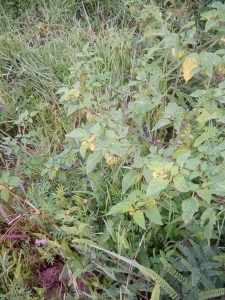
Stopping on our nature hike to take a picture in Los Amoles, I found tomatillo growing wild at my feet. Tomatillo is used in all sorts of savory Mexican dishes. It has a tart or tangy flavor to it.
Not edible!
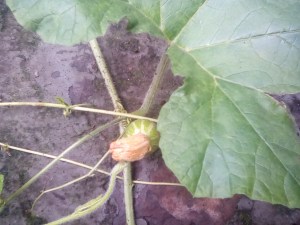
The fruit developing on this plant is not to be eaten, according to my husband, although it bears an uncanny resemblance to a squash.
Verdolaga (purslane) is found year-round. Cooked up it has the consistency of spinach with a sort of tangy taste. It’s often used in green salsa.
This plant is called Chichi de burra (Donkey boobs). The pods are edible and taste like figs.
The tubular petals from this flower (Klip Dagga) have nectar that can be sucked out making it a favorite of chuparosas (rose suckers otherwise known as hummingbirds) and mariposas (butterflies). They grow in large bunches under the mesquite tree near our house. It’s my favorite place to be at the tail end of the rainy season.
This is not an all inclusive list of wild edibles by any means. Every year, I learn a little bit more about the flora and fauna that surround me. Where else can I get a glimpse of a mountain lion, a roadrunner, and fox in one day? Where else do butterflies of every imaginable color and size flutter in clouds? Where else are daily humdrum activities stopped with the glimpse of a hummingbird? La Yacata remains the place to be for me!
Have you ever wondered what those pod things were at the Asian or Mexican market? Wonder no more. Today, let me share what I learned about tamarindo.
The Tamarind (Tamarindus indica) tree is not a plant native to Mexico, but was brought by the Spanish and Portuguese in the 16th century and has since become an integral part of Mexican cuisine and traditional medicine. It’s a slow-growing, long-lived tree that can be 80-100 feet tall with a trunk circumference up to 25 feet. The evergreen feathery foliage is made up of pinnate leaves that fold up at night. It has small 5-petalled yellow flowers with orange or red streaks. The flower buds are pink. It takes 80 to 90 years for a tamarind tree to begin producing fruit. The fruits are green pods or beans that ripen to a cinnamon brown color. The outer covering becomes brittle and the pulp within dries to a sticky paste. The fruit begins to dehydrate in 203 days and reaches full ripeness in 245 days. The fruit can be left on the tree for as long as 6 months after full ripening. (Morton, J. 1987. Tamarind. p. 115–121. In: Fruits of warm climates. Julia F. Morton, Miami, FL.)
Tamarindo fruit is high in tartaric acid, sugar, B vitamins, calcium, thiamin, iron, magnesium, niacin, vitamin C, copper, and pyridoxine. Other antioxidants found in the tamarindo include limonene, geranoil (shown to inhibit cancerous pancreatic growth), safrole, cinnamic acid, methyl salicylate, pyrazine, alkylthiazoles. Its high content of malic acid, tartaric acid, and potassium bitartrate make it an excellent treatment for constipation, which you may want to remember should you be tempted to eat large quantities.
Tamarindo has also been used traditionally as a treatment for stomach discomfort, diarrhea, parasitic infections, dysentery, helminth infections, malaria cell cytotoxicity, used as a gargle for sore throats, mixed with salt and made into a liniment for rheumatism and arthritic inflammation. It’s been used forDatura poisoning, alcoholic intoxication, liver toxicity, and sunstroke. It has also been recommended as a daily drink for those suffering from thyroid disorders and as a way of fluoride detoxification. The dried or boiled leaves and flowers can be made into poultices for swollen joints, sprains, boils, hemorrhoids, gonorrhea and conjunctivitis. The roots and bark are boiled in an infusion for chest complaints and as an ingredient in treating leprosy. In one study, the seeds have shown improve glucose homeostasis in rats with streptozotocin-induced diabetes mellitus, which may lead to further studies as a treatment for diabetes in humans. In another study, the bark has been shown to possess blood glucose lowering effect along with antioxidant effect and protective effect on renal complications associated with hyperglycemia. In yet another study of hens fed tamarindo as part of their daily diet, it has been linked to lower cholesterol in the hens’ serum and egg yolks leading to the speculation that similar results could be obtained in humans. (Top 15 Health Benefits of Tamarind and 30 Health Benefits Of Tamarind and 7 Amazing Benefits Of Tamarind) I could go on and on as to the health benefits, but I think you get the picture.
Are there any safety concerns about tamarindo? Yes, there are. As I outlined above, the ingestion of tamarindo has definite effects on the body. If you have certain conditions, tamarindo may make your condition worse.
As it lowers blood pressure, it may increase bleeding when taken with aspirin, ibuprofen, blood thinners, and anti-platelet drugs. As its ingestion reduces serum glucose levels, diabetics who are already taking drugs for lowering their blood sugar level should be careful to not eat too much. As with any food, you may have an allergic reaction. Excessive quantities of tamarind may damage the enamel of your teeth. Frequent ingestion of huge amounts of tamarind can promote the formation of gallbladder stones. If you have gastroesophageal reflux disease (GORD) or ‘acid reflux’, you should stay away from it since it will probably increase the acid in your stomach. If you are taking any sort of vasoconstrictor you need to know that tamarindo is known to add to the vasoconstricting effects by accelerating the process of narrowing of the blood vessels. If you are using any ophthalmic antibiotic on your eyes topically, avoid tamarind intake as it will interact with the cream. (Top 10 Side Effects Of Tamarind) So moderation is the key.
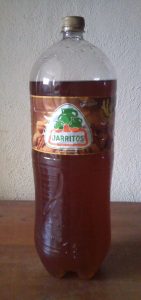
Just one of the many tamarindo products found in Mexico!
Although I can get agua de tamarindo from the same tricycle market vendors that sell jamaica and horchata, I thought I’d try and make my own. Here’s how that went.
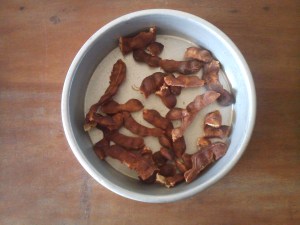
I picked up some dried pods at the market. Then I cracked and peeled them. Because of the stickiness factor, it was a bit more difficult than peeling a boiled egg. I soaked them in water for about an hour. When the pulp was soft, I removed the seeds and mashed the pulp with my fingers. That part didn’t take very long. After that, I added more water and strained the concoction to remove any large lumps and fibers. Add sugar to taste and ice and it’s ready, the perfect refreshing summertime drink!
I kept the seeds and have planted them. I’d surely like my own tamarindo producing tree (in 80 or 90 years)!
Tamarindo has other uses as well. Tamarind lumber is used to make furniture and carvings. The fruit pulp is used to polish brass statues and lamps, and remove the tarnish from copper, brass, and bronze items.
The word itself also has some distinctly Mexican uses as well. Tamarindo is sometimes used to insult los transitos (traffic police) probably first begun as a commentary about their brown uniforms. My husband has also said that among hombres (men) tamarindo can be used to imply someone is stupid or an a**hole. So perhaps it’s not a word you can throw around lightly in some parts however delicious the fruit!
My interest was piqued one day at the tianguis (flea market) in Valle de Santiago when the elderly woman wrapped in her dark blue rebozo against the cold that sold us the plant (for 10 pesos). She mentioned that this plant, which I knew as Wandering Jew, was called “Sin Verguenza” (Without shame) because it propagates without any special care whatsoever. She then said that it was good for treating diarrhea. I had not heard anything ever before about the medicinal uses of Tradescantia zebrina, so when I began my Herbal Materia Medica course through Herbal Academy, I added it to the list of herbs I wanted to investigate more thoroughly.
Before I had even begun my investigation, my husband plucked and ate a leaf as a cure for his upset stomach one day. As he didn’t die, and in fact, felt much better, I thought there might be something to this old wives’ tale.
I found out that Tradescantia zebrina was native to Mexico. However, I didn’t find anything in English about its medicinal use except a vague reference to a tea made from its leaves called Matali. So that’s what I searched for. Bingo! Youtube video and everything! Matali is a tea common in Tabasco used for treatment for urinary infections and kidney issues.
The preparation in the video was far from exact, so I tried digging deeper. One recipe for a kidney cleanse instructed boiling the leaves in water and allowing it to cool. Add lemon juice and honey.
There was no mention on how many leaves or how long to boil the concoction.
Apparently, I wasn’t the only one looking for this recipe. Yahoo respuestas led me to yet another recipe. There I was told that there is no exact number of leaves used in making the tea. Boil some, taste, and if it seems weak, add some more leaves. If it is too strong, add more water to dilute the tea. Okie Dokie.
There was a separate recipe for dysentery treatment. An unspecified number of leaves should be crushed with a bit of water. The mixture should then be strained. Mountain honey (the best I could figure miel de monte translates as) and lemon juice are added. This tea should be drunk 3 times a day for the duration of the illness.
Much to my surprise, I found the Chinese Traditional Medicine also listed a tea made from the Wandering Jew for stomach ailments. In Chinese, this plant is called Shui Gui Cao (Water Turtle Grass) and is recommended for kidney issues.Here I found some harvesting advice (don’t touch the sap because it might cause skin irritation) and a description of what the tea tastes like “slightly tasteless with a light herbal aroma having a purple/pink color after being boiled for a few hours.”
A few HOURS? Well, that’s still not specific enough. So I kept searching.
Finally, I found a site that gave a more precise recipe. Use 200 g each time. Soak 15 pieces of red dates in a container. Wash the Shui Gui Cao 3 times. Boil 1.5 liters of water. Add the Shui Gui Cao, red dates and 12 slices of ginger. Cook on low heat for 1.5 hours. Add brown sugar for sweetness. It can be reheated for maximum benefits. Drink 2 to 3 hours after eating or on an empty stomach for best results.
Another site gave the same recipe, however, cautioned not to use an aluminum pot to make the tea since it would cause a chemical reaction and result in a slow form of poisoning. Ok. Good to know!
There were quite a few things this tea was accredited to cure including bladder problems, piles, uric acid, blood in the stool, pulmonary tuberculosis, cough, kidney infection, poisonous snake bite, vaginal discharge, urinary infection, hemoptysis, nephritis dropsy, acute conjunctivitis, swollen larynx, even diabetes.
The diabetes cure had a recipe too. Make a cup of tea using 3 leaves. Drink 3 cups per day. If making the tea is too bothersome, you can just eat one leaf 3 times per day.
I wasn’t the only person to look deeper into medicinal use of the Wandering Jew plant. One study showed that a methanolic leaf extract from the Tradescantia zebrina plant had the highest antioxidant content of the plants studied. Antioxidants are good. Dr. Jim Duke’s Phytochemical and Ethnobotanical Database cited a 1969 study by Maximino Martinez listing this plant as a treatment for dysentery.
Well, with this information, it was time to make matali myself. I boiled a handful of leaves for 2 hours as instructed and got weak tea colored water. It wasn’t pink. And it tasted like, well, boiled water. So maybe I didn’t put enough leaves in it. I thought I’d try just making a cup with 3 leaves.
I choose leaves with the purplest underside, boiled the water and added the leaves. AND….the water turned out exactly the same color. I sampled it, and it was tasteless, although I did notice my tongue had a thin coating of blah afterward, so much so that I went and brushed my teeth and tongue to get rid of the feeling.
Update May 2020
I had so many comments about matalí tea that I thought I’d try making it a second time, to see if I could get the pink color. This time, I cut the leaves lengthwise and instead of boiling them, I allowed them to steep in boiling water.
To my disappointment, no matter how long I allowed them to steep, the water remained decidedly not pink. However, the tea tasted much better. It had a plant flavor rather than the BLAH that resulted from boiling the leaves.
Some interesting tidbits shared by readers include:
According to Thomas Ngumi, in Kenya the leaves are used as vegetables among the Kamba community.
David de la Rosa’s brother in Guatemala makes matalí tea using 7 leaves in 0.75 liters of water, boiling for about 3-5 minutes. David claims that drinking the tea every other day has reduced his brother’s prostate and improved his urination, as well as reducing his PSA levels.
Wes Lowrence told me that the tea is brown until he adds lemon juice to lower the pH level, then it turns a brighter color.
Another commenter suggested cutting the leaves to release the inside portions, then pour the boiling water over it, which is what I attempted this time. He also suggested that I wait until it cools for the pink/purple color. Chilling it overnight before straining will intensify the color.
One reader shared that her Chinese grandmother boiled the leaves in water along with their flowers. There was no specific amount of water, leaves or boiling time. She used this concoction to reduce the “heat” in the body as defined by traditional Chinese medicine.
Another interesting bit of information that Shannon shared with me is that the Mexican president
Andrés Manuel López Obrador had a dinner engagement with all the country’s governors in January 2020. The beverage served reportedly was matalí. The article included a picture and sure enough, each attendee had a glass of extremely pink drink.
Mystery solved! The variety needed to get the pink color is indeed different. However, the medicinal properties are very similar. We continue to use Tradescantia zebrina as a home remedy for acid reflux and heartburn here. Instead of bothering with the tea, we just eat a leaf or two and experience nearly immediate relief.









 Surviving Mexico