Category Archives: Native fauna and flora

Natural Healing–La Miel Sagrada

As if you needed another reason to consume honey regularly, here’s a little bit of information about the sacred Melipona honey. 

gailhampshire from Cradley, Malvern, U.K [CC BY (https://creativecommons.org/licenses/by/2.0)]

The Maya used the honey from the native stingless bee Melipona beecheii extensively in their traditional remedies. They believed that illnesses that could be cured with this honey had supernatural origins. It was used to treat both “hot” and “cold” infirmities including respiratory and digestive ailments, cataracts, pterygium eye and conjunctivitis, as well as wounds, burns, fevers and poisonous stings and bites.

The reason supernatural illnesses could be treated with this honey was because they believed it was a sacred gift from the gods, specifically the bee god Ah Muzen Cab. The Maya communities continue to use this sacred honey to treat cancer, sinusitis, typhoid, laryngitis, bronchitis, cough, bacterial infections and postpartum issues. It has and continues to be used as a sweetener, an antibiotic and the main ingredient in the fermented drinks balché and Xtabentun.

When Francisco Hernandez de Cordoba first arrived in the Yucatan in 1517, he encountered enough bee yards producing honey that was traded throughout Mesoamerica. The importance of this activity is evidenced in the Madrid Codex, one of the four surviving Maya codices, which was devoted entirely to beekeeping.

Honey contains iron, calcium, potassium, magnesium and vitamins B1 to B8. It is antimicrobial, antiseptic and anti-inflammatory, making it ideal for pain alleviaion in the throat, and as a result of burns and ulcers. Applied topically, it will moisturize the skin and is beneficial in wound healing. Honey can help ameliorate thyroid disturbances and reduce the risk of developing diabetes as well as fight cancerous cells. 

Regular honey consumption lowers cholesterol and reduces the occurrence of cardiovascular disease. Honey can help alleviate dehydration and potassium loss caused by diarrhea. Furthermore, it aids in digestion and reduces issues caused by gastroesophageal reflux disease (GERD).

The amount of nutrients that honey contains varies according to the local plant source.To determine whether a particular batch of honey is pure, drop a spoonful into a glass of water. Adulterated honey dissolves, while pure honey remains in a ball. Honey can be stored at room temperature. If it crystallizes, setting it in a pan of hot water will liquidize it again.

Melipona honey is slightly different than honey made from other types of bees. It is more watery, less prone to crystallization and contains more fructose than glucose giving it a distinct taste. The honey from these stingless bees has more antioxidant and anti-inflammatory properties than honey produced by stinging bees. 

The Melipona bees are in danger of extinction. The ecosystem which they have co-existed for centuries is being destroyed. They are also facing increasing competition with the Apis mellifera bees since commercial beekeepers prefer their more abundant honey production to the native species. If you are in the Yucatan, be sure to take advantage of the local sacred Melipona honey available to you.

Precaution: Honey should never be given to children under one year of age because it may cause botulism. 

Have you tried Melipona honey?

***

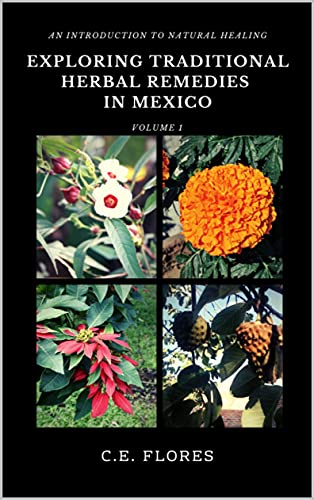
Interested in natural remedies? Uncover herbal remedies from traditional Mexican sources for healing and wellness in the Exploring Traditional Herbal Remedies in Mexico series.
Leave a comment

Filed under Health, Native fauna and flora, Natural Healing

Natural Healing–Árnica Mexicana

The other day, while perusing the teas at the market, I happened upon some Árnica tea. This intrigued me because I had only ever seen Árnica used in una pomada (ointment) for bruises and muscle pain. So off I went to do some investigation on the matter. 

Árnica Mexicana’s botanical name is Heterotheca inuloides and should not be confused with arnica montana which grows in Europe. In fact, one of the names of Heterotheca inuloides is false arnica, as the “true” arnica is arnica montana. Árnica Mexicana is native to Mexico and has been used medicinally for centuries by the indigenous people. It is also known as Árnica del país and in Nahuatl, Tlalyetl. 

Most commonly Árnica Mexicana is used to treat skin inflammations, rheumatism, muscular pain, menstrual cramps, and colic topically. However, it is also used for nervous disorders, dental issues, and gastrointestinal problems, hence the availability of the Árnica tea. 

Scientific studies have shown that Heterotheca inuloides contains antioxidants, and functions well as anti-tumor compound. It has been shown to effectively treat giardiasis, a stomach infection caused by the parasite Giardia lamblia found in contaminated water. Yet another study has demonstrated the positive effects of Árnica Mexicana and rosemary water extract on the dopamine and serotonin levels in the brain.

Other studies have demonstrated its topical benefits. Used externally, it has mild antiseptic, analgesic, and anti-inflammatory effects. It is effective in the treatment of skin disorders caused by fungus and bacteria. It is an effective natural insecticide and weed killer as well. 

You can find Pomada de Arnica at nearly every pharmacy in Mexico. However, if you’d like to make your own wash, tea, or tincture you can try one of these remedies. 

For bruises add 10 to 15 branches with flowers and leaves to ½ liter of alcohol and allow it to steep for 15 days. Rub the resulting tincture on the affected area. Another remedy calls for 2.5 grams of flowers, roots, and leaves gathered from 20 branches and steeped again for 15 days. 

As a hemorrhoid wash, boil 100 grams in two liters of water. A second remedy suggests 25 grams boiled in one liter of water. 

For stomach ailments, drink 10-20 drops of essential oil in water three times a day. As a tea, take one tablespoon every two hours made from 2.5 grams of flowers boiled in ¼ liter of water. Or one cup drunk four times a day made from 8 grams of flowers and leaves boiled in one liter of water. 

Precautions: 

Because this little yellow flower is part of the Asteraceae family, those who are sensitive to ragweed and feverfew should not use arnica because it may trigger allergic reactions.

Internal use of arnica should be limited to a few days due to potential toxicity

So, although I picked up a box of this Árnica tea at the market, after my investigations, I believe I’ll keep it for medicinal use rather than a regular breakfast beverage. 

****

Interested in natural remedies? Uncover herbal remedies from traditional Mexican sources for healing and wellness in the Exploring Traditional Herbal Remedies in Mexico series.

1 Comment

Filed under Health, Native fauna and flora, Natural Healing

Natural Healing — Gordolobo

My son has had a dry cough most of the month of January. His aunt recommended an infusion made from gordolobo, ajo (garlic), limón (lime), canela (cinnamon) and sweetened with honey. Before I had him drink this concoction, I thought I’d investigate a little more about gordolobo.

According to my little Aztec medicine book, gordolobo (which translates to English as fat wolf) has the botanical name of verbascum thapsiforme sdahere and other common names of vervasco, Cirio de Nuestra Señora, and Flor de Gran Candelero. Gordolobo is often translated as common mullein which is Verbascum thapsus. However, based on the botanical names, it seems that gordolobo is a type of mullein but not common mullein, so the translation is not correct.

I went to this handy site called The Plant List for some verification. There I found that most likely verbascum thapsiforme sdahere is another name for Verbascum densiflorum Bertol, dense-flowered mullein. I can’t verify this is the same plant entirely because gordolobo is only sold dried at the market and I’ve never seen a flowering plant to compare it to photos of the dense-flowered mullein. Nor could The Plant List. It gave itself a rating of 2 out of 3 on identification confidence. 

The Verbascum or mullein family has 360 species in it and it seems safe to say that gordolobo is a subspecies within that plant family. One study found that there wasn’t much variation between species when their compounds were compared. Therefore, it’s probable that many of the medicinal uses of common mullein will be true for the verbascum thapsiforme sdahere plant sold at the Mexican market. 

Gordolobo has been used by the indigenous people of Mexico for centuries, long before the Spanish arrived. Besides being used for cough, sore throat, and respiratory issues, it is often used as a treatment for hemorrhoids and varicose veins.

Mullein contains triterpene saponins, volatile oil, mucilage, flavonoids and bitter glycosides. It’s been approved by the German Commission for the treatment of respiratory catarrh. It has anti-inflammatory properties and mullein tea, made from the flowers and leaves, has been shown to be beneficial for sore throats, hoarseness, bronchitis, tonsillitis and dry cough.

The flowers have sedative and bactericidal properties. Flower extracts have been shown to be effective when used as treatment against E-coli, Staphylococcus aureus, Staphylococcus epidermidis and Klebsiella pneumoniae.

Some of the remedies I found in my Antigua Recetario Medicinal Azteca were:

For croup, gordolobo infusion is used as a gargle. 

For colds, make a tea from the flowers and leaves of three branches plus the branch of 1 malva (mallow) boiled in ¾ liters of water. This quantity makes three cups. 

Essential oil made from gordolobo is recommended for angina pain. It should be taken three times a day before meals. 

If gordolobo is used as an intestinal cleanse, fresh leaves should be boiled in milk rather than water. 

The leaves can be applied as a poultice for burns, hemorrhoids and varicose veins. Five grams of gordolobo should be boiled in ¼ liter of water when making the poultice.

Another tea remedy for cough, lung infections, sore throat and bronchitis calls for two tablespoons of dried gordolobo in two cups of water boiled for five minutes. Cover and steep for five more minutes. The infusion is a yellow color, which isn’t surprising since the flowers are yellow. It doesn’t have any taste nor scent to speak of. 

Precautions:

Gordolobo is a soft, wooly plant. It has been known to cause dermatitis when handled regularly.

Although gordolobo is the term most commonly used for mullein, in Mexico this name is also used for several other varieties of plants including Greater Burdock (Arctium lappa), Plume Poppy (Bocconia frutescens), Tapered Cudweed (Gnaphalium attenuatum), Pseudognaphalium chartaceum, and Coltsfoot (Tussilago). Be sure you identify the plant being sold to you before using it as a medicine.

Since my husband had also developed a dry cough, I mixed up a batch of the Garlic tea cold buster (garlic, lime and honey) and added some gordolobo to the mix. They both seemed to sleep better that night.

*** 

Interested in natural remedies? Uncover herbal remedies from traditional Mexican sources for healing and wellness in the Exploring Traditional Herbal Remedies in Mexico series.

4 Comments

Filed under Health, Native fauna and flora, Natural Healing