Category Archives: Native fauna and flora

Natural Healing — Ocote

Photo credit: Daderot

When many people think about Mexico, pine trees are not in their concept of native plants. However, believe it or not, Mexico has the highest number of native pine species globally, between 43 to 51 species

Many of these species are used in traditional herbalism in Mexico. In fact, the resin from ocote (Pinus montezumae), called oxitl, was given to humans by Tzapotlatena, the goddess of medicine herself. According to Bernardino de Sahagún, this resin was used in remedies for fever and cracked skin. The name ocote comes from the Nahuatl ocotl. Ocotzotl, the resin or turpentine from the pine, is known as trementina. Another indigenous remedy was cuauh ocotl, a tea made from the needles for respiratory illnesses.

Trementina de ocote is prescribed for nail fungus and as an anti-lice repellent. It is also combined with alcanfor (Cinnamomum camphora) or gobernadora (Larrea tridentata) for a rheumatism liniment. Trementina is antiseptic, diuretic, rubefacient, and anti-parasitic.

In the state of Puebla, ocote is used to alleviate cold symptoms, and in Tlaxcala, it is prescribed as a remedy for bronchitis. It is also used in wound healing. It is considered a “hot” plant and is often used for “cold” illnesses through steam baths and infusions

Ocote is a hard pine and is used in construction. The resin is so flammable that cut branches will burn like torches. A vanillin flavoring can be obtained from the resin and pulpwood. Like other pine species, the seeds of the Pinus montezumae are edible but small. 

Té de Ocote for Congestion

  • 1 ocote branch with needles about 6 inches long (Pinus montezumae)

Boil the branch in 1 liter of water for five minutes. Strain and sweeten with miel (honey) if desired. Drink one cup a day to help with respiration.

***

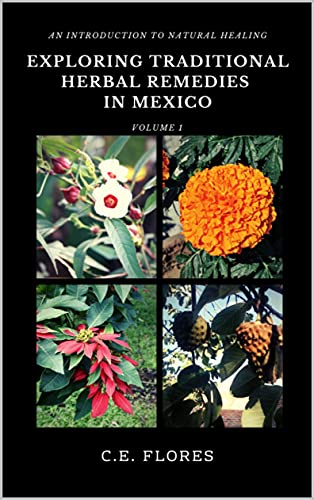
Interested in natural remedies? Uncover herbal remedies from traditional Mexican sources for healing and wellness in the Exploring Traditional Herbal Remedies in Mexico series.

Leave a comment

Filed under Health, Native fauna and flora, Natural Healing

Natural Healing — Jitomate

Photo credit: AnRo0002

The term used in Mexico for these red, delicious fruits is jitomate (Solanum lycopersicum) from the Nahuatl work xitomatl. Tomate is more commonly used for the green husked fruit tomatillo (Physalis philadelphica). Other names include Aadi-maxi in Otomí, bachuga in Cuicatleca, bti’ux in Zapoteca, and ts’ulub’p’ak in Maya. Botanically, the jitomate is a fruit rather than a vegetable because it contains the seeds of the plant. Nutritionists, on the other hand, classify them as vegetables based its low fructose content. 

The original progenerate Solanum pimpinellifolium was native to Ecuador and Peru with fruits the size of peas. The indigenous people, including the Aztecs, worked at cultivating the plant until it became a staple food source. In fact, Bernardino de Sahagún, stated there were a number of varieties he discovered in the Tenochtitlán market including “ large tomatoes, small tomatoes, leaf tomatoes, sweet tomatoes, large serpent tomatoes, nipple-shaped tomatoes,” and tomatoes of all colors from the brightest red to the deepest yellow.”

Hernán Cortés himself may have taken the first jitomate (a small yellow one) to Spain in 1521.

The Spanish introduced the jitomate to the rest of Europe where it was initially viewed with suspicion since it is part of the nightshade family and therefore related to belladonna, a known poison. The leaves and green fruit do contain tomatine, which is toxic, but the ripe fruit does not. 

Linnaeus classified the plant as Solanum lycopersicum in 1753. However, in 1768, Philip Miller moved the plant into its own genus Lycopersicon esculentum. Genetic study supports Linnaeus’s classification although some herbals and scientific papers that I consulted in my research still use Miller’s classification.

The jitomate is full of goodness. It is anti-cancer, antimicrobial, antimutagenic, anti-inflammatory, anti-neurodegenerative, and anti-platelet. It has antioxidant and cardioprotective properties. Recent studies have found that its antimicrobial activity makes it an effective treatment for symptoms of coronavirus as it mitigates acute lung inflammation and damage. 

Traditionally, jitomate has been used medicinally as a treatment for diabetes, cancer, asthma, cataracts, and heart disease in Mexico. It’s considered a “cold” food item and used to treat “hot” infirmities. 

Juice from a ripe jitomate is squeezed in the eye infected with conjunctivitis 3 to 6 times a day. A mouthwash for oral thrush is made from 20 albahaca (Ocimum basilicum) leaves, 1 jitomate leaf, and the juice from a cebolla (Allium cepa) boiled in 1 liter of water.

A jitomate leaf is applied to cold sores. For fever, two tomatoes are boiled then wrapped as a plaster on the feet and left on overnight. The leaves are prepared in an infusion for a wound wash. The fruit pulp is also used as a facial tonic.

***

Interested in natural remedies? Uncover herbal remedies from traditional Mexican sources for healing and wellness in the Exploring Traditional Herbal Remedies in Mexico series.

Leave a comment

Filed under Alternative Farming, Health, Mexican Food and Drink, Native fauna and flora, Natural Healing

Exploring Traditional Herbal Remedies in Mexico Volume 4: Discovering the Healing Power of Native Blossoming Plants

Volume 4 of the Exploring Traditional Herbal Remedies in Mexico series is now available on Amazon!

Are you ready to discover the incredible healing power of Mexican blossoming plants? Volume 4 of the Exploring Traditional Herbal Remedies in Mexico series explores over 50 different varieties and their unique medicinal properties.

From the breathtaking beauty of some of these plants to the less attractive yet equally powerful, gain valuable insights into the traditional uses and modern applications. Whether you are a professional in the field of herbal medicine or simply curious about the power of these plants, this volume has something to offer.

Unlock the healing power of blossoming plants and take control of your health and well-being. Don’t miss out on Volume 4 of the Exploring Traditional Herbal Remedies in Mexico series. Order your copy today and discover the incredible healing properties of these plants.

Leave a comment

Filed under Health, Native fauna and flora, Natural Healing