Category Archives: Mexican Holidays

El Dia de Los Muertos–Visible Mourning

que halloween ni que

I’ve had it up to here hearing about Mexican Halloween. It isn’t. It isn’t about dressing up, spooky stories, demons, or blood. Not Freddy Kruger, not poltergeists, not witches, warlocks or ghosts. It’s not about haunted houses, trick or treating, carved pumpkins or parades. It isn’t even about death.

It’s about life.

The celebration El Dia de Los Muertos in Mexico is the commemoration of the lives of our dearly departed and the acknowledgment of the loss the living experience with each death. Although I’ve lived in Mexico for almost 10 years, this is only the third year that I have participated in El Dia de Los Muertos events. And why is that? Because up until then, there was no one to visit at the cemetery. Three years ago, my mother-in-law was killed in an accident with a police vehicle. Two years ago, my husband’s grandmother in Cerano died at the age of 89. Now we have family to visit at the cemetery. And we do.
wpid-cam03971-1.jpg

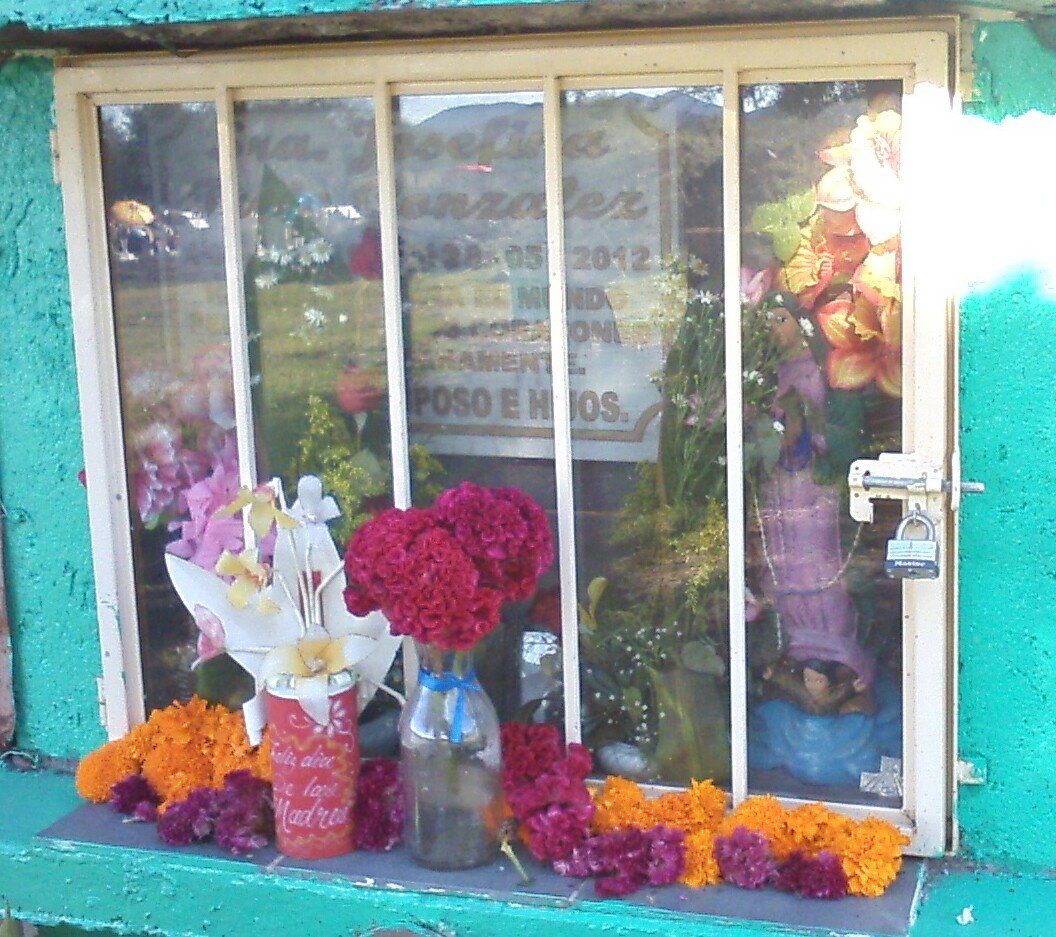
We clean and place flowers. We sit and remember. We laugh, and we cry. It’s more like Memorial Day in the United States. Or maybe Veteran’s day. So it’s hard for me to understand the touristy aspect that has sprung up in larger areas.
student altar

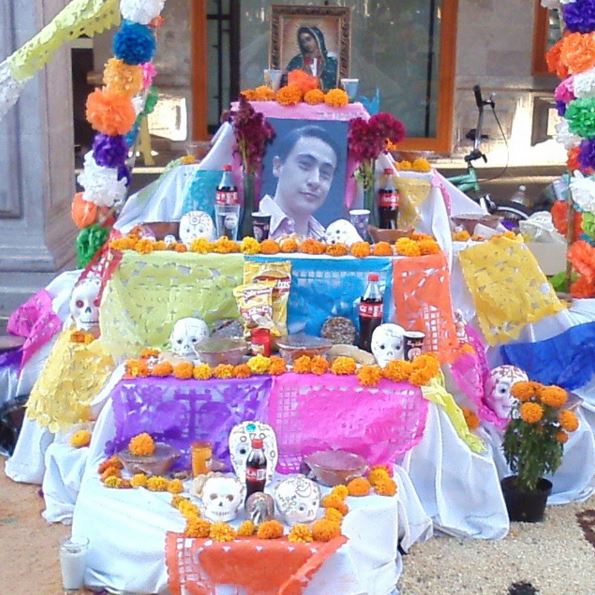
The altars that are constructed in the town center in Moroleon are typically in honor of recently deceased community members. It’s a community mourning ritual. There are altars for recently deceased students, teachers, bakers, metalworkers, shopkeepers and more. The platforms constructed outside homes in Cerano are even more personal. So what would motivate someone to go to some community of which they are not a member to gawk at this mourning ritual?

A child's crypt. Notice the toy cars and pacifier behind the glass.

A child’s crypt. Notice the toy cars and pacifier behind the glass.

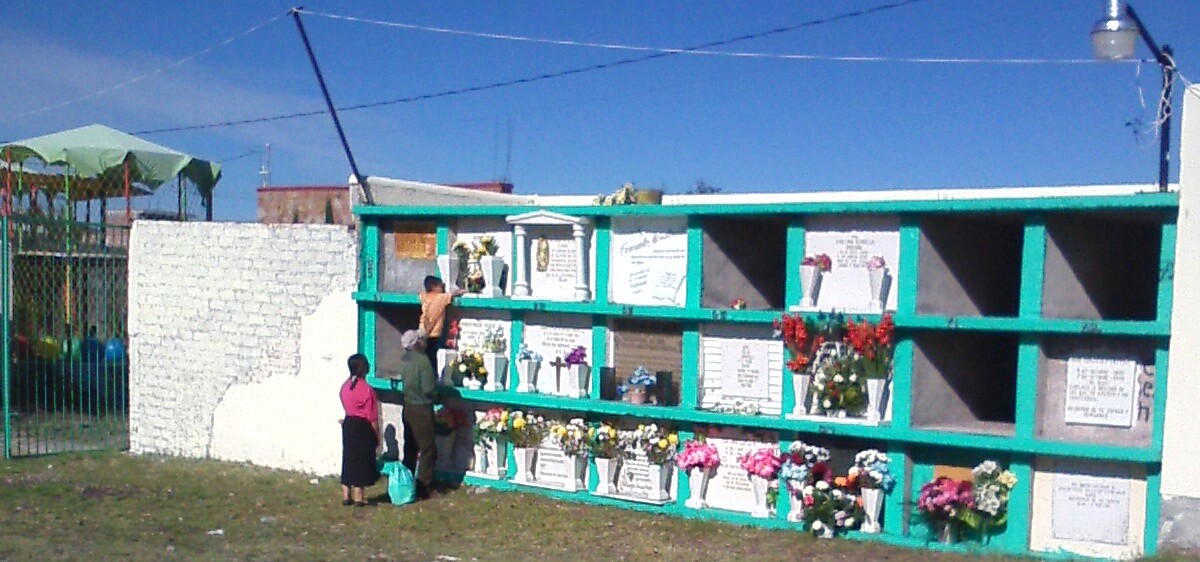
El Dia de Los Angelitos, November 1, is even more personal. Altars constructed in the town center or outside homes are created in memory of children who have died–some recently, some not so recently. It’s a personal homage. It’s not for me to intrude on this public manifestation of grief. After all, it is no more or less than a visible reminder that the dead are gone but not forgotten. Families visit the graves of their “little angels” and leave flowers and toys. Brothers and sisters are made aware that there was another that remains a part of the family although no longer physically present.
wpid-cam03975-1.jpg

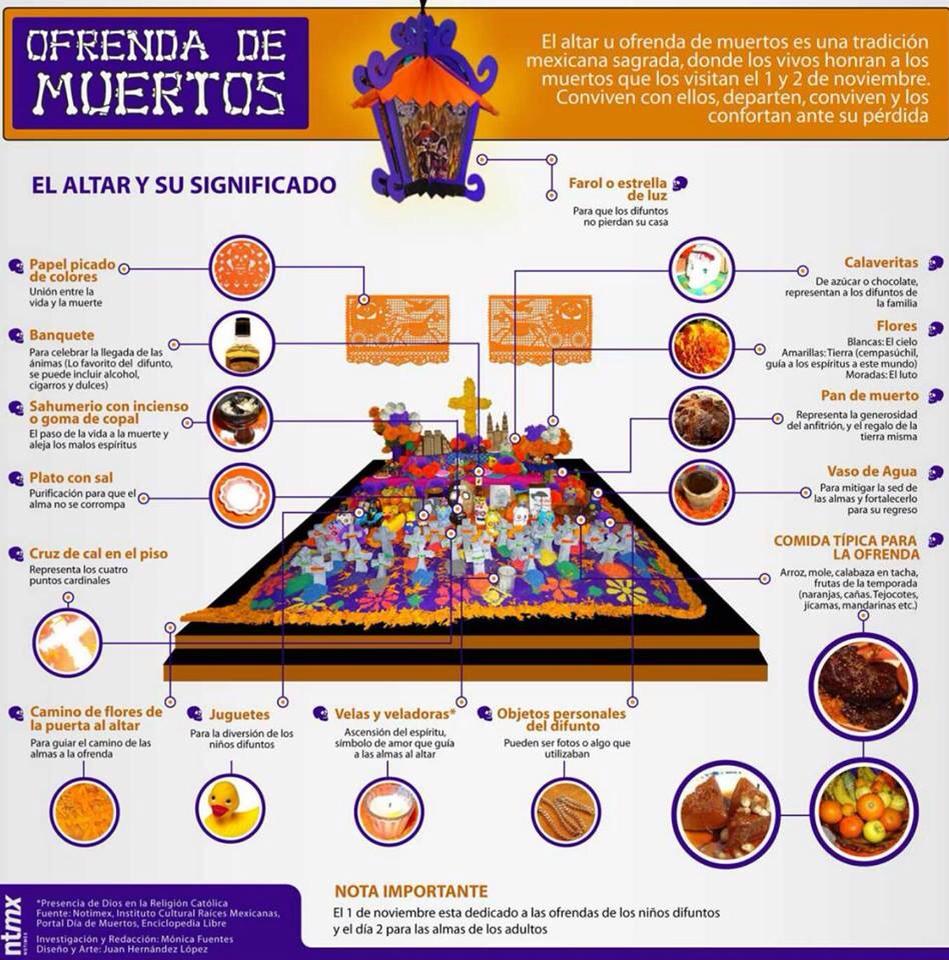
The sugar skulls are personal–you don’t buy a bag. You buy one and have a name written on its forehead. The figurines are personal–the catrinas are frolicking about in death much as the deceased did in life–drinking, dancing, singing, making music, even making love. The offerings left at the grave or incorporated into the alters are personal–favorite sweets, favorite toys, favorite drinks. The home altars are personal. Each one is constructed with the deceased in mind.
ofrenda

Perhaps it is the fact that these personal traditions are done publically that gives the impression that it is something to gape at–like one would at the zoo or a museum. Death and loss are not hidden away here. They are accepted as a part of life, not detached from it. Is this idea such a curiosity in modern times that guided tours are needed?
pan de muerto

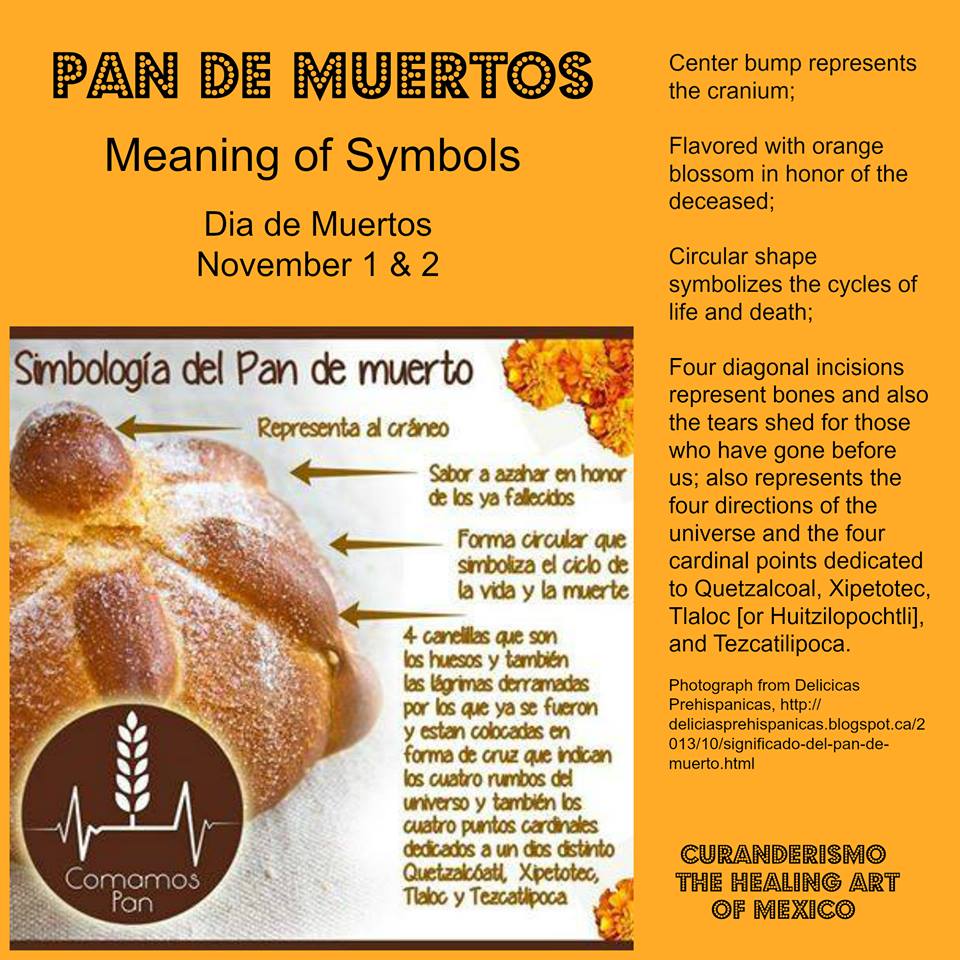
The rituals of El Dia de Los Muertos bring comfort to the living. The altar or ofrenda is constructed just so. The days of remembrance are sacred. But times are changing….

The school board waited until the last possible moment to authorize the day free from classes. The official calendar has November 2 listed as a school day, while November 16 is a non-school day for El Buen Fin, in some effort to compete with the US’s Black Friday. What does that teach the children about the value of tradition?

This year at the panteon (cemetery) in Moroleon there was a sign telling visitors to denunciar (report) people stealing from the graves. What do they steal? Flowers? Children’s toys? A bottle of coke? Who would take these things? For what purpose? Has it really come down to a culture that steals from the dead rather than honors their memories?

Some larger towns and cities now provide parades, contests, theatrical presentations, mass-produced foodstuff, and trinkets. Wal-mart even offers a Halloween/Day of the Dead mixed selection for your buying pleasure. This tradition that in 2003 was named as an Intangible Cultural Heritage of Humanity is now up for sale.
wpid-cam03982-1.jpg

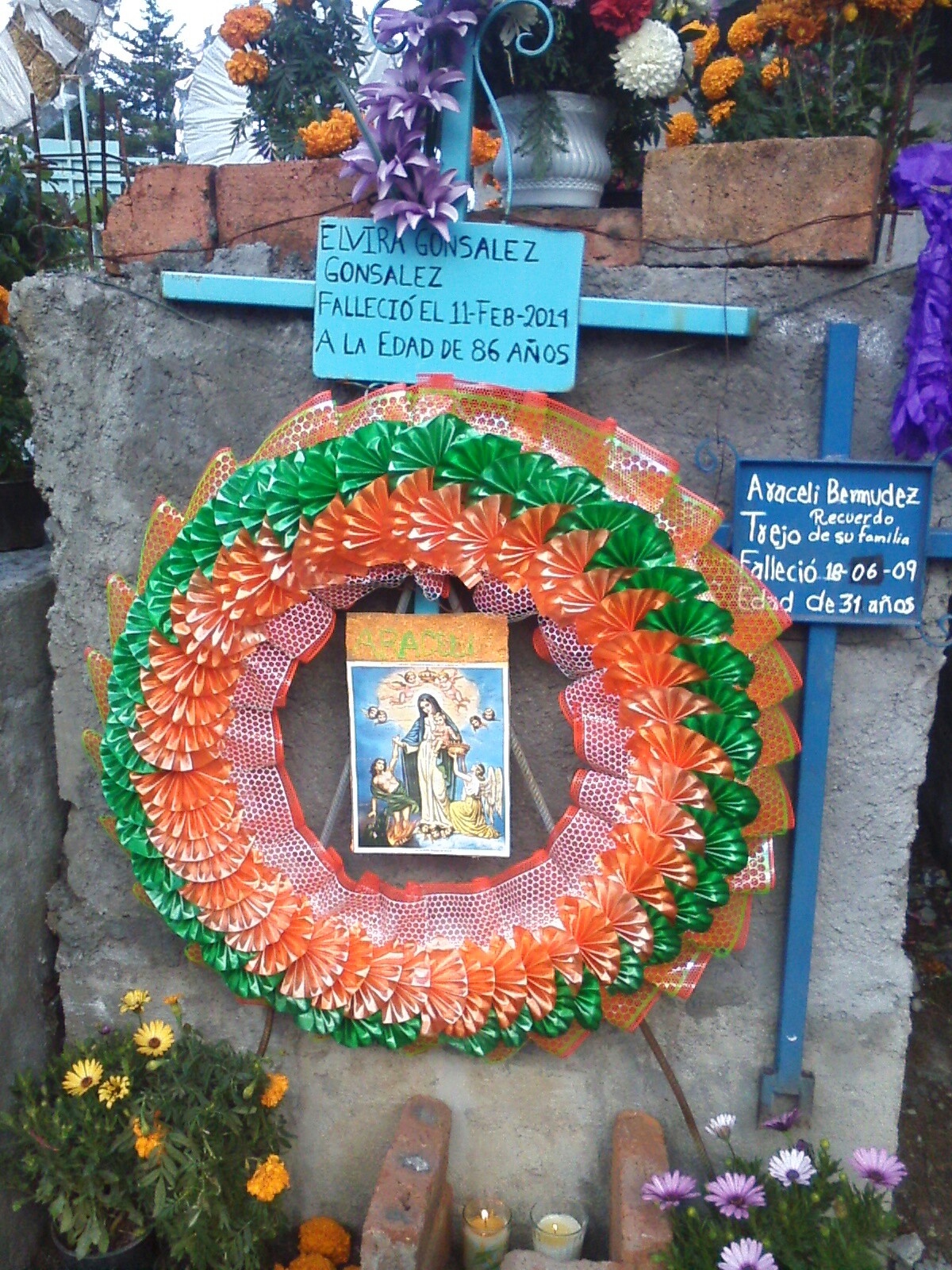
But for us, the ritual that is El Dia de Los Muertos remains personal. It reminds us that those that have preceded us in death remain part of our present lives. They helped shaped who we are today.  It isn’t a fascination with death.  It isn’t an obsession with death.  It’s an acknowledgment of death and a celebration of life.

SOTBS Blog Hop Op1Sq

    Have a Day of the Dead themed blog post? Link it up here!  

An InLinkz Link-up 

disclosure

17 Comments

Filed under Carnival posts, Cultural Challenges, Death and all its trappings, Mexican Holidays, Religion

Playing Tourist–Guanajuato, Guanajuato

Every now and then we have a chance between disasters to have a mini-vacation or two. Unfortunately, they never seem to be as relaxing as we would like.

gto

Guanajuato, Guanajuato

Some time ago, we had some business to complete in Guanajuato, Guanajuato. Our business was done early, and we had the whole day free. So we pulled over to this side-of-the-road tourist booth to get the grand tour. We followed the guy into town to a parking garage where we could leave the truck and hopped in a minivan with about 10 other people, all Mexicans (except for me) strangely enough.

tourists

Tourists!

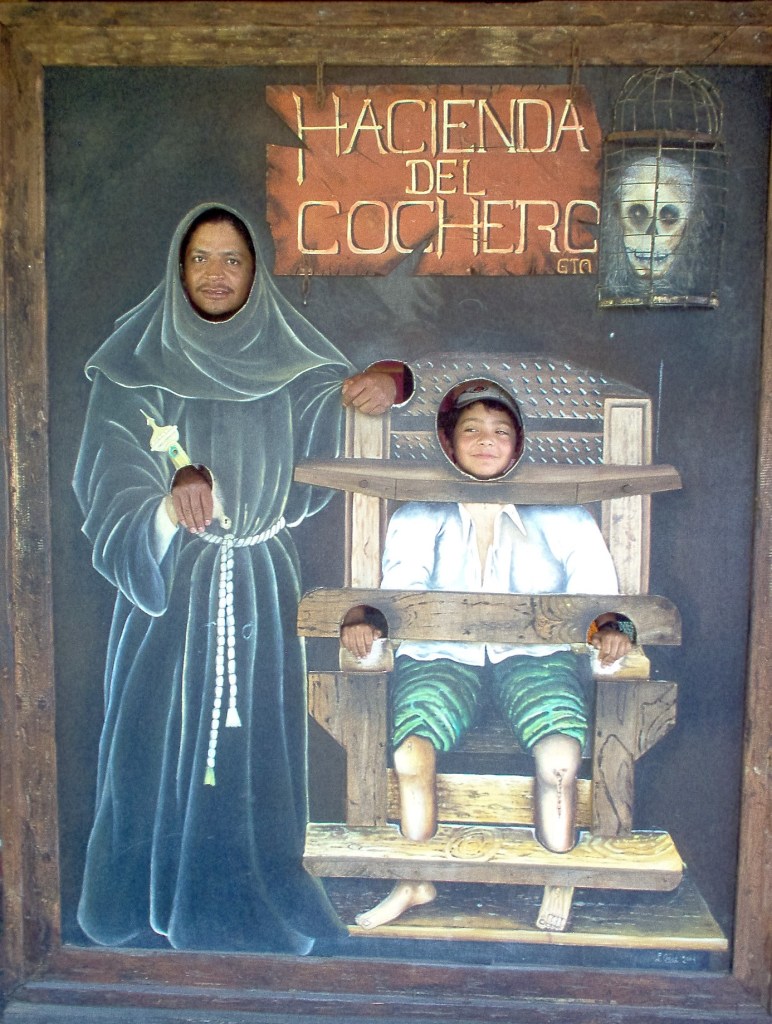
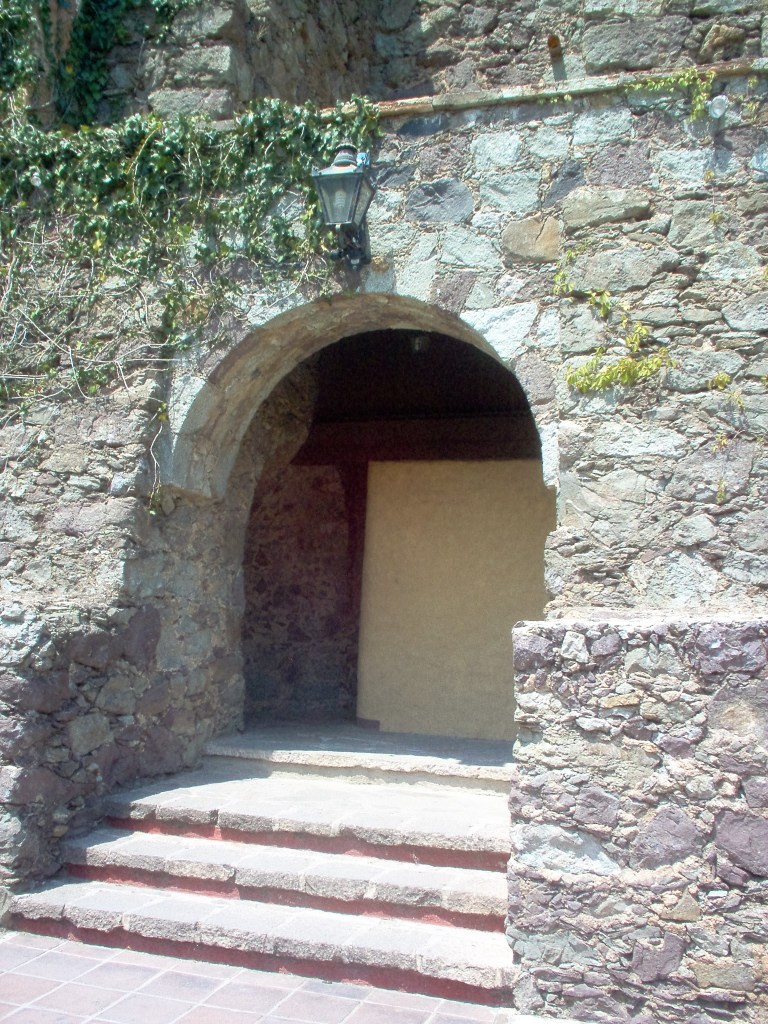
Our first stop was the Museo Ex-Hacienda del Cochero built in the late 1600s. It seemed mild enough from the outside. However, we were in for a surprise. Our guide, dressed in monk robes, led us from a beautiful garden to the dungeon to see the devices the Spanish Inquisition used to torture infidels, indigenous, political dissenters and anybody else that was in need of torture.

torture

Chained to the wall!

We saw iron maidens, chastity belts, guillotines, garrotes, hanging cages, the rack, and even a person’s remains that had been walled up alive. Our guide explained that some of the mummified remains (I wasn’t sure here if these were really mummified remains or just props) were identifiable as witches because of the red skirt and artifacts they were buried with. There was even a graveyard in the back. I guess they had to put the bodies somewhere. All this torturing supposedly went on without the neighbors knowing anything about it for years due to the thickness of the stone walls.

thick walls

The walls were 2-3 feet thick and kept the screams from bothering the neighbors.

So we were a bit creeped out by that, but surely the next stop would be better.

mummy

Yep, it’s a real mummy.

Nope–we headed to the Museo de las Momias de Guanajuato. Yep, mummies. Lines and rows of naked, crumbling mummies. It seems between 1865 and 1958, the local government required relatives of interred patrons to pay a tax to provide maintenance for the tombs. Those who had no family members, or whose family members did not pay the tax were dug up. The grave diggers discovered that the bodies had been naturally mummified due to the unique soil composition of the area. They started charging a few pesos for entrance into the shed where the bodies were stored. Eventually, the present museum was constructed.

So basically, it was horrible. The clothes had been cut off most of the mummies to cut down on the stench–although most still had their shoes on. There was a horrible section of infant corpses and the mother and child buried together after dying in childbirth, and the woman whose final resting position gave rise to the speculation that she had been buried alive. And did I mention the rows of glass cases with the naked men and women left without a shred of dignity between them?

outside mine

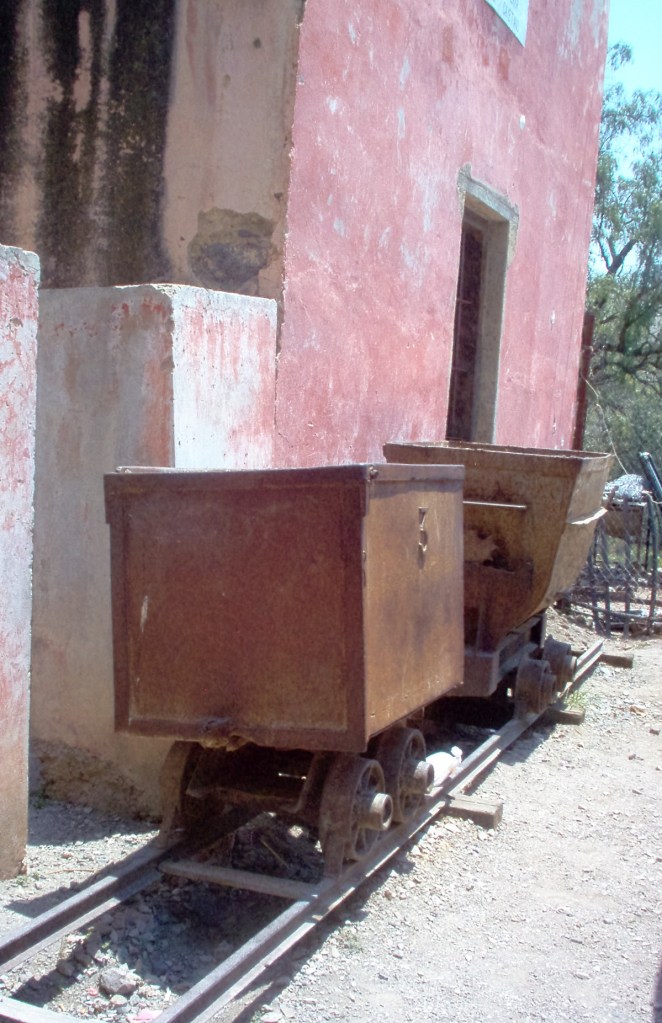
Outside the mine in GTO.

We hurried through that museum and waited outside with the tour van driver. Next stop, the San Ramon Boca Minas, silver mines where the Spanish exploited the indigenous men, women, and children for private gain! By this time, we were out of money, so couldn’t go on the tour, which was a disappointment as it seemed the only one worth taking.

cheesy smiles

Outside the sweet shop.

The tour van also took us to a regional sweet shop and an artesian store, which would have been more exciting for us if we had any funds to purchase anything. After all, each museum was about 35 pesos, plus the tip for the tour guide and the bus guide and the parking garage where we left the truck. It added up. We did take a picture or two though as mementos.

pipila

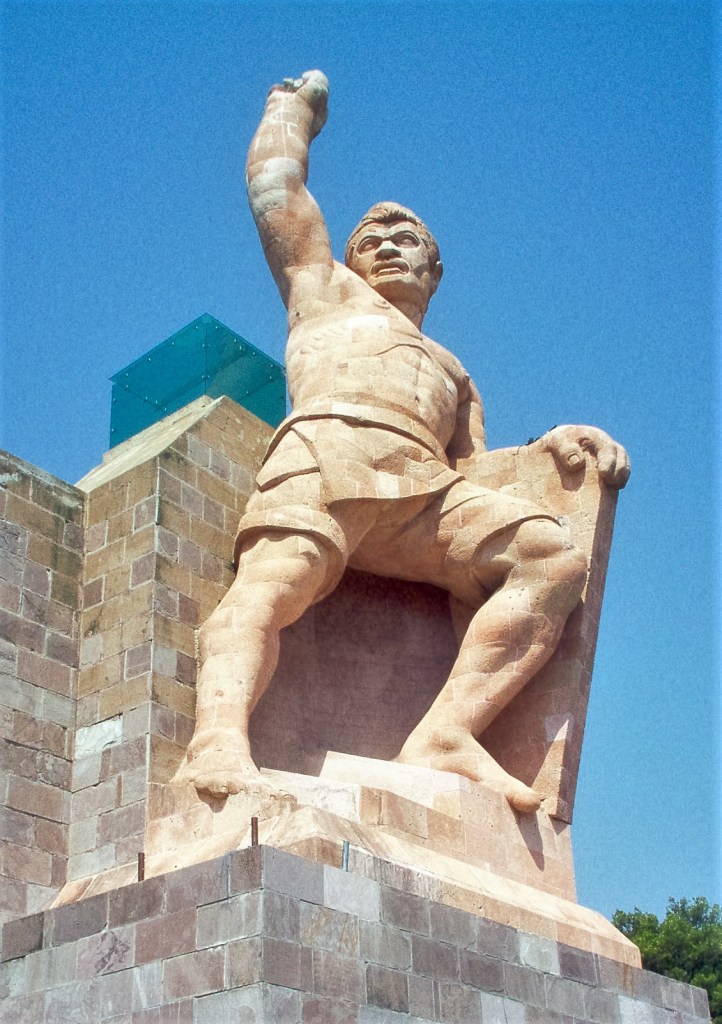
Pipila

The driving tour also took us past the giant statue of El Pipila. This statue was in honor of Juan Jose de los Reyes Martinez Amaro. He was a miner who became a revolutionary hero when he carried a giant stone on his back to protect him from musket fire and used a tarred torch to set fire to the door of the granary known as the Alhondiga de Granaditas. Once the door was destroyed, the rebels entered the storehouse and killed every single man, woman, and child who had taken refuge there. This occurred on September 28, 1810.

heads

Alhondiga de Granaditas

We were also driven past said building where the blood from the massacre could still be seen as late as 1906 on the pillars and main staircase. The morbid history of this building did not end there. The revolutionary leaders Miguel Hidalgo, Ignacio Allende, Juan Aldama and Jose Mariano Jimenez, were executed by the Spanish firing squad on July 30, 1811, and their heads hung on the four corners of the Alhondiga de Granaditas for 10 years, the time it took for Mexico to finally win its independence from Spain. In 1867, the Alhondiga de Granaditas was converted into a prison by the reigning French emperor Maximilian. It remained a prison until it was converted into a museum in 1958.

gto 1callejon

Thus ended the tour. This wasn’t the Guanajuato I remembered! I had visited the city as an exchange student some years ago and was charmed by the picturesque architecture and romantic stories like the Callejon del Beso. I even took the walking tour of the callejones (alleys) carrying a jug of sangria and listening to mariachis. After all, Guanajuato is a UNESCO World Heritage Site! I guess it just proves the truth that for every beauty there is an equally ugly underside.

student singers

Student singers

charming gto

Charming Gto.

**********************


disclosure

4 Comments

Filed under Mexican Cultural Stories, Mexican Holidays, Tourist Sites in Mexico

Attending a quinceañera

at the party

My son and his group of galanes (young men).

My son was recently invited to his first quinceañera party. What a milestone! While my son was not a chambelan (one of the male escorts) at this particular event, I’m sure that it won’t be long before he is requested to act as one.

His invitation spawned a flurry of activity on my part. I had no idea what he should wear and the uncertainty of whether he should bring a gift or not. So I went asking about. Since he was not a chambelan, he wouldn’t need a formal suit. However, church clothes would be appropriate. Well, he had grown out of his dress pants, so off to the store we went. We had to shop in the men’s section! Where did my little boy go? A pair of sensible black pants were purchased. Then he needed a shirt. After several options had been discarded, he picked the black shirt with striped sleeves. I think it was a good buy because he’ll be able to change it up a bit for future quinceañera parties (wear a vest, tie, open over another shirt, etc.Spanish young). His school shoes and socks were just fine–but he did need a belt. So we spent about 500 pesos on his outfit alone. Then there was the gift, a simple necklace, and the gift bag–so another 100 pesos or so.

quience lis

My beautiful niece in her quinceañera dress.

Traditionally, the quinceañera festival was a coming oyoung Spanish ladies. This custom was brought over to Mexico after the conquest and remains an integral part of a Mexican girl’s life. The traditional quinceañera gathering would have been the first time she was presented formally to the community as a woman, not a child. Her chambelanes (escorts) would have been eligible young men of her social class from which she would choose from and marry within the year, more often than not. While it’s less common these days for girls to marry before they turn 16, brides of 17 or 18 are fairly common, especially in the more rural areas.

I’ve had the honor of attending a quinceañera here in Mexico and was amazed at the ritualization of the event. Of course, I attended with my mother-in-law and that made the event even more memorable as you will see.

The day of the quinceañera, there is a formal mass in the big church downtown. I’ve been in several houses where a wall-sized picture of the quinceañera before the altar is displayed. It’s quite a thing to behold. After the mass (and subsequent picture taking session) there is a social event usually hosted in a rented salon (hall). The wealthier the family, the more lavish the event.

The guests are invited to arrive before the quinceañera so that she and her “court” can make a grand entrance. The first dance after the entrance is between the quinceañera and her father. Much like a wedding reception, there is symbolic of the passing of custody from father to the new “man” in her life as the father passes his daughter to her escort for the second dance. Following the escort dance, there are several other choreographed dances, performed by the belle of the ball and her court, before the floor is opened up to the general public. I was a bit surprised that the main song was  Total Eclipse of the Heart. I wasn’t expecting an English theme song for such a traditional event, much less this particular one, which seemed to me inappropriate for the innocence of a young girl’s coming out party (although it happens to be one of my favorite songs ever). But whatever floats your boat I suppose.

While these dances are being performed, the invitees are being served food. The standard fare in our area is carnitas (fried pork) which is not one of my favorites. At the quinceañera that I attended, my mother-in-law asked for several plates to go. Then she had another waiter bring her plates for now. Before too long, she had a pile of food in front of her stacked nearly nose high. She was ready to leave before the dances were even finished, and she asked for a two-liter bottle of soda to go. Then, of course, she needed a bag for all her foodstuff.

I was pretty embarrassed by this point. I come from an area where the leftover food is left to the host, not divvied up in doggie bags among the guests. Oh, but it didn’t stop there. She snatched up the tortilla basket, napkin and all–AND the decorative centerpiece from the table. I guess my surprise (or horror) showed on my face because she told me matter-of-factly that the hostess told her she could have one of the decorations. I imagine the hostess meant after the party was over though. Then my mother-in-law asked if I wanted one, thinking maybe I was jealous. No thank you.

This seems to be a fairly common practice, as ill-mannered as it seemed to me. As we were leaving the party, I overheard several older ladies debating which adorno (decoration) they were going to take when they left. My sister-in-law L. also has a number of centerpieces she took as momentos of various quinceañera and wedding receptions littered about her house. As she doesn’t have any tables, they sit on the floor in the corners of various rooms, gathering dust.

I refused to help my mother-in-law with her stolen goods and walked on ahead of her in some attempt to distance myself from her and her ill-gotten gains. I declined additional invitations she extended to accompany her to other events (well except for that party crashing Christmas posadas in December) after this.

My son had a far better time. He told me it was medium-fun. The music was loud. He danced with a girl. He received two compliments on his outfit (from girls) and was served a quarter glass of margarita, although the other boys were not. He thinks it’s because he has a mustache and the waiter thought him older than 13, which is probably true. They had tacos and were pretty good.

We picked him up at 11 pm, which was early for this type of event, but I reminded him he is only 13 and there is no reason he needed to be out later than that. I’m sure this is just the first of many such events in my son’s life!

********************************************

disclosure

7 Comments

Filed under Cultural Challenges, Mexican Holidays, Parenting Challenges and Cultural Norms