Category Archives: Mexican Food and Drink

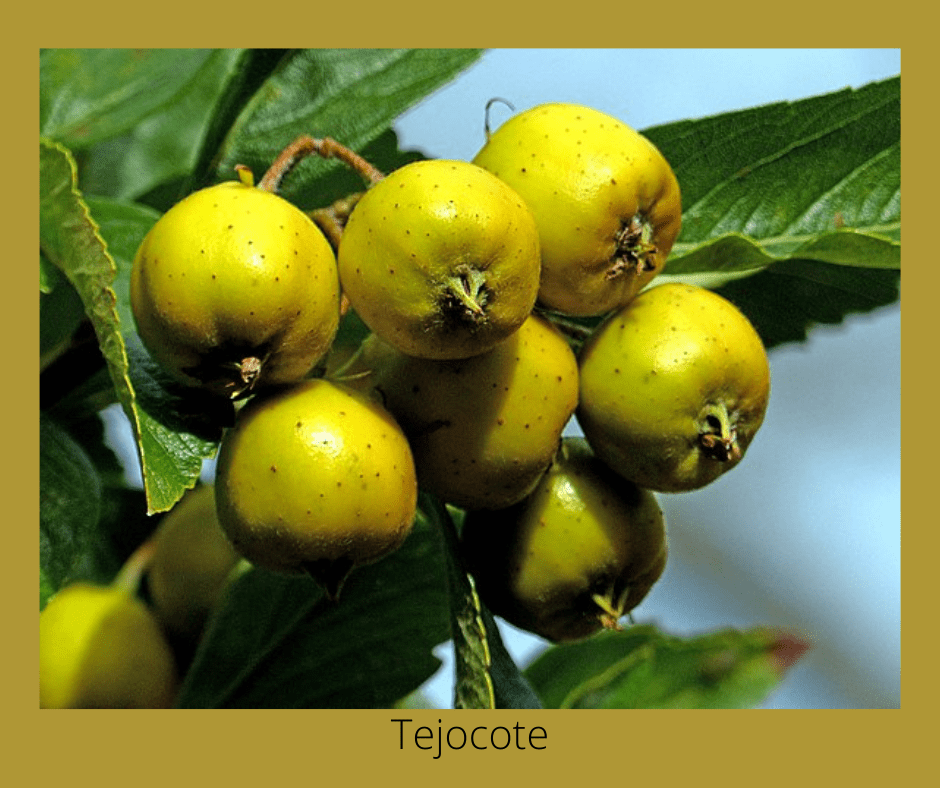
Natural Healing — Tejocote

Photo credit: Bernard Spragg. NZ

Tejocote (Crataegus mexicana) is Mexican hawthorn and is found in the mountainous regions of central Mexico. There are some herbal guides that list this tree as Crataegus pubescens Steud, but it is not considered a synonym according to botanists. However, Crataegus gracilior J.B.Phipps and Crataegus pubescens Steud are considered the same variety of hawthorn also native to Mexico. Crataegus oxyacantha is yet another hawthorn variety known as el espino blanco, espino albar, or majuelo. It is estimated that there are at least 13 native Mexican hawthorn species. 

In Mexico, these fruit-bearing species tend to be used interchangeably as medicine, although only Crataegus mexicana is known as tejocote. This name is the Spanishized version of the Nahuatl word texocotl, which means “sour stone fruit” and refers to the fact that the small apple-like fruit typically contains three or more pits and is sour when eaten raw. Other names include kanal chiste in Chiapas, npeni in otomí, and karhasi in Purhépecha.

In general, the leaves, seeds, flowers, fruit, bark, and roots of the Crataegus varieties found in Mexico are used to treat heart disease, hypertension, diabetes, and respiratory diseases. A root infusion is used as a diuretic and diarrhea remedy. An infusion made from the leaves and flowers to treat intestinal parasites

Interestingly, in the state of Michoacán, tejocote is given to children for “chipil.” This is a condition a child gets when his or her mother is pregnant. It is characterized by excessive crying, loss of appetite, and slight yellowing of the skin. A mild tea made from the leaves is made to help alleviate the condition which disappears on its own when the sibling is born. Also, in Michoacán, adult-onset diabetes is treated with a tea made from the leaves, roots, or bark.  

Tejocote is enjoyed raw, cooked, canned, in liquors, traditional sweets, jams, and preserves. It’s a main ingredient in ponche Navideño (Christmas punch). It is also prominent in Día de Muertos altar offerings. 

For respiratory issues, including bronchitis and cough, tejocote fruit is boiled and then eaten. An infusion made from the leaves and bark is prescribed for stomach issues. Another diabetes remedy calls for crushing the root, then boiling it, after which it is left to steep in aguardiente (alcohol) and drunk. Tea made from the roots or leaves is drunk three times a day for kidney problems. 

Alipotec is a diet supplement available in many Spanish-speaking countries (and Amazon) that reportedly contains tejocote root. Because of the side effects users were experiencing, several scientists decided to look into its composition. What they found was that there was no evidence of tejocote in the capsules. Instead, they found yellow oleander (Cascabela thevetia), which is poisonous. Tejocote root is also mildly toxic and can cause respiratory depression and irregular heartbeat. 

The Crataegus species studied have been found to contain quercetin which has antioxidant and anti-inflammatory effects, kills cancer cells, controls blood sugar, and helps prevent heart disease. Crataegus mexicana is antioxidant, toxic to liver flukes, and immunostimulatory. The leaves and stems from the Crataegus gracilior J. B. Phipps are anticancer, and the flowers, leaves, and fruit are potent vasorelaxants. It is also hyperglycemic, supporting its traditional use in the treatment of diabetes. Crataegus oxyacantha leaf and bark extracts have also been shown to be effective in treating cardiovascular diseases.

Dulce de Tejocote for Cough

  • 8 tejocotes (Crataegus mexicana)
  • 1 pinocillo cone (or 3/4 cup packed brown sugar)
  • 1 tablespoon vainilla extract (Vanilla planifolia)
  • 1 stick of canela (Cinnamomum zeylanicum)

Wash the tejocotes. Bring 1 liter of water to a boil. Add the tejocotes and boil for 3 minutes. Remove the tejocotes and place them in cold water. The skins will pucker so that you can peel them. Add the piloncillo cone, canela, vainilla, and peeled tejocotes back to the pot. Boil for 40 minutes, stirring continuously. Allow to cool for 2 hours before serving. 

***

Interested in natural remedies? Uncover herbal remedies from traditional Mexican sources for healing and wellness in the Exploring Traditional Herbal Remedies in Mexico series.

Leave a comment

Filed under Health, Mexican Food and Drink, Native fauna and flora, Natural Healing

Natural Healing — Café

Photo credit: Noyolcont

I don’t know about you, but there’s nothing better than Café de olla in the morning! But did you know coffee is medicinal as well? WhooHoo!

The genus Coffea is made up of at least 80 species and originated in Africa. Café arrived in Mexico in the late 1700s. Nowadays, Mexico is one of the world’s largest exporters of organic-certified coffee, mostly grown by small cooperatives of indigenous laborers. About 90% comes from the states of Chiapas, Veracruz, Puebla, and Oaxaca. 

The majority of the coffee produced in the country is the shade-grown Arabica variety. Robusta only makes up about 4% of the total coffee produced. At least three varieties have been given the denominaciones de origen mexicanas from the el Instituto Mexicano de la Propiedad Industrial (IMPI), meaning they are recognized as being an original product of Mexico. These are the hybrid Garnica, its mutation Garien, and Oro Azteca, another hybrid. 

In Mexican traditional medicine, coffee is prescribed for la gripa (cold), fever, headache, to improve digestion, as a mental stimulant, and increase a mother’s milk production. However, generally, coffee is not recommended for nursing mothers as the caffeine can be passed to the baby through the milk, and then the baby is awake all night! 

Five grams of unroasted coffee beans are boiled in ½ liter of water for fever reduction. Add the juice from one limón (Citrus aurantifolia) and sweeten it with miel (honey). To treat a headache, coffee grounds and manteca (lard) are spread on leaves of the maravilla plant (Mirabilis jalapa) and then applied to the temples. 

Regular café consumption has been shown to lower the risk of type 2 diabetes, kidney, liver, premenopausal breast, and colon cancers, and chronic liver disease. The seeds are antioxidant, hepatoprotective, antiviral, antifungal, anti-ulcer, antibacterial, and anti-inflammatory. They also have hypolipidemic effects. 

One cup of coffee has 1 mg of vitamin PP which lowers cholesterol, eases arthritis, and boosts brain function. Three cups provide up to 50% of the daily requirement. Coffea also contains mangiferin which has anti-inflammatory, antidiabetic, antihyperlipidemic, and neuroprotective activities.

Topically, seed extracts reduce fine lines, wrinkles, and pigmentation discoloration. The caffeine content creates diuretic and temporary hypertensive effects. It also increases stomach acid and stimulates kidney and liver function. 

Coffee seeds can reduce gallbladder disorders and may be beneficial in reducing acute gout inflammation. Roasted coffee brews demonstrate a stronger hepatoprotective effect when compared to green coffee brews. Some studies suggest that regular coffee consumption can reduce the risk of developing Parkinson’s disease by stimulating the central nervous system. In small concentrations, coffee may aid in sleeping and reduce the intensity of migraines when used in conjunction with ergotamine. As a stimulant, it can increase blood pressure, body temperature, blood circulation, and respiratory processes. 

If you’d like to incorporate some coffee into your morning, definitely try Café de Olla.

Café de Olla

  • 2 piloncillo cones (brown sugar)
  • 1 stick of canela (Cinnamomum Zeylanicum)
  • 100 grams of ground café (Coffea)

Boil 2 liters of water with the canela and piloncillo cones. Boil until the cones dissolve. Then add the coffee grounds, stir, and remove from heat. Cover and allow to steep between 5-10 minutes, depending on how strong you like your coffee. Strain and serve.

Traditionally, this drink is made in a clay pot, una olla de barro, and served in clay mugs.

***

Interested in natural remedies? Uncover herbal remedies from traditional Mexican sources for healing and wellness in the Exploring Traditional Herbal Remedies in Mexico series.

Leave a comment

Filed under Health, Mexican Food and Drink, Natural Healing

Natural Healing — Jitomate

Photo credit: AnRo0002

The term used in Mexico for these red, delicious fruits is jitomate (Solanum lycopersicum) from the Nahuatl work xitomatl. Tomate is more commonly used for the green husked fruit tomatillo (Physalis philadelphica). Other names include Aadi-maxi in Otomí, bachuga in Cuicatleca, bti’ux in Zapoteca, and ts’ulub’p’ak in Maya. Botanically, the jitomate is a fruit rather than a vegetable because it contains the seeds of the plant. Nutritionists, on the other hand, classify them as vegetables based its low fructose content. 

The original progenerate Solanum pimpinellifolium was native to Ecuador and Peru with fruits the size of peas. The indigenous people, including the Aztecs, worked at cultivating the plant until it became a staple food source. In fact, Bernardino de Sahagún, stated there were a number of varieties he discovered in the Tenochtitlán market including “ large tomatoes, small tomatoes, leaf tomatoes, sweet tomatoes, large serpent tomatoes, nipple-shaped tomatoes,” and tomatoes of all colors from the brightest red to the deepest yellow.”

Hernán Cortés himself may have taken the first jitomate (a small yellow one) to Spain in 1521.

The Spanish introduced the jitomate to the rest of Europe where it was initially viewed with suspicion since it is part of the nightshade family and therefore related to belladonna, a known poison. The leaves and green fruit do contain tomatine, which is toxic, but the ripe fruit does not. 

Linnaeus classified the plant as Solanum lycopersicum in 1753. However, in 1768, Philip Miller moved the plant into its own genus Lycopersicon esculentum. Genetic study supports Linnaeus’s classification although some herbals and scientific papers that I consulted in my research still use Miller’s classification.

The jitomate is full of goodness. It is anti-cancer, antimicrobial, antimutagenic, anti-inflammatory, anti-neurodegenerative, and anti-platelet. It has antioxidant and cardioprotective properties. Recent studies have found that its antimicrobial activity makes it an effective treatment for symptoms of coronavirus as it mitigates acute lung inflammation and damage. 

Traditionally, jitomate has been used medicinally as a treatment for diabetes, cancer, asthma, cataracts, and heart disease in Mexico. It’s considered a “cold” food item and used to treat “hot” infirmities. 

Juice from a ripe jitomate is squeezed in the eye infected with conjunctivitis 3 to 6 times a day. A mouthwash for oral thrush is made from 20 albahaca (Ocimum basilicum) leaves, 1 jitomate leaf, and the juice from a cebolla (Allium cepa) boiled in 1 liter of water.

A jitomate leaf is applied to cold sores. For fever, two tomatoes are boiled then wrapped as a plaster on the feet and left on overnight. The leaves are prepared in an infusion for a wound wash. The fruit pulp is also used as a facial tonic.

***

Interested in natural remedies? Uncover herbal remedies from traditional Mexican sources for healing and wellness in the Exploring Traditional Herbal Remedies in Mexico series.

Leave a comment

Filed under Alternative Farming, Health, Mexican Food and Drink, Native fauna and flora, Natural Healing