Category Archives: Health

Mexico’s Seguro Popular–Back for more–Round 1

Blood, feces and urine accepted here!

Blood, feces and urine accepted here!

Six months after my last doctor’s appointment, it was time for another blood workup for hypothyroidism. That’s what I was scheduled for, that’s what I did, even though I had been out of medication for nearly a month and felt awful!

So Sunday morning, I was up and ready to go at dawn, even though the office wouldn’t open until 8 a.m., it being Sunday and all. Having learned from experience that it is a first come, first serve basis for EVERYTHING in México. I marched myself in, without having eaten or had my morning cup of coffee like a good girl, asked who was the last person to arrive, took mental note that I followed the guy with the blue cachucha (baseball cap) and sat down to wait.

At 7:40 a nursey-type person came into the waiting room and told us that we needed receipts from the payments office before we had our blood draws. What? I sat and pondered that a moment and then asked the lady next to me. She showed me a yellow receipt and said I could get it from the office behind us without much hassle. Well, since I didn’t have the receipt, it was a hassle. I had to get up and get in line at the window for the receipt along with about 20 other people.

The lab opened around 8:20 and those with receipts lined up. The payment office was still closed. I lost my place behind the blue cachucha (hat). The security guard kept telling us we were blocking the aisle and that important people couldn’t pass. So someone asked when the payment office would open so that we could get out of the hallway. The guard said sometime between 8:00 and 9:00 a.m. on Sundays. Gee thanks!

Some of those in the receipt line tried to hop back over to the blood draw line but were sent back, tails between their legs. Now it was 8:40 and the lab started calling out patient names and here I was still in the dratted receipt line. Finally, someone arrived, but didn’t open the window until he finished his morning coffee and bolillo (bread). So we waited.

The man behind me commented that it seems the whole purpose of this process was to get us to lose patience and go to a private doctor for our health needs since we (nearly all of us line) had Seguro Popular no contributivo (no co-payment public health insurance) and therefore, there wasn’t a reason to check to make sure our “insurance” would cover the lab work and get this receipt. I commented that if I had the money to go to a private doctor, I certainly would not be wasting my time standing here.

So we continued to wait. Eventually, it was my turn. I handed the clerk my Seguro Popular paper and the lab work authorized by Dr. J. He looked at the paper and looked back at me and determined I would be the spouse, not the primary beneficiary, nor the child. Good thinking on his part. Then we went through the “my last name is F not E and E is my second name” rigamarole. He typed it in and printed out a yellow receipt for me saying that Seguro Popular would cover the lab work.

So I went to stand in the lab work line, which was much shorter now. When it was my turn at the window, I was pleased to discover I was nose level with the feces and urine samples lined up there. We went through the “my last name is F not E and E is my second name” rigamarole again here. The lab tech guy gave me a paper that didn’t have a date stamped to pick up the results but said that I should come back in 15-20 days for them since the TSH test was “special”. I pointed out that my doctor’s appointment was in 2 weeks and he said that maybe it would be in before then. Okie Dokie.

Then I sat down near the other door to wait to be called.

Meanwhile, my long-suffering husband had been waiting outside. He snuck in, past a distracted security guard, to see what the hold up was. I gave him the Seguro Popular paper and his little pink cita (appointment) book and told him to get himself an appointment with the surgeon who did his hernia operation a couple years ago and a physical appointment for our son who needed a medical release form to start secondary school in August. My husband trotted over to archivos (archives) to do just that.

Blood draws done assembly line style!

Blood draws done assembly line style!

All good things come to those who wait and eventually I had waited enough to be called into the blood drawing hallway. The normal seats were taken so I was herded to the way back part next to the freezer full of samples. The guy looked at my arm and seemed taken back. He squeezed and prodded and couldn’t seem to locate a vein he liked. He asked where blood was usually taken–well my arm obviously. Did he think the jugular would be a better spot? More poking and prodding. He wrapped a rubber glove around my upper arm and jammed that needle in. Then flipped off the rubber glove tie which smacked me in the face. I had a bruise for a week from that prick.

He asked for the labels and I told him I didn’t have any and that the vial should be marked “especial” which he did. Then I was free to go.

Cruz Roja in Moroleon

Cruz Roja in Moroleon

My husband also accomplished his mission and had an appointment the following week with the surgeon, however, archives said our son’s physical would need to be done at CAISES. (See Seguro Popular –getting started )That did not happen. We took him to the Cruz Roja, paid $100 for the physical and $50 for the blood type analysis instead. The process took less than 15 minutes. The amount of time we saved was well worth the money.

*******************************

disclosure

2 Comments

Filed under Health

Natural Healing–Maguey AKA Agave

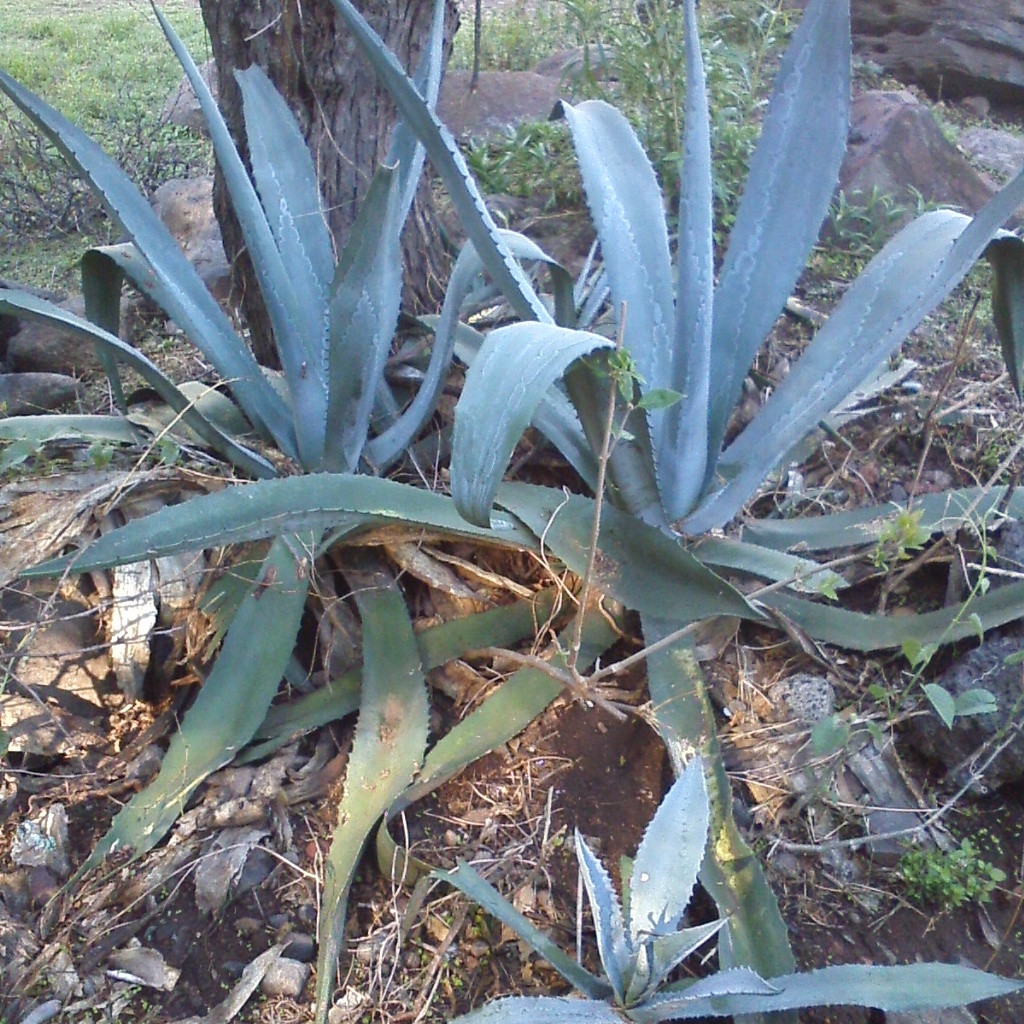
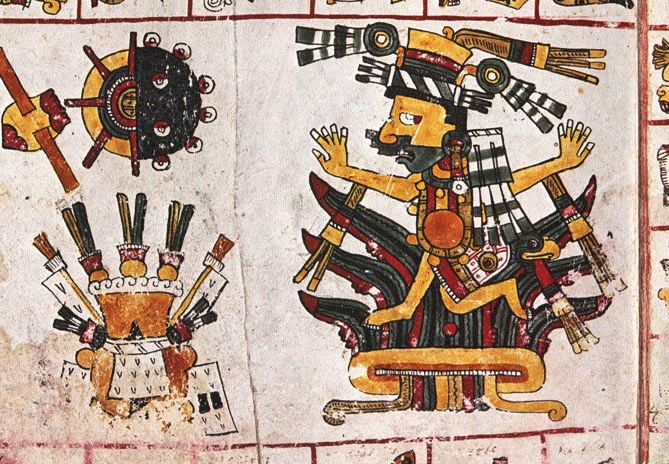
maguey Since time unknown, the maguey or agave plant has been used by the people in Mexico for clothing, medicine, shelter, fuel, alcohol and tools. Fibers, called pitas, were taken from the plant and woven into cloth. Thorns were used as sewing needles. Pencas (leaves) were dried to burn as fuel or overlaid for roofing. The sap was used as a sweetener, as medicine or distilled for alcohol. The Aztecs/Mexica even had a specific patron deity for this plant, the goddess Mayahuel.
goddess Mayahuel

The goddess Mayahuel

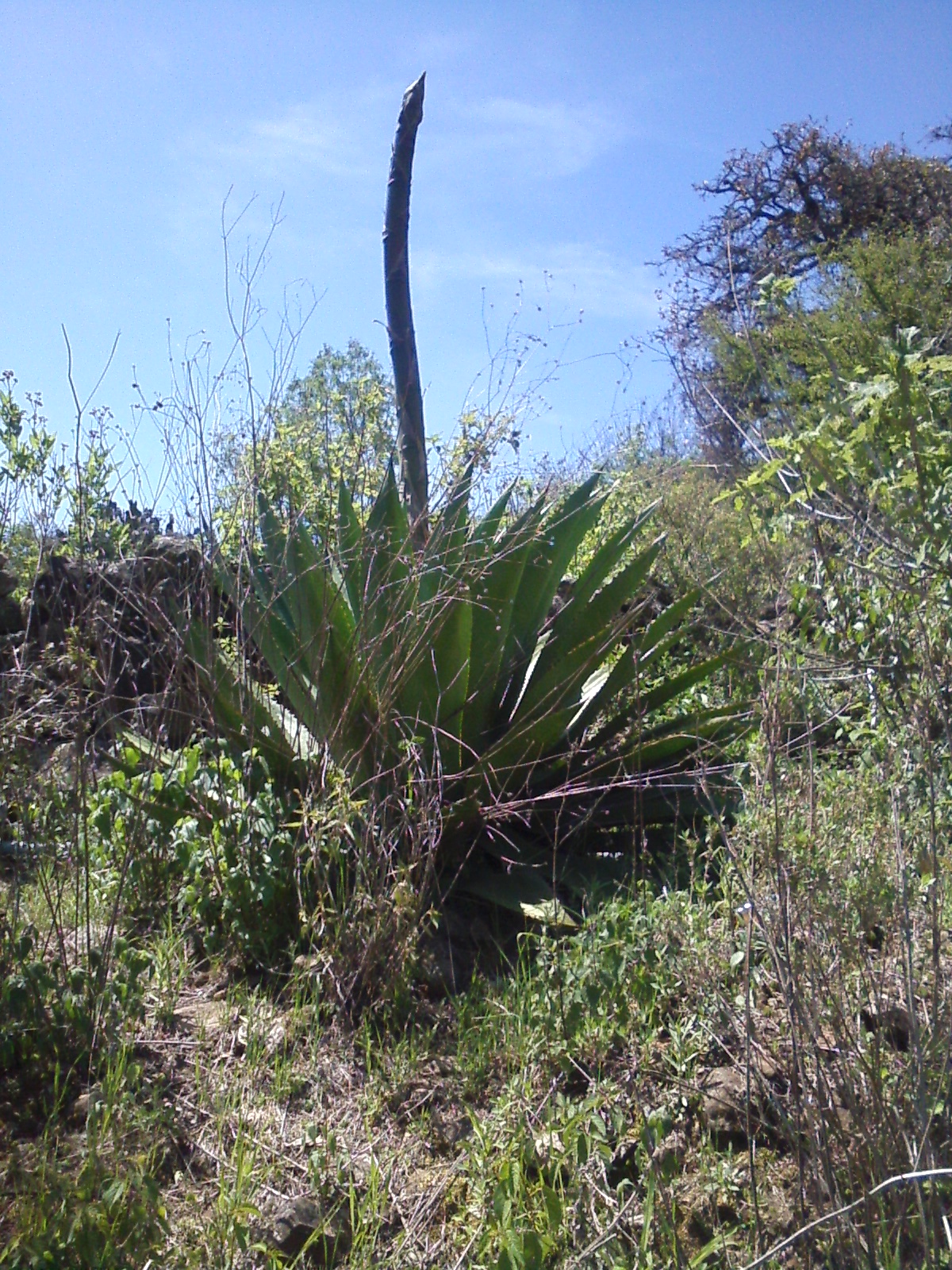
The maguey or agave plant is often mistaken for sábila (aloe vera), but is not closely related. Nor is it a cactus. The maguey can grow without irrigation and can withstand a great variation of moisture and temperature. It grows wild, but can also be cultivated.It may take 10 to 12 years for a maguey plant to be mature enough to “flower”. The “flower” is a large, obtrusive stalk that grows right from the middle of the plant. After flowering, the plant typically dies. flowering maguey To harvest, the stalk is cut before it blooms, leaving a hollow where the aguamiel (honey water) is collected. This juice can be fermented into an alcoholic drink which the Aztecs called octli, and is now called pulque. For tequila or mezcal, the sap is collected by heating the center of the plant in ovens and then distilled.
pulque god Tezcatzoncatl

The Aztec/Mexica god of pulque wine, Tezcatzoncatl.

According to my trusty source, Antiguo Recetario Medicinal Azteca, this plant is more than just making tequila or pulque. It can treat syphilis, accelerate the formation of scarring on wounds, cure gonorrhea, can be used as a strong stomach and intestine antiseptic (the sap has antibiotic properties which was also used to kill both staphylococcus aureaus and E. coli bacteria) and is useful as a laxative. Additionally, Bernardino de Sahagún attested in his book Historia General de las cosas de la Nueva España, that aguamiel was also used as a treatment for sore throats by the Aztecs.
drinking pulque

Drinking pulque.

Antiguo Recetario Medicinal Azteca suggests that for syphilis treatment, water and 10 drops of the sap from the root of the maquey should be drunk in the morning and 10 drops in the afternoon on the first day of treatment. The second day the dosage should be 20 drops and so on until 200 drops are ingested in each day. For aid in scar formation, heat the pencas (leaves) and squeeze out the juice much as you would with aloe vera. (See Animal Doctoring) The juice should be boiled with a little sugar until thickened. The salve should be placed on a cloth and tied around the wound. Gonorrhea can be treated by drinking the 1/4 cup of cooked aguamiel (maguey juice) for 15 days. For stomach and intestine cleansing, it is recommended to drink one glass of aguamiel with breakfast. While most pharmaceutical companies would poo-poo the use of maguey in treatment, these recipes have been around a long time and there may be some basis for using maguey medicinally. maguey agave We have even used the maguey penca in cooking goat. We dug a large hole and lined it with rocks which we then lined with dethorned maguey leaves. The goat was cut into pieces and put in a pot and then the hole was topped with another maguey leaf. The meat cooked, or steamed, overnight and was as tender as could be. Delicious!

**************************************************************
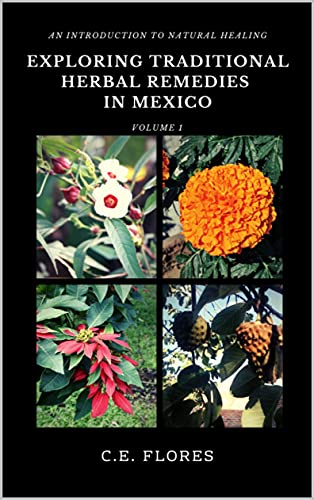
Interested in natural remedies? Uncover herbal remedies from traditional Mexican sources for healing and wellness in the Exploring Traditional Herbal Remedies in Mexico series.

7 Comments

Filed under Health, Native fauna and flora, Natural Healing, Religion

Natural Healing–Feverfew tea

feverfew

These flowers just popped up in our backyard.

With so many wildflowers growing in La Yacata, at times, I am overwhelmed with being so under informed, not being a native and all. I am sure that these plants are useful, and not just another pretty face, but it has been difficult to find anyone that knows herblore anymore. My mother was always interested in herbs and I remember drying and using chamomile flowers. For that reason, when I discovered this plant in my backyard, I thought at first it was a type of local chamomile. Locals call is manzanilla, which is chamomile. However, upon closer examination, it seemed just a little bit different than the chamomile flowers my mother dried. Although the flower was similar, it had a flat center rather than a cone shaped one and thus it was feverfew, not chamomile after all. Feverfew (Tanacetum parthenium) is also known as also known as altamisa, amargaza, amargazón, arrugas, artemisa, botón de plata, botón de plata común, camamila de los huertos, camelina de los huertos, camomila de Aragón, chapote, flor de la calentura, flor de santos, gamarza, gamaza, gamazón, hierba de altamira, hierba de Santa María, hierba santa, madrehuela doble, madrehuela olorosa, madrehuela rósea, magarsa, magarza, magarza amarilla, magarzuela, manzanilla, manzanilla botonera, manzanilla brava, manzanillo, manzanillón, margaza, matricaria, matronaria, pelitre, Santa María blanca, yerba de Santa María in Mexican Spanich and in Aztec– iztactzapotl or cochitzapotl. Even with all these names, I wasn’t able to find any information in my Aztec medicine booklets. But I was able to find a page in another of my books in my small, but oh so useful library. The name feverfew is misleading since this plant has not been shown to reduce fever. However, it has been used for centuries to prevent or reduce migraines. It also has been shown to relieve muscle spasms and can be used a mild sedative.
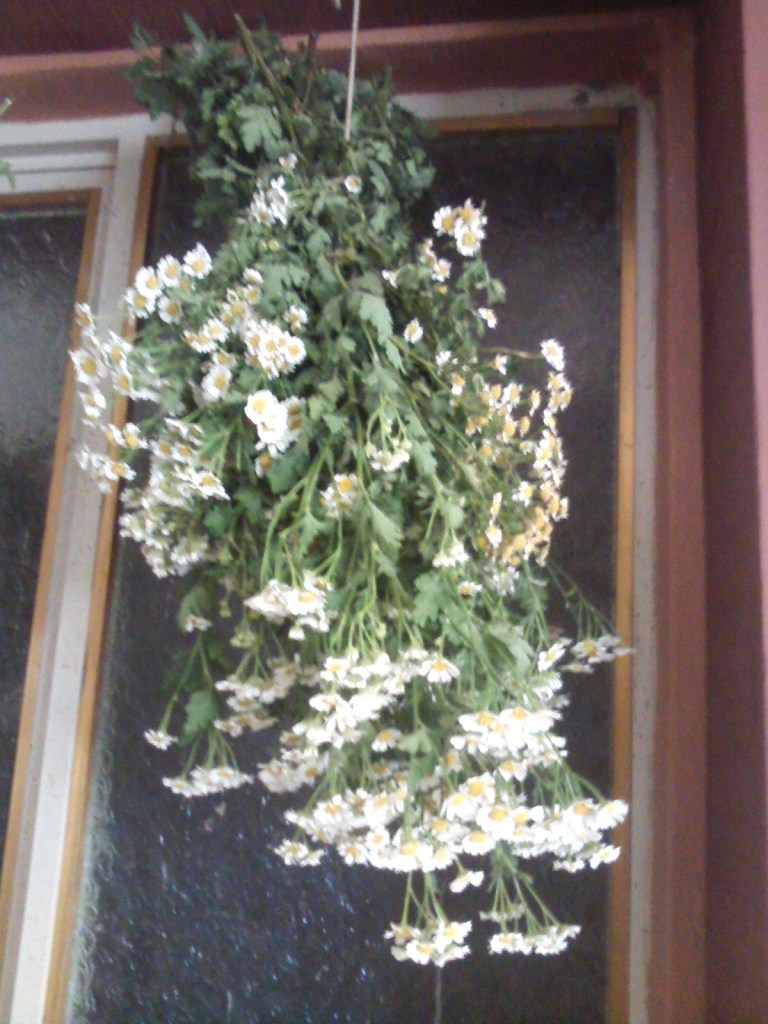
drying flowers

Cut and hung feverfew drying for tea.

When I asked around, my local sources told me this plant could be dried and made into a tea. I wasted no time in cutting and hanging. I have periodic migraines, leftover from a car accident some 20 years ago, and my husband constantly complains about hernia pain even after his operation, so I figured this was the perfect tea for us.
dry feverfew

Dried feverfew

When the plant was finally dry, I crunched the flowers and leaves, discarding the stems and roots. It had a very strong herb scent, but I was bound and determined to make a tea. I admit the first cup of tea was so very strong that we had to choke it down. (I made everybody drink a cup). So the next cup, I tried adding local organic honey and our own organic raw goat milk to try and cut the flavor. We decided this tea wasn’t a tea for milk, so the third night I just added the honey and we all agreed that it was passably flavored like that. This plant is self-seeding and before we even finished the first batch, there were plants to cut and dry. This time, I am going to try and separate the flowers and leaves and try a tea with just the flowers. The leaves are pungent and make the tea a might bit strong for our tastes.

**************************************

Interested in natural remedies? Uncover herbal remedies from traditional Mexican sources for healing and wellness in the Exploring Traditional Herbal Remedies in Mexico series.

8 Comments

Filed under Health, Native fauna and flora, Natural Healing