Category Archives: Guest Blogger Adventures

Life in Mexico–from the perspective of my 13 year old son

Have you ever wondered what life is like for your children?  As an adult, I’ve come to accept the hardships and limitations of our life here in Mexico, although sometimes not as gracefully as I should.  When I read my son’s guest blog post, I had the opportunity to look at our life through his eyes.  I hope you enjoy his little contribution.

My life

by guest blogger WPFT.
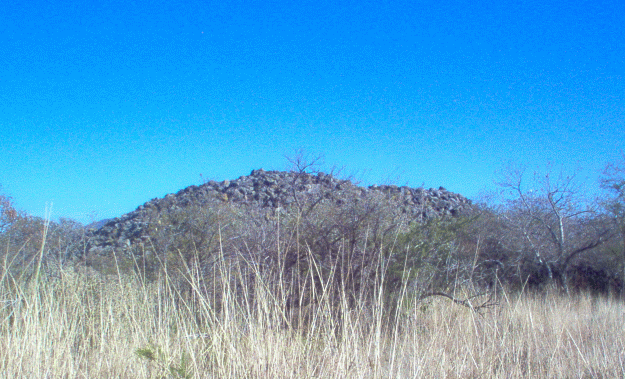
La Yacata

I live in a small neighborhood called La Yacata. It’s called La Yacata because it has a small mountain of stones in the middle of it. There are like 7 families that live there, and we are pretty many neighbors even though we live a mile away from each other. My grandpa and my uncle live up the hill from where we do.  It’s mostly trees and rocks and stuff. The roads are very badly paved. Most of my classmates and most of the people I meet think I live in a cave because we have no electricity. They don’t know how to survive that way. However, our living conditions are ok compared to some people because we are comfortable with the money we have, but we could still get more.

finished front

I’m in the second grade of middle school. I get up very early, at 5:30 am and go to school until 1:40 pm. My grades are pretty good. I like math. I don’t like physics and art. There are 45 kids in my class. I would like if the school had grass on the fields so that it’s more comfortable and easier to play there. (See Why we chose to send our child to public school in Mexico)

wpid-cam03865.jpg

After school is over, I walk to the school where my mom works and play on the computer awhile. I like to play Minecraft, Halo, and Fable. I like to come to the school to play because we don’t have electricity at our house.

At 4:30 pm I go to soccer practice until 6:30 pm. During training, we run and jog. I train as a goalkeeper. The other kids make shots, and I stop them. I play goalkeeper on two teams. The difference between the two teams is that one team is made up of 12- and 13-year-olds and the other team are 15+-year-olds. I play with them even though I’m only 13. The little team is pretty good. We’re in third place on the ranking board.
wpid-cam00051-3.jpg

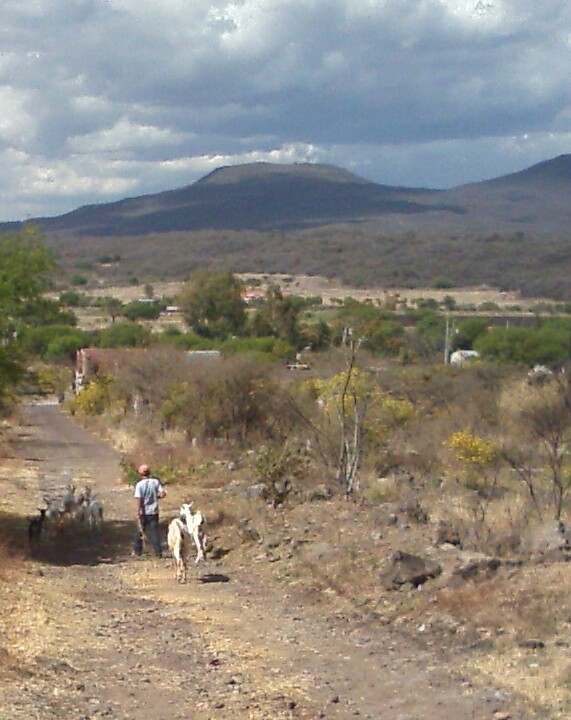
After that, I go home to tend to the horses, goats, chickens and cats for about 2 hours. And let’s not forget about our dog Chokis. I give them water and feed them. I take the goats and horses out awhile so they can eat. The horses eat grass. The goats enjoy eating short grass and tree branches. With the goats, sometimes it’s very difficult to take care of them because they run around. There’s not a day that goes by that Chokis doesn’t go with me and the animals. Most of the time I listen to music while I’m out with the animals. I also like to read a book. When I bring them in, first I bring in the goats because if I bring in the horses first, the goats will run away. And then I go back and get the horses. After that, I give them water and feed them for the night. (See Our Family Hobby)

reading

Enjoying a book on Kindle!

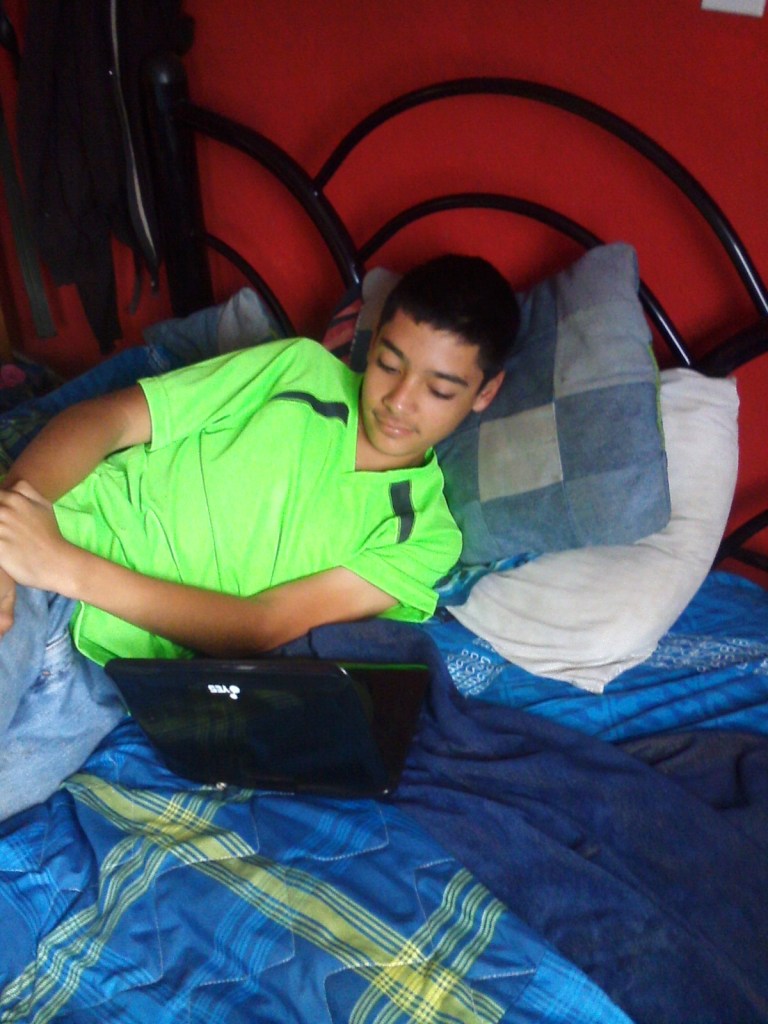
Then I read and go to bed, preparing myself for another day. Sometimes I play on my laptop when I take it home. I read with the flashlight in the night. I like to read adventure books. Sometimes I watch a movie on the portable DVD player. I like to watch comedy movies. I used to play on my phone, but now it has a tumor, and I can only see one corner of the screen.  I have no idea when my mom is going to buy me a new one.  I wash my face a lot, and then I go to bed.
movie watching

Watching a movie on my DVD player.

On Saturdays, I go to the school where my mom works and use the computer and listen to music. I do a Portuguese course on DuoLingo and play Minecraft or watch YouTube videos. After that, I do my homework and take out the animals….again.

goalie

On Sundays, I go to wash clothes and then to my soccer game in the mornings. In the afternoons, I read a book and help my mom clean the house.
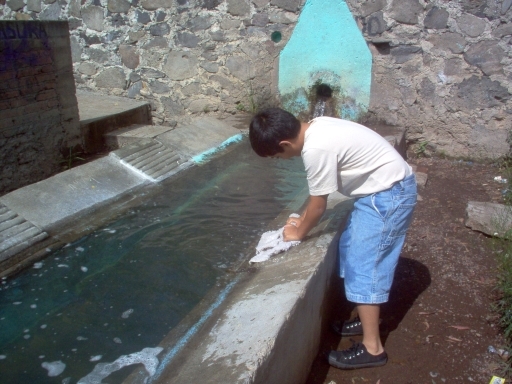
everybody helps out

A picture of a younger me doing laundry!

Sometimes my life is very boring because I have nothing to do or brothers or sisters to play with. Sometimes my mom is very annoying because she wants me to do boring stuff like write this blog post. My dad is very annoying because he makes me do stuff when I’m doing something else.

My life would be better if we had electricity and a fair amount of money and less animals because sometimes they are just too much for me to handle. Overall, life is medium-good, but it could be better.

See it in video format!

***


disclosure

14 Comments

Filed under Animal Husbandry, Carnival posts, Education, Guest Blogger Adventures, Homesteading, Parenting Challenges and Cultural Norms

Women in Mexican History–Stories from the Revolution–Marcelina

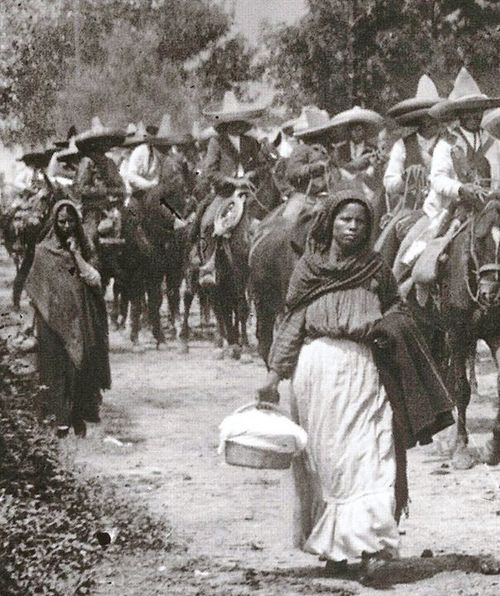
train adelita

The role women were thought to play in the Mexican Revolution has been typically confined to the caricatures of the Adelitas. Although women did fight alongside their men, the Adelitas were not the only women involved in the revolution.

girl revolution

Claudia Guzes, a Mexican friend of mine, told me some stories about her family during the Mexican Revolution. With her permission, I have translated these stories and am sharing them to give name to some of these anonymous Women of the Mexican Revolution.

Claudia shares:

This is the story of my great-aunt Marcelina Magaña López, my great-grandmother’s sister, Alta Gracia Lucina Graciela Magaña López, originally from Moroleón, Guanajuato.

My great-grandmother Alta Gracia Lucina Graciela Magaña López told my mother some of the stories about her life during the Mexican Revolution. It was a difficult time for women. Soldiers, whether for or against the revolution, were known to kidnap women and girls, who were often not heard from again. Therefore, the people of the town and individual families would make special efforts to hide all the women and girls when soldiers came. Once the revolutionaries arrived in Quiahuyo and my great-grandmother, only a child at the time, asked the soldiers if they had come for las muchachas (girls). She told them that all the girls had already been hidden, which made the soldiers laugh. With good humor, they left without any girls that time.

women in the revolution

My great-grandmother also told me a story about her brother Patricio Magaña López. He was in the habit of heading out to las mezquiteras en el cerro (large areas of mesquite trees) early in the day to work in the fields. One day, he was walking before the sun had risen and literally ran into bodies of soldiers (or rebels depending on the perspective) that had been hung near the entrance of Quiahuyo.

She also told stories about the difficult life of her older sister Marcelina Magaña López. Marcelina bore 8 children, four boys Antonio and Jose Luz (Chito), Eliazar (Eliaser), and unnamed baby boy and four girls Guadalupe, María, Josefina, and Bertha. During the Revolution, her husband, Hermenegildo Pérez, decided to fight with Venustiano Carranza sometime between 1910 and 1913. His particular group patrolled Chihuahua, Zacatecas, la Sierra Madre and up through Texas.

Marcelina was in constant fear for her husband’s life when he was off on patrols while she was at home with the children. This wasn’t an unfounded fear. When rebels were caught by los federales (federal troops) nearly all captives were killed. Once Hermenegildo’s group was captured and somehow he managed to not get shot. He hid among the dead bodies of his companions, pretending to be dead as well, and survived the revolution, although his proximity to canons during the war caused him to lose much of his hearing.

When Hermenegildo did get a chance to visit, he told Marcelina where he would be so that she could come and join him but did not give her any money for the journey. Despite the objections of her mother, Marcelina went, taking all her children with her. The journey was difficult and made more so by the fact that Hermenegildo had to change his location often to hide from los federales (Federal troops). The family traveled by boxcar from one area to another.

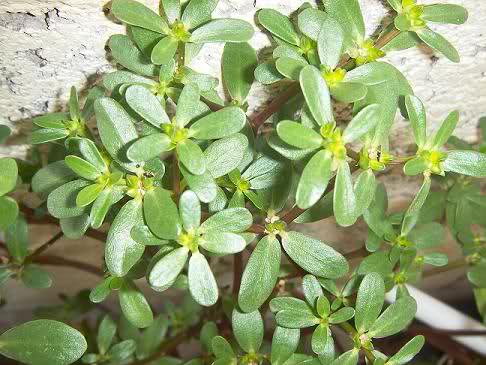
Food also was another difficulty on the road. Marcelina and the children often ate tortillas stuffed with nothing more than quelite del campo, an edible plant found along the sides of the road and abandoned fields, or other types of foraged vegetation.   One of Marcelina’s daughters,  Bertha,  died when she was only a few months old as a result eating unripe peaches.

quelite

At times, the family sheltered under bridges. It became such an ordinary event for the children that when they finally were able to return home, her son Chito would cry because he wanted to sleep under the bridge again and not in his own bed.

On one of the family’s trips to San Luis Potosi, Marcelina gave birth to a baby boy who died a short time later.  She left her other children behind and went to pedir limosna (charity) to buy the casket.   On the road, she met with two men who were moved by Marcelina’s grief.  They took Marcelina and her infant son to the panteon (cemetery) in their car and helped her bury him.   The men promised that while they were alive, there would always be flowers on his tomb.

Both Hermenegildo and Marcelina survived the revolution. Hermenegildo became pious, reciting the rosary whenever the opportunity presented itself, and died at the respectable age of 80, although partially blind and completely deaf by then. Marcelina died much younger at the age of 60. It is most likely her life was shortened by the hardships she endured during the revolution and the “reconstruction” afterward.

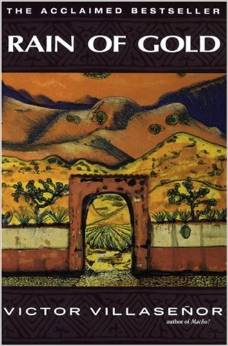
rainofgold

This period of history, although now glorified with parades and fanfare, was devastating to many Mexican families. Thousands of families fled to the United States during the Revolution. The story of two such families, that of the Villaseñores and the Carmargos, parents of Victor E. Villaseñor are told in his biography The Rain of Gold. The accounts of these families are similar to Marcelina’s story, girls hidden under piles of chicken shit, women raped, traveling by train, high infant mortality, and families separated and destroyed. Villaseñor’s grandmother, the mother of 19 children, lost all but 3 of her children during the war. And what did all this suffering accomplish?

silence

The conditions which sparked the Revolution, inequality of the distribution of wealth, censorship, extreme government control, are still present in México. Talk among the campesinos (farmers) is that it is time for a new revolution even as the government tries to repress it. Recently 43 students have “disappeared” (see Anatomy of a Mexican Student Massacre) hauntingly reminiscent of Tlatelolco student massacre of 1968.  There is no doubt that women will be involved in this new period of civil change.  It remains to be seen exactly how.  (See Also Crisis in Mexico: Could Forty-Three Missing Students Spark a Revolution?)

*******************************

Would you like to read more about women in Mexican history?

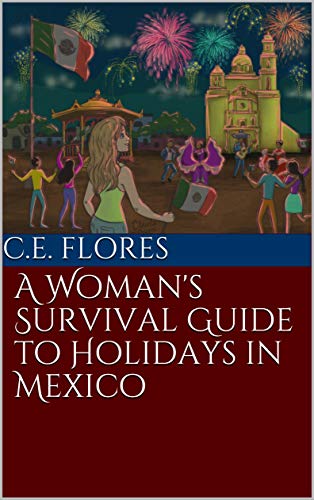
Check out A Woman’s Survival Guide to Holidays in Mexico.

cover holidays

9 Comments

Filed under Guest Blogger Adventures, Mexican Cultural Stories, Mexican Holidays, Politics