
Looking at CFE accounts, they would have you believe that 98% of Mexico has electricity even though 15% of the time there are unstable power outputs or loss of service for hours or days at a time. According to the 2016 census in Mexico, there are more than 500,000 homes without electricity. Nearly 16% of the total population with access to water do not have water installed in their homes. Only 26% of the population of the state of Guerrero have daily access to water. Nearly 7,000,000 Mexicans live in isolated communities without adequate access to water and electricity. Having limited or no access to electricity or water means doing the laundry can be a challenge in many areas of Mexico.
I don’t mind doing laundry. Hands down, I prefer it to doing the dishes. However, with not having electricity at our house for so long, we’ve had to be proactive about doing laundry. I mean, we couldn’t just throw it in the machine and let it wash itself now, could we?
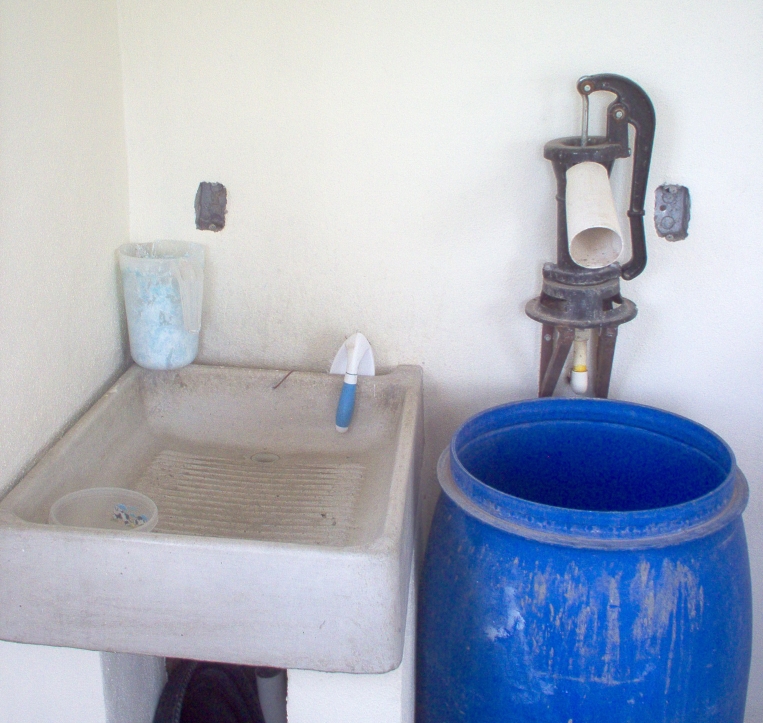
Our pre-remodel second-floor laundry area, complete with hand pump connected to the ajibe (dry well).
Necessity meant we found alternatives. One alternative is hand washing. Almost every house in Mexico has a built-in washboard just for that purpose. The raised cement ridges are just the thing for scrubbing stubborn stains. When the washboard isn’t quite up to the job, a bristle brush can be used to attack those manchas (spots). Clothes receive one-on-one personal attention and come out cleaner than regular ol’ machine washing. The drawback is that it uses a LOT of water. First, you have to soak the clothes, then scrub with soap, then rinse the soap off. Although we have our gray water running into the garden, it still was a major expense.
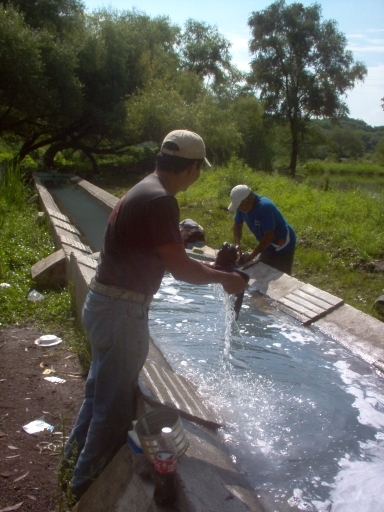
My husband and father-in-law doing the wash.
The next laundry option is to go to the arroyo (stream) and wash. Water is limitless and the washboards angled to get a good suds on. Washing was much quicker with all hands on deck. Again, though, there were some drawbacks. Wet laundry is HEAVY and in order for it to dry properly, we had to haul it back to our house and hoist it up to the second floor where the clotheslines were. Then of course, occasionally, there were the lookie-loos who laughed at our public chonie washing. But what can you do?
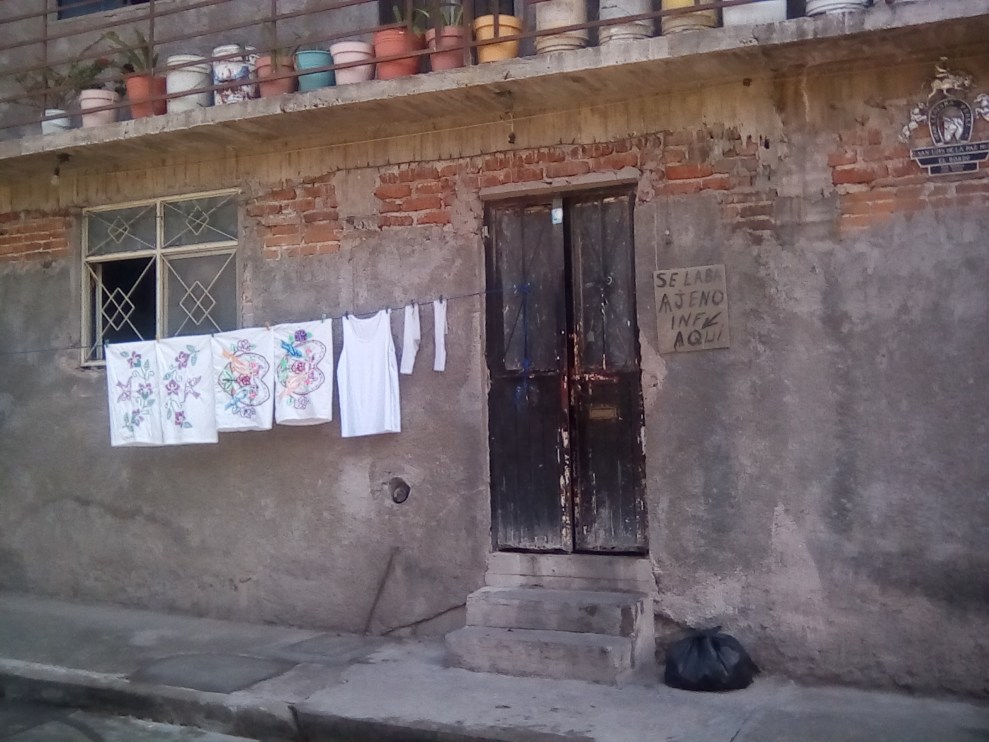 There are other options should you not wish to air your dirty laundry in public and don’t mind other people touching your unmentionables. The washerwoman still can eek out a living here in Mexico. Just look for signs that say “se lava ropa ajena” (foreign clothes washed here).
If you aren’t comfortable taking your wash to someone else’s home, you can have a cha-cha (muchacha) come in and do the washing for you. These girls often come from very small towns and take the bus every morning to their jobs, usually one or two days per week in each home. They take care of everything, the laundry, beating out carpets, general and deep cleaning, minding the children, cooking, even dog grooming, so that the lady of the house is free to devote her time to other things. Pay is dependant on the number of hours and a chore list and can be quite affordable.
 There are also lavanderías, but not the laundromats that you may be used to with quarter slots and TVs and dryers. These laundromats are drop-off service. They have one or two machines in the back and will wash and dry your clothes for pick up. This is a good option for blankets and comforters which are nearly impossible to wrangle clean in the arroyo (stream). Some lavanderías offer ironing services and small clothing repairs, like sewing on buttons or patching garments.

Another option for those special care items is the tintorería (dry-cleaners). Our local dry-cleaner even offers a pick-up/drop-off service.

Knowing the pros and cons of hand washing, it’s more and more common for the lady of the house to request a lavadora for Mother’s Day. There are several options available. The most popular is the chaca-chaca machine. It’s a round drum that agitates the clothes clean and makes a chaca-chaca sound. On either side of the spectrum is the mini-washer which holds a maximum of 2 pairs of pants but would work well for undergarments and baby clothes and the modern washer with all the bells and whistles.
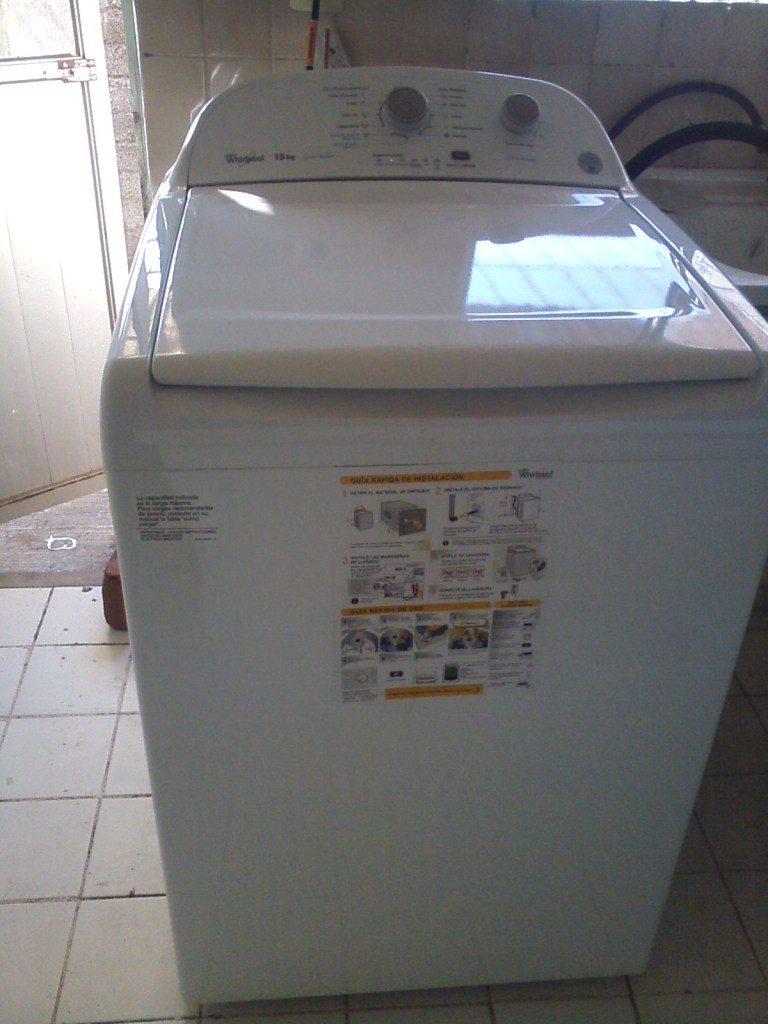
I opted for the later and have been blissfully using it at the Little House in Sunflower Valley for over a year now. We made an attempt to move it to La Yacata after we got the 3000 power inverter but unfortunately it didn’t work. It seems our power inverter uses a modified sine wave rather than pure sine wave and the washer wasn’t happy with the power output. So for the moment, it remains washing merrily in Sunflower Valley.

No electricity = no dryer
As for drying options, dryers are quite rare, so sun-drying is the most popular option. Lines are usually made of a special wire that doesn’t rust instead of clothesline, although I have seen plastic clotheslines for sale. Make sure your line is sturdy and anchored well. It’s not fun when your freshly laundered clothing falls into a mud puddle on the ground. In the event that you don’t have a line, fences and cactus will hold your clothes nicely. Remember to turn your clothes inside out so as to minimize sun bleaching. And make sure the clothespin is clipped securely. Flying underwear has been known to cause a death or two (Motorizado se accidenta por calzón volador en La Ceiba).
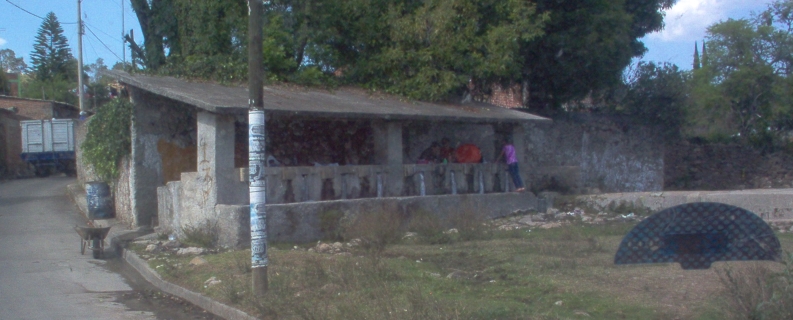
A local laundry mat, although not the one we use.
Now that you armed with this laundry knowledge, I give you the domestic goddess blessing “Go Forth and Clean!”





 He was finally won over by this little



 Surviving Mexico