Category Archives: Cultural Challenges

Hate thy neighbor

shadow

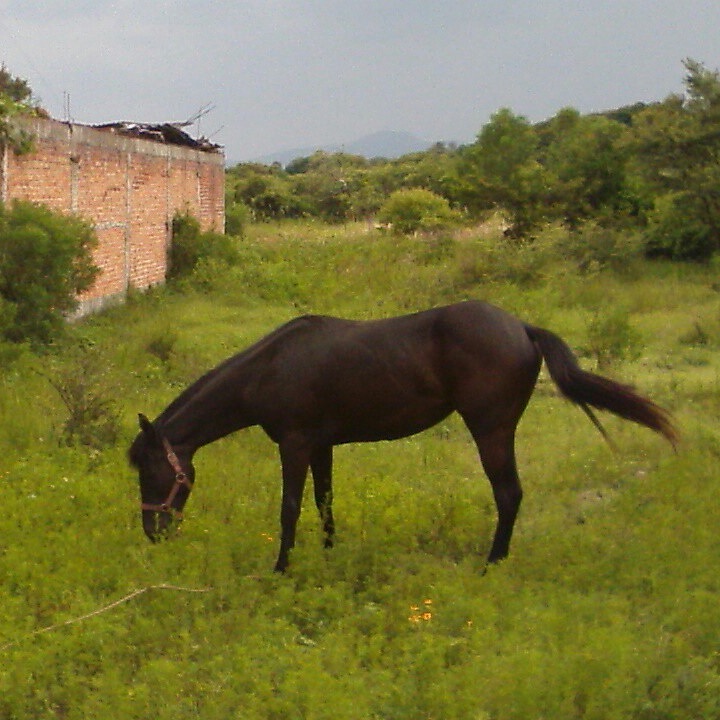
Our lovely girl Shadow, grazing peaceably.

Yesterday, someone injured our lovely lady Shadow. She and Joey were behind that house. While my son was just up the road with the goats, someone sliced Shadow’s leg, unclipped her rope and startled her so that she, Joey and Chokis the dog, bolted down the road to the main intersection. It was our good fortune that the neighbor, the cow barn guy, was coming to collect one of his cows and passed them on the road. He stopped to let me know and urged me to use my moto to catch up with them before they reached the highway. He even loaned my son a lasso since Shadow’s lasso was still tied to the mesquite. I pulled out the moto and my son hopped on behind. He had come a-running as soon as he realized the horses were gone, leaving the goats to fend for themselves.

At top speed, we raced down the road and found the three escapees under a tree off the road. My son walked back home with them. Joey was ornery as all get out, but Shadow had been injured. We put the horses back in their stalls and went in search of the goats, who had wandered up the hill. Seeing the gravity of the injury to Shadow’s leg, I determined that my husband should be notified immediately. Only, he had left his phone at the house. So I raced to his work to tell him and somehow or other he beat me home to take stock of the damage.

Shadow was injured in two places. One was a clean, deep gash all the way to the bone. The other was a jagged edge wound like she got caught on some barbed wire. We won’t know if she has nerve damage until the wounds heal up, but she’s in a lot of pain right now.

This isn’t the first time one of our animals has been deliberately harmed.  Our poor, defenseless donkey Fiona was shot in the hind leg.  Our babies’ mama Beauty‘s hoof was sliced nearly in half.  Countless dogs and cats have been poisoned. Makes you want to cry sometimes.

We suspect C as having done the deed this time. (See Buying a piece of heaven) There’s no proof of course. And really, there isn’t any valid reason, at least in our opinion, for him to have done so. Although he planted corn this year where my husband usually sharecrops (See Sharecropping) our horses have NEVER been in his corn. On the contrary, we have reason to complain about his pig farming. Every few days, another one of his pigs has died and he throws the corpse wherever where Chokis discovers the tasty morsel of raw, rotting bacon and hauls big sections of it down to our house and leaves it at the front door as a present. It’s disgusting! However, we haven’t called the Department of Ecologia yet.

grazing Shadow

Notice there is not a corn plant to be seen!

This week we have also had a complaint from another neighbor. He claims that it was our horses that have been nibbling his corn. It simply isn’t true. Ever since our other neighbor’s horses were stolen last year, including Spirit one of Beauty’s babies, we have kept our horses close to home. They are either tied or within sight. When no one is there to mind them, they remain in their stalls. The neighbor’s reasoning is that our horses are the closest to his corn field. But we are by no means the only neighbors with horses.

loose horses

Caught in the act! These horses happily munching the corn crop belong to the horse guy!

The horse guy, up the hill, has three horses, two of which are the same size and coloring as Joey and Shadow. Having heard hoof clopping late at night, we suspect that he may let his horses loose at night to graze. But again, we can’t prove anything.

He and the chicken feather guy were recently feuding. The chicken feather guy had a goat in with his pigs. The goat was not a happy goat and we could hear it bleating and bleating, probably because it was alone. One day, the goat disappeared. The horse guy accused my father-in-law of stealing the goat. The chicken feather guy went over to where my father-in-law keeps his goats to look for it. Boy, did that make my father-in-law mad. Not finding his goat there, the chicken feather guy scurried off, tail between his legs. If you think a 67-year-old man isn’t scary, you haven’t seen my father-in-law in the throes of righteous indignation with a machete in his hand.

So the suspect in the goat kidnapping fell back on the horse guy, who hotly denied it, of course. In retribution, the chicken feather guy set La Yacata on fire, destroying the grazing area of the horse guy’s horses. So now he lets them free graze.

The chicken feather guy and the horse guy outdo themselves as ladrones (thieves). Just last week, my son was bringing the goats home and came across the chicken feather guy loading various and sundry building material items into the back of his truck from the lot that belongs to the cholo boracho (drunk punk), another neighbor. I think perhaps cholo boracho is in jail at the moment, otherwise, I don’t think the chicken feather guy would have had the guts to steal from him. When he saw my son, he covered his face as if he was suddenly unrecognizable. Feel free to take a moment to roll your eyes here.

The horse guy has been sighted making off with building materials wherever he may find them as well. He has tried to pin the thefts on us, after all, we live full-time in La Yacata, as that were evidence enough or something. For instance, the newest neighbors recently returned from a 20-year stint in el Norte (the US), are constructing a cabaña (cabin) in La Yacata. Every week or so, something goes missing. The horse guy is very vocal about it being us. It isn’t. Having spent so long in the US, the newest neighbors have a fond prejudice for gringos and a belief in their overall honesty. So, as far as I know, they don’t believe us to have sticky fingers, but I could be wrong.

If “Justice in the life and conduct of the State is possible only as first it resides in the hearts and souls of the citizens.” –Plato, and the hearts and souls of La Yacata are representative of all of Mexico it is no wonder that 43 students are still missing, that journalists and activists are murdered, and that the countryside is full of mass graves.

Well, as my husband says “El cantaro da muchos vueltas” (what goes around comes around)

I counter with “Vengeance is mine; I will repay, saith the Lord.” (Romans 12:19) and Karma is sweet.

********************************************************

disclosure

11 Comments

Filed under Animal Husbandry, Cultural Challenges, Homesteading, La Yacata Revolution

Courting in Cerano

The tianguis on Sunday in Cerano.

The tianguis on Sunday in Cerano.

Last weekend we gathered our chichares (junk) together and headed to Cerano to see what we could sell for cash. (See Failing at your own Business–Tianguis) The morning was busy but uneventful. We sold things right off the bat and then sold some more. Buyers were typically male and campesinos (country folk). We sold enough for us to get some Cerano specialty carnitas de res (fried cow parts) and ice cream. My husband, as always, was in charge of any and all business, therefore my son and I had some free time on our hands. We decided to people watch.

El templo in Cerano.

El templo in Cerano.

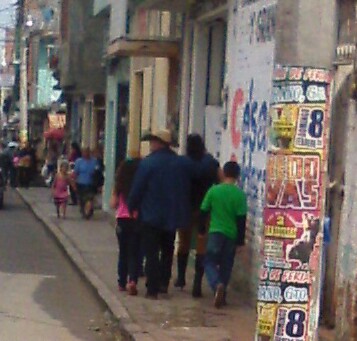
Every town has its “circuit” where the young girls and boys circle around and observe, talk to or hook up with members of the opposite sex. In Cerano, Sunday afternoons in the tianguis (flea market) is the place to be. Things really didn’t get interesting until after mass, around 12 pm. Then the young people began to peacock around.

Watching the girls!

Watching the girls!

My son and I were most interested in what makes a muchacho or muchacha (young fellow or lady) attractive and the subsequent “hooking up” stage. We began by observing the groups of boys. They circled in groups anywhere from 2 to 6 in a group. Each group had its own identity. There seemed to be 3 main styles. There were the pseudo-skaters (pseudo in the sense that they did not carry skateboards) in t-shirts and tight colored jeans with even more colorful shoes. Then there were the vaqueros (cowboys) with their checked shirts, jeans, boots and belt buckles. And finally, there were the bad boy gangsta-wanna-bes with their t-shirts, baggy pants, and sparkly gun/marijuana/skull belt buckles, maybe even an earring or two.

We noticed that girls arrived and made the circuit in groups of two, sometimes three. Some girl packs came with their little ones wrapped in rebozos. (See Babywearing in Mexico). Others had toddlers that trailed behind. Some came with their mothers or grandmothers. A few came alone and met up with friends as they circled. All the young ladies were dressed to the hilt.

The main objective is to get the attention of the opposite sex, whether through ostentatious dress or eye contact. Some efforts to get the girls’ attentions were complete and utter failures. Hooting and hollering made the girls speed up or take a sudden left turn into oblivion. Although most already were acquainted, sometimes we witnessed formal presentations by an intermediate after liberal eyeballing from both parties. These introductions allowed the formerly group of 2 to become 3 and the circuit walk continued.

A "couple" walk in Cerano consists of the man walking slightly behind his woman with his hand on her shoulder.

A “couple” walk in Cerano consists of the man walking slightly behind his woman with his hand on her shoulder.

The commitment level of the relationship was easy to read. Single males were still in their wolf packs. The newly hooked up circled in groups of 2 or three (the potential couple and chaperone female friend). Those in the official couplehood stage walked in the customary Cerano way–the female was slightly ahead of the male who had his hand on her shoulder “guiding” her along.

Young couples with babies have a modified couple walk. The woman holds the hands of toddlers, and more often than not, the male carries the infants. This allows the woman to have her hands free for shopping, after all, they were at the tianguis (flea market) and certain things need to be bought. Women with children who had no man, perhaps he was in el norte (the US) or the relationship had ended, carried their own children and were often with another female friend in the same position, or more rarely with their mothers. These women, or young ladies, were either “single” or “in a relationship” which could be determined by how much skin was exposed. The committed had far less tata display than the single ladies.

A gathering of married men in el jardin in Cerano.

A gathering of married men in el jardin in Cerano.

Men married for an extended period of time arrived as lone wolves, meeting up in the jardin (central park) with other lone wolves after making the circuit and seeing what there was to see. Women of the same age also arrived alone but didn’t typically linger after making necessary purchases.

Everything you could possible need is on sale in Cerano on Sundays.

Everything you could possibly need is on sale in Cerano on Sundays.

What an educational day! In the early afternoon, we called it quits, gathered up what remained of our crap for sale and headed home.

*************************************

disclosure

2 Comments

Filed under Cultural Challenges, Mexican Cultural Stories

Cultural Challenge—How to tell if you’ve been just been called an idiot

dunce

It’s not as easy as you might think to determine if you have just been insulted by a Mexican Spanish speaker. Sure words like idiota or estúpido can be easily understood by an English speaker, but there are expressions that on the surface might mean something completely different. Just so you know, all of the following expressions are meant to cause offense, so best not use them unless you want your butt kicked.

aloe vera

¡Ponte sabila! This isn’t a reference to the sábila (aloe vera) plant (See Natural Healing with sábila) but to the word saber (knowledge). It loosely translates as Wise Up! After all, a wise person would use sábila in healing. You’ve just been told you are acting like an idiot.

trout

¡Ponte trucho(a)! The word trucho literally refers to a male trout. However it’s actual use is more in line with fraud or fake. Although, in this expression it means rascally or shrewd. So here the expression is for you to Sharpen up like a male trout! You’ve just been told you are acting like an idiot.

¡Ponte chingón(a)! The word chingón comes from the verb chingar which has a whole slew of meanings in México. It could mean to f*** with, to f****, to take advantage of or to work diligently, among others. This expression advises you to take control of the situation or manipulate it for your benefit. You’ve just been told you are acting like an idiot.

empty head

¡No seas cabeza hueca! The word hueca means hollow or empty. So here the idea implied is that there is nothing inside the hollow of your head. You’ve just been told you are acting like an idiot.

¡No seas pendejo(a)! The word pendejo refers literally to pubis hair. No joke! Therefore, the use of this word is a bit stronger and more offensive than some. It means you are acting in an adolescent, unwise manner. A related expression is¡No digas pendejadas! This expression advises you forcefully to leave off saying whatever it is you are saying because you are speaking like an idiot.

¡No seas mamón! This expression uses the verb mamar which means to suckle and is extremely offensive. They literally refer to the idea that you are not capable of an intelligent action or thought because you are still being breastfed. You’ve just been told you are acting like an idiot.

¡No mames! This also uses the verb mamar but has a slightly different meaning. It is typically used when you just can’t believe something. In English, you might say You’ve got to be kidding! Obviously, you have just done or said something stupid.

manches

¡No manches! This expression is sort of the juvenile version of ¡No mames! Sort of like Jeez in place of Jesus Christ as an expletive. The verb manchar means to stain or leave a mark. The expression is typically used when one is frustrated with the actions or comments of another person. When my students use this expression in class, me being the wise-ass that I am, calmly inform them that No estamos manchando! (we aren’t staining anything at the moment) and they laugh and try for a more polite response.

table

¡No seas menso(a)! The word mensa once upon a time was a reference to a table. So calling someone a table would indicate that they are of inferior intelligence. In México, this expression means you are of inferior intelligence or in other words you’ve just been told you are acting like an idiot.

burro

¡Burro(a) or Asno(a)! Both words refer to the donkey and imply that you have so little intelligence that you are fit for nothing but working in the fields. (See On Being a Burro). You’ve just been told you are acting like an idiot.

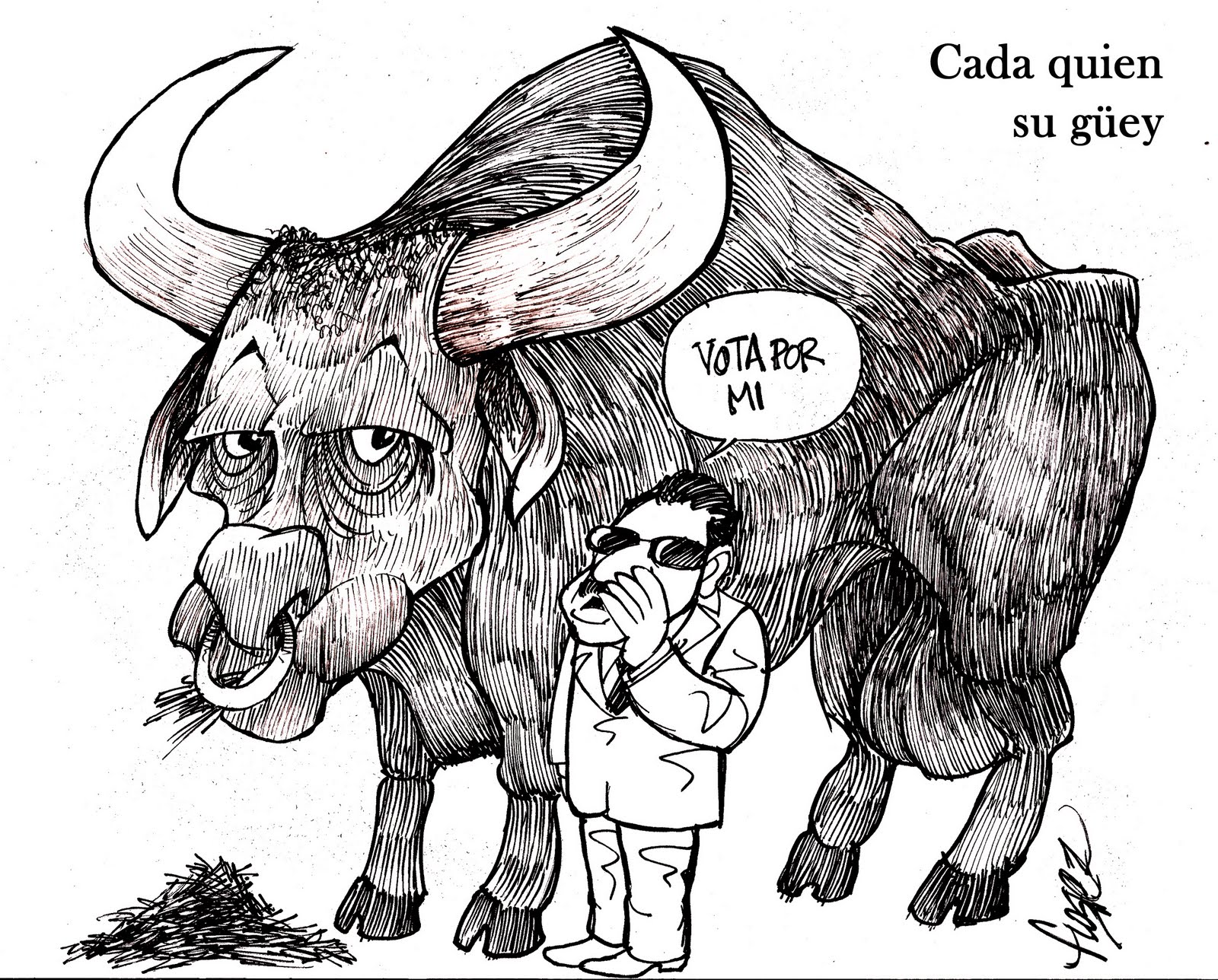
Cada quien su guey

¡Güey! This word is an altered version of the word buey which is an ox. Again we have reference to the limited mental prowess of an animal. You’ve just been told you are acting like an idiot.

tonto

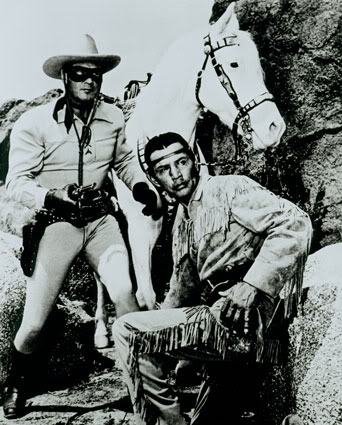
¡Tonto(a)! or ¡Deja de decir tonterías! Yes, the Long Ranger’s sidekick’s name was Stupid. The second expression indicates that you are saying foolish things and should leave off saying them immediately because you are an idiot.

¡Tarado(a)! This expression isn’t as common where I live, but I heard it on a Spanish language dubbed movie. My husband wouldn’t tell me what it meant so I had to look it up. It implies that you are deficient in the intelligence department and you’ve just been told you are acting like an idiot.

blockhead

¡Tarugo(a)! Literally the word means a thick piece of wood. Wood, like tables and suckling babes, are low on the intelligence totem pole, and you have just been told you are an idiot, blockhead.

¡Idiota! This word actually comes from the Greek word for a layman, someone untrained or not involved in public affairs. It is easily understood by English speakers as an insult to your higher reasoning powers.

¡Estúpido(a)! Again, this word is easily recognized by English speakers. However, I will warn you that it seems a stronger insult in Mexican Spanish and is seldom used. One day, I was reading The Emperor’s New Clothes to first graders and the version I was reading used the word stupid. Oh my goodness! You would have thought I had insulted their mothers the way the kids carried on. I certainly didn’t want them running home and saying the English teacher used the word estúpido in class, so I tried to explain that it didn’t mean the same in English and that regardless, we weren’t going to use it in class.

computer guy

Contra Indios. This racial expression can be translated literally against Indians. It is used when something you are trying to use isn’t working correctly. For instance, if you can’t open the trunk of your car it’s because the lock is contra Indios. This implies that the object is too technically advanced for a backwoods Indian and you are a backwoods Indian. You have just been told you are an idiot.

This list is not conclusive. I am sure that there are many other ways you might be told you are sub-intelligent that I have yet to hear. But I hope it helps with any inter-cultural communication situations you might find yourself in.

knight

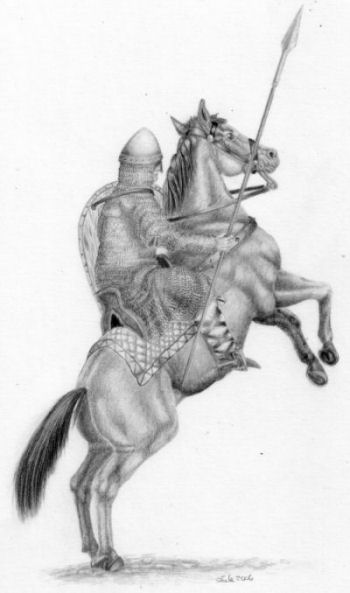
If you want to respond to any of the previously mentioned, you might try ¡Te pasaste! or ¡No te pasas de lanza! Pasar means to go over or past and lanza is a weapon (lance). These phrases let the insulting speaker know that he or she has gone over the limit with the idiot comment and you don’t appreciate it. After all, them’s fighting words!

***************************

disclosure


2 Comments

Filed under Cultural Challenges