
Category Archives: Carnival posts

Surviving a Kakistocracy in La Yacata

cam04084.jpg

Kakistocracy occurs when the least qualified are in positions of power. That definition certainly fits Mexico to a T.

The whole mismanagement of funds and the lack of services in La Yacata can be followed back to having the least qualified person in charge for more than 20 years. (See Birth of the Revolution) La Yacata is just a small not-quite village, but how high does this bad governing go, really?

Let’s look at the highly publicized case of the 43 students from the Ayotzinapa Normal School who disappeared in 2014 as an example of the ineptitude. To make this long story shorter, here’s a brief summary of the facts known to date.  On September 26 of that year, 6 innocent bystanders were killed, 25 were wounded and 43 protesting students were abducted by local police in Iguala, Guerrero, which is about 80 miles south of Mexico City. (See also El Dia del Estudiante) Various elements of human rights violations were perpetrated in this incident. Starting at the bottom rung, local police were guilty of homicide and attempted homicide in the initial confrontation. Then once the students were detained, they were turned over to the crime syndicate Guerreros Unidos (United Warriors) by local police enforcement who then murdered every single one. Talk about a breach in due process there!

On September 28, 22 local police officers were arrested for their participation in the abduction and murder of the students and bystanders. But this was more than a local rogue police force. On September 30, a warrant was issued for the arrest of the Iguala mayor and his wife as well as the Director of Public Security, all of whom fled. The mayor and his wife were able to evade arrest until November 4. The Director of Public Security is still at large.

The ensuing protests in Mexico had a domino effect on the government structure. On October 23, the Governor of Guerrero resigned once it became clear that he had actively protected corrupt officials and possibly contributed to a cover-up of the events that transpired on Sept 26.

The PRD political party founder and senior leader resigned on November 25.  PRD is the dominant political party in Guerrero.

The Mexican Attorney General had received prior information about the cartel ties of the Iguala mayor and did not act on that information and is currently under investigation. He resigned his post on February 27, 2015.

Further investigation has shown that the Mexican Armed Forces were also present on September 26 and did nothing to aid the unarmed students or bystanders. In fact, the Army tried to run interference by preventing wounded students from receiving medical attention at the local clinic. The current Supreme Commander of the Mexican Armed Forces is the current Mexican president Enrique Peña Nieto. The President also holds the right to appoint the Attorney General.

Thus, kakistocracy is evident all the way to the top level of government in Mexico. But it doesn’t stop there. Several experts have traced the hierarchy of power to the U.S. And as long as the U.S. is pulling the strings, Mexico will continue to be a kakistocracy. (See La Llorona Returns)

So how does all this make La Yacata the perfect place to live in the event of kakistocracy? Well, once the colonos (community members) became fed up with the local kakistocracy, we staged a coup, albeit a legal one and elected a new governing body. Although we have yet to succeed in uniting the community enough to really benefit ourselves, we have prevented the continued exploitation by the same corrupt representative. (See You can lead a horse to water, sewage, and electricity)  Therefore, we are all ready for the coming revolution!

**********************


4 Comments

Filed under Carnival posts, Politics, Safety and Security

Surviving a Jawhole disaster in La Yacata

miserable-flooding-is-a-fact-of-life-in-mexico-citys-impoverished-iztapalapa-borough-1401737787

A jaw hole is a hole in which dirty water or sewage is collected. And yes, there are apocalyptical disasters involving sewage, and not just in third-world countries either.

London, UK. 1878. The local sewage system still in use today had formed large mud banks of waste in the Thames River. The steamer Princess Alice sunk in the middle of the Thames and 650 people died from drowning in the raw sewage.

Louisville, Kentucky, USA. February 13, 1981. Two miles of road were destroyed when hexane vapors illegally discharged into the sewers caught fire and caused a series of explosions.

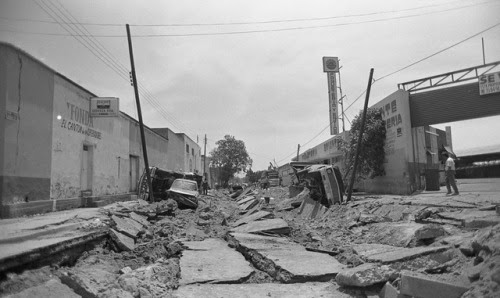
Guadalajara, Jalisco, Mexico. April 22, 1992. Two hundred fifty-two people were killed, 500 were injured and another 15,000 people were left homeless after gas explosions in the sewer system destroyed 5 miles of streets. Strong gas smells had been reported by residents four days previous to the disaster, however, city officials felt it was not necessary to evacuate the area.


Um El-Naser, Gaza. March 27, 2007. Seventy percent of the village’s homes were submerged in 2 meters of raw sewage when the earthen wall of a cesspool sewage pool collapsed. Five people were killed, including two babies, an elderly woman, and a 15-year-old girl, 20 more people were injured. The collapse was due to sand theft from the areas around the embankment. The sand had been sold to building contractors.

Edinburgh, Scotland. April 20, 2007. A pump failed at the city’s sewage processing plant and caused millions of liters of waste to flow into the Firth of Forth for days. It was devasting to the local fish and wildlife.

San Isidro and La Providencia, Mexico. April 2011. Three children were injured and more than 200 homes were flooded when a sewage pipe cracked.

So what about La Yacata? Well, we aren’t connected to the main sewer line. (See You can Lead a horse to water, sewage, and electricity) Although we reuse quite a bit of our greywater for our garden, our toilet and shower drains are connected to a pipe that connects to the drenaje (drainage) out to the road. To no one’s surprise, the pipes in the road are not the appropriate size. These smaller than requisite pipes run down the road and swerve to the left and open out to the arroyo (an open drainage pit or jaw hole). The little towns up the road, Caricheo, Pamaceo, La Ordeña, Las Peñas, all have the same jaw hole. The sewage goes away–to where I’m not exactly sure.

One of our neighbors once mentioned that he likes to stand under the pipe and bathe during the rainy season. EWW! Be that as it may…

We have a beginning of an environmental disaster on our hands. Our neighbor has pigs. (See Hate Thy Neighbor) He shovels the pig poop into the sewer pipes. The sewer pipes are not designed for human poop much less pig poop. Pig poop has backed up into the sewer pipes and has been oozing out of the open sewer pipe of the house down the street. Our house is above the pig farm, so the poop hasn’t reached us yet, but if it does, boy am I going to pitch a fit!

Our plan is to call the Departamento de Ecologia before that happens. I’m sure the neighbor won’t be happy with us, but hey, poop is icky!  And I hope the road doesn’t collapse over the sewer one day like happened to this poor woman in India!

https://youtu.be/wOPQqTjYcD4

****************************


10 Comments

Filed under Carnival posts, Construction, La Yacata Revolution

Surviving an Impact from an asteroid in La Yacata

Asteroids hit the Earth all the time. Usually, they are little rocks and hardly anybody notices, however, it’s estimated that over the last 600 million years, the Earth has been struck by at least 60 asteroids with a diameter of 3 miles or more. There are at least 3 craters left from these mega-impacts that are linked to major extinction events on our planet. The most famous mass extinction event was that of the dinosaurs 66 million years ago.

Seems like ancient history right? Well, there have been other catastrophic asteroid related disasters since then. In 1490, stones fell like rain killing more than 10,000 in the Ch’ing-yang district of China ranging from the size of goose eggs to water chestnuts. Scientists believe this stone shower was a result of an asteroid that exploded within the Earth’s atmosphere.

Then there was the meteor explosion near the Stony Tunguska River in Yeniseysk Governorate in Russia on June 30, 1908. Scientists believe a meteor burst just 6 miles from the Earth’s surface. The result of this explosion was the destruction of 80 million trees over an area of 830 square miles.

Russia was hit yet again on February 15, 2013, around the area of Chelyabinsk Oblast. The resulting explosion had 20-30 times more energy than the atomic bomb that exploded over Hiroshima. The meteor burst more than 18 miles above the surface of the Earth and produced extensive ground damage. Officials reported that 1,491 people were injured, most from shattered glass from windows that exploded. The intense light from the explosion was estimated at 30 times brighter than the sun and caused at least 180 cases of eye pain and 70 cases of flash blindness. About 20 people were injured by ultraviolet sunburn.

Will it happen again? Probably. Scientists are currently monitoring an asteroid called Apophis as it travels across the universe. It’s about the size of 3 football fields. In 2029, it will pass really close to some of Earth’s communication satellites in space, but there is a risk that it will orbit back in 2036 and actually hit the planet. If Apophis enters the Earth’s atmosphere, it could do so with 750 megatons of kinetic energy and a huge section of Earth would be in the “path of risk” including southern Russia, islands in the north Pacific, the coastlines of California, Mexico, Nicaragua, Costa Rica, northern Colombia, Venezuela and on through the Atlantic Ocean, stopping just before reaching the coast of Africa. In the projected hypothetical impact simulation, Colombia and Venezuela could have more than 10 million human casualties. If Apophis hits the ocean area, scientist forecast a short-range tsunami with a potential destructive radius of 1000 km at a wave height of more than 2 meters for most of North America, Brazil, and Africa, a radius of 3000 km for Japan and a radius of 4500 for Hawaii. I’m not exactly sure what that means, but it sounds scary.

So supposing an asteroid does hit the Earth, what then? The impact will vaporize (yes, you read that correctly) a large amount of the Earth’s crust, throwing rocks into the air for miles. Most of the rock will rain back on the Earth, heating the atmosphere and triggering massive forest fires. The dust from the impact and forest fires will block the light of the Sun for a year or so. Without sunlight, the climate will enter another Ice Age and vegetation will die. Without vegetation, animals, including humans, will die.

Or at least this is what happened 65 million years ago when the Chicxulub Crater in the Yucatan, Mexico was formed. We all know the result of that asteroid impact now, don’t we?

So what can you do to maximize your survival in the event of an asteroid impact? Nothing. Experts agree. (See also Asteroid hits Earth!, How to survive a collision with an asteroid) Although, European scientists suggest staying away from windows. (See What can we do if an asteroid threatens Earth? Europe Starts Planning)

Might as well enjoy life in La Yacata until it happens.

***************************

4 Comments

Filed under Battling Nature, Carnival posts, Safety and Security