The Great Food Heist

George on the left and Fred on the right.

The other day, it was raining, which is no surprise because we are in the rainy season after all. My son dashed out to feed the horses and left the back door open a crack. He was gone maybe five minutes and came back to find the door wide open and muddy paw prints all over the place. 

He hollered for the dogs. Fred came dashing out from the garage so fast he slid on the tile like a cartoon. George came tumbling down the stairs with the cat’s food dish in his mouth. The fact that it was George who went upstairs puzzled us because Fred is the sniffer. He’s able to smell food like nobody’s business. George, as the head dog, then appropriates Fred’s find. But in this case, it was George who immediately headed upstairs. 

After the dogs were outside and Fuzz’s food dish reclaimed, we followed the tracks to try and figure out the series of events that led to the Great Heist. It seemed Fred was sent as a lookout to the front door, while George went upstairs and found Fuzz stretched out on the bed. He must have taken a sniff or two of this recumbent feline, who paid him no mind. The muddy paw print on the blanket was left in evidence. 

Then George grabbed the food dish and hurried back downstairs when my son called. So how did George know there was food upstairs? Was it a crime of opportunity, or had deliberate planning gone into it? 

We’ve come to believe that George has been plotting this escapade for a few weeks now. You see, when Fuzz, his royal highness, isn’t happy with his food selection for the day, I drop the leftovers from the back porch to the dogs. I’ve seen George puzzling out how I come to be up on the porch and how to get there himself. With the opened door, George seized the opportunity and took it upon himself to get today’s leftovers (although Fuzz hadn’t properly finished with them yet). 

We’ll have to be more cognizant of open doors now. Once a successful heist has occurred, from now until infinity, the two scoundrels will be casing the joint, looking to take another run at it. Meanwhile, Fuzz will lay there and observe it all.

***

Leave a comment

Filed under Animal Husbandry

Surround Sound in the Quarantine Home Gym

One of my goals way back in January was to lose some weight this year. Age and hypothyroidism mean I’ve packed on a few more pounds than I am comfortable with. Then quarantine happened, and that regular exercise routine never really took off as I would have liked. 

I had a bonus assignment at work and decided that I would use that money to get an exercise bike. With shootings, rough roads and rainy season, I haven’t been biking like I had before. So I figured a stationary bike would be just the ticket to burn some calories. 

Shopping during quarantine was not easy. On one grocery store run at the Bodega, I found a bike that I was interested in at a price I was happy with. Of course, when we went back to get it, they were out of stock. I also tried all the empena (pawn) shops in town. I did find one, but it was in such a sorry state that I had to pass. My sister-in-law said they had treadmills at Coppel, but I didn’t want one of those. 

On the way to the bank one day, we saw a weight machine in a storefront window. I copied the phone number down and had my husband call to ask about the price. The owner was willing to give us a deal, only $25,000 pesos and it was ours. Sorry, Charlie. Not going to happen. 

Having exhausted the local options, I tried searching online. Amazon had just the one I wanted, but it would cost just as much to ship it as it would to purchase it. I checked Amazon Mexico for comparative purposes. The cheapest on that site was $50,000 pesos. I could buy a lot in La Yacata for less than that! 

I put the bike idea on the back burner for just a bit. Then thought about it some more. I had already earmarked that extra check for this purchase and it would cover the cost of the bike and shipping from the U.S. So I bought it from Amazon, only to be informed that it was on back-order and they weren’t exactly sure when they would get a new shipment in. Well, drat! I guess everybody else was trying to get their home gyms set up, too!

In the meantime, I ordered some speakers for the computer. We have a tentative plan to try and get my son his U.S. GED since they are offering it online due to COVID-19. In order to take the exam, he needed a microphone, camera, and speakers–a headset wasn’t allowed. So those were purchased. He’s still working his way through the GED practice lessons, but I’m hopeful he’ll be ready to take the exam by the end of September. 

Finally, Amazon sent me a notification that my exercise bike had shipped. It arrived two weeks later, which was two months after I ordered it, but hey, better late than never, right? I have all my Amazon shipments go to my sister-in-law’s house, since we don’t have an address here in La Yacata. From there, my husband strapped it on the back of his moto and brought it home. 

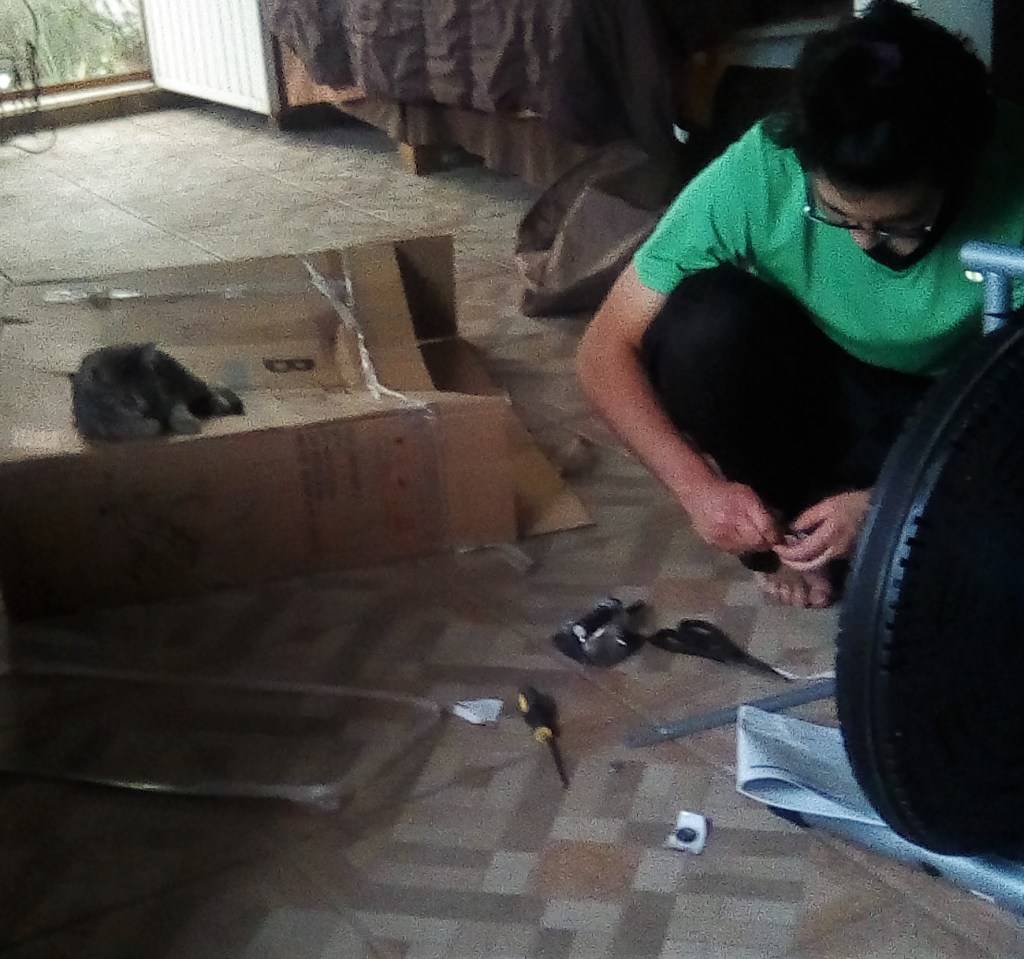
My son, Fuzz, and I spent the afternoon putting it together. It took some doing as the instruction manual was poorly translated, but we managed. It’s exactly what I wanted. With the speakers, I can pedal away the pounds to the beat of some of my favorite tunes, or at least what I imagine is happening. I haven’t actually lost any weight yet, but hope springs eternal!

How are you staying fit while staying at home?

Leave a comment

Filed under Health, Mail Service and Shipping in Mexico

Elder Care in Rural Mexico

Assisted living facilities are a relatively new concept to Mexico and mostly confined to highly concentrated expat areas. You can find private nursing homes in places like Ajijic, Lake Chapala or Puerto Vallarta in Jalisco. San Miguel de Allende, Guanajuato in the interior of the country is another expat haven. Along the US/Mexican border, the states of Chihuahua and Baja Norte are just a short drive from San Diego and El Paso, making them areas of high demand for American citizens looking to reduce their expenses when it comes time to find a place for mom and pop.

Casa Hogar para Ancianos (nursing homes for the eldery), asilos (asylums) and casas de adulto mayores (homes for older adults), are not as common outside of these expat areas. Although small towns often have at least one, usually run by the Catholic church, it may not meet the minimum standards you feel comfortable with. However, there are several other options available if you need assistance in caring for elderly loved ones in rural Mexico. 

Mexicans often live in intergenerational homes, designed to accommodate parents, children, grandparents and even great-grandparents. It’s not uncommon to find homes with separate mother-in-law casitas or a suite of rooms separate from the main house.

If your elderly relative prefers to remain independent as long as possible, there are ways to accommodate that as well. It’s customary for even the middle class to hire a cleaning lady that comes several times a week. She often takes charge of shopping and simple meal preparation for the elderly in her charge as well. Many grocery stores offer delivery service, even in rural areas, making it easier for someone up in years to keep stocked up. Fruit and vegetables trucks come right to your doorstep once a week in many rural areas. Potable water and cooking gas is delivered in the same manner. 

Several of our older residents in Moroleon, GTO.

Even when the elderly are living independently, there are very few elderly that have been completely abandoned. For example, Mama Sofia and her husband Tio Felipe lived in their own home in Cerano while Tio Felipe’s great nephew’s wife and daughter came by once a day to bring them hot meals and check on them. They lived there until Tio Felipe died at 98, then Mama Sofia’s daughter took her to live with her in Zamora, Michoacan where she died a few years later at 97.

In our town, there is an elderly couple that makes the rounds of the local businesses every morning. They are in the bottom right of the picture above. The husband is 102 years old and his wife a mere 80. She is a bit impatient with his slow gait and often is several feet ahead of him on the walk to town. They stop at a place that has coffee for a cup each, then they stop and receive 5 pesos of tortillas from my sister-in-law’s tortilleria. After that, they pass by the carniceria for some carnitas. I’m not sure of the other places they stop. All of these small businesses give them this little bit without charge. Small towns tend to take care of their own. 

In rural Mexico, the elderly often are active in the community while many senior citizens continue to work out of necessity. Our neighbor Doña Oliva is 75 and each morning she has pickled pig feet, bunuelos and other food items for sale. You can see her stand in the top right of the picture above.

Our other neighbor down below, Don Alfonso rode his bike 2 miles to tend to animals he kept in La Yacata. He is now 98 and for the last six months has been unable to make the trip, now assigned to his grandson. 

My own father-in-law is 76 and bikes daily to town to pick up some pan y leche and dog food for his two four-footed companions. His mid-day meal is prepared by his daugher T and delivered by his son B. We try and keep an eye on him as well, but he doesn’t much like hovering and sometimes heads down the opposite road so we can’t keep track of his comings and goings as well as we would like. 

When you need more help with those that have medical issues, full-time caretakers and even trained nurses can be hired. You may need to spend some time finding just the right person for the job however. Some families have opted to rent a small house and have caretakers look in on their elderly family members periodically. Others have chosen to have a live-in caretaker assume full responsibility 24/7. Mexican culture reveres those that have reached “la tercer edad” (the third age) and caring for senior citizens is not looked upon as a burden by most.

How have you found elder care in rural Mexico?

Leave a comment

Filed under Cultural Challenges, Parenting Challenges and Cultural Norms