
Natural Healing –Alfalfa

Medicago sativa arrived in Mexico with the Spanish colonists in the 16th century as fodder for their horses. The original Arabic word al-faṣfaṣa has evolved to alfalfa, which is how it is referred to in North America. It’s still commonly used as animal food. However, alfalfa is also used to strengthen lungs, treat kidney inflammation and anemia, as a relaxant, to prevent scurvy, and alleviate rheumatism in traditional Mexican medicine. 

Studies have shown that alfalfa stems and leaves reduce cholesterol absorption and atherosclerotic plaque formation. Regular ingestion reduces hyperglycemia levels. It also has antimicrobial, antifungal and antibacterial properties. Alfalfa is also antioxidant and may protect the brain from damage as a result of strokes. The plant loses potency when dried, so using fresh leaves, flowers, and roots is best. 

As a detoxifier, three teaspoons of lightly crushed leaves are steeped into a cup of boiling water daily. For kidney infections, a full plant with roots and two Agave lechuguilla plants are boiled in a half liter of water for five minutes. Another remedy calls for four complete agave lechuguilla plants and one full alfalfa plant with roots. Boil them for five minutes a liter of water. Allow it to cool. Drink half in the morning before breakfast and half in the afternoon before dinner. Alfalfa is effective in reducing painful urination and can help with peptic ulcers as well. It has a mild diuretic effect, making it a useful digestive aid. 

For nerves, one cup is taken every other day with 25 grams of new leaves boiled in a half liter of water for three minutes. For anemia, the flowers and leaves are used in a decoction. 

Blend lime, alfalfa and water into a beverage for lung remedies. For general well-being, and to avoid scurvy, fresh leaves are often added to soups, atole, or eaten with tortillas by children. Not surprisingly, alfalfa has properties known to improve immune system functioning. 

As a treatment to encourage increased lactation, 50 grams of new leaves are boiled in a liter of water and given to the new mother. Since it has been shown that alfalfa has significant estrogenic activity, if the low milk production issue is due to hormones, this is an effective remedy. Alfalfa has also been useful in treating hot flashes and night sweating in menopausal women and increasing thyroid functioning. 

Boiled alfalfa seeds sweetened with honey is prescribed to alleviate rheumatism. However, raw alfalfa seeds and sprouts are toxic and can cause lupus-like symptoms in certain individuals. Seeds should never be taken during pregnancy or while breastfeeding. 

Alfalfa has a grassy taste, as you might expect. It’s not a strong flavor and can be easily added to blended juices if you are considering including this herb in your regular diet.

***

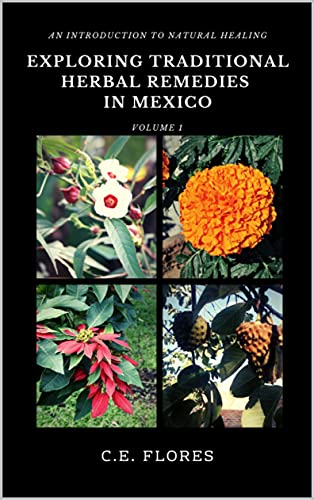
Interested in natural remedies? Uncover herbal remedies from traditional Mexican sources for healing and wellness in the Exploring Traditional Herbal Remedies in Mexico series.
Leave a comment

Filed under Health, Natural Healing

Buen Fin Mattress Shopping

New twin mattress setup!

Because Cocoa was sick all over the twin mattress and I couldn’t get it clean enough, I decided that we needed new mattresses all around. Off to the mall we went to check prices. Only, I hadn’t realized the Buen Fin (sort of like the Mexican version of Black Friday) started on November 9 this year because of the pandemic. 

I’m not sure what the rationale was for the extended shopping period, fewer people out at the same time? It didn’t seem like it was effective. Moroleon has also instituted a “night” shopping session for the calle de la ropa (clothing street) as part of the COVID-19 restrictions and again, I’m not sure how that is helpful. Does the virus not come out at night? Anyway, because I didn’t realize Buen Fin had already started, I was surprised to see the mall mobbed with people. 

We went to Dormimundo (Sleep World) first since it’s obviously a mattress place. The sales lady and I had some trouble communicating, perhaps because of our masks or maybe because I had forgotten that a twin size bed is called an individual here not a twin. Anyway, the prices she quoted even with the Buen Fin discount scared my husband. I also asked about mattress covers, but again, they seemed extraordinarily expensive.

Our next stop was Famsa which is the process of declaring bankruptcy. Just like at Dormimundo, we were the only customers there. We just had to wade through the crowds to get from one end of the mall to the other. In short order, we had a full size (matrimonial) display model for my son purchased at a reasonable price. The employees wrapped it up and loaded it onto our truck. They did not have either twin or king size mattresses that were firm enough for our liking and wouldn’t be getting anymore in because of the bankruptcy. Phooey.

The next day, being a weekday, we ventured out to Coppel. Unfortunately, it was super crowded. However, they had a mattress that was perfect and in our price range. We waited around to make the purchase online, since they didn’t have it right there at the store. Disappointingly, that model was sold out in both twin and king. Meanwhile, my sister-in-law queued up to buy a backpack. It took 45 minutes for her to complete that purchase. 

The Coppel sales clerk asked for our phone number. He said there may be a new shipment later in the week. Well, he did call and told us that the model we were interested in wouldn’t be available, but he had other models we could look at. No thanks. 

We went out again to search for a mattress that Thursday. There’s a furniture store in town called PorVenir but it being Thursday, it was closed, because of an old town regulation. Thursdays and Sundays are only half days for businesses in Moroleon, Buen Fin extravaganza or not. 

Instead, we headed to Uriangato to a store called El Bodegón. We arrived just about the lunch hour, 3-4 pm and there were very few people there. Delightfully, they had mattresses! We were interested in the line of Viking beds. Thor, Odin or Loki were nice, firm mattresses. Sadly, they didn’t have them in stock. But the model Reflection was available for immediate pickup in both king and twin size and in our budget range. Yippee! We got a free pillow as our Buen Fin bonus. 

Next, we had to decide what to do with our old mattresses. We opted to keep the full size mattress that was on my son’s bed and make a new base for it from some scrap wood as a guest bed. The twin and king mattresses were beyond salvaging. Off to the recycling center they went. We received 50 pesos for each mattress and good riddance. 

So although it was stressful being out and about with all the people, we managed to avoid most of the crowds and get new beds. We shouldn’t have to replace these for another 15 years, so an investment well worth the time and effort it took. 

Mattress covers, new sheets, and comforters I ordered at Zulily. New pillows I picked up at la Bodega Aurelia on my weekly grocery shopping trip. Since quality sleep is a requirement for a healthy immune system, new bedding is my endeavor against getting COVID. Well, new bedding and a daily dose of Vitamin D, C, and Zinc as a precaution. It’s worrisome. Numbers in Mexico are skyrocketing. So stay home and stay safe everyone this holiday season!

1 Comment

Filed under Economics, Mexican Holidays

Natural Healing — Chicalote

Chicalote (Argemone mexicana) grows in abundance in La Yacata during the dry season. I discovered that it has medicinal value quite by chance. I was looking for another plant, and found a picture of this one, which I could positively identify, having seen it year after year by my house. 

Mexican prickly poppy has several names, leading to some confusion. Chicalote is the name I am most familiar with, however in Mexico, it is also known as cardo, cardo santo, adormidera, adormidera espinosa, amapolilla, and Amapola montés. Cardo santo was the name given to this plant by the Spaniards when they cataloged medicinal plants they found, not to be confused with Cnicus benedictus which is also known as cardo santo. 

In Nahuatl, it was known as chicálotl, chillazotl, or xicólotl. In Zapoteca spoken in Oaxaca, the same plant is called guechinichi. In Maya, it is k`iix-k`anlol or k`iix-saklol. In the language spoken by the Tarascans centered in Michoacan, it was shate or xaté. And in Huasteca, the indigenous language of San Luis Potosí, it was known as tzólich.

The fact that so many different indigenous groups identified this plant so specifically shows its importance both culturally and medically. Chicalote was believed to be sacred to the Aztec rain god Tlaloc, the fact that it grows abundantly in the dry season notwithstanding. It was used to treat water related diseases like palsy. Most indigenous groups in Mexico believed that diseases could be classified into four categories, hot, cold, wet and dry. And that sometimes gods punished their subjects with specific diseases that must be treated with appeasement of the angry god, who would then send a cure. Thus, near drownings or lighting strikes (signs of Tlaloc’s displeasure) were also treated with chicalote. 

You should exercise caution when using this plant as the seeds are toxic to humans and animals that accidentally ingest them while grazing. On the other hand, a pinch of ground seeds mixed with water makes an effective laxative. 

The sap is an orange-yellow color and contains berberine and protopine. It has been used medicinally in Mexico as a topical analgesic. The seeds are also crushed and mixed with petroleum jelly for an ointment to treat burns and skin infections. 

The leaves when smoked have a slightly narcotic effect, however vomiting and diarrhea are common side effects. This hypnotic effect is the reason the chicalote was used traditionally as a sedative, for migraines and coughs, and for epilepsy. The Seri in Sonora use chicalote leaves to treat kidney pain and expel afterbirth. 

An infusion of leaves is used to treat nervios (nerves). Insomnia can be relieved with an infusion of 14 grams of the flowers in ¼ liter of water drunk before bed. 

For migraines, a spoonful of leaves is steeped in a cup of boiling water and drunk. For a severe cough, drink 1 cup of tea made from 50 grams of ground seeds and leaves that have been boiled for 15 minutes in a liter of water before bed. 

Traditional medicine also uses chicalote to treat diarrhea. The leaves are boiled with ground, browned rice and drunk throughout the day. 

Quite a bit of scientific study has been done on the Argemone mexicana. Not surprisingly, most of the traditional uses have merit and some new applications have been discovered. The leaves and stem are antibacterial, antifungal and anti-parasitic. They also contain anti-cancer, antioxidant, and anti-inflammatory properties. 

The leaves are also useful in reducing side effects experienced from synthetic medicines and are effective in the treatment of epileptic disorders. And finally, Malaria, HIV and morphine withdrawal have been successfully treated with decoctions made from the Argemone mexicana. 

Who would have believed that this scrubby thistle would have so many medicinal benefits?

***

Interested in natural remedies? Uncover herbal remedies from traditional Mexican sources for healing and wellness in the Exploring Traditional Herbal Remedies in Mexico series.

Leave a comment

Filed under Health, Native fauna and flora, Natural Healing