Although I joined the Buy Me A Coffee platform some time ago, I recently sprinkled additional buttons on my website.
Buy Me a Coffee is used by more than 200,000. It’s a Patreon alternative for writers, artists, and bloggers. Fans can support their favorite creative by buying virtual “coffees” (which is a small cash donation to further creative endeavors).
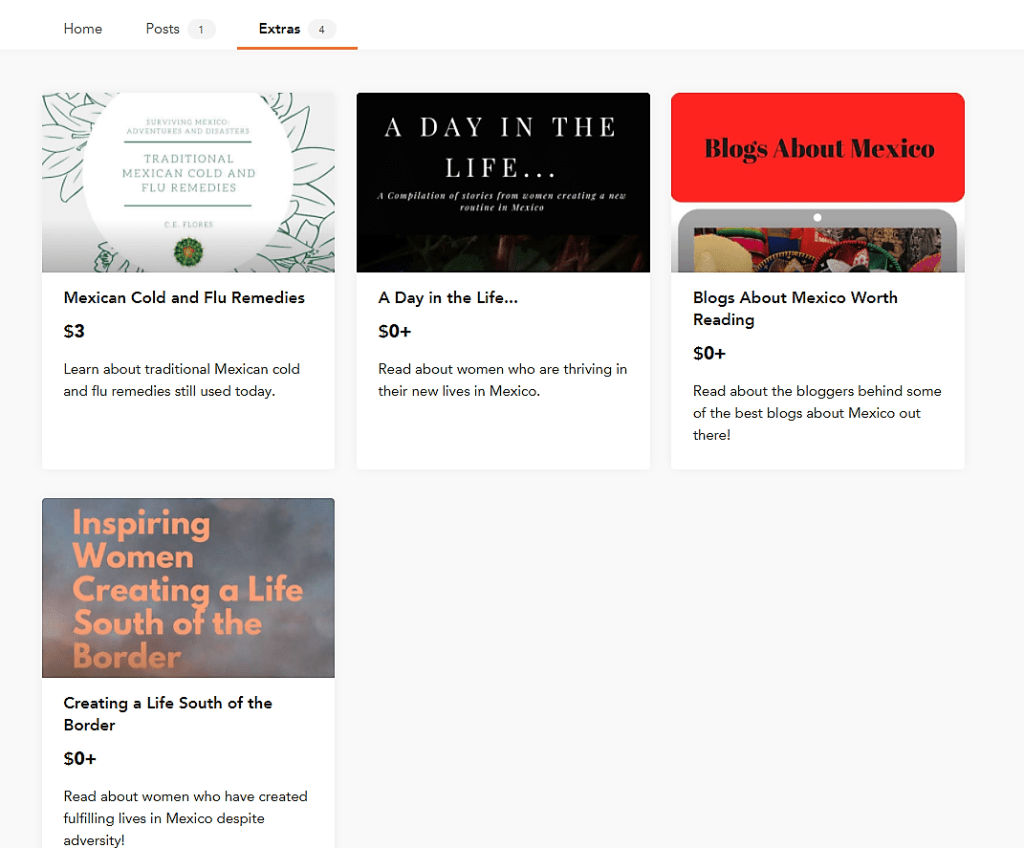
In addition, you can find “extras” on my Buy Me a Coffee page. Those of you that have been faithful followers for a while now, probably already have these ebooks, which are no longer available on my site, but exclusively at Buy Me a Coffee. I hope to have more of these extras later this year. I’ll keep you posted!
Buy Me a Coffee also has a membership option. This would be for people who would like to become a “patron of the arts” and provide regular support for creatives. Some artists and bloggers provide exclusive content for their patrons, but I’m not going to do at this time. My goal in blogging and writing is to share useful information that helps people without a fee, not make a profit from it (although a coffee now and then is never remiss).
WAAAAY down at the bottom of the page.
There is also a “share” option at the very bottom of the page. Since the more readers I reach, the more people have access to the useful content I create, this is a nice way to increase exposure and doesn’t cost a cent.
Although there are several types of cinnamon available commercially, Mexican recipes and remedies call for cinnamomum zeylanicum otherwise known as Ceylon cinnamon. These light brown sticks are made up of many thin layers and are easily ground with a metate (grinding stone).
This spice was brought to Mexico in 1690 by Juan de Esteyneffer, a Jesuit physician from Germany. He combined remedies and treatments he learned in New Spain (Mexico) with the European knowledge he had as a pharmacist in his work Florilegio Medicinal, published in 1712. Juan de Esteyneffer had a powerful belief in the healing properties of cinnamon or rather canela from the Latin word cannella meaning “little tube” referring to the way the bark curls as it dries. He prescribed it as a cure for sudden blindness and deafness indicating that the physician should chew on a stick and then blow the pieces into the eyes or ears of the afflicted.
While that particular remedy didn’t catch on, canela is used to treat stomach issues, fever, cough, colds, rheumatism, regulate menstruation, teething issues, motion sickness, and hangovers in Mexico. It also is considered an aphrodisiac.
Canela essential oil is used as a rub for rheumatism. Cinnamomum zeylanicum has wound healing properties, being both anti-inflammatory and anti-nociceptive (reducing the sensation of pain).
For cough, 1 section of canela, gordolobo (mullein), ajo (garlic), is boiled in ¼ liter of water and drunk as needed, sweetened with honey and flavored with limón (lime). Cinnamomum zeylanicum is an effective fungicide and can be used to treat a variety of fungi that cause respiratory infections.
It has antimicrobial, antibacterial, and antiparasitic properties as well as anti-gastric ulcer and anti-secretagogue effects, supporting its use as a stomach ailment remedy. It has also shown to be effective against Porphyromonas gingivalis, a bacteria found in the upper gastrointestinal tract, the respiratory tract and the colon. Both rheumatoid arthritis and Alzheimer’s disease have been associated with this periodontal infection.
Motion sickness calls for canela tea. Teething issues are treated with a decoction of canela, mejorana (marjoram), butterfly bush (Buddleia davidii), menta (peppermint) and cempasuchil (marigold) is administered.
Cinnamomum zeylanicum has hepato-protective effects, making it a beneficial addition to those that drink just a bit too much alcohol by reducing the effects on the liver. It also lowers the serum cholesterol levels.
Studies have shown that canela is useful in the treatment of PCOS (Polycystic ovary syndrome) and helps regulate menstrual cycles among women with this condition. It has also shown to be effective in reducing menopausal symptoms. For cramps, a decoction made with the flowers from la barra de San Jose (Joseph’s staff) and cinnamon is the recommended remedy. A postpartum treatment calls for ajo (garlic), ruda (rue), laurel, romero (rosemary), orange peel, clavo (clove), canela, and alum is added to a small brazier of coals and burned. The new mother stands over the brazier as it smokes. This treatment is done every other day until the 40-day postpartum period is over.
Although tea is the typical method of preparation as an herbal remedy, canela is also a staple in many other traditional beverages. Mexican chocolate, horchata (rice milk) and cafe de olla (coffee) are always made with a dash of canela. Mole, the thick chocolate sauce served with meat and rice, also uses canela, both when it is in broth form and then added again when ground. Tepache, an alcoholic beverage made from pineapple is seasoned with cinnamon. One of the most common atole (a thick corn drink) flavors is canela. And finally Ponche Navideño (Christmas punch) would not taste the same without this little twig.
Last year being what it was, I didn’t participate in the A to Z Blogging Challenge. This year, however, I’d thought I’d take up the gauntlet once again. I will be featuring 26 female authors and illustrators on my blog ceflores.com in April.
I have a few lined up, but I’d also like to make an open invitation. If you (or someone you know) falls into the category of female author or illustrator and would be interested in being featured next month, use the contact form below and I’ll send you more information.
At the end of the month, I’ll post the complete list on Surviving Mexico or you can follow along daily at ceflores.com.











 Surviving Mexico