
Elections? Today? Mexican Judicial Elections 2025

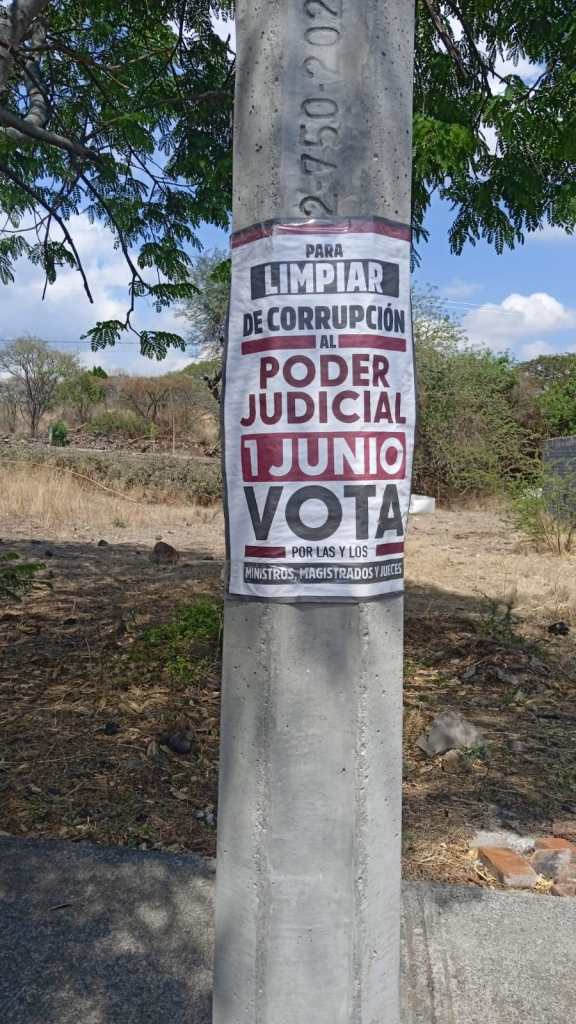
When posters went up around La Yacata, I had to stop and do a double-take. I had heard there were going to be elections, but honestly, I hadn’t paid much attention. So, I thought I’d do a little research and share with you what I found out. 

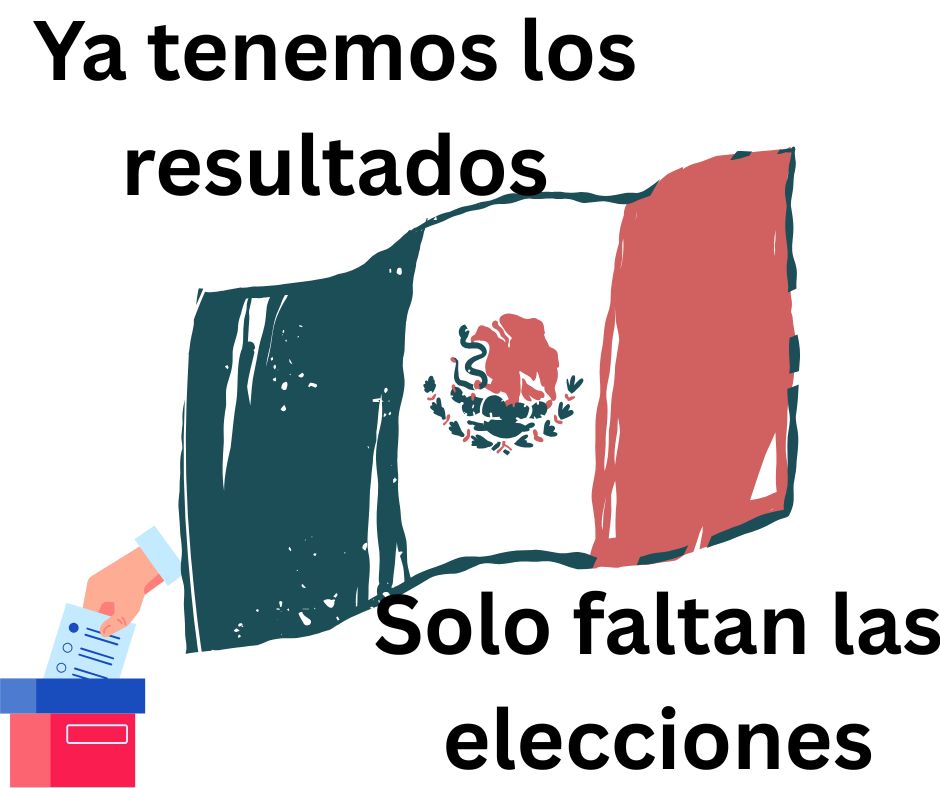
On June 1, 2025, Mexico is holding its first-ever national judicial elections. This historic event enables citizens to vote directly for nearly 2,700 judicial positions, including all nine Supreme Court justices, circuit court magistrates, district judges, and members of the newly established Judicial Disciplinary Tribunal.

This unprecedented reform, initiated by former President Andrés Manuel López Obrador and continued under President Claudia Sheinbaum, aims to democratize the judiciary and combat corruption. However, it has sparked significant controversy. Critics express concerns that electing judges could undermine judicial independence and open the door to political influence and organized crime within the courts. I’m not sure how relevant this concern is, since if a candidate is not to the local crime syndicate’s liking, they are removed permanently before or after the elections anyway.  

The election process has also faced criticism for its complexity and lack of transparency. With over 7,700 candidates vying for positions, voters have reported confusion due to limited information about the candidates and the absence of traditional campaigning, as political parties are prohibited from endorsing judicial candidates. A few candidates have a bit of notoriety and are a little more well-known, such as Silvia Delgado, El Chapo’s defense lawyer.  

Despite these challenges, the elections represent a significant shift in Mexico’s approach to judicial appointments. Supporters argue that this move empowers citizens and increases accountability within the judiciary. The outcomes of these elections are expected to have profound implications for the rule of law and democratic governance in Mexico; whether those implications are positive or negative remains to be seen.

Final results are anticipated by June 15, 2025, with a second wave of judicial elections planned for 2027 to complete the overhaul of the judiciary, whatever that implies. 

2 Comments

Filed under Cultural Challenges, Politics

The Clucking of Chickens

One afternoon, not long after our tense encounter with the infamous Chicken Feather Guy, I got a call from a fellow colona, her voice full of excitement. She had just come from the presidencia, and was eager to share what she witnessed there with me.

Apparently, Chicken Feather Guy had stormed into the Urban Development office while she was there asking about escrituras for a different fraccionamiento where she owns lots. There, she had front row seats to quite a public spectacle. Chicken Feather Guy launched into a tirade, his voice rising with fury, accusing Super Prez of refusing to recognize his claim to a lot. You know the one. His allegations spiraled. He insisted la gabacha (which, of course, is me) had also bought her lot from Chuchi, the previous administrator, which was a flat-out lie, and added that Super Prez had 300 lots. Also untrue. And I fail to see the relevance of either of these statements to his particular complaint, but ok, whatever. 

He wasn’t done. He swore up and down that he’d had that lot for over 20 years, another fabrication, while pacing and gesturing wildly, saying he’d just sell the lot and be done with it. When he finally paused for breath, the colona warned him that trying to sell that certificate would be fraud. At that, he switched gears, declaring with exaggerated indignation that he would never do such a thing, right.

The Urban Development guy, clearly weary of the theatrics, finally cut in. “This isn’t our jurisdiction,” he said. “Talk to the asociación civil.” Meaning: talk to us, the mesa directiva. That should’ve ended it. But Chicken Feather Guy, undeterred, puffed up and stormed out, muttering that he’d take his complaints straight to the presidenta.

The circus didn’t stop there.

The following week, Huesos, the very man who had sold Chicken Feather Guy that dubious lot, booked an appointment during our Thursday office hours. He arrived fired up, brandishing a rolled-up plan like a sword. He was furious, he said, because we had claimed the lot didn’t exist, and he had the documents to prove otherwise.

Unfazed, Super Prez calmly laid down a legal document of his own, showing that the very lot in question had been transferred years ago to his father, with Chuchi’s signature sealing the deal.

As we examined the paperwork Huesos brought, a tangled web began to unravel. The chain of custody traced back to an architect who had once done work for Chuchi and had allegedly been paid with that lot, a lot Chuchi never had the right to give. That architect had then sold the land to none other than Fidel El Pancho Villa, the eccentric old man with the tricycle who famously built La Chuecha.

Huesos confessed that he had bought the lot from Pancho Villa’s son, also named Fidel, who assured him everything was in order, except, he warned, he might have to pay off some outstanding aportaciones. Ironically, Pancho Villa owed nothing, and that reason was a complete lie made to justify the low selling price.

I reminded Huesos, again, that both my husband and I had warned him about the questionable status of that lot before he sold it to Chicken Feather Guy. And then, I looked him straight in the eye and asked: Did Chicken Feather Guy send you here?

He hesitated, then nodded. Yes.

I didn’t hold back. “The issue was never whether the lot exists,” I said. “It’s that Chuchi never had legal authority to sell it. You saw the document.”

He mumbled that he’d confront Fidel Jr. the next time he saw him. I invited him to bring Fidel to speak with us directly. But instead, Huesos lowered his eyes and quietly slunk away.

****

So you have big dreams of buying a few acres in Mexico and living the good life? There’s more to living in Mexico than you might imagine. In a land where everybody’s finger is in the pie, it’s hard to find the proper channels to get basic services like water, sewage, and electricity installed. When one community has had enough, they staged a coup and launched La Yacata Revolution. Follow along with their attempts to restructure the Mexican political system in microcosm. Viva!

Leave a comment

Filed under La Yacata Revolution

Natural Healing — Ololiúqui

Photo credit: DMTrott

Ipomoea corymbosa

Identifying this plant proved to be quite tricky. Finally, I found confirmation that Ipomoea corymbosa, Ipomoea sidaefolia, Turbina Corymbosa, and Rivea corymbosa all refer to the same native Mexican plant whose seeds are used in religious ceremonies as a hallucinogenic. The botanical name listed depends on the date and source origin.  

The Mexican name for the plant is also widely varied, although the uses are similar throughout the country. The most common name used in central Mexico is ololiúqui which in Náhuatl means “round thing,” referring to the seeds rather than the plant. In Náhuatl, this variety of morning glory is Coatlxoxouqui, Coaxihuitl, or Coaxoxouque (snake-plant); in Maya, Xtabentún or x-táabentun, badoh in Zapotec; in Mixtec, Yucu-yaha or Yugu-yaha. The Chinantec use the terms Huan-mei or Huan-men-ha-sey. In the Mazatec language, it is Mo-so-le-na. The Tlapanec refer to it as Yuguá. Spanish names include tripa de pollo (chicken intestines) and tumba caballo (knocks a horse down). In English, common names include Christmasvine and Christmaspops.

Ipomoea corymbosa is a viney plant with heart-shaped leaves and white bell-shaped flowers. The seeds contain the hallucinogens d-lysergic and d-isolysergic acids, comparable to LSD, and have long been a part of religious ceremonies in Mexico by the Chantec, Mixtec, Mazatec, and Zapotec for divination, finding lost objects and people, and diagnosing illnesses. One source also reported that the seed was given to those intended for sacrifice to induce euphoria and drowsiness. 

X-táabentun (which translates roughly as one that is tied to the stone or stone vine) root infusions are given to women by parteras (midwives) in especially difficult delivery situations in some areas in the Yucatán. The infusion is prepared with three fingers of x-táabentun root, and nine spikes of koke’ (Smilax spinosa Miller) sweetened with Melipona honey. In Oaxaca, the seeds are used instead of the root.

Lysergic acid (d-lysergic acid) found in both the Ipomoea corymbosa and Ipomoea tricolor causes uterine contractions within fifteen minutes of ingestion. This compound is also hemostatic and has been shown to reduce hemorrhaging after childbirth if given after the placenta has been delivered.

Among the Maya, this plant is representative of the departure of the rains and the rainy season, during which plants (and humans) are more at risk for death. Baalche’ is a ritual drink made from the seeds, fermented maíz (Zea mays), and melipona honey. It is drunk to induce visions and also rubbed on pregnant women’s abdomens. 

Ipomoea tricolor

Ipomoea tricolor (also known as Ipomoea violacea and Ipomoea rubrocaerulea) seeds have a hallucinogenic effect but not as intense as the seeds from the Ipomoea corymbosa plant. This plant shares the names ololiúqui and badoh negro as their stronger counterpart. Other names include bodongás, manto del cielo, hiedra, and Mich-doh. In English, these plants are known as grannyvines or heavenly-blue morning glories. Ipomoea tricolor typically has blue, purple, or white blossoms.

The hallucinogenic effect is dependent on the dosage. Anything over 200 seeds is a high dosage and can result in undesirable effects, including suicidal tendencies. Other side effects include panic attacks, incoherent speech, coldness in the hands and feet, nausea, uncontrollable laughter or weeping, and extreme body odor.

In some areas, the bright blue flowers of the Ipomoea tricolor (also known as Tlitliltzin in Náhuatl) are ground and mixed with corn flour to make colored ceremonial tortillas.

In addition to the aforementioned properties, Ipomoea tricolor also has significant cytotoxic activity against breast cancer cells and antibacterial properties.

***

Interested in natural remedies? Uncover herbal remedies from traditional Mexican sources for healing and wellness in the Exploring Traditional Herbal Remedies in Mexico series.

Leave a comment

Filed under Health, Native fauna and flora, Natural Healing