Personalized Cards from SignedCards

Recently, I discovered SignedCards.com and as it’s a service that will appeal to ex-pats in Mexico, I thought I’d share today. With SignedCards you can choose a card for a whole slew of occasions, and add your personalized commentary which will appear in YOUR handwriting. SignedCards then sends the card to anywhere in the U.S. or Canada via first class mail. 

Each card costs $7.99 and includes postage. Since greeting cards can range from $4 to $9 and you don’t have to leave the delivery to the whims of the Mexican postal service, it’s not a bad deal. Plus, did I mention, that it has your own handwritten message? 

After I sent my cards, I received a flurry of emails checking that I was satisfied with the procedure and that the recipient was happy with the card. Talk about personalized service!

SignedCards delivers anywhere in the US or Canada and accepts Visa, Mastercard, Paypal, and Amazon Pay. Currently, there are 51 occasions, 52 holidays, and 42 special messages in a 30,000 card selection. For Christmas alone, there are 536 cards, 312 Season’s Greetings or Happy Holidays messages, and 30 for Hanukkah.

The cards are designed by independent artists and they are always looking for more. So if you have an artistic flair and want to make a little extra money, you should check out the application process for cardmakers.

The founder shared with me that as a former Marine, his family found it difficult to get cards delivered for special occasions while living abroad. Not only was it nearly impossible to find English language cards in some countries, but the local postal system was often hit or miss when it came to international deliveries. Thus, SignedCards was born!

So how exactly does this work? It’s not complicated at all. First, you write your message on an unlined piece of paper then take a picture of it, uploading it to the site. It is then transferred to the card you have selected and printed. Each envelope is hand-addressed with a first-class stamp and mailed at the local post office. 

How reliable is this service? Well, Trustpilot has the business rated at 4.9.

The company guarantees delivery on or before the day promised or they will refund your purchase price and, if your card is more than one day late, they will send a replacement card by expedited delivery at their expense.

SignedCards prides itself on superior, “white glove” customer service.  Every card is visually inspected to ensure printing is perfect and the handwritten note and signature are crisp and clear.  Email support is available during business hours and response times are less than 60 minutes. So if you have a hankering for some handwritten sentiments this holiday season and know better than to rely on the Mexican postal service for delivery, then I recommend SignedCards!

2 Comments

Filed under Mail Service and Shipping in Mexico

The Mexican Apothecary

As we head into cold and flu season, I’m redoubling my efforts at staying healthy. I’m eating oodles of mandarinas that have arrived fresh off the tree at the fruteria. I’ve upped my intake of vitamins, including C & D. And I’ve incorporated even more garlic into my meals. These few things coupled with sensible social distancing and hand washing, well, here’s hoping for an illness-free holiday season. 

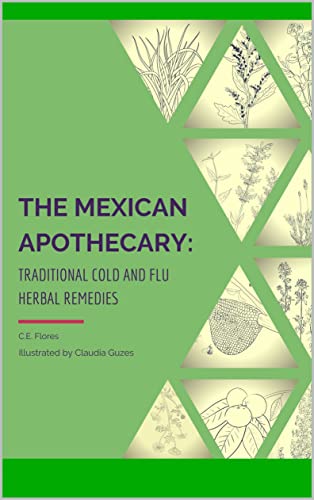
Along those lines, I’m also delighted to announce the publication of The Mexican Apothecary: Traditional Cold and Flu Herbal Remedies, now available on Amazon. In this beautifully illustrated book (with drawings by Claudia Guzes), you’ll discover information about more than 70 cold and flu remedies commonly used in Mexico including traditional treatments for:

  • Cough
  • Stuffy noses and congestion 
  • Headaches 
  • Sore eyes and earaches
  • Nausea and diarrhea
  • Sore throat and cold sores

There are also 44 plant studies with well-researched scientific support for each herb’s specific use as traditional alternative medicine.

Recently, I chatted with Roxana Bangura from the Bangura Chronicles about the validity of herb use for wellness and we talked about my book. You can check out that conversation here:

Mexican Traditional Herbal Remedies with Author C.E. Flores

If you are interested in downloading the Bugambilia Cough Remedy information I talk about with Roxana, you can do that below.

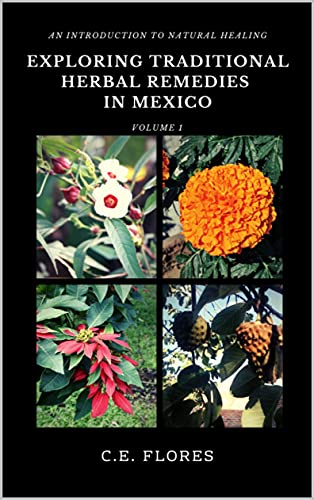
In other herb news, my book, Exploring Traditional Herbal Remedies in Mexico: An Introduction to Natural Healing was inducted into the Great On Kindle Program. When you buy the kindle version of this book, you get credit towards another book purchase from the Great On Kindle Program. It’s quite an honor for little ol’ me. 

Any of these herb books would make great gifts, for yourself or another health-minded loved one!

Leave a comment

Filed under Health

Natural Healing — Palo de Brasil

Haematoxylum brasiletto Photo credit: Jim Conrad

Palo de brasil (Haematoxylum brasiletto) is also called azulillo, palo rojo, Brasilillo marismeño, and in Nahuatl quamóchitl (or cuamóchitl) and hoitzquánhuitl. This tree has yellow flowers and under certain conditions can bloom most of the year. It is native to Mexico and Central America.

In some areas it is known as palo tinto or palo de tinto, however this name leads to some confusion due to the fact that a very similar tree, Palo de Campeche (Haematoxylum campechianum), is also called palo tinto. The misnomer continues when translated into English. Palo de brasil (Haematoxylum brasiletto) is Brasilwood, while Palo de Campeche (Haematoxylum campechianum) is Mexican logwood. Both trees are used to make paint dye (hence palo de tinto). Many herb texts use the two interchangeably, which is incorrect.  

Palo de Brasil has been used traditionally for heart conditions and kidney disease. The Aztecs used the bark as a treatment for diarrhea. In Sonora, twigs are chewed for mouth sores and tooth infections. The bark is combined with licorice root for asthma attacks. A tea made from the branches is a common remedy for depression, fever, and urinary issues. Other areas in Mexico use palo de Brasil as an astringent to clean wounds, treat skin infections and genital warts. 
This tree has anti-bacterial properties and has been shown to be effective against E.coli and Staphylococcus aureus infections. Brazilwood is also used in the treatment of gastric ulcers and cancer in some areas of Mexico. Studies have proven it has anti-cancer properties supporting its use in cancer treatment. Scientists have also discovered that it is useful in the treatment of diseases caused by parasitic protozoan trypanosomes of the genus Trypanosoma such as Chagas disease.

Palo de Brasil Infusion for Kidney Problems

Boil ½ liter of water. 

Add:

12 to 15 grams of palo de Brasil woodchips 

Drink 1 cup 3 times a day after meals.

***

Interested in natural remedies? Uncover herbal remedies from traditional Mexican sources for healing and wellness in the Exploring Traditional Herbal Remedies in Mexico series.

Leave a comment

Filed under Health, Native fauna and flora, Natural Healing