Echoes of History

Every morning when I read through the headlines, I become more and more concerned about the direction the US is heading and wonder how the new authoritarian regime will affect my life in Mexico and my loved ones’ lives still in the US. Doing a little historical digging, here are some of the things that concern me most.

Cracks in the Democratic Foundation

Recent analysis describes the U.S. displaying disturbing similarities to Weimar Germany: political polarization, declining institutional trust, extremist rhetoric, socioeconomic anger, and media fragmentation may be pushing democratic erosion, or worse. 

Stanford democracy scholar Larry Diamond sees an accelerating global decline in democratic norms, with slow authoritarian creep in many nations, including the U.S., often underpinned by inequality and disinformation. 

Personal Powerusurpation and Legal Erosion

The pattern of executive overreach in America mirrors pre-WWII Germany. Both invoke “emergency” powers to skirt democratic checks. In Germany, the Reichstag Fire Decree and Enabling Act dismantled civil liberties and legislative authority. In the U.S., critics point to an uptick in executive rulings, including invoking obscure laws to detain or deport without full due process. 

Another hallmark of rising authoritarianism is institutional capture, where courts, law enforcement, and agencies are stacked with political loyalists. The U.S. has seen growing politicization of the judiciary and federal agencies, echoing Germany’s purge of independent institutions. 

Scapegoating, Propaganda, and Cults of Personality

Scapegoating has long been a potent tool for authoritarian regimes, used to unify a majority by targeting marginalized groups. In 1930s Nazi Germany, Jewish people, communists, Roma, and others were falsely blamed for Germany’s troubles and were framed as existential threats to the “Volksgemeinschaft.” Today in the U.S., similar patterns emerge: immigrants, asylum seekers, and religious or racial minorities are increasingly portrayed as threats to national identity or security.

This narrative is reinforced by a vast network of ICE detention centers, now resembling a modern internment system. In 2025, internal planning documents reveal ICE’s intention to nearly double its inmate capacity from 50,000 to over 107,000, which involved adding 125 facilities, including mega-detention and soft-sided “tent” structures, with major private prison contractors like Geo Group and CoreCivic set to profit massively.

First-hand reports reinforce these concerns. Many facilities are described as overcrowded, unsanitary, and neglectful, with detainees forced to sleep on concrete floors, lacking adequate food, water, or medical care. In a harrowing account, a detainee likened conditions to something worse than prison, describing moldy cells and denial of basic needs, while lawmakers seeking oversight have repeatedly been blocked from entering these centers.

The expansion of these detention systems echoes the Japanese American internment camps of World War II. During that era, over 120,000 U.S. citizens and residents of Japanese descent were forcibly relocated and incarcerated without due process, which was justified under wartime hysteria and xenophobia, and later condemned as a grave constitutional violation. Today, the toll of expanding ICE custody, including detaining non-criminal individuals and asylum seekers, is strikingly similar. One report notes that the proposed doubling in detainees would bring numbers “close to the number of Japanese Americans kept in internment camps”.

Beyond physical repression, propaganda plays a crucial role in normalizing such abuses. Just as Nazi Germany used state media and mass rallies to build cults of personality around Hitler, modern political media in the U.S. idolize certain political figures and delegitimize dissent. This framing enables the gradual erosion of democratic norms, painting detention centers as necessary for security, rather than as sites of human rights violations.

All this underscores a brutal truth: once a society normalizes the detention of “undesirable” groups under the guise of security, it erodes the very foundations of rights and protections for all. The U.S. risks repeating historical mistakes unless public scrutiny, media vigilance, and legal oversight intervene.

What This Means for Me as an Expat in Mexico

Mexico as a Historical Haven but Not a Utopian Escape

For decades, Mexico has provided refuge for Americans fleeing political repression and ideological persecution. From anti-war activists of the 1960s–70s to self-exiled journalists, Mexico has been a sanctuary and, increasingly, a destination for U.S. expatriates seeking relative safety or an affordable life. As of 2022, there are an estimated 1.6 million Americans living in Mexico, including retirees, digital nomads, students, and families.

Still, Mexico, while historically hospitable, is not without its challenges. A Los Angeles Times column notes that affluent American expats may unintentionally insulate themselves from local realities, living in privileged bubbles that shield them from poverty, violence, or corruption. “Expats are immune to that… playing the game of life on someone else’s server with cheat codes.”

A major flashpoint has been the sudden rise in anti-gentrification protests in Mexico City’s trendy neighborhoods like Roma and Condesa. In early July 2025, residents marched through long-time urban communities facing skyrocketing rents and cultural displacement triggered by foreign arrivals, often labeled as “digital nomads.” Protesters carried signs reading “Gringo: Stop stealing our home” and “Housing to live in, not to invest in!” criticizing both Airbnb-driven short-term rentals and government-promoted tourism strategies.

Furthermore, Mexico faces its own authoritarian pressures: centralization of political power, weakening of institutions, and militarization of governance. Some analysts argue the country may be drifting toward “competitive authoritarianism.” Executive overreach, judicial reforms, and suppression of dissent muddy the promise of stability for longtime dissidents.

Moreover, political violence, particularly assassinations connected to organized crime targeting candidates, continues to threaten democracy at the local level, complicating political life for both citizens and exiles.

Final Thoughts

Living in Mexico, I’ve crafted a life I genuinely enjoy, built on community, cultural richness, and personal freedom. Despite the challenges, this country has become a place I call home. 

Yet, I can’t ignore that the political climate is shifting here as well. Mexico has increasingly shown a willingness to kowtow to U.S. pressure in politically sensitive areas, a dynamic that could strain its autonomy and indirectly affect those of us who have built our lives here.

  • In August 2025, Mexico extradited 26 alleged cartel members to the U.S., a move many analysts regard less as a sovereign governmental decision and more as a maneuver to appease U.S. leadership and stave off economic sanctions tied to the fentanyl crisis. This bypassed the typical judicial process, suggesting the extraditions were influenced by Washington’s pressure.
  • Earlier this year, Mexico deployed 10,000 National Guard troops along the northern border under Operation Frontera Norte, directly responding to U.S. threats of tariffs linked to migration control, which was a decision seen by critics as reactive compliance rather than proactive defense of national sovereignty.
  • Most notably, Mexico is now pursuing constitutional reforms to explicitly protect against possible U.S. military incursions or interventions, an ominous signal that such threats feel plausible enough to require legal reinforcement.

Whether democracy will crack, stabilize, or rebound is unpredictable, making my life in Mexico feel even more precious and fragile. It’s not perfect, but it might be all there is before too long.

*****

Considering a Move to Mexico?
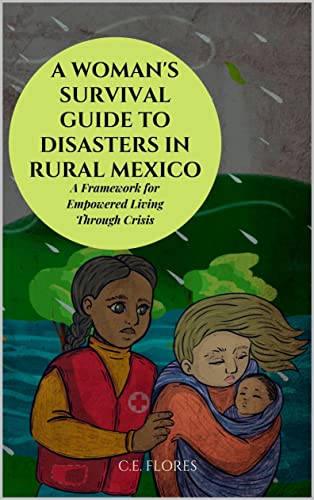
The Woman’s Survival Guide to Disasters in Rural Mexico: A Framework for Empowered Living Through Crisis

In uncertain times, preparation is power. This guide is written for women navigating life in rural Mexico, offering hard-earned lessons, crisis strategies, and resources for building resilience in the face of political, social, and environmental instability. If you’ve ever wondered how to protect yourself, your family, and your future in an unpredictable world, this book gives you the framework to act now.

2 Comments

Filed under Politics, Safety and Security

Natural Healing — Zarzaparrilla

Photo credit: makamuki0

Color me surprised when I discovered the Maya her Koh-key (also spelled koke’) was good old fashioned sarsaparilla and a Mexican native plant to boot. Zarzaparrilla is the Spanish term for the Nahuatl herb, Mecapàtli, heralded by Nicolás Monardes in his book Joyfull Newes Out of the Newfound World (1574) in two entire chapters. He recorded information about a tonic from zarzaparrilla root drunk three times daily for two weeks to sweat out illness. Unsurprisingly, both the “sweat it out” cure and zarzaparrilla root juice is found in traditional Mexican remedies today.

Other names include kgentsililh in Totonac, t’ocnal ts’aah in Huastec, bejuco de canasta (also Philodendron longirrhizum), olcacatzin, zarza parra, cabrestillo, alambrillo, diente de perro, uarhocutaracu sapichu in Purepecha, and cocolmeca, although this term is more often employed to refer to Dioscorea mexicana.

Although there may be as many as 350 worldwide species of this plant, the word zarzaparrilla generally indicates one of five varieties of Smilax used medicinally in Mexico; Smilax spinosa, Smilax domingensis, Smilax ornata, Smilax aristolochiifolia, Smilax moranensis. The rhizome from these plants is used interchangeably in remedies for stomach problems, menstrual disorders, adult-onset diabetes, syphilis, rheumatism, blood disorders, skin inflammations, and diarrhea. 

During childbirth, a decoction made with three fingers of zarzaparilla root and nine thorns from the plant, epazote, sweetened with melipona honey is given to the laboring mother. Although I haven’t seen any studies suggesting zarzaparilla causes uterine contractions, it does have analgesic properties.  

As a blood fortifying tonic, an infusion is made with 80 grams of the zarzaparrilla rhizome for each half liter of water. The root should be soaked for at least 12 hours and then boiled in the same water. Drink three cups daily. Smilax aristolochiaefolia has been shown to aid in the formation of blood cellular components in cases of aplastic anemia, while other varieties of Smilax have demonstrated high anti-hemolytic activity, supporting the traditional use as a blood-fortifier.

For rheumatism, two spoonfuls of chopped zarzaparrilla root (Smilax ornata) and three spoonfuls of chopped cola de caballo (Equisetum hyemale) are boiled in one liter of water for ten minutes. The infusion is covered. Strain and drink every two hours. Studies have shown that Smilax ornata contains significant analgesic and anti-inflammatory properties.

Smilax spinosa is an effective treatment for male impotency because of the estrogenic properties it contains. An infusion for male impotency is made from 1 tablespoon of ground zarzaparrilla root in one liter of boiling water. Allow it to cool, strain, and drink three times a day about 30 minutes before meals. 

For menopausal symptoms, try traditional cerveza de raíz (root beer). Add 7 grams of zarzaparrilla root (Smilax ornata), 1 finger-sized piece of jengibre (Zingiber officinale) cut into pieces but not peeled, 1 vainilla (vanilla planifolia) beanpod (already opened) or two teaspoons of vanilla extract, and two star anise (Illicium verum) pods to four liters of water and bring it to a boil. Turn down the heat and add seven cups of honey. Stir until it dissolves. Strain and allow it to cool. To serve, add two or three tablespoons to a glass of mineral water. Stir and enjoy.

Smilax domingensis is an estrogen agonists, found to be useful in osteoporosis and breast cancer prevention. Smilax spinosa root demonstrates anti-neoplastic effects against breast cancer cells.

Smilax ornata is used to treat ringworm infections in some areas of Guatemala and Mexico. Studies have shown that it has fungicidal and fungistatic activities supporting this traditional use. Smilax ornata root also exhibits antifungal activity and has been shown to be useful in the treatment of yeast infections. 

One syphilis treatment calls for zarzaparrilla root (Smilax aristolochiifolia /Smilax morenensis) and the bark of guayacán de América (Guaiacum sanctum). The two are boiled for two minutes and steeped for 10 minutes before straining. It should be drunk in small doses throughout the day. Smilax spinosa has antioxidative, antibacterial, antiprotozoal, and anti-microbial activities. 

As syphilis is a bacterial infection, zarzaparilla’s antibacterial and anti-inflammatory properties are beneficial in treating this and other genital infections. 

A daily tonic infusion for adult-onset diabetes is made with 1 liter of water and 2 grams of zarzaparrilla root boiled for 15 minutes. Strain and drink hot or cold. Smilax moranensis is a α-glucosidase inhibitor, Smilax aristolochiifolia has a proven hypoglycemic effect, and Smilax moranensis inhibits hepatic glucose production, supporting the traditional use for the treatment of diabetes type-2.  

Smilax aristolochiifolia root has been shown to counteract some symptoms of metabolic syndrome, a cluster of conditions that increase the risk of heart disease, stroke, and diabetes, including high blood pressure, high blood sugar, excess body fat around the waist and abnormal cholesterol levels. Studies have shown that the Smilax species are excellent sources of anti-tumor compounds as well. 

El popo is a traditional celebratory beverage that contains zarzaparilla stems found in Veracruz and Oaxaca. It also has pulverized cacao (Theobroma cacao), piloncillo (coned brown sugar), canela (Cinnamomum zeylanicum), anís (Pimpinella anisum), and whole rice. 

***

Interested in natural remedies? Uncover herbal remedies from traditional Mexican sources for healing and wellness in the Exploring Traditional Herbal Remedies in Mexico series.

Leave a comment

Filed under Mexican Food and Drink, Native fauna and flora, Natural Healing

Natural Healing — Jalapa

Morning glories (Ipomoea) are native to Mexico and, in many herbal sources, lumped together. However, it’s worth the time and effort to unravel the specific uses. Today’s post focuses on jalapas. 

Ipomoea purga

Ipomoea purga, as the name implies, has been used as a purgative since before the conquest. In Náhuatl, this plant is known as tolómpatl or tlanoquiloni.  In Totonaco, it is called Suyu’. The Spanish gave this plant the names mechoacán, from the state Michoacan, and jalapa (xalapa) after the city in Veracruz where these plants grow in abundance. 

The root, raíz de jalapa, can be either laxative or purgative, depending on the dosage. High dosages of the root can be toxic. To treat diarrhea with stomach cramps, a spoonful of the chopped root is simmered in a cupful of water. As a purgative for intestinal parasites, a teaspoon of fresh or dried powdered roots is added to a cup of water and drunk on an empty stomach. 

Constipation is treated with a cup of water and five grams of powdered root every morning until the person has regular bowel movements. As an appetite suppressant, three grams of the powdered root is ingested in a cup of water one hour before each meal. 

In addition to being a powerful purgative, studies have shown that Ipomoea purga demonstrates cytotoxic and antiproliferative activity, making it a potential compound in the treatment of cancer.

***

Interested in natural remedies? Uncover herbal remedies from traditional Mexican sources for healing and wellness in the Exploring Traditional Herbal Remedies in Mexico series.

Leave a comment

Filed under Health, Native fauna and flora, Natural Healing