Spanish Accelerated

For those of you that struggle with the language barrier, you’ll love today’s featured ex-pat. In this post, I’d like to introduce you to Judit Megal, owner of Spanish Accelerated (Use code Spanish22).

My family is Russian and I grew up with Russian as my first language and English as my second. Knowing these two languages can give you a bird’s-eye-view of how languages work and how Spanish and English are similar and different, both at the same time. My mom was an immigrant in her 40s and to her last days, spoke with a heavy accent. So I understand the struggle learn a second language, especially later in life.

In 2006 a job brought me to Mexico. I was working for Diamonds International, in Riviera Maya. Now I live in the Riviera Nayarit, another job moved me here and I loved it so much I stayed!

I’ve had so many defining moments since moving to Mexico. There’s nothing quite like getting lost in Mexico City, in heavy rain, at rush- hour, because I didn’t understand the directions given to me… I also couldn’t pronounce the words Cuauhtemoc, Tlaquepaque, and Jacarandas, which were all on my way to work. It was definitely stressful to be in Mexico City, alone, on a bus, and not understanding. It has contributed to my desire to learn, and fast.

After over a decade of living in Mexico, I’m more Mexican now than something else, the daily rhythm, the way we say things, handle problems, negotiate, etc. It made me much more Cabrona than before but also allowed me to express my more feminine, soft side. I love Mexico!

Six years ago I’ve decided to take my Spanish lessons to be a full-time job because my side hobby was so satisfying that my client exploded. I teach mainly to retirees and snowbirds because they are the biggest population here. We work online, both one-on-one and in small conversation groups and I found that combination brings the best results. Plus, you must speak the language, because only reading and writing will bring you 2/3 of the way. The understanding part, especially when people speak fast, is crucial, and can’t happen without YOU SPEAKING. ( Our private classes are off the record and designed to give you the courage to speak).

Facebook is an easy way to reach me:
https://www.facebook.com/MexicanSpanishLessons

Or for more information, you can also go to:

Spanish_Accelerated

Leave a comment

Filed under Small Business in Mexico

Natural Healing — Zacate Limón

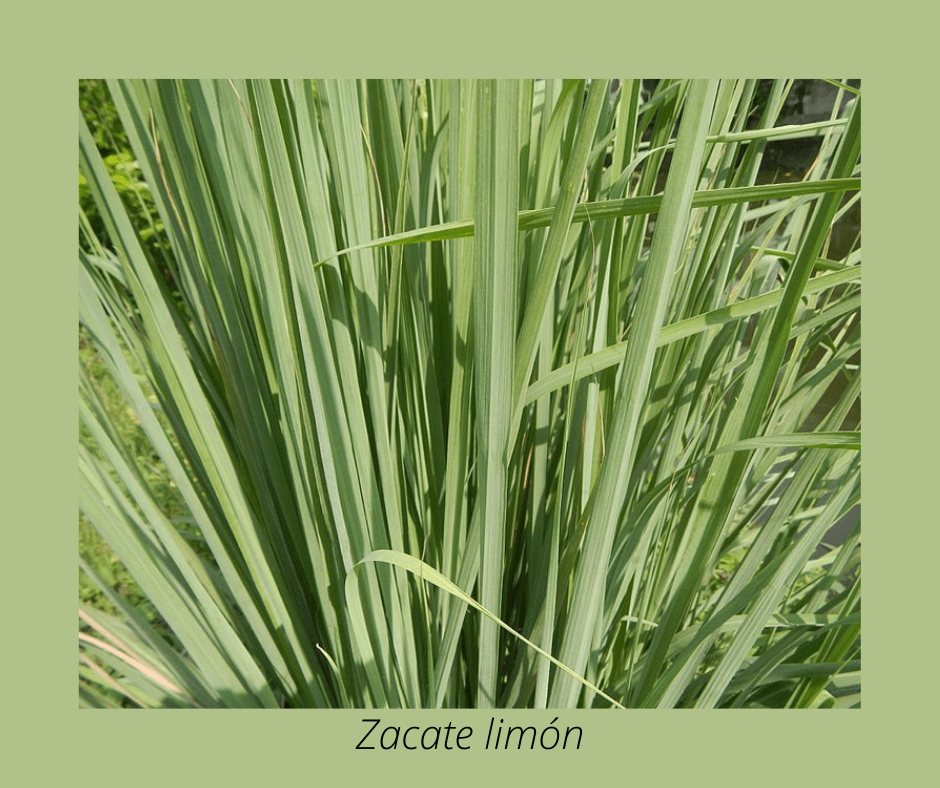
Cymbopogon citratus Photo credit: Judgefloro

Zacate limón (Cymbopogon citratus) is also known as té de limón, limoncillo, limonaria, hierba de limón, cedrón pasto, pasto de limón and lemongrass. It’s uncertain when zacate limón arrived in Mexico. Some sources claim that Francisco Hernández mentions it in his book about Mexican indigenous remedies. However, I was unable to verify that. The word zacate comes from the Nahuatl term zacatl which means grass. Since limónes aren’t native to Mexico and weren’t found in the country until after the Spanish conquest, it’s not a term that is found in Nahuatl and none of the zacatl terms in Hernández’s writings match the description of zacate limón. Therefore, it’s probable that zacate limón is another herb brought by the Spanish friars. 

Zacate limón has antiamoebic, antibacterial, antidiarrheal, antifungal, antimalarial, anti-inflammatory, antiparasitic, antibiofilm, antimutagenic, anticancer, antitumor, and antimycobacterial properties. It also contains antioxidants and functions as a neuroprotective and vasorelaxant agent. It is an effective botanical insecticide as well.

Traditionally, zacate limón is used to lower blood pressure, reduce muscle pain and migraines, treat colds, fungal infections, and diarrhea. A daily decoction of zacate limón after meals or before breakfast with milk is prescribed for stomach ailments. For nausea and vomiting, an infusion is made combining zacate limón and yerba buena (Mentha spicata). To lower blood pressure, three cups of a zacata limón are recommended.  A compress can be made by boiling entire leaves and then applying it to infected areas. Some areas also use the dried leaves or the root as a tooth whitener. For a refreshing summer drink, combine leaves from orange (Citrus × aurantium) or lime (Citrus aurantifolia) trees and zacate limón. The section of grass closest to the root will give you the best flavor.

Zacate Limón and Jengibre Energy Drink

  • 2 tablespoons grated jengibre root (Zingiber officinale) 
  • 2 chopped full stems of zacate limón (Cymbopogon citratus)
  • 3-5 flores de naranjo (Citrus × aurantium)
  • 1 teaspoon yerba buena (Mentha spicata)

Add the ingredients to two cups of boiling water. Allow it to steep for 10 minutes. Strain. Add miel (honey) if desired. Serve hot or cold.

***

Looking for practical plant remedies for common ailments? Find the benefits of over 60 traditional Mexican treatments for health and wellbeing in the Exploring Traditional Herbal Remedies in Mexico series.

2 Comments

Filed under Health, Natural Healing

Natural Healing — Jícama

Photo credit: Judgefloro and Wibowo Djatmiko

Jícama (Pachyrhizus erosus), from the Nahuatl word xicamatl, is a native Mexican plant. From Mexico, it was introduced to the Philippines by the Spanish and then to Southeast Asia. In Mexico, two types of jícama are cultivated. Jícama de agua is turnip-shaped and has a clear, watery juice, while the juice from jícama de leche is spindle-shaped and is milkier.

As with other plants we’ve looked at, its importance in the prehispanic diet is evidenced by the number of Nahuatl words devoted to it. These words include the specific name for the root, catzotl, the verb for planting jícama, cahtzōntōca, and the person who plants jícama,  cahtzōntōquiliā. Other names it is known by in Mexico include chicam and hehenchican. In English, jícama is most often called the Mexican yam bean.

The edible tuber’s fresh leaves, seedpods, and peel contain the toxin rotenone and make an effective insecticide. However, once the leaves dry, they are no longer toxic and often used as livestock feed in Mexico.

If you’ve never had jícama, you are in for a treat. The tuber is crisp and juicy and can be enjoyed raw or cooked. It has a fresh flavor with a hint of cinnamon. It is often added to salads or sprinkled with limón and chile powder. It remains crisp after cooking, making it an excellent substitute for water chestnuts. Starch from the tuber is used in custards. Even the seed pods can be eaten, as long as they are thoroughly cooked.

Jícama plants need nine months of frost-free weather to mature. Once harvested, the tuber will remain fresh for up to four months whole and up to one week after being cut. 

An intestinal purge is made with 40 grams of jícama seed juice drunk morning and night. For wounds, a tincture is made from 100 grams of powdered seeds steeped in ½ liter of alcohol, soaked for three days, strained, then applied as a poultice. An infusion made from the root and seedpods is utilized as a wash for gout and inflammation. 

Not only is jícama refreshing, but it also has excellent nutritional value. Jícama contains iron, magnesium, potassium, manganese, zinc, calcium, and selenium. It also has vitamins C, A, and E.  Additionally, studies have shown it is a good substitute for probiotic drinks.

Studies have shown it to have antioxidant, anticancer, anti-diabetic, anti-osteoporosis, antifungal, antibacterial, and antiviral properties.  It has an immunomodulatory effect. It is considered a preventative food source against the development of diabetes and obesity. The toxic rotenone found in the peel, fresh leaves, and seedpods is an effective insecticide and anti-tumor. Regular ingestion promotes cardiovascular health. The seed extract cause muscles to relax as well as reduces anxiety and aggression. The seeds also show moderate anti-herpes simplex virus (HSV) activity.

Agua de Jícama

  • 4 cups of water
  • ½ cup jugo de limón (Citrus aurantifolia)
  • ½ cup jícama peeled and cut into pieces (Pachyrhizus erosus)

Blend the jícama with the limón juice and water. Sweeten with miel (honey) as desired.

***

Interested in natural remedies? Uncover herbal remedies from traditional Mexican sources for healing and wellness in the Exploring Traditional Herbal Remedies in Mexico series.

Leave a comment

Filed under Health, Mexican Food and Drink, Native fauna and flora, Natural Healing