Natural Healing — Guaco

Guaco is the common name for plants in the Aristolochia genus, not to be confused with Cleome serrulata or Mikanie guaco, which are also known as guaco. There are at least 500 species of Aristolochia, mostly found in the tropics. Approximately 65 are native to Mexico. At least three have been very recently discovered and named; Aristolochia purhepecha found in Michoacán; Aristolochia chiapensis native to Chiapas; Aristolochia emiliae in Jalisco. 

Guaco flowers have a strong odor to attract insects, which then become caught in the perianth tube. Once an insect has been captured, the hairs wither, and the insect is released, now covered with pollen. 

Most often, guaco is prescribed for stomach ailments or pain relief from poisonous bites and stings. Although guaco is the most common name in Mexico, some species of the plant have other regional names. 

Aristolochia plants have been shown to be anticancer, antibacterial, antiparasitic, and antiviral. They also have antiplatelet, antioxidant, anti-inflammatory, and neuroprotective activity. Additionally, the plants have demonstrated antifibrotic activity and anti-diabetic potential. Many varieties cause changes in the estrous cycle, and no remedy containing guaco should ever be taken by pregnant women as the plant is toxic. 

A few studies have been done on specific plants in the Aristolochia genus. Aristolochia taliscana exhibits antimycobacterial, anti-inflammatory, trypanocidal, and neuroprotective activity. A plant decoction is made to treat malaria.

Aristolochia trilobata (bejuco guaco) demonstrates antinociceptive and anti-inflammatory effects. A vaginal douche to treat infection is made by boiling a leaf in ½ cup of water and the root is heated and placed directly on a throbbing tooth infection. 

Photo credit: Zazil Dellamary 

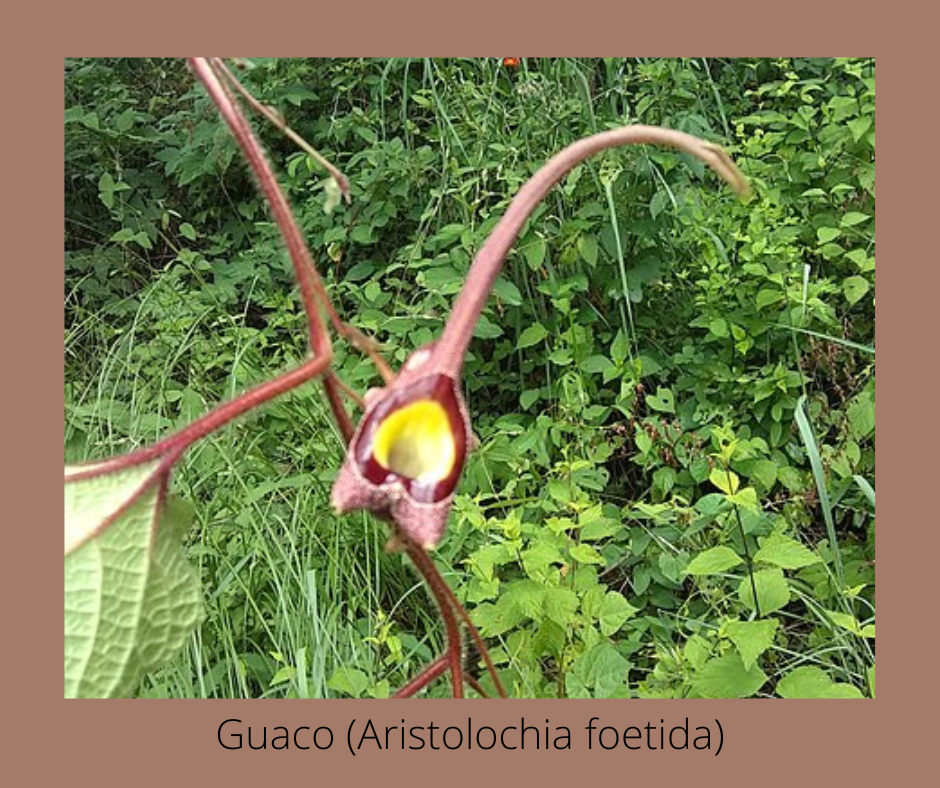
Aristolochia foetida shows cytotoxic potential against breast cancer cells. 

Aristolochia Mexicana is tlacopatli in Nahuatl and was used to treat urinary tract infections and speed labor during a difficult birth. Francisco Hernández reported its use in the treatment of abscesses, dysentery, and deafness. He described two varieties, coayxtelolotli (Aristolochia odoratissima) and Tomahuactlacopatli (Aristolochia pringlei), utilized in the treatment of venomous bites and stings. 

Photo credit: David J. Stang

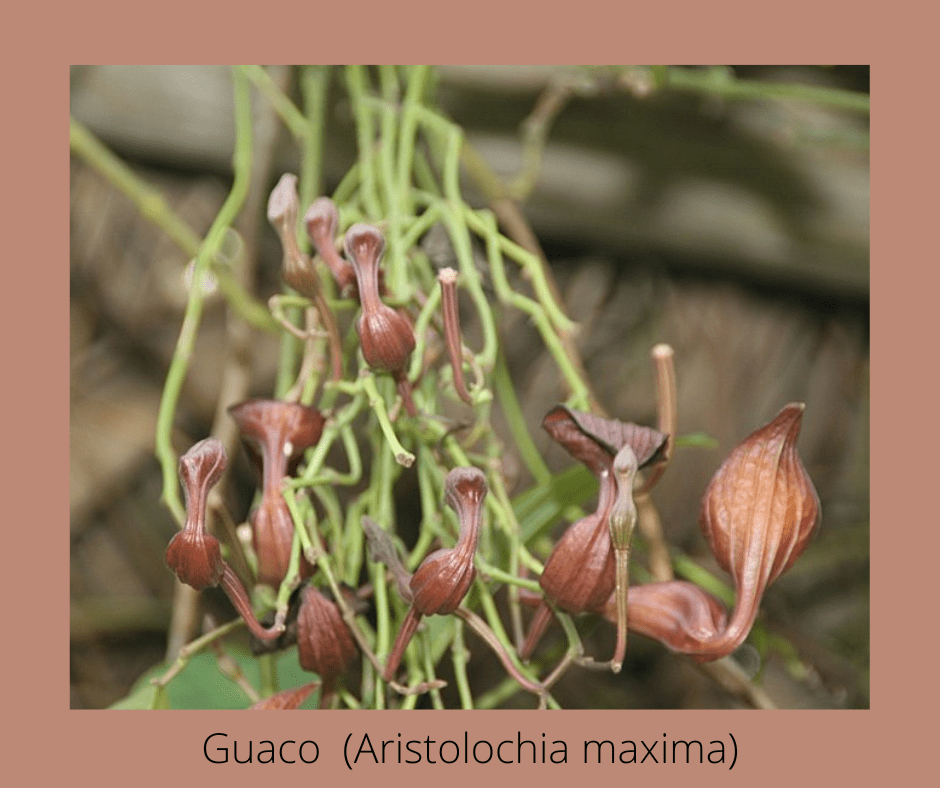
Aristolochia maxima has the botanical synonyms Aristolochia geminiflora and Aristolochia constricta. It’s native to South and Central America. In Guatemala, it is known as canastilla and in parts of Mexico, it is known as tecolotillo and wako aak’ in Maya. It’s often prescribed as a root decoction for stomach pain. Studies have shown that it reduces the severity of opiate withdrawal symptoms. 

Photo credit: Hesner Coto Fuentes

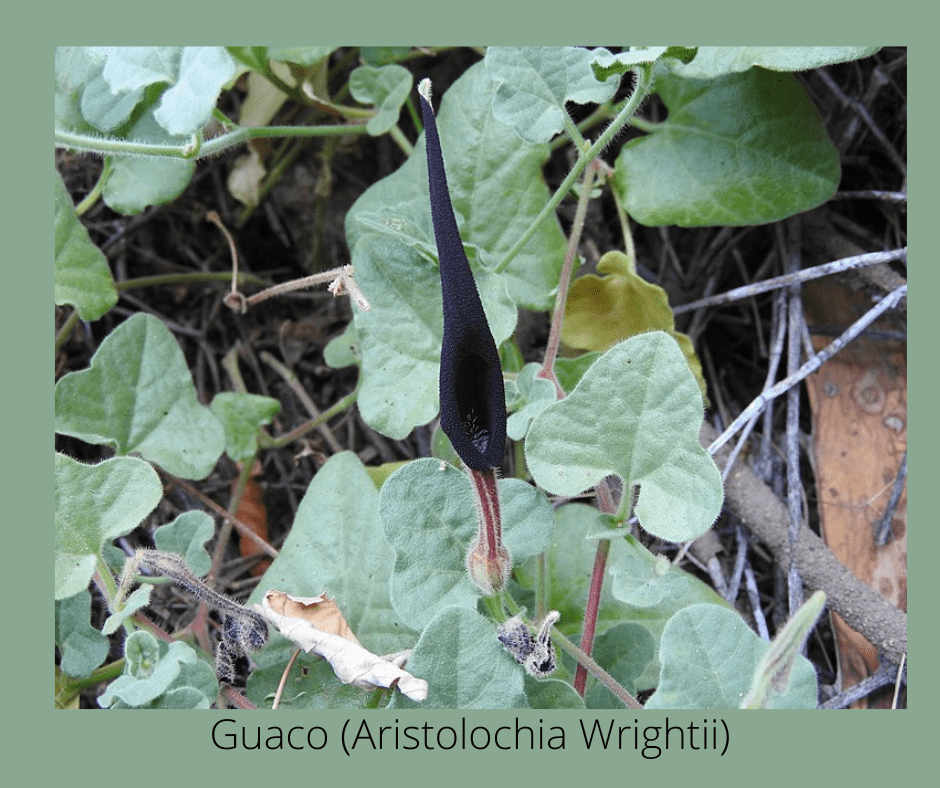
Aristolochia brevipes, with its botanical synonym Aristolochia Wrightii, is often referred to as hierba del indio. It has anti-cancer properties, as well as antimycobacterial and anti-tuberculous activities. Boil five guaco leaves in a liter of water and drink a room-temperature glass every day as a cancer preventative. Gallbladder pain can be treated with the same infusion three times a day cada tercer día (every other day). 

Aristolochia monticola, another variety known as hierbo del indio, is used in Baja California Sur for bilis (excessive rage), digestive issues, and intestinal parasites. It is also used in diabetes treatment and eye infections (lagañosos). For intestinal parasites, one root Aristolochia monticola section is boiled along with the estafiate root (Artemisia ludoviciana subsp. mexicana) and taken daily before breakfast. 

Aristolochia Watsonii, with its botanical synonym Aristolochia porphyrophylla, has stinky flowers that resemble a rat’s ear. The entire plant is toxic. However, it has been used as a treatment for snakebite, in a leaf decoction to reduce fever, and as a substance to expel the placenta after birth. 

Photo credit: John Tann

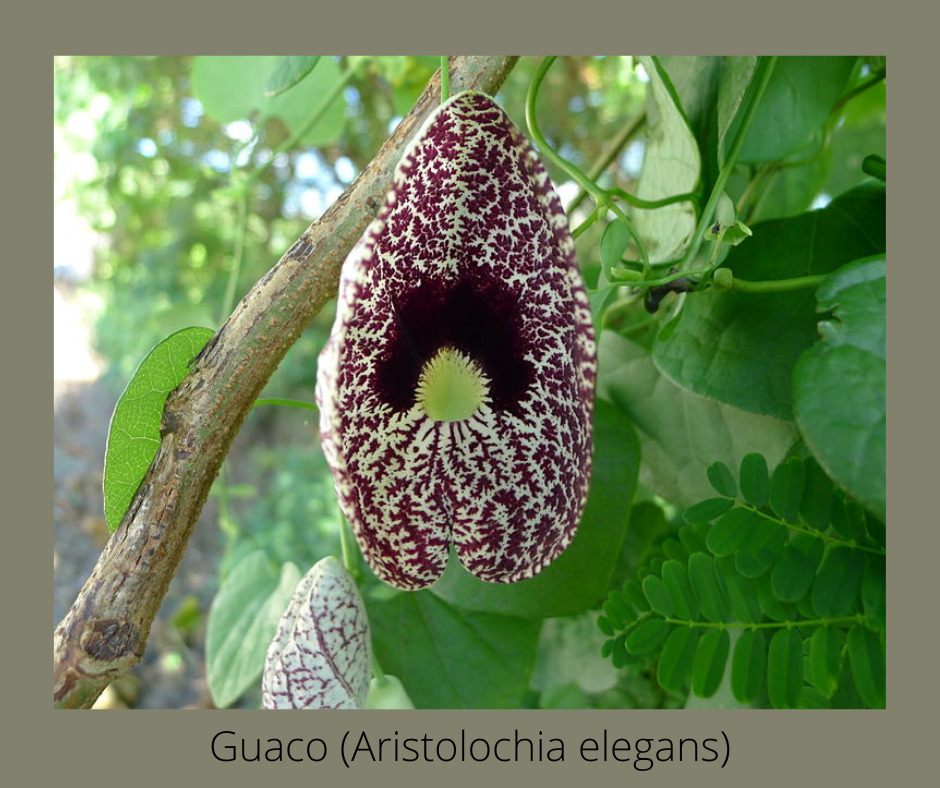
Aristolochia elegans, known as Flor de Cálico or flor de patito, is often used as an anti-venom. Studies have shown that the roots are an effective treatment for scorpion sting symptoms. The plant also demonstrates antiparasite and antimycobacterial activity.

A poultice for scorpion stings is made by dampening the crushed plant with warm water and placing it on the stung area. In addition, a hot infusion is made with one leaf in a cup of boiling water drunk at three-hour intervals until the pain subsides. 

Photo credit: Charlie Jackson

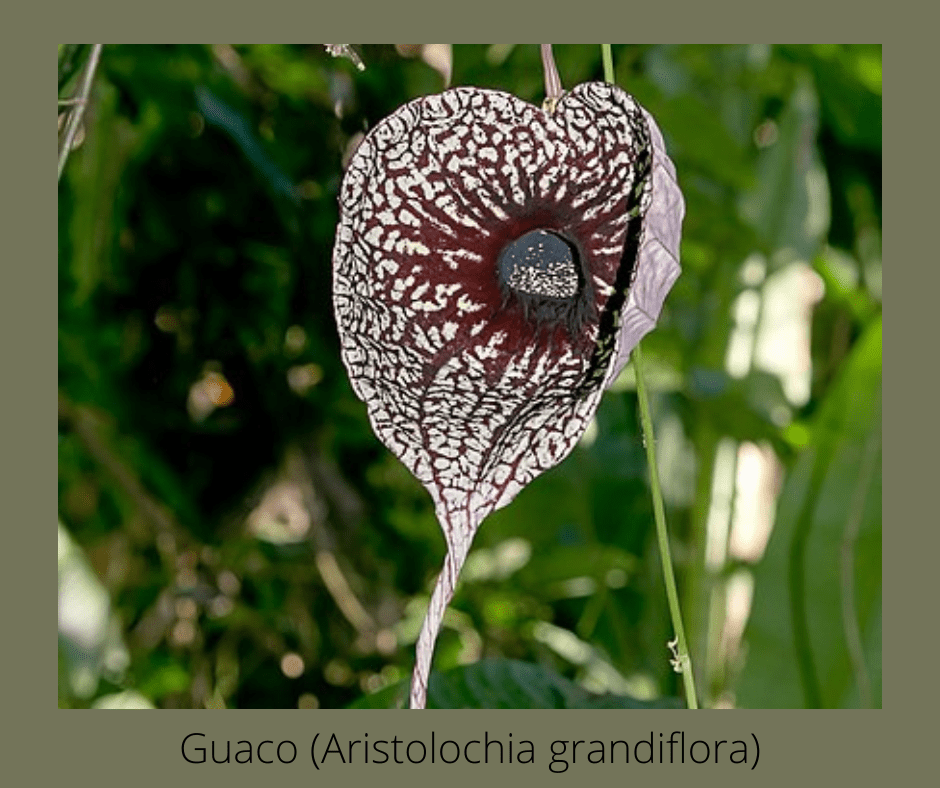
The entire Aristolochia grandiflora plant is used as an anti-venom in the event of snakebite. The leaves are made into a poultice for rheumatism pain. Aristolochia asclepiadifolia Brandegee, native to Veracruz, is prescribed for dysentery and poisonous stings and bites. 

One cup of a tincture, about ten milliliters, made from five guaco stem pieces about six cm long, soaked in five liters of aguardiente (liquor), is a recommended diarrhea treatment. Because of the toxicity of the plant, it should only be administered once per illness period. If diarrhea continues after this treatment, another remedy should be given that does not include guaco. 

Aristolochia odoratissima, also known as cuaco, sombrerito, hediondilla is prescribed as a stimulate, diuretic, and antipyretic. The leaves are used as a poultice for swollen lymph nodes, venomous bites or stings, and sciatic or arthritis pain. A tea infusion made from the roots or flowers is prescribed for arthritis pain.  Studies show that the plant does provide an analgesic effect. 

Photo credit: Kurt Stüber

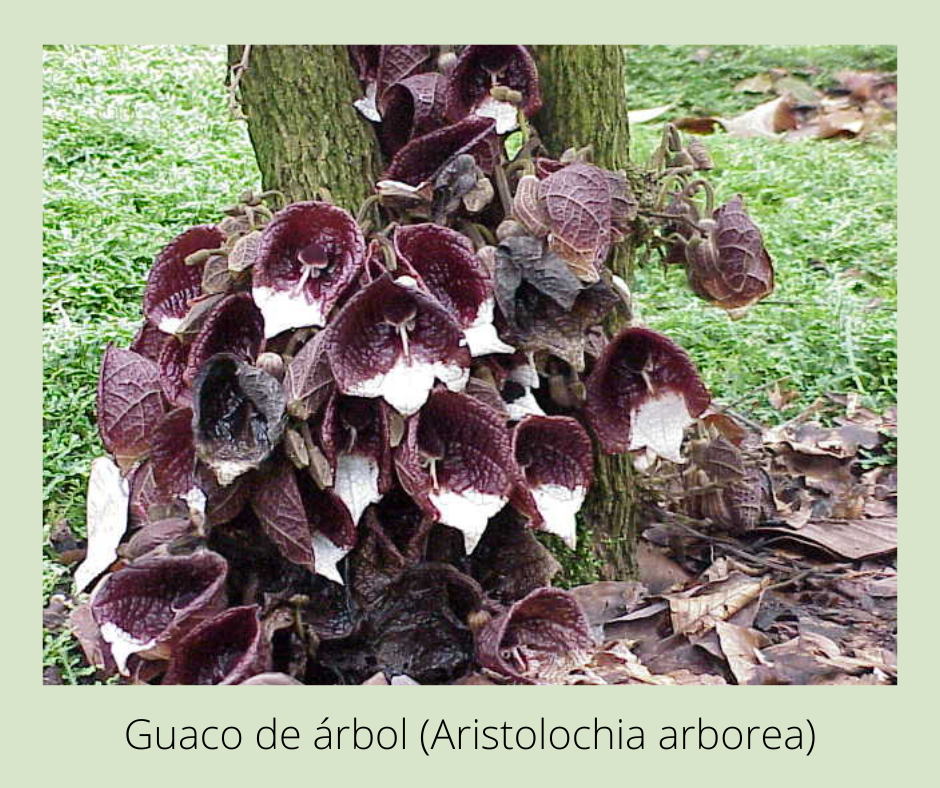
Aristolochia ovalifolia and Aristolochia arborea (guaco de árbol)  are used as snake bite treatments in Veracruz. Aristolochia pentandra is the species used in Tabasco and Yucatán. Additionally, Aristolochia pentandra is given for stomach pain (empacho) and used in wound care. An antiseptic wash is made from the flowers. Aristolochia impudica (guaco de palo) is prescribed for snake bites, cough, heart pain, and diarrhea. 

One snake bite treatment calls for five 2.5 cm guaco stem sections harvested from a mature plant, a dry seed from the crucetillo (Randia monantha Benth), and a piece 3 to 5 cm of  contrayerba (Dorstenia contrajerva L.) These are added to a liter of aguardiente (alcohol) to make a tincture. After being bitten, the person should drink a “trago” (shot) of the tincture and head to the nearest clinic or hospital for further treatment. 

As a treatment for cansancio (fatigue), the guaco tincture does not include crucetillo or contrayerba. One tablespoon is recommended each week. As a treatment for skin diseases, small amounts of shade-dried root powder are taken orally for 48 days.

*** 

Interested in natural remedies? Uncover herbal remedies from traditional Mexican sources for healing and wellness in the Exploring Traditional Herbal Remedies in Mexico series.

Leave a comment

Filed under Health, Native fauna and flora, Natural Healing

Natural Healing — Cardo Santo

Photo Credit: Erick Noe Tapia Banda

The genus Cirsium, known as cardos, has around 300 species, 75 of which are native to North American and another 35 native to tropical Central and South America.

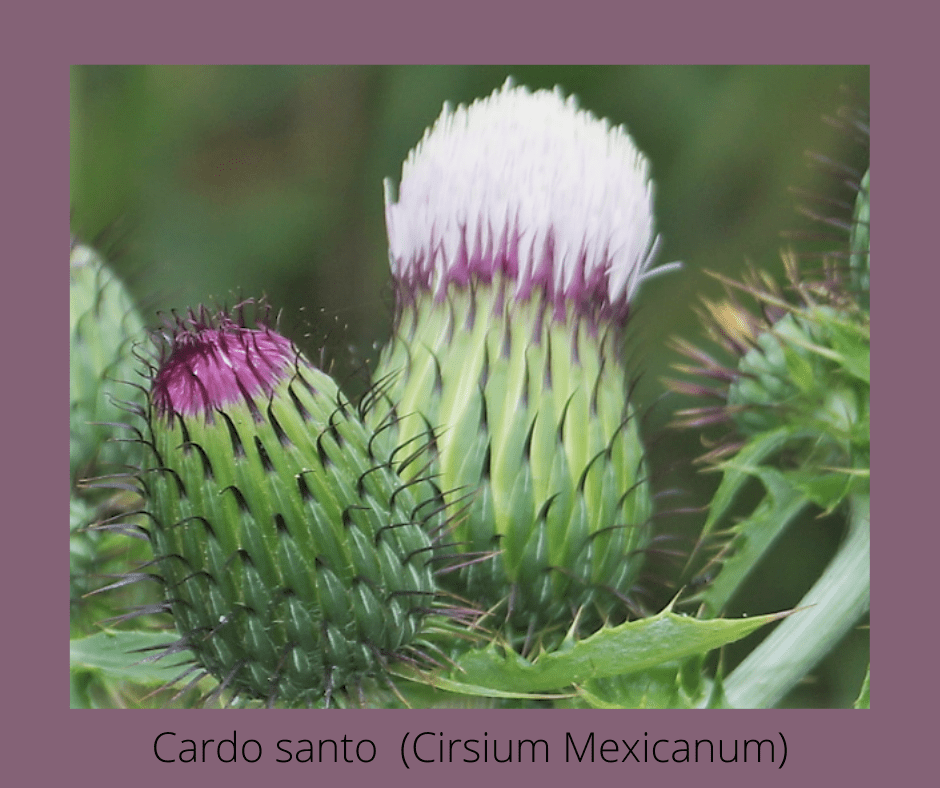
Cardo santo (Cirsium Mexicanum), holy thistle, should not be confused with cardo bendito (blessed thistle/Centaurea benedicta), which is not native to Mexico, or chicalote (Argemone Mexicana / Mexican Prickle Poppy). Both plants are commonly called cardo santo. 

There is also some issue with spelling. Nicolás Monardes recorded several uses for “carlo santo” in his book Joyfull Newes Out of the Newfound World, which subsequent herbalists have used to refer to this plant. However, in Mexico, the term most commonly employed is the Spanish cardo (not carlo) santo. Traditional remedies recorded in Monardes’ book included chronic stomach distress, bad breath, and flatulence. 

According to The Classic Codex of 1552, the general Nahuatl term for thistles (cardos) was huitz-quilitl, meaning thorny (huitz) edible (quilitl), and they were used in remedies for black blood (bilis), scurf (dandruff), excessive heat (fever), and inflammation.

However, these days, cardo santo (Cirsium Mexicanum / Mexican Thistle) is generally prescribed to treat digestive ailments, toothache, rheumatism, heart pain, and anxiety. Other uses include fever reduction, cancer treatment, and diabetes regulation. The Zapotecs, Mixtecs, and Totonacs include cardo santo in remedies to combat el susto (fear-induced infirmities).

The roots are boiled for a tea to reduce stomach inflammation. An infusion of the flowers is made for diarrhea. Another diarrhea remedy calls for a large pinch of chopped cardo santo roots boiled in a liter of water for 15 minutes. Allow it to cool slightly, strain, and serve. An infusion from the entire plant is made as a laxative. 

For toothache, a small piece of root is boiled. The liquid is then swished through the mouth for a few minutes to alleviate the pain. 

In Michoacán, small root segments and a piece of tejocote (Crataegus mexicana) are brewed for urinary tract infections. An infusion made from the flowers is prescribed for the same ailment in the states of Mexico and Puebla.

An infusion made from the leaves is administered as a diabetes treatment. However, studies have found that there is no scientific support for cardo santo’s use in the treatment of cancer or diabetes. 

Photo credit: Patrick Alexander

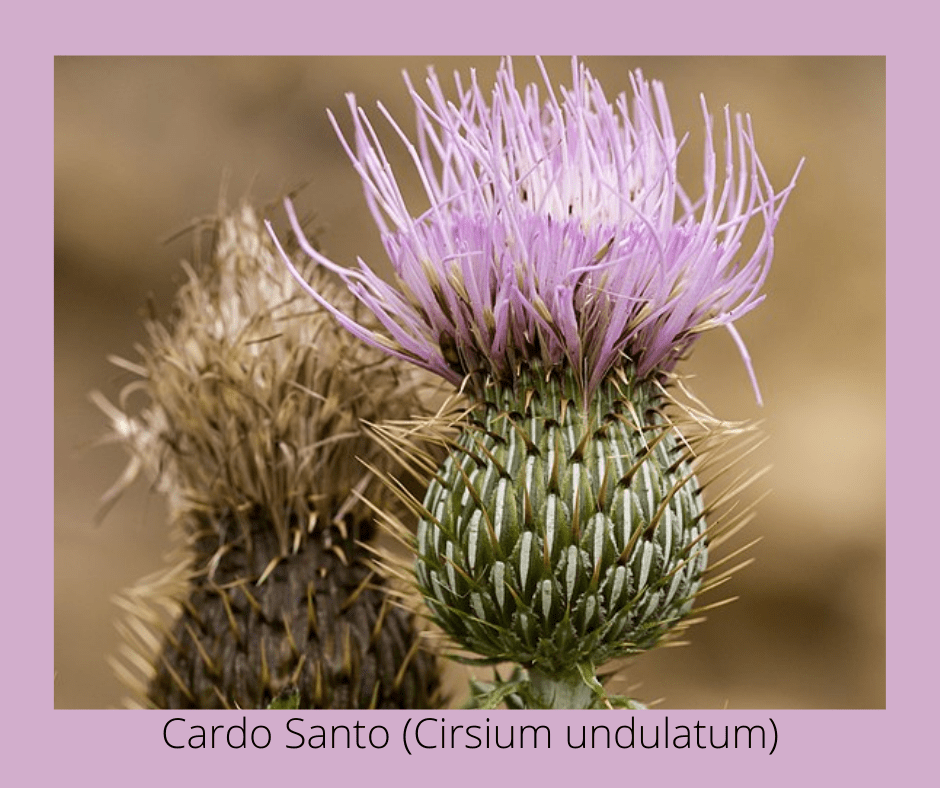
Cirsium undulatum (wavyleaf thistle) is another native thistle that is commonly referred to as cardo santo in Mexico. It is used interchangeably with Cirsium Mexicanum in most remedies.

Photo credit: Ricardo Arredondo

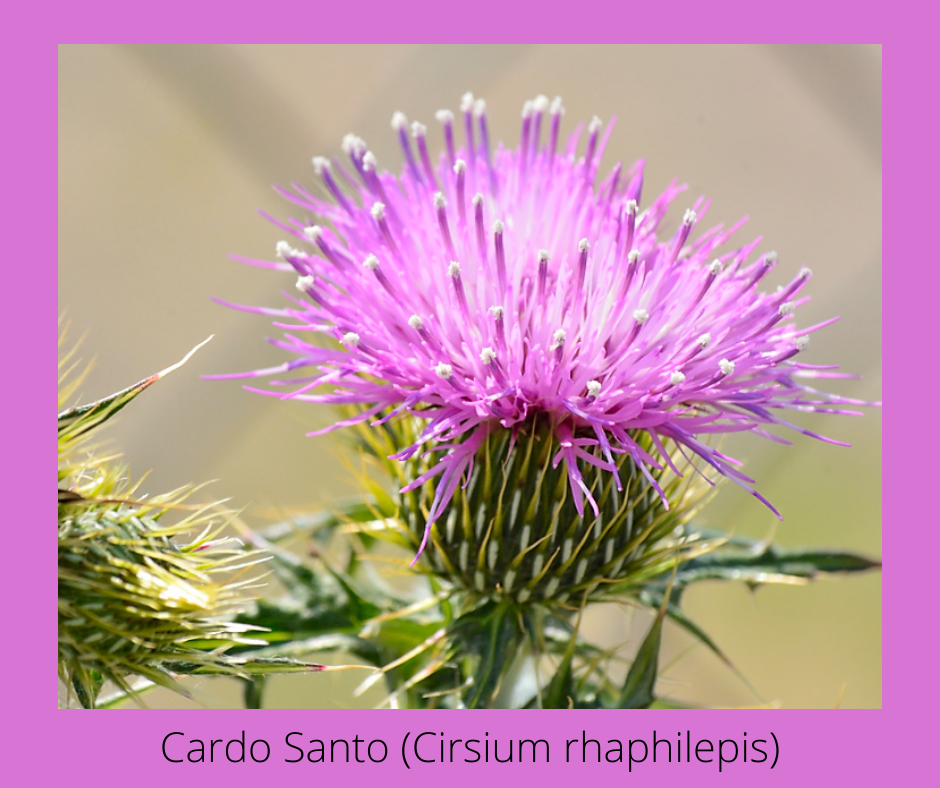
Another thistle commonly referred to as cardo santo is Cirsium rhaphilepis

Photo credit: Robb Hannawacker

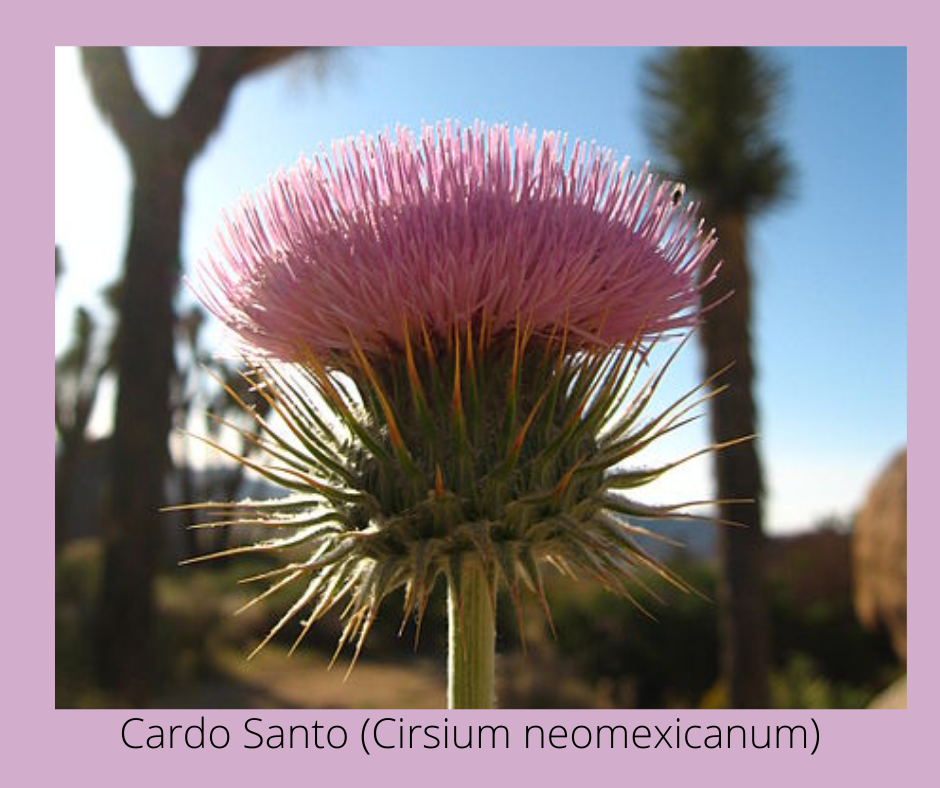
Cirsium neomexicanum (desert thistle) is also known as cardo santo. The stems and roots are edible when harvested early, before blossoming. Stems over two feet tall are too tough to eat. 

Photo credit: Dick Culbert

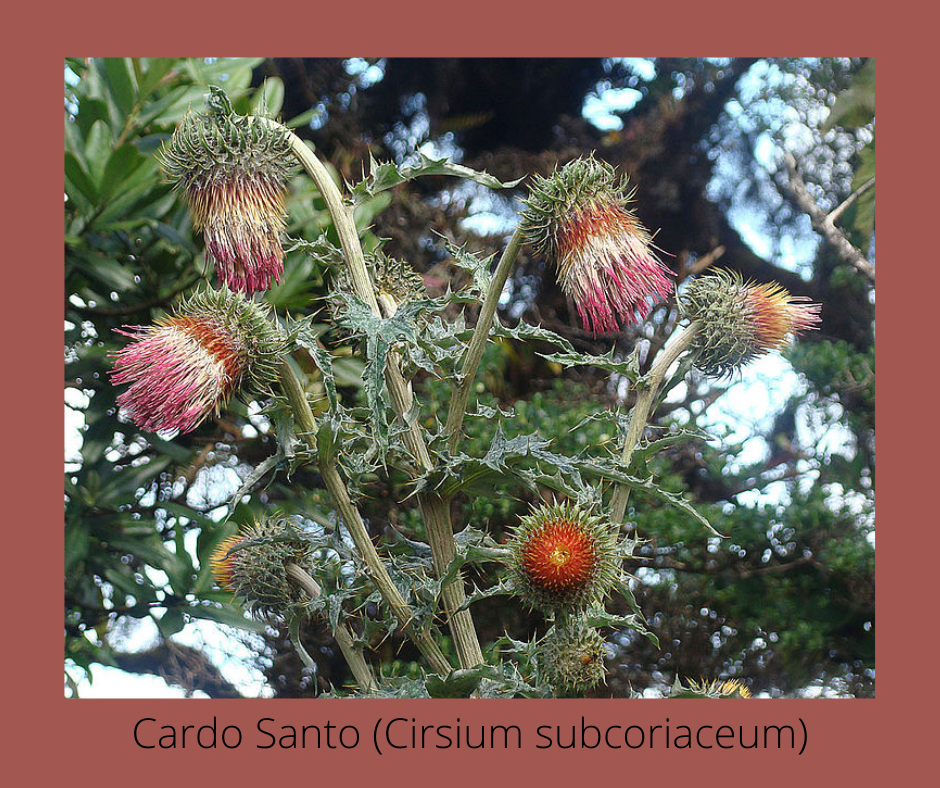
Cirsium subcoriaceum, yet another cardo santo, is prescribed for liver, heart, and respiratory ailments. Typically, the remedy calls for five grams of root and flowers boiled to make a strong decoction. One cup is drunk every 6 hours for 15 days, followed by a 15-day abstinence. The treatment is repeated every 15 days until symptoms improve. Studies have shown Cirsium subcoriaceum to be anti-inflammatory and analgesic.

***

Interested in natural remedies? Uncover herbal remedies from traditional Mexican sources for healing and wellness in the Exploring Traditional Herbal Remedies in Mexico series.

Leave a comment

Filed under Health, Native fauna and flora, Natural Healing

Natural Healing — Algodoncillos

Algodoncillos (Asclepias spp.)

There are approximately 200 species of Asclepias worldwide, 75 of which are found in Mexico, and at least 17 of those have reported medicinal uses. The plants in this genus are most often referred to as algodoncillos, talayotes, or venenillos in general, although some varieties are known by other names by local populations. Unfortunately, as is common with plant names in Mexico, many of the names are also used to identify unrelated plants, making positive identification difficult. 

Most Asclepias are toxic, although certain varieties are used medicinally, and others are essential to the lifecycle of the monarch butterfly. A few have edible fruit or leaves.

Inmortal (Asclepias asperula) 

Photo credit: Zion National Park

Asclepias asperula ssp. Asperula is known as antelope horns or spider milkweed in English and algodoncillo and cuerno de antílope in addition to inmortal in Spanish. Bernardino de Sahagún reported that inmortal was used as a laxative by the Aztecs. An Aztec Herbal: The Classic Codex of 1552 included it in a chest congestion remedy as well. 

As a tonic, laxative, or expectorant, a teaspoon of powdered root is added to a glass of water first thing in the morning. The root powder is also used in a tincture to bring on menstruation. A stronger dose is employed to strengthen labor pains and quicken delivery. Additionally, the ground root is soaked in water and rubbed on the laboring mother’s abdomen. As an aid to expel the placenta, a tea is made from inmortal ground root and epazote leaves (Dysphania ambrosioides).

Asclepias asperula is a favorite of monarch butterfly caterpillars. It contains cardiac glycosides, which are toxic. The butterfly retains this toxicity, making them poisonous to predators. Inmortal is toxic to humans and livestock as well, and extreme care should be exercised when employing this plant for any remedy. 

Asclepias asperula ssp. Capricornu is a second subspecies of Asclepias asperula also known by the name inmortal. The leaves of the capricornu are broader, and the floral crowns are whiter than subspecies asperula. Accepted synonyms for Asclepias asperula ssp. Capricornu include Asclepias asperula var. Decumbens, Asclepias capricornu, Asclepias capricornu ssp. Occidentalis, Asclepias decumbens, Asclepiodora decumbens, and Aceratos asperula. Asclepias asperula ssp. Capricornu is prescribed in some areas as an abortifacient.

Quiebra muelas (Asclepias curassavica)

Photo credit Vinayaraj

Asclepias curassavica has a whole host of names including flor de sangre, burladora, mata ganado, cancerillo or cancerina, cresta de gallo, and quiebra muelas. Indigenous names include pameyat warnal (Tzeltal), xpamal yat (tzotzil), tesuchi-potei (otomí), chac anal or x-anal (Maya), and punchix huítz (Tenek).

Throughout Mexico, the latex sap is most often prescribed for tooth problems, especially as pain relief from cavities or during tooth extraction. In the state of Tabasco, the plant’s seed is placed on the painful tooth. Asclepias curassavica has been shown to be anti-inflammatory and possess an antinociceptive effect.

In other areas, the sap is applied to the skin for various ailments such as acne, gonorrhea, warts, cold sores, and erysipelas (bacterial skin infections). Pus-filled sores are covered in a poultice of crushed leaves. Bacterial skin infections call for 25 to 30 ground leaves made into a paste with a little salt water and applied three or four times daily for two days. Leaves boiled with salt and added to a bath for a pimple treatment. 

In the state of Puebla, an acne decoction employed as a wash is made with quieba muelas, flor tocada (Lobelia laxiflora), and gobernadora (Lantana camara). Also, in Puebla, snake bites, scorpion stings, and embedded thorns are treated with a quiebra muelas plant decoction. A wound wash is made by boiling the branches and leaves from quiebra muelas, epazote (Dysphania ambrosioides), escoba amargosa (Parthenium hysterophorus), and salt. 

The flowers are made into a tincture for headaches and rheumatism relief. Pain in the spleen is treated with half a glass of water and four drops of latex drunk several times a day. A root decoction is prescribed for painful urination. 

Quiebra muelas is used as an anti-parastic compouns and purgative. It’s recommended for bilis (rage). It’s considered a “hot” plant.

Asclepias curassavica demonstrates antioxidant, antitumor, cytotoxic, and pro-apoptotic activity, making it useful in cancer treatments. 

As a respiratory aid for congestion from colds and flu, the latex is liberally applied to a cotton cloth, allowed to dry, and then sniffed, which causes sneezing, in effect clearing out the nasal passages temporarily. One study has suggested quiebra muelas is effective in treating COVID-19 as it increases respiratory capacity and reduces symptoms.

Hierba del chicle (Asclepias notha)

Photo credit: Pedro Tenorio Lezama

Asclepias notha and Asclepias lanuginosa are considered botanical synonyms. Other names for the hierba de chicle include hierba de leche, ita kutu, and chicle guizh guts in Zapotec. The sap is used to made chicle (chewing gum) by the Chocho, a Mixtec group in Oaxaca.

***

Interested in natural remedies? Uncover herbal remedies from traditional Mexican sources for healing and wellness in the Exploring Traditional Herbal Remedies in Mexico series.

Leave a comment

Filed under Health, Native fauna and flora, Natural Healing