Mentzelia aspera is given the name pega ropa (sticks to clothes) and Mentzelia hispida, pegajilla (a little sticky), because they literally stick to any fabrics or fur that happen to brush against it, hitching a ride. In fact, bats have been known to become hopelessly entangled in the plant. This stick-to-it-ness led to its prescription for caída de matriz (displaced uterus) with the belief that something that sticky could keep that roving womb in place.
Other names for both plants include pega-pega (it sticks, it sticks), pegoste (sticky), and pegajoso (clingy). Mentzelia hispida is known as tsayuntasy or tsots-k’ab in Maya and zazálic or zazale with a spelling variant sasele which mean “something sticky” in Nahuatl. Zazalic patli was a medicine made from the “sticky rods” given to women who had given birth either as an aid to expel the placenta or to help move the internal organs back into place. English names include blazing stars and stickleafs.
Not much research has been done on the medicinal value of the Mentzelia genus. There are approximately 95 varieties found worldwide. Twenty-five species of Mentzelia grow in Mexico.
Mentzelia aspera and Mentzelia hispida are often used interchangeably in traditional medicine. Pegajilla ashes are applied to the skin for pimples. Pega ropa pulverized root induces vomiting. An infusion made from the entire plant, except the roots, is given to relieve rheumatism and anemia and drunk as agua de uso (in place of water).
For the condition, hervor de sangre, which, as close as I can figure, is an eruption of boils resulting from a skin infection or cancer, the plant is boiled, and the water is used for bathing the afflicted area. Mentzelia aspera has enhanced antiproliferative activity, and Mentzelia chilensis (native to Chile) is anti-inflammatory, supporting this traditional use. In the state of Guanajuato, pega ropa is given as an infusion to improve fertility, again with the idea that the baby will “stick” in the womb until full term. In Puebla, the same infusion is given to loosen the placenta during a difficult birth. Mentzelia infusions are prescribed for syphilis in Mexico, while in Oaxaca it is a gonorrhea remedy. It’s classified as a “cold” plant. Martín de la Cruz and Bernardino de Sahagún recorded that the Aztecs used this plant to treat urinary tract disease as well.
Way back in July, at the very end of the pozo (well) update, I mentioned that CFE paid a surprise visit to La Yacata. I haven’t posted anything about it since. I really didn’t want to jinx it, and even now that the initial project is done and over, it’s still something of a miracle. But let me start at the beginning.
About a month after the letter to the governor, someone came a’banging on my door to tell me that CFE (the electric company) was down the road and wanted to talk to someone in charge. Um, well, I guess that would be me.
So I hurried my fanny down the road and sure enough, there was a CFE vehicle and two men holding what appeared to be plans. I approached and they gave me the astounding news that we were one of three neighborhoods that the federal government would be providing electricity in the next few months. Say again???
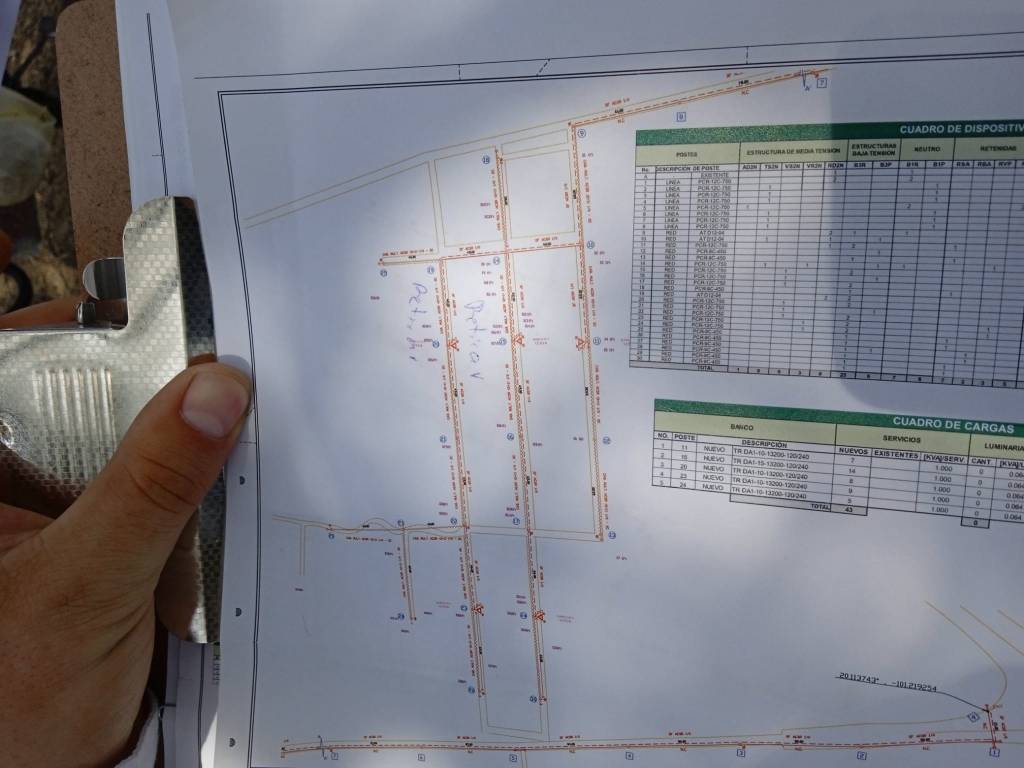
So they did, and they showed me the plans, asked about who the president of the association was, and assured me that this wasn’t a prank. The contractor knew Super Prez, so they made immediate contact and set up a time to meet. I took pictures of the plans because NO ONE WOULD BELIEVE ME and did some happy jumping around.
I had a few questions because this seemed almost too good to be true. First, what were we to do with the existing posts and wires that had never been registered and, therefore, could not be used. The contractor said that he could remove them, although that wouldn’t be covered under this grant, which meant the colonia would have to pay him to do it.
The plans also showed several roads that would not be electrified as the roads themselves were in deplorable conditions. What about those? The contractor said he could give us an estimate for finishing the lines after the posts, wires, and transformers that were given by the federal government were installed. Fair enough. Finishing would be a fraction of the cost of starting from scratch, which is where we stood at the moment. The transformers were also small, and he cautioned that, realistically, they could only support 40 dwellings each. We don’t have 40 full-time residents right now, so that would be fine. Then, as the colonia grew, we could petition to have the transformers removed and replaced with those with more capacity.
Super Prez was all for letting the colonos (residents) know about this windfall immediately. I suggested we wait a bit. It wouldn’t do to have everyone’s hopes up and then have it not materialize, so we waited and waited and waited.
Then we got word that the CFE workers were digging the post holes in another of the three neighborhoods instead of La Yacata, which was only discovered when the CFE supervisor came to La Yacata looking for his crew, and they were not here. Obviously, there was some miscommunication somewhere.
Super Prez called the contractor, who assured us that yes, indeed, we were first on the list. He also said he’d send over the estimate for the post removal in the next day or so with the idea that the new posts could be placed in the same locations.
A couple of days after the phone call with the contractor, there was another banging on my door. My presence was requested by the CFE crew, who were sent to dig the holes. I hurried my fanny down the road, and they asked if I could help them locate the lots so they could mark the dig spots. My copy of the neighborhood plans had been given to the contractor, but these workers didn’t have it. I had a miniature copy, but even with my bifocals, I couldn’t make out the lots’ dimensions.
The neighbor lady, the sister-in-law of the now-deceased Chuchi, ran into her house and popped back out with some plans she had. It seemed she had been holding out on us. She claimed that she gave all the paperwork to Super Prez after Chuchi’s death. Obviously, that wasn’t so. Regardless, it was helpful since Super Prez was out of town, and we needed the plans.
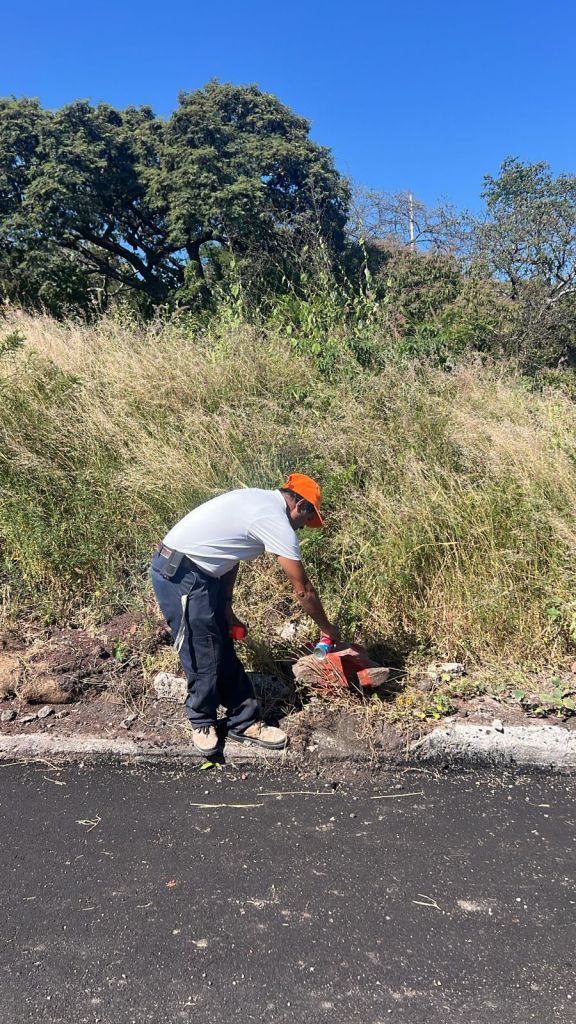
These guys had a tape measure that wasn’t long enough to mark the distance between the posts, so the measuring was an estimate. One guy would mark a spot with orange paint and move up, dragging the tape behind him. The other guy couldn’t ever seem to find the mark and spent considerable time hunting it before reading off the new measurement to be added to the first one to get the correct distance.
I traipsed along with the plans, checking the lot dimensions as we went. When we reached the first corner, my husband showed up. He’d been out searching for seed corn to plant. When he arrived, the two guys said they needed his help to line up the posts now that the spots had been marked. So if he would stand on that orange spot, they’d go down to the end of the road and check the alignment.
They hadn’t brought any stakes or anything to mark the spots besides the paint. So what they did was one guy stood at the bottom corner, and the other stood on the first spot, straight and tall, as if he WERE A POST. The guy at the bottom squinted and bobbled his head to see if the two human posts lined up. This process was repeated up the road at each marked spot.
I was laughing so hard at this point that I nearly missed a phone call from Super Prez. I had sent him a message saying we needed the plans. He called the contractor, who said the two guys had the plans. And well, yes, they did have plans, but those plans weren’t the plans for La Yacata. They were the project plans, and there had been some modifications since the project plans had been made, one of which was that the new posts were to be placed in the same spot as the old posts. Nobody had told this to the two guys who were marking on the opposite side of the road.
Super Prez was going to send me to have a new set of the plans printed out, but he remembered he had a set at his house. He called the ‘chacha and told her to expect me. We dashed to his house, picked up the plans, and brought them back to the guys. When we got back, they had moved on to the posts on the main road, the ones that had fallen, and were doing the same measurement skit there.
I have to say that these guys were probably not the most capable electrical road crew I’ve come across, but perhaps they were just the post-hole diggers, and the next group would seem more like electricians. I couldn’t wait to see what would happen next.
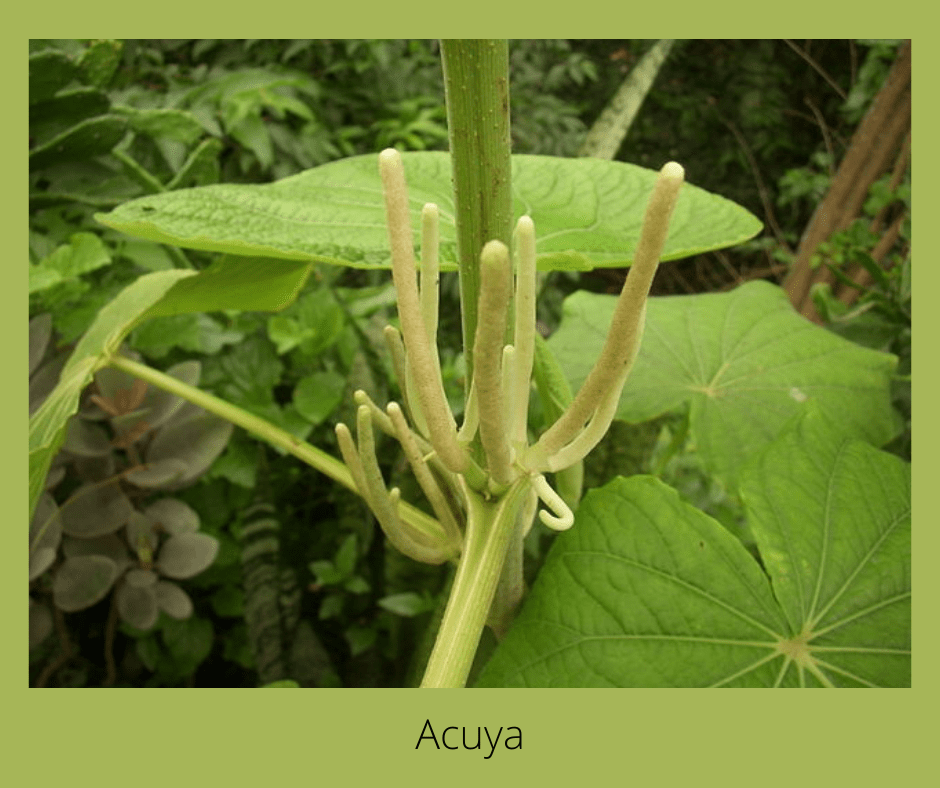
Piper umbellatum is locally known as acuya, not to be confused with acuyo which is one of the names given to Piper auritum.
The leaves are applied topically to wounds. An infusion of leaves and roots is prescribed as a purgative. Dried leaves are burned in ceremonies and added to steam baths to ward off evil, poisoning, fever, and migraines. Acuya is antibacterial, anti-inflammatory, analgesic, antifungal, antioxidant, cytotoxic, antiparasitic, and antimalarial. It has gastroprotective properties and is beneficial in treating inflammatory bowel disease and peptic ulcers.