Secondary Graduation

the grad

This week the kids in our area head back to school.  I am delighted to say that neither myself nor my son is a part of that throng.  Instead, I am going to take a few minutes to talk about the last stage of my son’s education, secondary graduation.

Perhaps it was partly due to my son’s lack of interest in the proceedings, or perhaps it was that I didn’t know what was expected, being a foreigner and all, in any case, we didn’t get the invitation to the special after-ceremony dinner, so our whole experience was cut short, but not by much.  It was a LONG, drawn-out affair.

The day started early for us as the animals needed attending before we went anywhere.  Then there was the showers and the fixing up process.  Since my son became a teenager, this stage of the morning routine is agonizing in length.  Once we were all ready, we hopped into the truck and headed to the salon (hall).  We arrived in plenty of time and stood around with the hoards of people milling around the entrances.  

I handed the family invitation to the doorman and he said something about my husband needing to go around to the other door.  We paid him no mind, having no IDEA what he was talking about.  We found some seats and sat down.  

banner

Nothing in Mexico ever starts on time so we did some people watching.  Each of the 10 (yes ten) graduating classes had a lona (banner) with a blown up version of their class picture.  We were quite near 3F’s display and could clearly see my handsome son.  I don’t know why they had such a fit that he wore a red tie instead of a brown tie.  Some of the boys didn’t even have ties on.  In any event, the shadowing of the photo made his red tie look brown.  We did, however, get a brownish tie for today’s graduation ceremony.  Geez!  Ties are expensive!

After about 45 minutes, the show finally got on the road with the presentation of the invitados de honor (the important people that sit on the stage).  Much to our surprise, the president of Moroleon was the guest of honor.  Even more surprising, his daughter attends the school my son goes to, which is a PUBLIC school.  Most of the well-to-do send their kids to private schools. So this really was something.  There was some blah-blahing about recent renovations to the school and the funding for those renovations, thanks to the president.  None of this concerned us since my son was graduating and wouldn’t be a beneficiary.

Suddenly, I realized that I shouldn’t be there sitting in the parent section, but standing with my son as “madrina” (godmother).  Customarily, someone outside the family is asked to perform this function.  I figured that since I took my son to school every morning, made sure he had a clean uniform and finished most of his homework, I was the most qualified to stand as madrina.  Only, I had entered as a parent and now didn’t know where my son was.  

I spent 15 frantic minutes crossing back and forth looking for his group, asking people that seemed in charge, only to be sent back to where I had just come from.  Finally, I located my son, no mean feat in a sea of identically clad teenagers and took up my position.  Being on the short side, meant I was unable to see much of anything.

Eventually, we all marched forward.  My job as madrina was to escort my son to his seat, which I managed to do quite well thank you very much.  Then I was supposed to sit in the specially set aside madrina/padrino section.  Thinking I could just get by if I followed the padrino in front of me, that’s what I did.  Only he ended up some other place and I had to march in FRONT of the stage to get to my seat.  My son said I was so short that nobody noticed that faux pax as my head didn’t even clear the stage floor.  I scampered along and managed to get the seat right in front of the speakers.

chicken marching

The next item on the program was the himno nacional (national anthem) and the passing of the flag from the graduating honor guard to the next level down.  This is quite a big deal.  There are formal words that need to be recited.  The flag has to be presented in a certain way.  And the departing group must leave in a dignified manner, well it would be dignified if they actually had sabers strapped on.  All very military.  Only no one took into account that the flag might get caught in the white drapey decorations, which is what happened.  And personally, I thought the elbows out march looked a bit like a chicken walk.  But again, I’m not Mexican so perhaps the solemnity of the situation escaped me.

stepping forward

After everyone involved in the flag exchange was gone, the first of the 10 (yes, ten) graduating classes was called up on stage.  The teacher read off the attendance list.  Each student was to take a step forward and call out “presente” when they heard their names.  After which, the teacher called out a last group attendance call, and all students took a second step forward with one last “presente.”  Of course, some groups were rather large, my son’s class had 39 graduating students,  and this second step nearly was the end of a few of the teachers teetering on the stage edge.

final class step forward

After everyone in the group was accounted for, the jefe del grupo (prefect) was called to the head mucky-muck table to shake hands and receive the pack of class documents.  My son is the jefe del grupo of 3F.  Instead of leaving the stage, walking around to the back steps and going up them to the raised tier where the important people table sat, my son, with his long legs, just climbed up a tier, shook some hands, accepted the documents, and hopped down the same way.  His short round teacher had to go the long way around.

photo op with pres

Then there was the group photo shoot with the school director and the president of Moroleon.  After that happy event, students filed offstage.

zombies2

In between group presentations, there were several entertainment segments.  Some of the teachers prepared a “surprise” dance routine that began as Thriller zombies and then morphed into a soulful rendition of Despacito with some getting jiggy with it moves to round it all out.  I totally was not expecting zombies at the graduation ceremony. There was also a dramatic recitation or two by students and a song by a rather talented curly haired sophomore.  

marching on stage

My son’s group was the last of the 10 (yes, ten) graduating classes.  Just when we thought it was over, there was the awards ceremony.  Highest promedio (grades), special participation in events throughout the year, and so on.  Not only were the awards for the graduating students, but also for the other two grades.  The president’s daughter received a certificate of some sort, so there was more picture taking which made it even LONGER.

Then the school principal took the stage.  More blah-blah.  And another artistic performance by a girl from each of the 10 (yes, ten) graduating classes.  By that time, people were getting restless.  The graduation misa (mass) was supposed to start at 12 pm and the madrinas and padrinos were filing out like sheep to make it to the church on time.  But it’s not over until the fat lady says “clausura oficial” literally.  The students hurried through the Himno a la escuela (school song) so that fat lady could make the pronouncement.

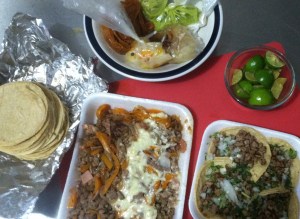
Not being Catholic and all, we opted out of the special mass and went for tacos instead. Much to our astonishment, the president of Moroleon also stopped at this same roadside taco stand and congratulated my son before sitting down at the next table with all his entourage (and daughter).  They serve some pretty good tacos there!

good conduct certificate

So for all that rigamarole, the folder my son was given contained nothing more than a certificado de buena conducta (Good behavior certificate).  His official diploma I had to download from the SEP site and print out myself the following week, which I did.  He needed it to enroll in his next course of study–Online Prepa!

*********************

disclosure

8 Comments

Filed under Cultural Challenges, Education, Parenting Challenges and Cultural Norms

Conquer Your Clutter Super Bundle

This year, as we transition from mainstream schooling to online preparatory, it is even more essential that we are organized.  Not having an imposed schedule to follow, we need to monitor our own habits.  It isn’t so easy.

Resources such as the Conque Your Clutter Super Bundle have been helpful in the ultimate organization of our time.  Check out all the useful items for cleaning and chores, decluttering, family organization, time management, meal planning, and paper organization!

Order it here!

Do you want to be an Ultimate Bundle Affiliate? Click here.

**************

disclosure

1 Comment

Filed under Parenting Challenges and Cultural Norms

Natural Healing–Tamarindo

Have you ever wondered what those pod things were at the Asian or Mexican market?  Wonder no more.  Today, let me share what I learned about tamarindo.

The Tamarind (Tamarindus indica) tree is not a plant native to Mexico, but was brought by the Spanish and Portuguese in the 16th century and has since become an integral part of Mexican cuisine and traditional medicine.  It’s a slow-growing, long-lived tree that can be 80-100 feet tall with a trunk circumference up to 25 feet.  The evergreen feathery foliage is made up of pinnate leaves that fold up at night.  It has small 5-petalled yellow flowers with orange or red streaks.  The flower buds are pink.  It takes 80 to 90 years for a tamarind tree to begin producing fruit. The fruits are green pods or beans that ripen to a cinnamon brown color.  The outer covering becomes brittle and the pulp within dries to a sticky paste. The fruit begins to dehydrate in 203 days and reaches full ripeness in 245 days.  The fruit can be left on the tree for as long as 6 months after full ripening. (Morton, J. 1987. Tamarind. p. 115–121. In: Fruits of warm climates. Julia F. Morton, Miami, FL.)

Tamarindo fruit is high in tartaric acid, sugar, B vitamins, calcium, thiamin, iron, magnesium, niacin, vitamin C, copper, and pyridoxine.  Other antioxidants found in the tamarindo include limonene, geranoil (shown to inhibit cancerous pancreatic growth), safrole, cinnamic acid, methyl salicylate, pyrazine, alkylthiazoles.  Its high content of malic acid, tartaric acid, and potassium bitartrate make it an excellent treatment for constipation, which you may want to remember should you be tempted to eat large quantities.  

Tamarindo has also been used traditionally as a treatment for stomach discomfort, diarrhea, parasitic infections, dysentery, helminth infections, malaria cell cytotoxicity, used as a gargle for sore throats, mixed with salt and made into a liniment for rheumatism and arthritic inflammation.  It’s been used for Datura poisoning, alcoholic intoxication,  liver toxicity, and sunstroke.  It has also been recommended as a daily drink for those suffering from thyroid disorders and as a way of fluoride detoxification.  The dried or boiled leaves and flowers can be made into poultices for swollen joints, sprains, boils, hemorrhoids, gonorrhea and conjunctivitis. The roots and bark are boiled in an infusion for chest complaints and as an ingredient in treating leprosy. In one study, the seeds have shown improve glucose homeostasis in rats with streptozotocin-induced diabetes mellitus, which may lead to further studies as a treatment for diabetes in humans.  In another study, the bark has been shown to possess blood glucose lowering effect along with antioxidant effect and protective effect on renal complications associated with hyperglycemia.  In yet another study of hens fed tamarindo as part of their daily diet, it has been linked to lower cholesterol in the hens’ serum and egg yolks leading to the speculation that similar results could be obtained in humans. (Top 15 Health Benefits of Tamarind and 30 Health Benefits Of Tamarind and 7 Amazing Benefits Of Tamarind)  I could go on and on as to the health benefits, but I think you get the picture.

Are there any safety concerns about tamarindo?  Yes, there are.  As I outlined above, the ingestion of tamarindo has definite effects on the body.  If you have certain conditions, tamarindo may make your condition worse.

As it lowers blood pressure, it may increase bleeding when taken with aspirin, ibuprofen, blood thinners, and anti-platelet drugs.  As its ingestion reduces serum glucose levels, diabetics who are already taking drugs for lowering their blood sugar level should be careful to not eat too much.  As with any food, you may have an allergic reaction.   Excessive quantities of tamarind may damage the enamel of your teeth.  Frequent ingestion of huge amounts of tamarind can promote the formation of gallbladder stones.  If you have gastroesophageal reflux disease (GORD) or ‘acid reflux’, you should stay away from it since it will probably increase the acid in your stomach. If you are taking any sort of vasoconstrictor you need to know that tamarindo is known to add to the vasoconstricting effects by accelerating the process of narrowing of the blood vessels. If you are using any ophthalmic antibiotic on your eyes topically, avoid tamarind intake as it will interact with the cream. (Top 10 Side Effects Of Tamarind) So moderation is the key.

Just one of the many tamarindo products found in Mexico!

So how do you eat it? Maybe the correct question is how don’t you eat it?  The fruit can be eaten raw right off the tree. Wherever you go here in Mexico, you can find tamarindo candy dipped in chile, tamarindo balls, tamarindo candy that comes out of its containers like a  playdoh barber shop toy, tamarindo fruit roll-ups,  tamarindo juice, tamarindo soda, tamarindo Tang, tamarindo salsa, tamarindo on a plastic spoon,  tamarindo margaritas, tamarindo lollipops,  tamarindo marinade, tamarindo gummies,  tamarindo nectar tamarindo popsicles, tamarindo hard candy, tamarindo soup, and many more delightful and savory uses.  (Recetas de Tamarindo).  Would you believe that it’s also found in good ol’ Worcestershire sauce?  

Although I can get agua de tamarindo from the same tricycle market vendors that sell jamaica and horchata, I thought I’d try and make my own. Here’s how that went.

I picked up some dried pods at the market.  Then I cracked and peeled them.  Because of the stickiness factor, it was a bit more difficult than peeling a boiled egg.  I soaked them in water for about an hour.  When the pulp was soft, I removed the seeds and mashed the pulp with my fingers.  That part didn’t take very long.  After that, I added more water and strained the concoction to remove any large lumps and fibers. Add sugar to taste and ice and it’s ready, the perfect refreshing summertime drink!

I kept the seeds and have planted them.  I’d surely like my own tamarindo producing tree (in 80 or 90 years)!

Tamarindo has other uses as well.  Tamarind lumber is used to make furniture and carvings.  The fruit pulp is used to polish brass statues and lamps, and remove the tarnish from copper, brass, and bronze items.

The word itself also has some distinctly Mexican uses as well.  Tamarindo is sometimes used to insult los transitos (traffic police) probably first begun as a commentary about their brown uniforms.  My husband has also said that among hombres (men) tamarindo can be used to imply someone is stupid or an a**hole.  So perhaps it’s not a word you can throw around lightly in some parts however delicious the fruit!

*********************************

5 Comments

Filed under Health, Mexican Food and Drink, Native fauna and flora, Natural Healing