
Natural Healing — Huizache

huizache pic.jpg

La Yacata, being the dry, rocky land that it is, plays host to the huizache. When it flowers in the spring, it can cause allergies, but the benefits of this plant far outweigh the few weeks of sniffling. You also should take care that the long thorns don’t scratch you. In some parts of Mexico, this tree is called espina divina (divine thorn) and with good reason! They are certainly worth a healthy dose of respect in my book. In fact, in many crucifixion reenactments during Semana Santa (Holy Week) Jesus’ crown of thorns is made from huizache branches. 

Huizache (also spelled huisache or guizache) or Sweet Acacia has several botanical names which cause some confusion but the three most common are acacia farnesiana, mimosa farnesiana, and vachellia farnesiana.

The flowers are used to create the perfume Cassie. The sap is used as glue. The bark has long been used for its tannin. A black dye is obtained also from the bark.

Bernardino de Sahagún reported that seed pods were considered aphrodisiac in nature by the indigenous people in Mexico and that flowers of the tree were used for a headache remedy.

The seed pods are antioxidant and topical anti-inflammatory agents. Animals, including cattle, sheep, and goats, that eat seed pods transfer the antioxidant properties to their milk. Our goats love huizache!

Extracts from the seed pods are used to treat dysentery and tuberculous and are also effective in treating cholera.

A mouthwash for sore gums is made with an infusion of leaves, flowers, and stems. A tea decoction made from the same parts of the plant is traditionally prescribed to reduce excess phlegm.

Dried leaves can be applied directly to sores. Vaginal infections can be treated by combining leaves, flowers, and roots simmered to make a douche or sitz bath. 

Overall, the huizache is quite a useful plant to have around!

***
Leave a comment

Filed under Health, Native fauna and flora, Natural Healing

Personal History Month

May was Personal History Month and our little SOTB Blogging group had the intention to write about our personal histories, only the month got away from us, so here we are in June trying again.

Truthfully, this topic worked out really well for me. As you know from last week’s post, I was able to travel to Pennsylvania and visit my family this month. My online jobs allowed me to have a flexible work location as did my son’s online studies.

So here’s a bit of personal history about me. My mom can trace our family history back to England in the 1500s. Our family were Quakers that opposed slavery and left the faith over the issue to move to this area around about the time settlements here were getting settled.

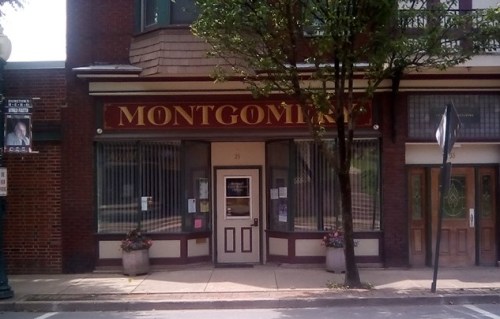
I grew up just outside a little town called Montgomery along the west bank of the Susquehanna River, population 1,695. It was founded or settled or something in 1783 by John Lawson.  It’s claim to fame was the logging boom. There were a lot of trees that could be sent downriver to other booming metropolises in the early 1800s.

The latest income generating industry in the area is natural gas. Apparently, there are a few pockets of the stuff under the ground which the powers that be are sucking from the earth. I have to admit that the landscape is not what I remember.

With the influx of the gas money, there have been some recent attempts at redevelopment in Montgomery. The downtown buildings have been revamped. The football field wasn’t there when I was growing up. The school (elementary, middle and high school are in the same building) has added a new technology wing. Overall, though, neither the people nor the town changed very much from when I lived here.

There’s nothing quite like being home again. My status as a PA native streamlined the process of getting a new driver’s license. Since I had a license in 1998, well then, with my birth certificate, marriage certificate to document my name change and my expired PA ID (Pennsylvanis Identification), we were good to go. Thank GOD!

My friend Shannon and I talked each other hoarse every night (and drinking copious amounts of wine). We went yardsaling, rummaged around in the discount stores and drove up and down the backroads that once were so familiar to me.

I’ve been able to show my son my old haunts and my childhood home. My brother and I tried to outdo ourselves with sharing childhood memories (or traumas depending on who is telling the story) with our children.

I was also able to spend some time with my parents whose health isn’t the best these days. In fact, I spent quite a lot of time this month at the hospital with my mom. 

On the other hand, MAGA hats were on many heads and I edited out the part where I live in Mexico in my what have you been up to recitation. I was glad my son is light enough to pass as a local, and that we have hundreds of years of local history to poo-poo the recent immigrant charges. We were careful not to speak Spanish in public too. It’s not unheard for those too foreign for locals to be murdered in these parts. In fact, this local hate crime was turned into a movie (Shenandoah) with quite a cult following.

So although I enjoyed my time in central PA, the trip was bittersweet for me. I’ll be glad when we are safely home in La Yacata.

2 Comments

Filed under Uncategorized

Natural Healing — Pochote

pochote pic

Pochote, Ceiba aesculifolia (Kapok) is also known as apochote, ceiba, puchote, lánta in Chiapas, kuch (Maya) in Yucatán y len-o-ma (Chontal) and Matzu (chinanteco) in Oaxaca.

Once a year, the pochote trees in La Yacata are festooned with huge cotton balls. Every year I tell myself that I’m going to gather them up to stuff some pillows. This year, I finally did!

It wasn’t as easy as I had hoped. The trunk of the Ceiba aesculifolia (kapok) is covered in thorns, so climbing is out of the question. The seed pods were mostly out of my reach considering these trees can grow up to 25 meters high. The soft, downy fluff disintegrated and floated away after I touched it.  It’s like trying to catch dandelion puffs.  I managed to get one shopping bag full for my efforts.

Since the fluff is quite a bit, uh, well fluffier than synthetic materials, not only did I make a huge mess trying to stuff a pillow, but my bagful was only enough for one very small pillow. Well, I guess I’ll try again next year when the cotton balls bloom.

This tree has no leaves when it flowers, making it a strange sight. Bats are the primary pollinators as well as moths and hummingbirds. It grows in dry and rocky areas, so it comes as no surprise that La Yacata abounds in them.

As with all things found in nature, the pochote has medicinal value. In the states of Mexico and Quintana Roo, it is used to induce vomiting. In Yucatan, the fermented bark is used in a wash given to those with sunstroke.

Again, not surprisingly, the cotton-like fluff has been traditionally used for stuffing. It has also been used as tinder for fires and wicks for candles. Recently, this soft material has been found to be effective insulation for refrigerators.

The seeds of the pochote are toasted and eaten in Veracruz. The roots are also edible. Craftsmen make jewelry out of the seed pods and carve houses from the wood.

Traditionally, infusions of the pochote leaves have been used to treat sores, snake bite, and dermatitis. Francisco Hernández de Toledo mentioned the pochote in his collections of works Plantas y Animales de la Nueva Espana, y sus virtudes about plants and animals found in Nueva Spain (Mexico) and their virtues.

There have been no studies so far to ascertain the validity of using pochote leaves on the skin.

***

Leave a comment

Filed under Health, Native fauna and flora, Natural Healing