Did it Happen in 2024?

Last year, I had some writing, Yacata, and self-care intentions that went, welp, not as well as I would have hoped. 

Writing

I had the ambitious plan to finish and publish 6 WIPs (works in progress). I managed to publish two (Exploring Traditional Herbal Remedies in Mexico Volume 5: Botanical Treasures from Acuya to Zarzaparrilla and Exploring Traditional Herbal Remedies in México Special Edition: Volumes 1-5).

This year, my goal is hopefully more realistic. I’d like to do a new book in the Lupita series (the first draft is already done), then a book for the Apothecary series (although I haven’t decided which one yet.) The third book may be from the La Yacata series or the Women’s Survival Series; I’m still up in the air on that. So, in all, I’d like to move 3 WIPs along the draft, editing, and publishing treadmill. This seems like a more manageable accomplishment. 

La Yacata

The pozo (community well) did not get legalized. However, the water quality and quantity studies were done, as was the video of the interior. All of those were turned in to SMAPAM (the local water commission), and we are waiting on a project plan they promised us. 

This year, I hope that this project moves along toward completion. There is still much more to be done (erecting a parameter fence to protect our water source, installing the pump and water lines, having a new water tower put up, dismantling the obsolete one, etc.). 
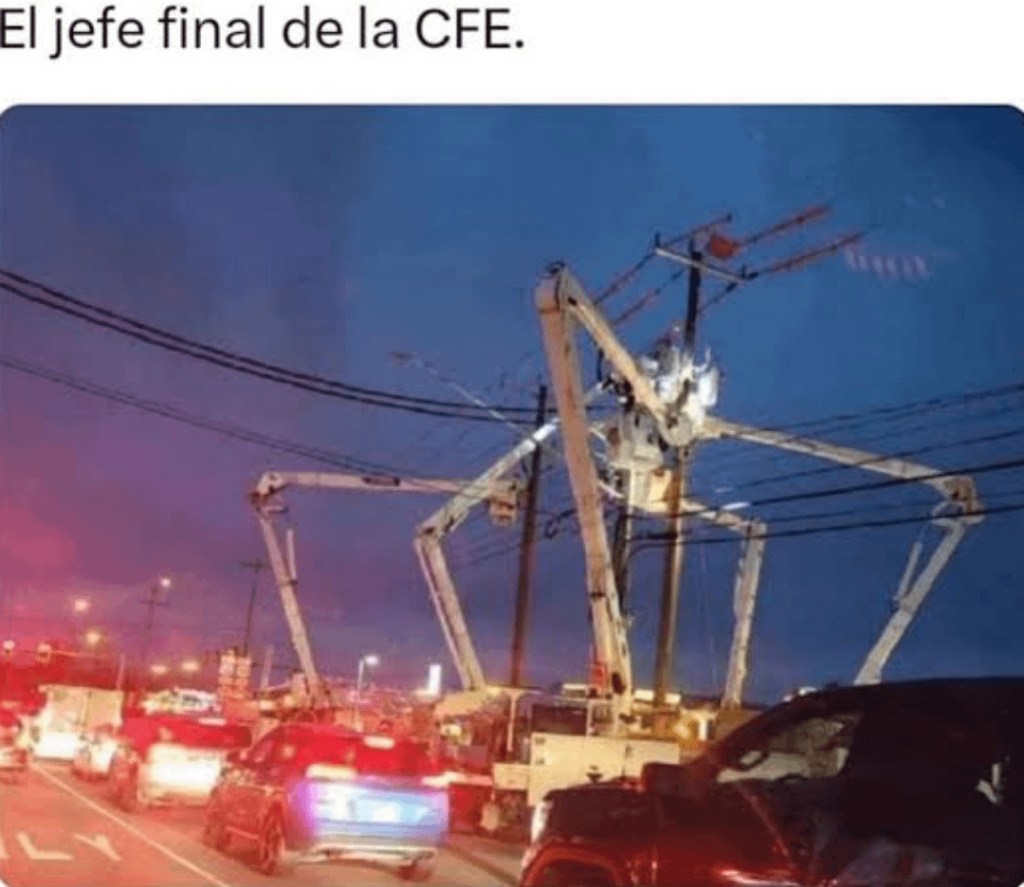
What did happen was the electricity, which was something of a miracle. There are more things we need to do to have 100% coverage, and CFE is fighting us every step of the way, but it’s a start. The idea is to finish this project, but it may take more than a year to do so because that’s just how things roll here in Mexico. 

Construction on my son’s house was slow going. The bathroom is all but finished, just needs some plumbing accessories. The window frames on the first floor were installed. The counter was finished and the walls painted. In 2025, I’d like to see the floor finished on all 3 floors. The tile for the majority has already been bought. The cost of rebar has drop substantially, so there’s a good chance the window frames and doors will be done this year too. 

I bought an additional lot just before prices doubled in La Yacata because of electricity availability. Right now, it has a makeshift fence to keep roaming animals away from my plants, but I hope to have some sort of more permanent fencing or divide put up this year.

Self-Care

My exercise routine petered out towards the end of the year. I’m blaming it on a joint flare-up that just would not settle down. So there’s room for improvement on that front. 

I have a new reading challenge for 2025 because I enjoyed 2024’s so much. My plants were variable, some flourishing, others languishing. That will be an ongoing issue, I expect. I made a concerted effort to be in the pool every moment I could until early fall, and I plan on continuing that little self-care ritual this year. 

I also quit one of my jobs, which may initially not seem like self-care since the loss of income was an added stressor. However, I picked up more teaching hours and made up the difference. I enjoyed many aspects of the woo-woo magazine I worked for, but with PayPal processing fees eating into my pay, it wasn’t a sustainable economic situation. I’m not actively looking for another job, although there is some concern that the new president-elect in the US and his hatred of immigrants (who make up 100% of my student body) will impact my job. We shall see. 

I also hope to do some of those online courses I signed up for at some forgotten time in the past. My goal is one course or class per month. Some are short, 40 minutes or so, and others are a bit longer. Naturally, if I start a class and find it not what I need right now, I give myself permission not to finish it because life is busy enough as it is, don’t you think?

So there they are, my 2025 intentions. What are your intentions for the year?

Leave a comment

Filed under Uncategorized

Convivio without CFE

A week after the official power inception, the CFE supervisor was back doing some final checks. He asked for, and I handed over the solicitud (application) for the last murete (meter post) that was installed and connected. I asked him if he had a date that he and his supervisors would be available to plan the convivio (community gathering). He said that week he was busy, but perhaps Monday or Tuesday of the following week.

Super Prez got a confirmation for Thursday between 2-3, and preparations began. R. bought a borrega (sheep) and a chiva (goat from my sister-in-law L. and assured us he knew just the person to have them prepared with montalay (which is a vegetable dish in guajillo sauce commonly served with birrira). R. was also in charge of the beer. My other sister-in-law, T., made 12 kilos of tortillas. C. made rice to accompany the meat and montalay. Her son-in-law provided disposable plates, cups, napkins, and utensils. We asked that anyone who was attending bring a family-size bottle of soda. We rented the chairs and tables from another colono. And the best part is I didn’t have to lift a finger to organize it! Anyone who asked what they could do or bring, I referred to C. and let her handle it. 

I posted the date and time in the WhatsApp community group, which started a firestorm. Immediately, the question was how much this would cost and whether they would have to pay if they weren’t attending. I explained that the cost would be divided equally among the lots and would come out of the fees for the second semester. A few colonos said they weren’t paying a peso. Others responded that they would gladly pay their part even though they couldn’t attend. One individual reminded everyone that in the old days, a meal was an appropriate demonstration of gratitude, and it was only fitting that we offered CFE the same for the enormous benefit our community received in having electricity installed, even if only a part of the fracionamiento (neighborhood). 

I tagged Super Prez in the conversation, and eventually he swooped in to smooth ruffled feathers, pointing out that divided among the properties, the cooperacion (contribution) for the convivio would not be more than 20 pesos, and there was really no reason to put up such a fuss. That settled everyone down, and we had approximately 80-90 colonos confirm their attendance.

The day of the convivio arrived. Super Prez confirmed that the CFE delegates were still planning on attending. The tables and chairs were set up on the first road with the hope that there would be some shade. We really need a community palapa for this type of event! Everything came together, and the tortillas, meat, and beer were delivered almost at the same time the rice was ready, which was seriously some sort of miracle. At just about 3 pm, colonos began arriving, and the serving table was set up.

Then Super Prez got a call from the CFE supervisor saying they could not make it. Apparently, his boss had just been fired, and the office was in a major upheaval. Hmmm, we’d have to look more closely at that situation, but not this day.

We went ahead and had our community gathering without them. The food was yummy. I had my husband haul the speaker we bought for the juntas (community meetings) down to the corner and got some tunes playing. The feeling was decidedly pleasant, and I enjoyed myself immensely. 

The sun disappeared behind the house, leaving a chill around 5 pm, and we started winding down. Attendees helped fold the chairs and tables and pick up trash. And that was that.

****

Want the background to our little community adventure? Check out La Yacata Revolution: How NOT to Buy a Piece of Heaven in Mexico! Available on Amazon.

Leave a comment

Filed under La Yacata Revolution

Natural Healing — Mala Mujer

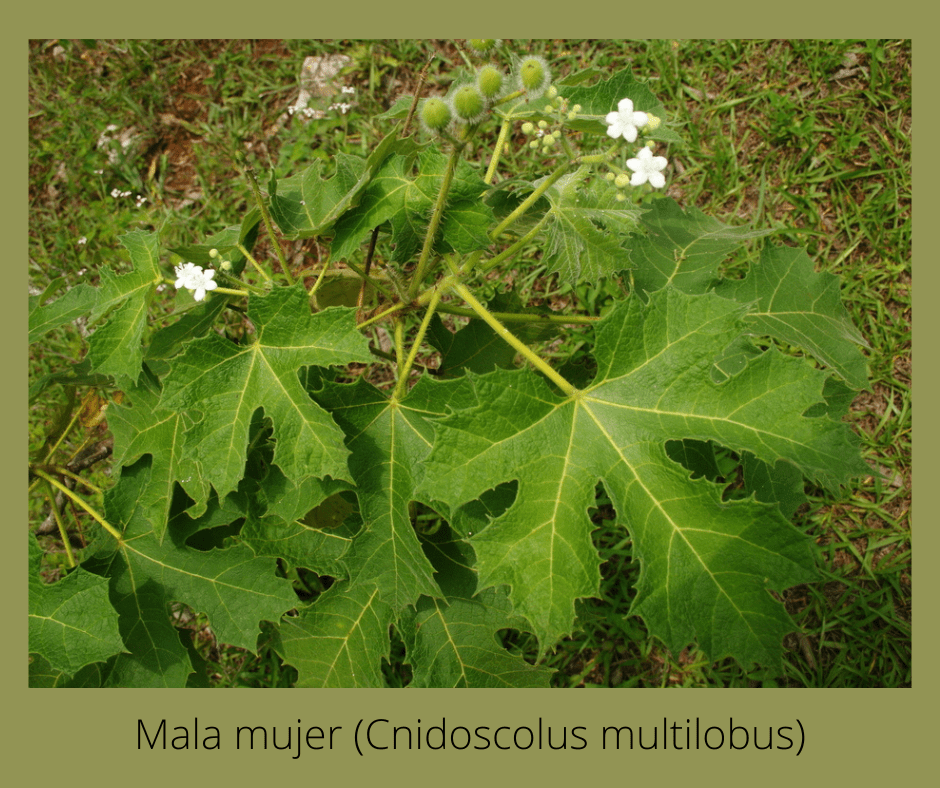
Mala Mujer (bad woman) is a term used to refer to both Cnidoscolus tehuacanensis and Cnidoscolus multilobus in different areas of Mexico. 

In traditional medicine, Cnidoscolus tehuacanensis is applied topically for scorpion stings, arthritis, hemorrhoids, and rheumatism. The leaves have anti-inflammatory and anti-bacterial properties

Cnidoscolus multilobus is also known as chaya de monte, chichicaste de caballo, pica-pica blanca, tetsonkilit or tetzonquilitl in Nahuatl. In Oaxaca, it is called chench tiek and in Veracruz, kakne. 

Cnidoscolus multilobus is classified as a “cold” plant. It is also employed in treatments for nose bleeds, kidney infections, hypertension, measles, and skin infections. Interestingly, mala mujer can be used in place of rennet as the coagulant to make cheese. 

It’s used as an anti-diabetic remedy. The flowers are eaten as a vegetable in San Luis Potosi. 

The sap is rubbed on cavities to reduce pain. The leaves and stems are rubbed on the skin for rheumatism pain. 

Mala mujer and ortiguilla (Urtica chamaedryoides), both prickly plants, are chopped and applied to sore joints with the belief that “al picar las espinas se cortan las dolencias” (the nettles will cut the pain in half). 

The condition tlapeaxcoconxtle, an ovarian inflammation resulting in yellow discharge, is treated with a cold infusion of the flowers three times a day until the infection subsides. Cnidoscolus multilobus is an antioxidant and has demonstrated an antiproliferative effect on cervical cancer cells. It has antimicrobial activity. The seeds and leaves are made into an infusion to improve milk flow for breastfeeding mothers. 
Mala mujer is also used in the treatment of susto (sudden fright), mal aire (evil winds causing illness), and brinco del arco (rainbow jumping). Brinco del arco was a condition I hadn’t heard of before, so a little more research was in order. This malady occurs when a rainbow appears above a person and “traps” them. A pregnant woman caught under the rainbow might have her womb filled with water, resulting in a false pregnancy (pseudocyesis), polyhydramnios (excess amniotic fluid), or excess water retention. Someone who is not pregnant and experiences brinco del arco also might be “filled” with water and could develop a urinary tract infection, edema, or excessive urination. The cure is an infusion made from ajo (Allium sativum) and mala mujer leaves (Cnidoscolus multilobus). One cup is drunk. The remainder is used as a wash.

***

Interested in natural remedies? Uncover herbal remedies from traditional Mexican sources for healing and wellness in the Exploring Traditional Herbal Remedies in Mexico series.

Leave a comment

Filed under Native fauna and flora, Natural Healing