Tag Archives: natural remedies

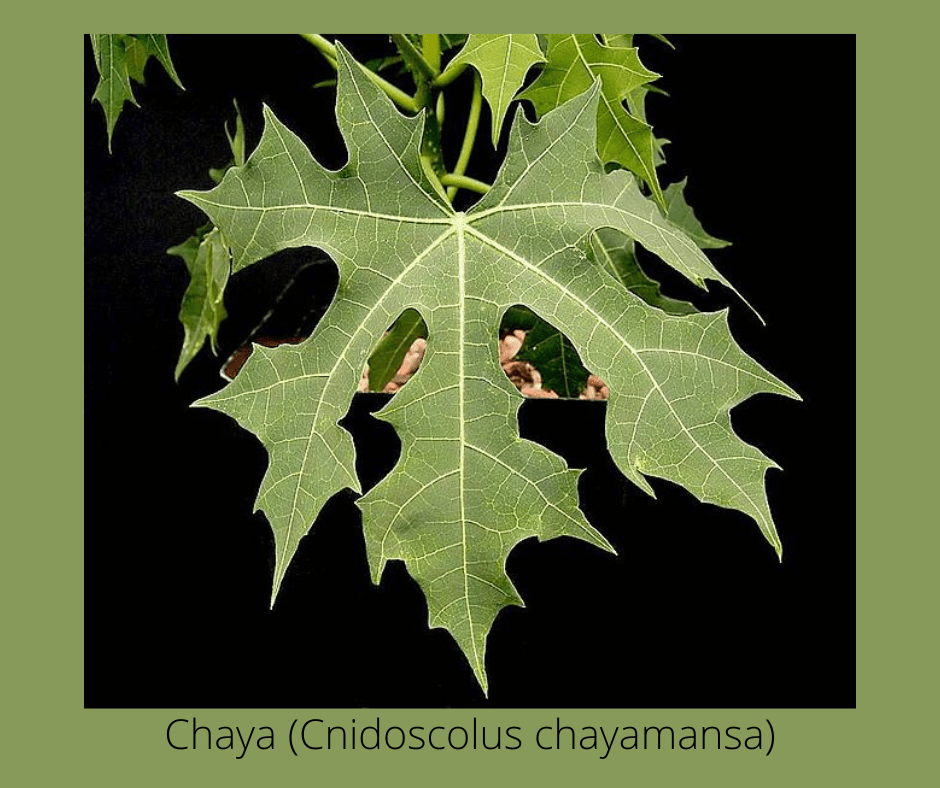
Natural Healing — Chaya

Photo credit: Frank Vincentz

Chaya (Cnidoscolus chayamansa) is also called chaya col, chaya mansa, chaay, chin chin chayy, ts’iim, ts’iim, and tree spinach. Cnidoscolus aconitifolius, also known as chaya, is another edible variety less commonly consumed. The two are often used interchangeably in traditional remedies. 

Photo credit: Tortie tude

Chaya is a vitamin C-rich food source and is used traditionally to combat the common cold, parasites, bacterial infections, diabetes, rheumatism, insomnia, skin disorders, gout, alcoholism, respiratory, kidney, and gastrointestinal diseases, and as an anti-inflammatory agent. Leaf sap is sometimes prescribed for eye infections, while the sap from the stem is applied to insect bites, acne, skin eruptions, and scorpion stings. In Chiapas, boiled, shredded leaves are applied to fungal infections. As a part of a daily nutritional regime, the recommended dose is two to six leaves boiled and blended into juice or soup. 

For a mild laxative, boil 10 grams of leaves and stems in a liter of water and blend. Drink one cup before every meal for fifteen days. 

A decoction of dried or fresh leaves and stems is also drunk to augment milk production and applied topically for vaginal infections and as an after-birth wash. Be sure to boil the tea for at least five minutes since the leaves contain hydrocyanic glycosides. Boiling ensures that the leaves are safe to ingest. 

Cnidoscolus chayamansa leaf infusions are antibacterial, antioxidant, antimycobacterial, hypoglycemic, antiprotozoal, hypocholesterolemic, cardioprotective, hepatoprotective, anti-inflammatory, and minimally antimicrobial

Cnidoscolus aconitifolius leaf extract has a hypotensive effect. It has been shown to be gastro and renal protective. Other studies have shown that it prevents hepatic injury, reduces blood glucose and plasma cholesterol levels,  and improves muscle glucose uptake. There has been some preliminary evidence that it has antithrombotic and anti-tumor properties. It is anti-inflammatory, antioxidant, and analgesic.

***

Interested in natural remedies? Uncover herbal remedies from traditional Mexican sources for healing and wellness in the Exploring Traditional Herbal Remedies in Mexico series.

Leave a comment

Filed under Health, Native fauna and flora, Natural Healing

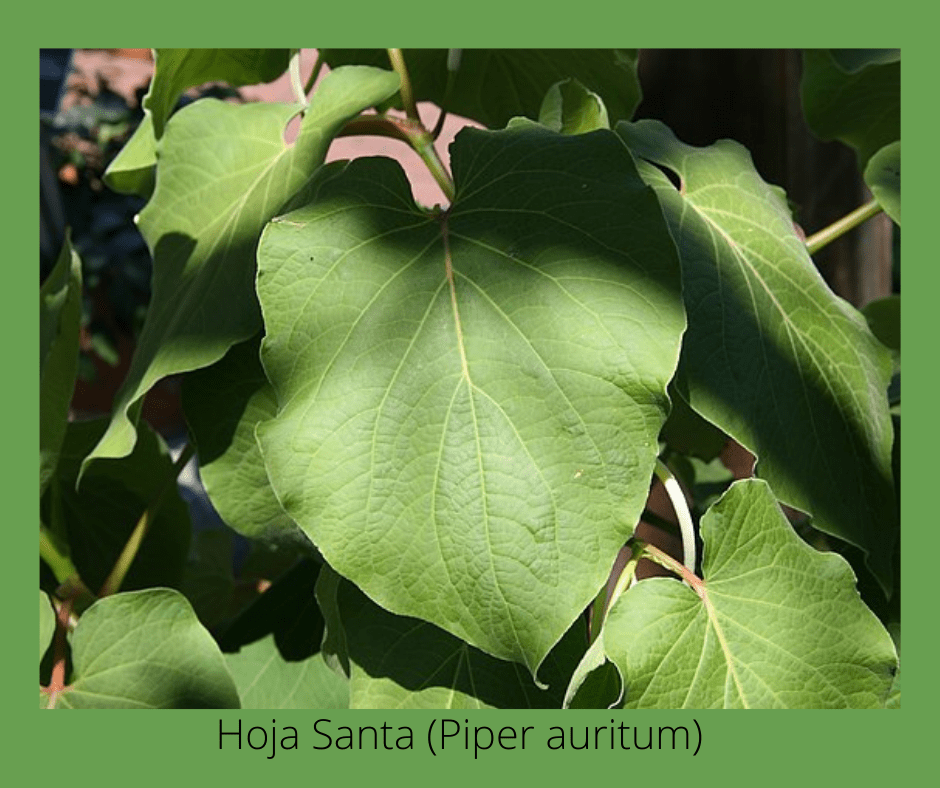
Natural Healing — Hoja Santa

Photo credit: David J. Stang

There are approximately 57 species of Piper indigenous to Mexico and 1457 worldwide, but less than 10 percent have been studied. Unfortunately, local names often apply Hoja Santa to several unrelated plants. Piper auritum and Piper sanctum are two species that share the names hoja santa or hierba santa. Although it is tempting to say the two are synonymous, as you can see from the picture below, the leaf structure is a little different. Then to make matters more complex, according to one study, Piper sanctum is an erroneous classification and more properly classified as Piper commutatum. Be that as it may, in many cases, Piper auritum and Piper sanctum are used interchangeably in Mexican herbalism. 

Photo credit: Tortie tude

Piper auritum is also known as acuyo, jaco, hoja de anís, momo, yuva ntoo, x-mak-ulam in the Mayan language. The santa or holy part of this plant comes from a story of how the Virgen María dried her holy son’s diapers draped over this plant. However, I couldn’t find much more than brief references to this legend.  

Medicinally, a tincture made from the entire plant is used to treat asthma, laryngitis, bronchitis, and other types of inflammation such as rheumatism, venereal diseases, and toothaches. Other uses include treating diarrhea, coraje (anger issues), ear infections, snake bites, and stopping hemorrhaging. The leaves are made into a decoction for indigestion and abdominal cramps. Two cups of water are boiled with one leaf and drunk before meals. 

The Chinantec people drink a decoction of leaves to aid in childbirth. The Maya apply the leaves for wound healing. The leaves are boiled and applied to the affected area to treat skin infections. For fever, a wash is made from boiled leaves. Warmed or toasted leaves are placed on the abdomen for cramps. In Yucatecan traditional medicine, a tea is prescribed to manage diabetes, hypertension, and obesity. 

Piper auritum’s sassafras-like flavored leaves are used in Mexican cuisine as a flavoring and to wrap tamales. The fresh stems are eaten. This is the only Piper variety that is utilized as a food source

Plants in the Piper species are antioxidant, antibacterial, and antifungal. They have antiproliferative, anti-inflammatory, anti-parasitic, anti-diabetic, and neuropharmacological activities, giving them a preventive potential for several chronic disorders. The compound piperlongumine or piplartine found in most Piper plants has anti-cancer and anti-neuroinflammatory properties. 

One study has shown Piper auritum has an anti-inflammatory effect similar to that of the anti-venom serum, supporting its traditional use in treating snakebite. It also has high antiglycation activity, which treats, prevents, or reverses skin damage. The leaves improve renal function and inhibit insulin resistance. Studies show that Piper sanctum is also anti-diabetic and antimycobacterial

Hoja Santa Tea for Cough

  • 2 hoja santa leaves (Piper auritum)
  • 1  limón cut into pieces (Citrus aurantifolia)
  • pinch of orégano de monte leaves (Lippia graveolens)

Wash the hoja santa leaves. Bring ½ liter of water to a boil. Add the ingredients and boil for five minutes. Drink three times a day as symptoms persist.

***

Interested in natural remedies? Uncover herbal remedies from traditional Mexican sources for healing and wellness in the Exploring Traditional Herbal Remedies in Mexico series.

Leave a comment

Filed under Health, Native fauna and flora, Natural Healing

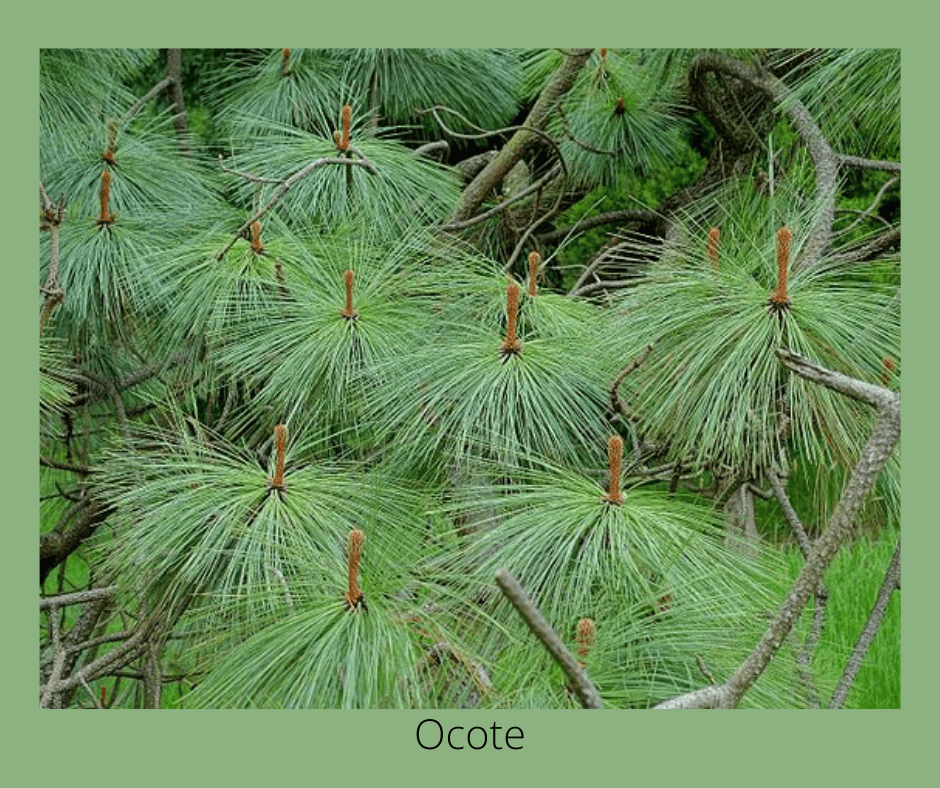
Natural Healing — Ocote

Photo credit: Daderot

When many people think about Mexico, pine trees are not in their concept of native plants. However, believe it or not, Mexico has the highest number of native pine species globally, between 43 to 51 species

Many of these species are used in traditional herbalism in Mexico. In fact, the resin from ocote (Pinus montezumae), called oxitl, was given to humans by Tzapotlatena, the goddess of medicine herself. According to Bernardino de Sahagún, this resin was used in remedies for fever and cracked skin. The name ocote comes from the Nahuatl ocotl. Ocotzotl, the resin or turpentine from the pine, is known as trementina. Another indigenous remedy was cuauh ocotl, a tea made from the needles for respiratory illnesses.

Trementina de ocote is prescribed for nail fungus and as an anti-lice repellent. It is also combined with alcanfor (Cinnamomum camphora) or gobernadora (Larrea tridentata) for a rheumatism liniment. Trementina is antiseptic, diuretic, rubefacient, and anti-parasitic.

In the state of Puebla, ocote is used to alleviate cold symptoms, and in Tlaxcala, it is prescribed as a remedy for bronchitis. It is also used in wound healing. It is considered a “hot” plant and is often used for “cold” illnesses through steam baths and infusions

Ocote is a hard pine and is used in construction. The resin is so flammable that cut branches will burn like torches. A vanillin flavoring can be obtained from the resin and pulpwood. Like other pine species, the seeds of the Pinus montezumae are edible but small. 

Té de Ocote for Congestion

  • 1 ocote branch with needles about 6 inches long (Pinus montezumae)

Boil the branch in 1 liter of water for five minutes. Strain and sweeten with miel (honey) if desired. Drink one cup a day to help with respiration.

***

Interested in natural remedies? Uncover herbal remedies from traditional Mexican sources for healing and wellness in the Exploring Traditional Herbal Remedies in Mexico series.

Leave a comment

Filed under Health, Native fauna and flora, Natural Healing