
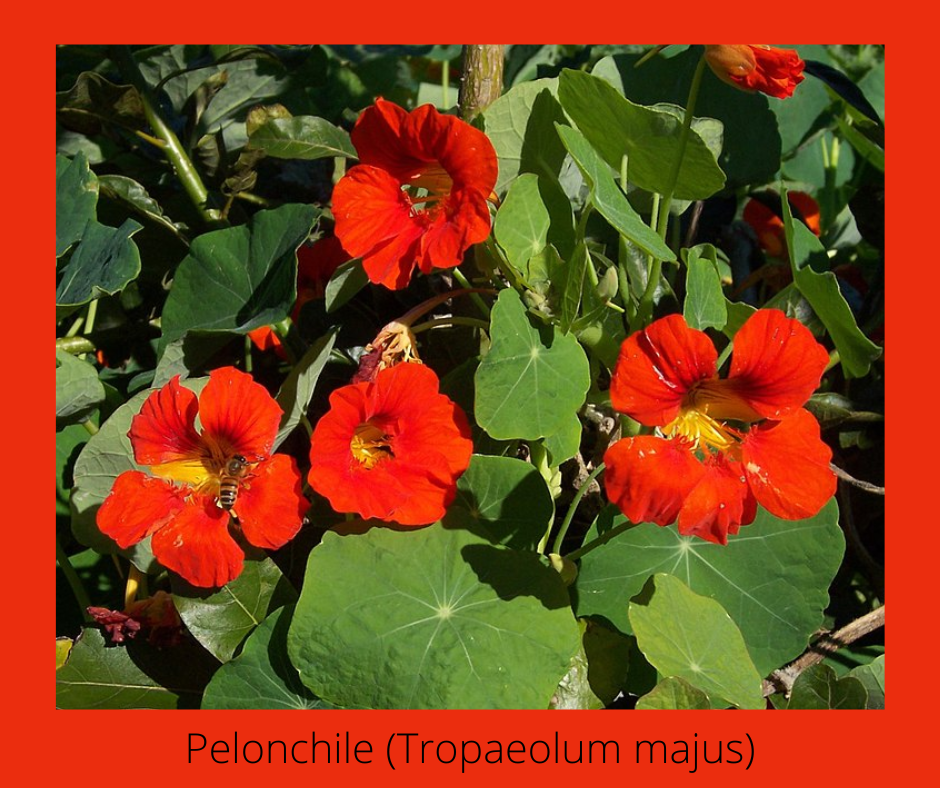
Photo credit: B.navez
Tropaeolum spp. is native to Central and South America, from Chile to Mexico. As seems quite common among plants, there are some naming issues that cause confusion. First, in English, this plant is often called nasturtium. However, it does not belong to the watercress genus Nasturtium officinale. Tropaeolum was given this common name because it produces a similar oil as watercress.
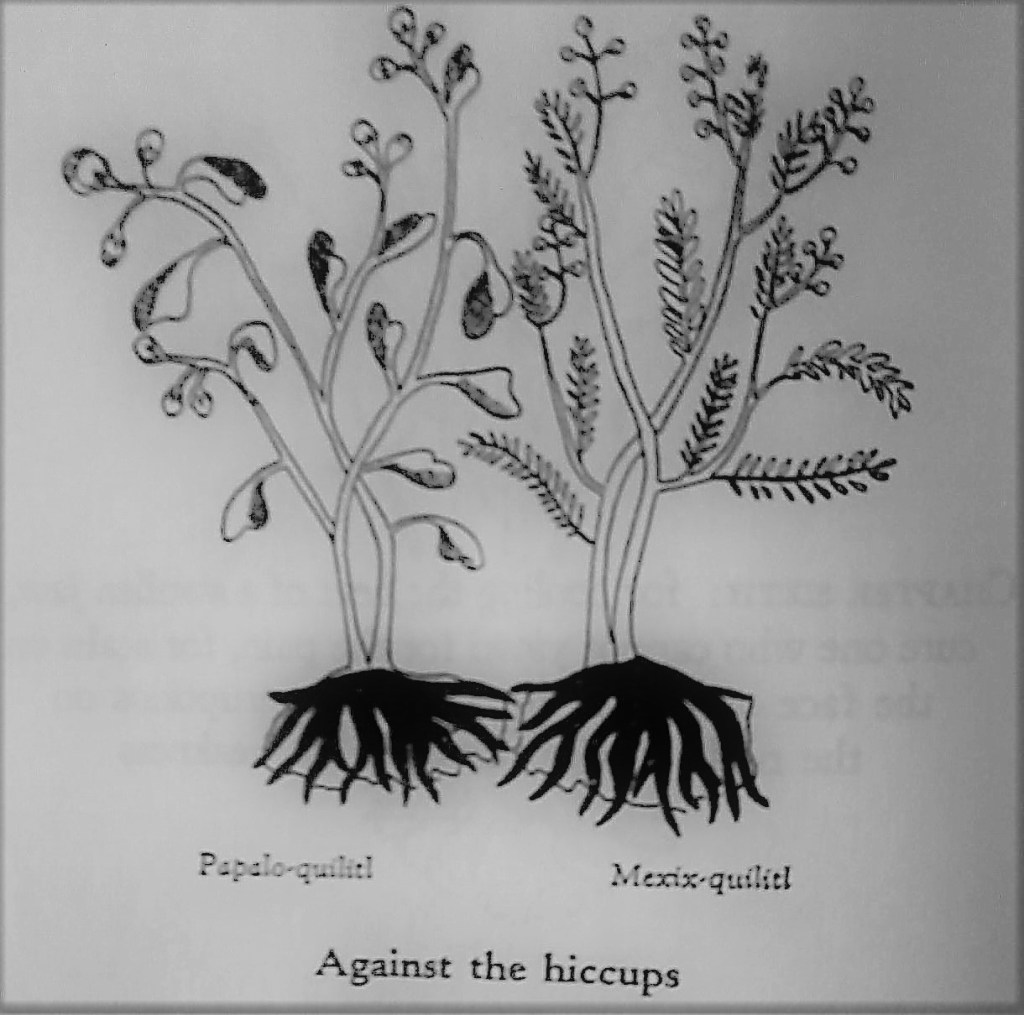
Another language name issue is the term mastuerzo used for this plant from the Spanish nastuerzo, meaning “de nariz torcida” (crooked nose). Mastuerzo is also used to identify the plant Lepidium virginicum, known as pepperwort in English and Mexixquilit in Nahuatl. I’ve seen several reputable herb texts make this misidentification error with the Nahuatl term. The matter is made clear with this illustration for a hiccup remedy from The Classic Codex of 1552. The plant Mexixquilit in no way resembles the climbing Tropaeolum majus but is a fair representation of Lepidium virginicum.
Pelonchile from the Nahuatl pelonchili is a more precise name for this plant. The etymology gives us even a little history. Pelon from the word pelun meaning from Peru, and chili the term for anything spicy. This breakdown suggests that the plant originally came from South America and lets us know that it has a spicy taste. Nicolás Monardes, author of the 1569 herbal Historia medicinal de las cosas que se traen de nuestras Indias Occidentales introduced pelonchile to Spain.
Other names include capuchina, cachaco de muladar, espuela de caballero, mexiquelite from the original pelonmexixquilitl meaning edible plant from Peru, texao, marañuela, taco de reina, curutziti, chimbindo in the Bajio region of Mexico, cuitziquiendas in the Tarascan language, and jauaxola in Purépecha.
The Tropaeolum genus has about 80 species. The climbing varieties belong to the family Tropaeolum majus, and the bushier types are classified as Tropaeolum minus. The flowers and leaves are edible for all varieties. Juice is made from a handful of crushed fresh leaves drunk before breakfast for at least 15 days as a tonic. The leaves are also added to soups for a lightly spicy flavoring.
Pelonchile is full of trace elements and bioactive compounds easily absorbed by humans. The flowers contain potassium, phosphorus, magnesium, phosphorus, iron, copper, and zinc. Because of the plant’s high content of vitamin C, anthocyanins, and polyphenols, it provides antioxidant activity.
Melasma, a condition that causes dark, discolored patches, and chloasma, the same condition that occurs in pregnant women, is treated with a decoction made with Pelonchile flowers drunk two or three times a day.
Pelonchile essential oil demonstrates antimicrobial, antifungal, anti-diabetic, hypotensive, anticancer, and expectorant effects. It has been shown to be effective in the treatment of digestive and respiratory illnesses, especially bacterial infections in the bladder and upper air tract.
An infusion made from the dried plant is prescribed for colds, flu, bronchitis, and cough. To make this, five grams of pelonchile are added to one cup of boiling water. Allow it to steep for ten minutes before straining. Drink two cups per day for three or four days.
The seeds contain a high content of erucic acid, which can be used to treat adrenoleukodystrophy, a hereditary condition that damages the myelin sheath that insulates nerve cells in the brain. It is a strong diuretic. A cold infusion for digestion is prepared by adding a pinch of stems, leaves, or seeds to a cup of cool water and allowing it to steep overnight before drinking.
The leaves have been shown to be useful in the treatment of liver cancer. The plant is antibiotic. It also shows the potential to prevent and treat obesity. It demonstrates anti-bacterial and anti-inflammatory properties.
***
Interested in natural remedies? Uncover herbal remedies from traditional Mexican sources for healing and wellness in the Exploring Traditional Herbal Remedies in Mexico series.

 Surviving Mexico
