
Tag Archives: Moroleón

Carnival, Lent, Holy Week and Pilgrimages

footprints soledad

Footprints of those that make the pilgrimage to La Soledad to see La Virgen.

Well, there is quite a bit to cover with a grand title like that, but I’m going to keep it local, rather than national. México is a Catholic nation, as I’ve mentioned before, but each area has its own spin on things. There are some areas where the activities and rituals surrounding this holy season are a reaffirmation of faith both for participants and observers. Moroleón is not one of those areas.
kinder parade

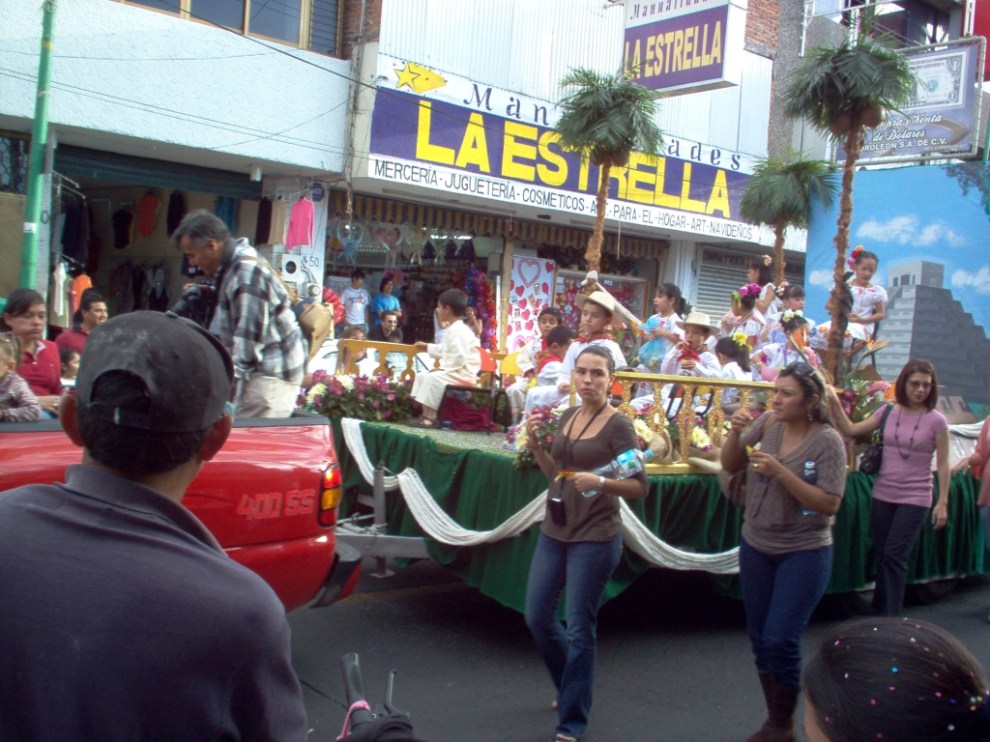
Moroleón Carnival parade with 4 and 5-year-olds dressed in traditional attire from Veracruz

In Moroleón, the beginning of the season of fasting and supplication begins with a parade. A kindergarten parade. In February, all the private kindergartens sponsor a float and dress their students in costumes representative to different regions or countries where Carnival is celebrated. Of course, having been a teacher in various kindergartens, I have had the dubious privilege of marching beside the float and keeping little guys from jumping out. It’s never fun for me, although the kids like throwing candies to the crowds. It’s a long walk around town, I get confetti in areas where confetti never should be found, and it’s often cold and blustery. After all, it is February.

Then there is the egg throwing. In Moroleón, after the kindergarten carnival parade, there is egg throwing. They are supposed to be blown eggs filled with confetti, but sure enough, there is a significant number of real eggs tossed. I have asked and asked, but no one can explain to me the significance of the egg throwing or its origin. Perhaps it is a symbol of waste, I don’t know. Regardless, we stay away from downtown as being pelted with either confetti-filled eggs, or real ones is low on the list of activities we’d like to do in the evening.

Then comes Ash Wednesday, the official beginning of Cuaresma (Lent). In the Catholic religion, the traditional purpose of Lent is the preparation of the believer for Holy Week through prayer, penance, repentance, almsgiving and self-denial.

This year, Ash Wednesday came right before Valentine’s Day, and I thought that the subsequent Valentine’s Day celebration would be muted. But no, apparently the gluttonous consumption of chocolate and the orgies of public displays of affection are allowed. So much for self-denial.

Ash Wednesday is marked by misa (mass) and the receiving of an ash and oil cross on the forehead in a reminder that “from dust we are and to dust we shall return.” As nearly everyone in México is Catholic, the church is overrun with devotees on holy days. They have become more efficient in their proceedings by using a rubber stamp (dipped in ink mixed with ash and holy oil) to mark the foreheads of the penitent.

The 40 days of Lent are to be a time of prayer and fasting in remembrance of the 40 days that Christ fasted in the wilderness. However, the fasting need not be extreme, at least here. Only meat is to be given up on Ash Wednesday and Fridays during Lent. All the carnicerias (butchers) are closed on these days. Fortunately, meat still may be bought at the Bodega Aurelia (a branch of Wal-mart) for those that are not Catholic or vegetarian. Fish, of course, is acceptable either day, as it is not considered particularly satisfying.

As one of the traditional practices in addition to prayer and fasting is the giving of alms, supposedly the meat that one would have customarily eaten on those days should be bought and given to someone in need, someone less well-off financially. However, I have yet to meet anyone in this area that does that. But that’s what I’m told.
christ walk

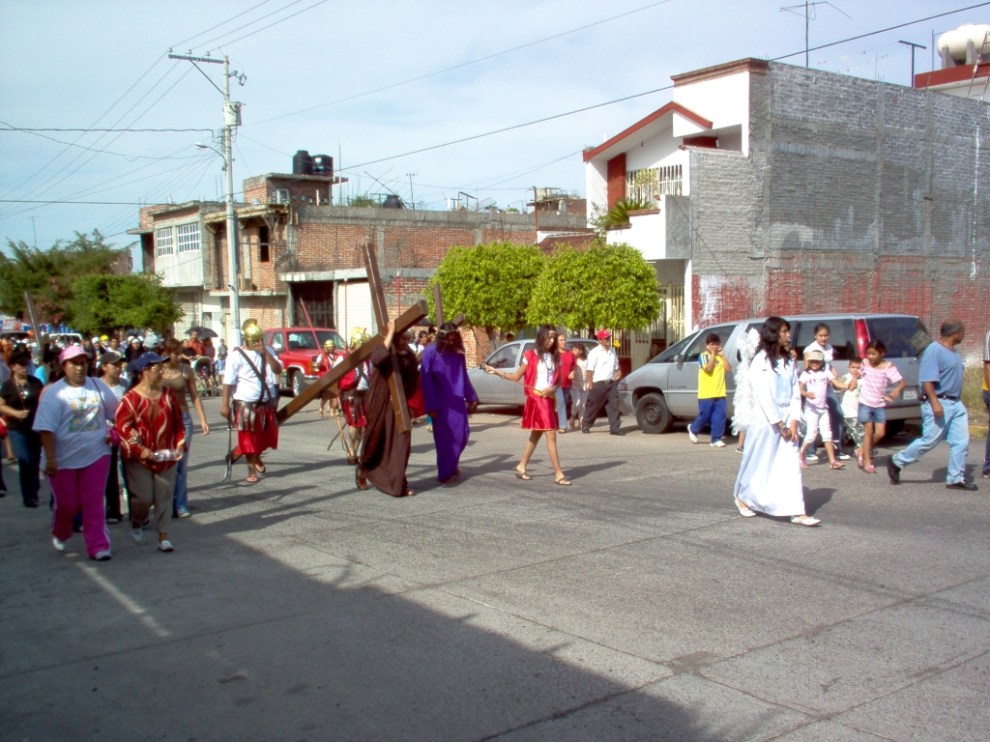
Part of the drama, Christ carrying the cross.
The drama ends with the cruxification of Christ.

The drama ends with the crucifixion of Christ.

Semana Santa (Holy Week) is celebrated throughout México with reenactments of the betrayal, trial, and crucifixion of Jesus Christ. It’s really a good show. Barabas actually goes into shops that are open (as all stores are supposed to be closed anyway) and steals items. I even saw him take an ice cream cone from a little child watching the drama. The final crucifixion is done on a vacant lot on the edge of town. In Moroleón, Jesus and the 2 thieves are only tied up on the crosses, not nailed as they are in other parts of México. There is also no flagellation of any kind, Moroleón being a moderate sort of town.

During Cuaresma, suffering is the key, so traditionally one is to give up something dear for the 40 day period as a sacrifice in addition to meat. If your sacrifice holds the entire period, you may make a pilgrimage and ask a favor from the Virgin. The choice of pilgrimage place and the difficulty is dependent on the petition. For instance, when my mother-in-law was dying, her husband promised that if she survived, he would make a pilgrimage during Semana Santa (Holy Week) to La Soledad descalzo (barefoot). As she didn’t survive her injuries, the promise is not enforceable, and my father-in-law did not make his pilgrimage.

We, however, did. During Semana Santa (Holy Week), most specifically Maundy Thursday, Good Friday, and Sábado de Gloria (Holy Saturday), those in need of health-related favors make the pilgrimage to La Soledad, a little town outside Moroleón and there deliver their petitions to the Virgen de la Soledad, Madre de todos los enfermos. (Virgin of Comfort, Mother of the Ill)
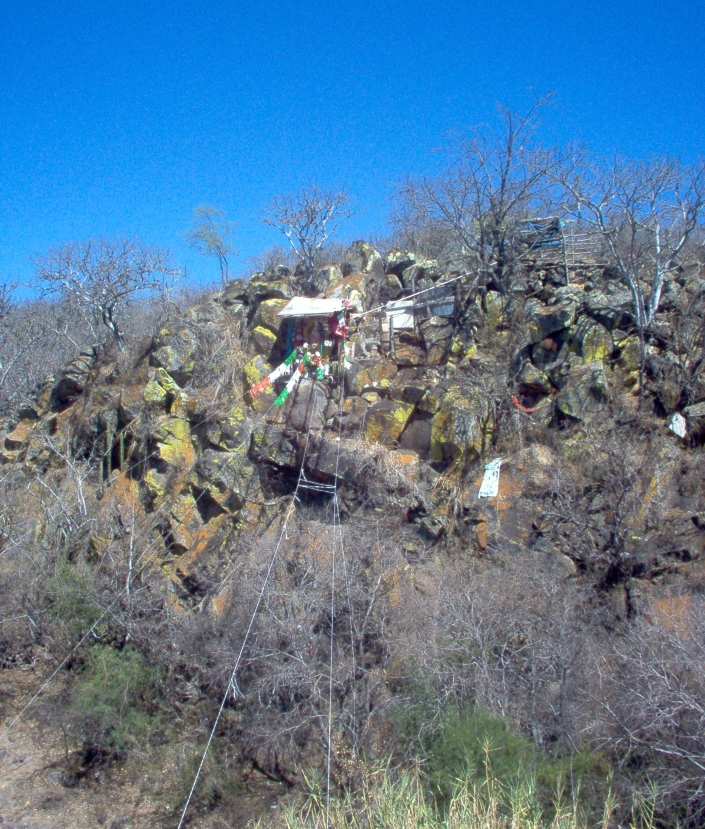
virgin

This shrine marks the entrance to the path that leads to La Soledad. As with all shrines of La Virgen, it supposedly appeared miraculously.

The transitos (traffic cops) stand on the major roads and slow traffic so that the hundreds of men, women, and children who make the pilgrimage from Moroleón and Uriangato and other communities can cross. From La Yacata, La Soledad is not terribly far. Through the dry creek bed and past the basurera (dump) the distance is about 3 miles as the crow flies. So Saturday morning, I donned my big floppy hat and long sleeve shirt (not taking any chances on yet another severe sunburn), and we were off.
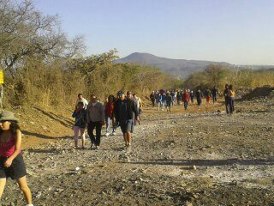
Hundreds make the pilgrimage to La Virgen de la Soledad during Semana Santa.

Hundreds make the pilgrimage to La Virgen de la Soledad during Semana Santa.

We were late getting started since we had to attend to the animals before we left and we met more returning from the pilgrimage than going in the same direction. But we arrived in good time, after maybe 2 hours of walking.
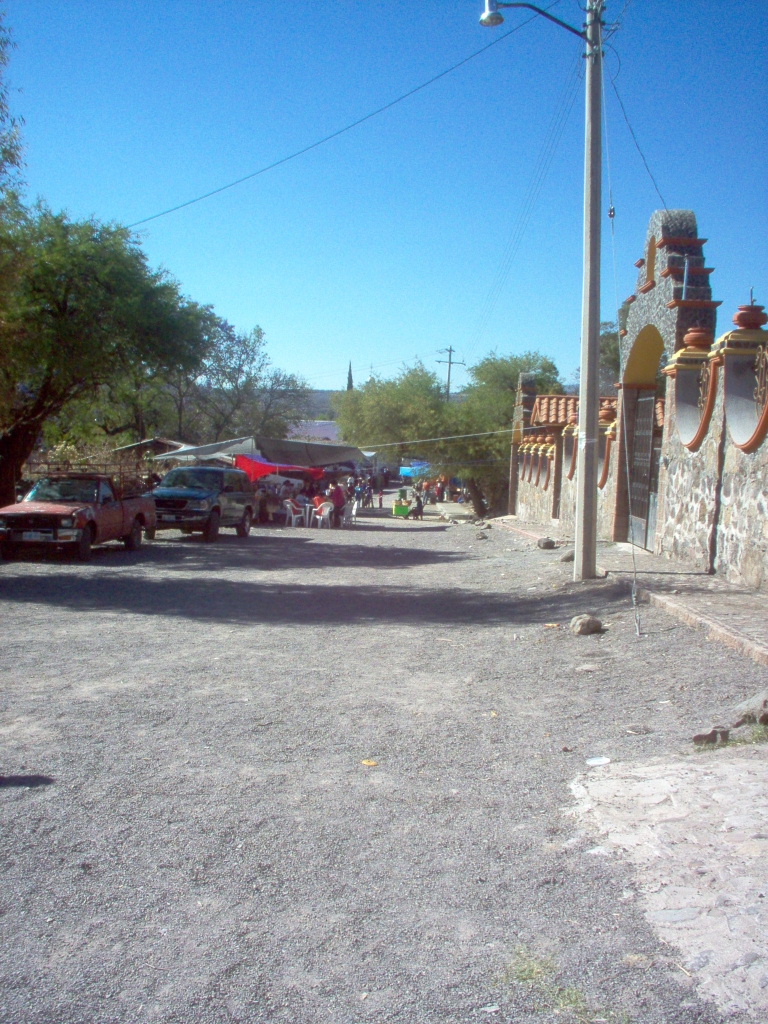
arriving in soledad

Refreshments for the weary walkers are available.

Enterprising vendors sell rosaries, holy prayer cards, candles and orange juice to the pilgrims arriving in La Soledad.
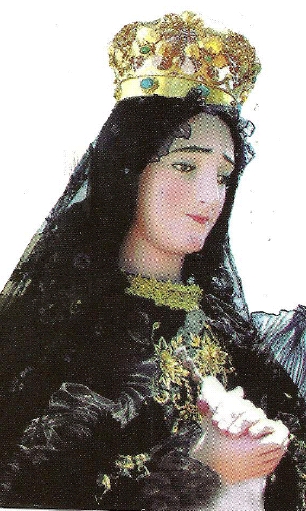
Virgen de la Soledad

La Virgen de la Soledad

The shrine is not especially big, perhaps holding 20-30 people. Inside is a life-size statue of the Virgin Maria, dressed in mourning black and surrounded by flowers.

The prayer goes as follows:
Estás, Madre mía a la cabecera de todos los enfermos del mundo de todos los que, en este momento han perdido el conocimiento y van a morir, de los que han comenzado ahora su agonía, de los que han abandonado toda esperanza de curación, de los que gritan y lloran de dolor, de los que no pueden curarse por falta de dinero, de los que desearían andar mucho y tienen que estar inmóviles, de los que tendrían que acostarse, y la miseria les obliga a trabajar, de los que buscan vanamente en la cama una postura menos dolorosa, de los que pasan noches interminables sin poder dormir, de los que atormenta el pensamiento de una familia en la miseria, de los que tienen que renunciar a sus mas caros proyectos para el futuro, y sobre todo, de los que no creen en una vida mejor, de los que se revelan y maldicen a Dios, de los que ignoran que Cristo sufrío como ellos.

Loosely translated:
Mother of all those that are sick
You, my mother, foremost of those ill in the world that in this moment have lost consciousness and are about to die, those that have now begun their final agony, those that have abandoned hope of being cured, those that shout and cry out in pain, those that can not be cured due to lack of money, those that desire to walk and must remain immobile, those that wish to lay down but misery obligates to work, those that search in vain for a less painful position in their beds, those that spend countless nights unable to sleep, those that are a torment in the thoughts of their families because of their misery, those that have given up their most precious projects for the future, and above all, those that do not believe in a better life, those that revile and curse God and those that ignore that Christ suffered as they do.
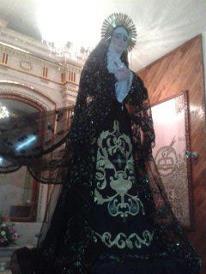
La Virgen de la Soledad

La Virgen de la Soledad

Well, we took a quick look, didn’t stay the entire mass since we weren’t there to make any petitions, had some pan (bread) and horchata (rice milk), rested a bit in the shade, then started back. However, perhaps we should have made some sort of offering. We were under the weather the next three days.
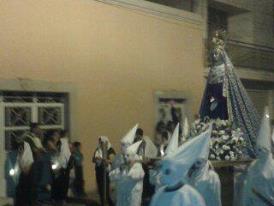
Procession of silence

Procession of Silence

There is also a procession of silence at night, but we didn’t stay for that.

Domingo de la Resureción, (Easter Sunday) is again observed with a mass and traditionally is a family day. However, this year, we noticed that several small towns used the opportunity to hold jaripeos (rodeos) later after misa (mass). Monday is typically a day off here, with the work week being Tuesday through 3/4 day on Saturday, so I’m sure the revelers had time to recover from the jaripeo (rodeo) overindulgence (the main attraction at the jaripeo is beer, beer, and more beer).

Schools are closed the week following Semana Santa, and many families use these days to go to the beach or other vacation areas. We took the week to recover from the virus that we caught and are now gearing up for back to school.

*********************

disclosure

12 Comments

Filed under Mexican Holidays, Religion, Tourist Sites in Mexico

Losing the battle–but not the war

la yacata green

La Yacata is lovely after the rains.

The other day, we were surprised to open our front door to find a taxi parked outside, having not heard it drive up. And even more surprised to find Doña Maria, our now 98-year old colona (property owner) inside. She had come to talk to my husband about selling her 2 lots. They negotiated a bit. She’s still as sharp as anything, even if her physical strength is giving out, although she recovered well from her fall at the last junta (community meeting). Finally she lowered her price to $50,000 pesos for the two lots with the understanding that if my husband found a buyer, she would give him something para la soda (a commission). We put a sign on our front door (Se venden 2 lotes. Informes aquí.) but not with much hope. With the current problems facing the neighborhood, nobody is buying. Doña Maria, however, is not in a position to wait until these things are resolved.

Then I received an email from R asking for the contact information of Super Prez. I forwarded the message to Super Prez and replied to R with Super Prez’s email. Well, guess what? R has left the country. He has gone to the States for an indefinite period of time to work and kindly gave his authorization for us to replace him as secretary (not that he did any work, mind you, but we need a secretary legally to form a mesa directiva). His vocal (understudy) el profe had already left the area and our councils several months previously due to marital problems. And yesterday, el taxista, the vocal (understudy) for the president, left for the border as well. So our official committee that legally must be made up of 6 members is reduced by half.

Desorollo Urbano (the permit office), who canceled their appearance at the last junta (community meeting) chose April 8 at 8:30 in the morning for their visit and inspection. Friday at 3 p.m. (the end of the workday), they called Super Prez to say that regretfully they were required to be in an urgent Monday morning meeting and therefore would not be able to visit La Yacata until April 14. Super Prez immediately called me, however, the volantes (flyers) had already been delivered and the radio announcement had already been paid for. My husband went to see if he could at least cancel the radio announcement, but the office personnel had already left for the day and anyway, there would be no refund given. This is México after all. My husband also said that he would not deliver any more flyers since this is the second time we have promised (in vain) the community that Desorollo Urbano, (the permit office), would be there. Our unity as a community is fragile and I’m afraid this will destroy it.

My theory is that el contratista chueco (the corrupt contractor who installed the stolen electricity system in La Yacata but now is the head contractor under the new president of Moroleón) or Chuchi went to JG the new president and compadre (buddy) and asked that the meeting be delayed. Chuchi is especially adept at throwing roadblocks in our way. (see demanda 1 & demanda 2) He understands that delay will irritate the people, causing them to become downhearted, and throw doubt on the mesa directiva’s credibility. El contratista chueco also has reasons for not wanting an inspection since what he did was illegal and questions will be asked. However, I can’t prove that either one had a hand in the last minute cancellation.

Super Prez and I (as the remaining committee members) now will have to stand with egg on our faces in front of the community tomorrow morning and explain how we weren’t able to deliver on our promise. Any credibility we have painstakingly earned now lies shattered at our feet.

Though we have lost this battle, we have not lost the war. We have not yet begun to fight, it’s just going to take longer. But I’m afraid Doña Maria will not be around to see our triumphs.

**************************

disclosure

1 Comment

Filed under La Yacata Revolution, Politics

Parenting challenges–when someone dies


Welcome to the March 2013 Carnival of Natural Parenting: Tough Conversations

This post was written for inclusion in the monthly Carnival of Natural Parenting hosted by Hobo Mama and Code Name: Mama. This month our participants have spoken up about how they discuss complex topics with their children. Please read to the end to find a list of links to the other carnival participants.

***


cross

The majority of México is Catholic and nearly every house has a cross displayed.

We moved from a predominately Protestant but mostly religiously tolerant country to a nearly universally Catholic country when we moved from the United States to México. So the question became how to raise a religious but open-minded child in such a dogmatic and closed culture?

Don’t get me wrong, I’m not saying there is anything inherently wrong with Mexican Catholicism. After all, there are millions of devout devotees. But I wasn’t raised as a Mexican Catholic, and I did not wish to limit my son’s religious experience just because it’s the religion of the masses.

Although my husband was raised as a Mexican Catholic, our religious differences were not a point of contention between us, until we arrived in México with our 4-year-old child who had not been baptized as an infant. My mother-in-law started in immediately with how it was necessary for our son to be baptized in order to remove the devil’s horns from his head. (I admit to thinking WHATEVER to that idea.) My husband began to agree and make noises about how we should get him baptized. I told him that if he wanted to get our son baptized, although personally not seeing the necessity of that myself, he could go ahead and make the arrangements himself. As he never went to make the arrangements (being male) and my mother-in-law was unwilling to take on the expense (being cheap) this passed and our son remained unbaptized.

Then came the First Communion debate. Having not baptized our son, I did not see the necessity of having him prepared for his First Communion, but since his cousin, the same age was going through the ritual, it came up again. Again, I told my husband if he wanted to do this, he would need to make the arrangements, and again my mother-in-law was not interested enough in the plight of my son’s soul to make the financial sacrifices involved (clothes and a party mostly). Being a non-Catholic, I was automatically barred from involvement, unless of course I went and became Catholic. I wasn’t interested in doing that.

We attended mass on a few occasions, mostly for the experience of it over the last 6 years, but we never really had to confront the issue until last May when my mother-in-law was involved in an accident. Then, all of a sudden, religion became a big deal in our lives. My mother-in-law’s personal saint was El Niño de Atocha, and the family lit candles to that saint in supplication for her life. The saint was moved from her house to ours since my father-in-law was either in jail or at the hospital and couldn’t be there to keep a candle lit, so it became my responsibility. My father-in-law made a vow to walk descalzo (without shoes) to the Virgin of Guadalupe‘s shrine in Soledad if my mother-in-law recovered. My brother-in-law B became downright hostile towards me, the only non-Catholic in the bunch, although I tried to do what I could to help. When my mother-in-law died, she received the last rights and made her confession as any good Catholic would. My father-in-law asked me, not his religious son B if he needed to complete his pilgrimage since she died. I said no, I didn’t think so.

The altar of El señor de Escapulitas Catholic Church in Moroleón

The altar of El señor de Escapulitas Catholic Church in Moroleón

We had the funeral in the El Señor de Escapulitas with all the pomp and circumstance of a Catholic funeral. Then we began the novena(the 9-day prayer session for the soul of the departed to be released from purgatory). And then my son asked me about death.

So we talked about it, he and I. I asked him what he thought might happen when someone dies. He said he wasn’t sure. Being only 10, his death experiences involved mostly pets and livestock. So I explained that most people in México believed the soul lives on for a time in a place called purgatory, which wasn’t heaven or hell and that there would be rituals that were intended to help his grandmother’s soul move from purgatory towards one or the other. We talked about what heaven might be or what hell might be. Then I presented other ideas to him. I talked about the concept of reincarnation, the belief that the essence of a person is transferred to another living being, human or otherwise, in its quest for nirvana. He found that concept fascinating. I talked about that perhaps nothing at all happens at death, that perhaps we just cease to be and our body returns to the earth as part of a natural cycle of life. He was quiet for awhile after our discussion, thinking over things and finding his own way in the darkness that accompanies death.

That night, my son sat down with us for the first of the 9 prayer sessions of the novena. His cousins, who were baptized and confirmed, played outside as we prayed. He said to me after the prayers, “Mom, I don’t think that abuelita is in purgatory, but I prayed to remember her.” He endured the entire 9 days and subsequent mass, the only one of her many grandchildren who did so.

I’m not sure he’s made up his mind about death yet. I’m not sure I have either. We find comfort for our grief as we can. I’ve shared several of my favorite poems and scriptures about death and life with him. He’s listened and commented and gone on with his young life. I know perhaps it would be easier on him if I had made definite statements about what happens when someone dies instead of letting him grope about for his own answers. But finding your own way is the most precious part of living, and I would not deprive him that, even if he is still too young to understand.


***

disclosure

***

Carnival of Natural Parenting -- Hobo Mama and Code Name: MamaVisit Hobo Mama and Code Name: Mama to find out how you can participate in the next Carnival of Natural Parenting!

Please take time to read the submissions by the other carnival participants:

(This list will be updated by afternoon March 12 with all the carnival links.)

  • A Difficult Conversation — Kellie at Our Mindful Life is keeping her mouth shut about a difficult topic.
  • Discussing Sexuality and Objectification With Your Child — At Authentic Parenting, Laura is puzzled at how to discuss sexuality and objectification with her 4-year-old.
  • Tough Conversations — Kadiera at Our Little Acorn knows there are difficult topics to work through with her children in the future, but right now, every conversation is a challenge with a nonverbal child.
  • From blow jobs to boob jobs and lots of sex inbetweenMrs Green talks candidly about boob jobs and blow jobs…
  • When Together Doesn’t Work — Ashley at Domestic Chaos discusses the various conversations her family has had in the early stages of separation.
  • Talking To Children About Death — Luschka at Diary of a First Child is currently dealing with the terminal illness of her mother. In this post she shares how she’s explained it to her toddler, and some of the things she’s learned along the way.
  • Teaching 9-1-1 To Kids — Kerry at City Kids Homeschooling talks about the importance of using practical, age-appropriate emergency scenarios as a springboard for 9-1-1 conversations.
  • Preschool Peer PressureLactating Girl struggles to explain to her preschooler why friends sometimes aren’t so friendly.
  • Frank Talk — Rosemary at Rosmarinus Officinalis unpacks a few conversations about sexuality that she’s had with her 2-year-old daughter, and her motivation for having so many frank discussions.
  • When simple becomes tough — A natural mum manages oppositional defiance in a toddler at Ursula Ciller’s Blog.
  • How Babies are Born: a conversation with my daughter — Justine at The Lone Home Ranger tries to expand her daughter’s horizons while treading lightly through the waters of pre-K social order.
  • Difficult Questions & Lies: 4 Reasons to Tell The Truth — Ariadne of Positive Parenting Connection shares the potential impact that telling lies instead of taking the time to answer difficult questions can have on the parent-child relationship.
  • Parenting Challenges–when someone dies — Survivor at Surviving Mexico writes about talking to her child about death and the cultural challenges involved in living in a predominantly Catholic nation.
  • Daddy Died — Breaking the news to your children that their father passed away is tough. Erica at ChildOrganics shares her story.
  • Opennesssustainablemum prepares herself for the day when she has to tell her children that a close relative has died.
  • Embracing Individuality — At Living Peacefully with Children, Mandy addressed a difficult question in public with directness and honesty.
  • Making the scary or different okay — Although she tries to listen more than she talks about tough topics, Jessica Claire of Crunchy-Chewy Mama also values discussing them with her children to soften the blow they might cause when they hit closer to home.
  • Talking to My Child About Going Gluten Free — When Dionna at Code Name: Mama concluded that her family would benefit from eliminating gluten from their diet, she came up with a plan to persuade her gluten-loving son to find peace with the change. This is how they turned the transition to a gluten-free lifestyle into an adventure rather than a hardship.
  • Discussing Difficult Topics with Kids: What’s Worked for Me — Deb Chitwood at Living Montessori Now shares parenting practices that enabled discussions of difficult topics with her (now-adult) children to be positive experiences.
  • Tough Conversations — Get some pointers from Jorje of Momma Jorje on important factors to keep in mind when broaching tough topics with kids.
  • Protect your kids from sneaky people — Lauren at Hobo Mama has cautioned her son against trusting people who’d want to hurt him — and hopes the lessons have sunk in.
  • Mommy, What Does the Bible Say? — Amy at Me, Mothering, and Making it All Work works through how to answer a question from her 4-year-old that doesn’t have a simple answer.
  • When All You Want for Them is Love: Adoption, Abandonment, and Honoring the Truth — Melissa at White Noise talks about balancing truth and love when telling her son his adoption story.


14 Comments

Filed under Carnival posts, Death and all its trappings, Parenting Challenges and Cultural Norms