
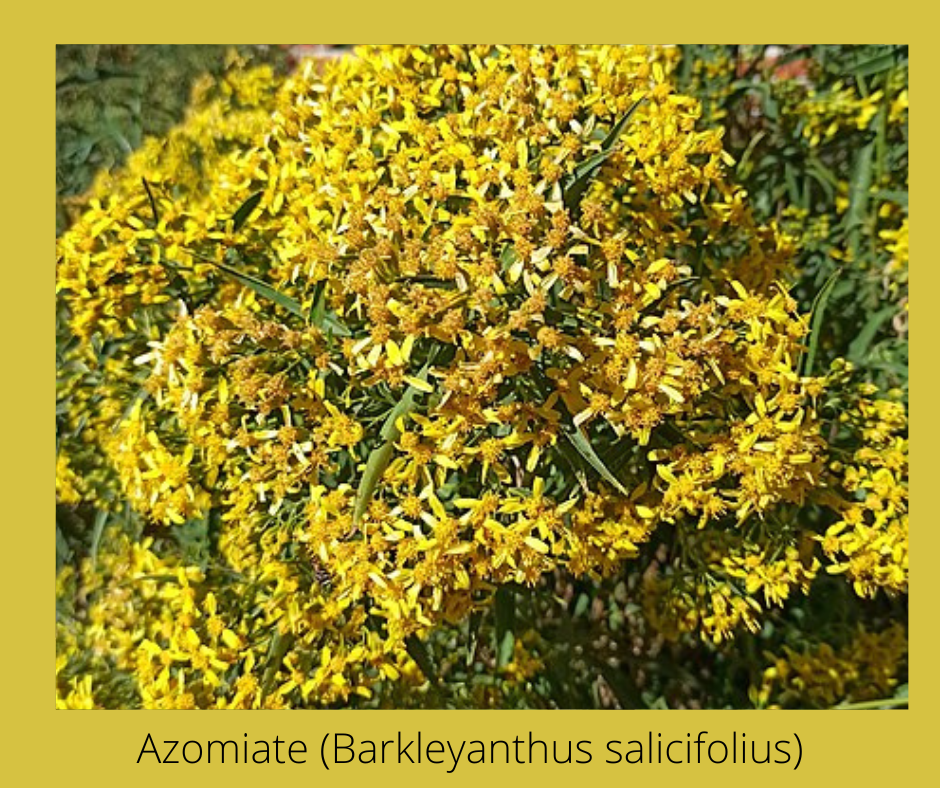
Tag Archives: mexican herbal remedies

Natural Healing — Tumba Vaqueros

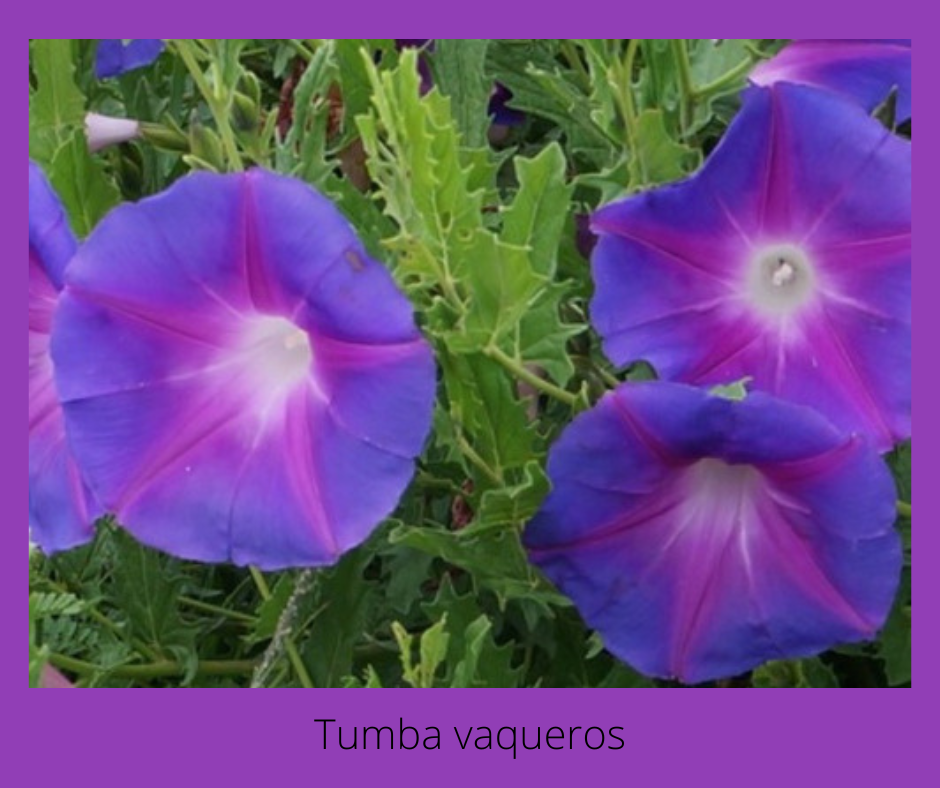
Ipomoea stans, another morning glory although more bushy than viney, is most often called tumba vaqueros (knocks down cowboys) in the area where I live. However, there are a plethora of other names including espanta lobos (frightens wolves), limpia tunas (cleans prickly pears), quebra platos (breaks plates), correhuela (run it smells), and campanita (little bell). In Náhuatl, this plant is known as cacamótic, cacastlapa (cacaxtlapa), flor de casclapa (caxtlapa) or castlapa canibata. Still other areas use the terms galuza, manto, maromero, tanibata, den-tzee’ or tlaxcapan (with spelling variant tlascapan). 

The rhizome is boiled in remedies for kidney ailments and bilis (excessive rage). It’s also used to treat el mal de San Vito (Huntington’s disease), chorea (involuntary movement disorders), and epilepsy. For movement disorders, the recommended dosage is 15 grams of rhizome boiled in one-half liter of water and drunk three times a day. Studies have shown Ipomoea stans does have anticonvulsant properties as well as neuroprotective activity.

As an anti-anxiety treatment, it is made into an infusion along with flor de azahar (Citrus sinensis), flor de manita (Chiranthodendron pentadactylon), salvia (Salvia mexicana), palo de Brasil (Haematoxylum brasiletto), and flor de tila (Ternstroemia lineata). Another nerve tonic used in the states of Guanajuato, Hidalgo, and Puebla is to make a tincture with the rhizome, allowing it to steep for eight days. When it is ready, the tincture is applied to the back of the neck. An infusion for nervous disorders is made with two grams of the rhizome boiled in a one-half liter of water. Half is drunk in the morning and the other half in the evening. Research has demonstrated that tumba vaqueros possess anxiolytic and sedative effects. 

The chopped rhizome is eaten to calm coughing. An infusion made from boiling chopped root and allowing it to steep for ten minutes before straining is drunk three or four times daily during menstruation as an anticontraceptive. A tincture made from the plant is rubbed on the abdomen to reduce cramping. 

In one form or another, tumba vaqueros is also used for headaches, nephritis, bone pain, dysentery, and dizziness in different areas of Mexico. As with jalapa (Ipomoea purga), the root also has purgative properties. It’s considered a “hot” remedy.

To treat dystenery, ten flowers are boiled in one liter of water and sweetened with honey. It’s drunk before breakfast and then three or four times additionally during the day. 

In addition to the aforementioned properties, tumba vaqueros is cytotoxic, antiproliferative, and antibiotic

***

Interested in natural remedies? Uncover herbal remedies from traditional Mexican sources for healing and wellness in the Exploring Traditional Herbal Remedies in Mexico series.
Leave a comment

Filed under Health, Native fauna and flora, Natural Healing

Natural Healing — Zapatilla del Diablo

Photo credit: Dinesh Valke

The fifteen or so Pedilanthus species, all of which are native to Mexico, were merged as a Euphorbia subgroup. Different herbal resources, depending on their publication date, may therefore refer to this unique plant as either Pedilanthus tithymaloides or Euphorbia tithymaloides. Subspecies of this plant are identifiable by their leaves. Some are variegated or tinted pink, white or red, or even uniquely shaped. Unlike many plants, this species is able to thrive in toxic waste sites and landfills. Planted near a doorway, it is believed to ward off evil spirits. 

Euphorbia tithymaloides is known as zapatilla del diablo (devil’s slipper), pilicxitl, redbird flower, Devil’s backbone, and slipper spurge. The pink or reddish flower resembles a slipper. 

The sap, stems, roots, seeds, and leaves are toxic. However, it is a common ingredient in the treatment of isihuayo, also known as caída de matriz. Zapatilla del Diablo is applied topically with hot stones, warm oil, or ash above the area the uterus is believed to be anchored to the body in order to settle the womb back in place after delivery or accident. Isihuayo is believed to be a “cold” condition that benefits from “hot” treatment. Zapatilla del Diablo is considered a “hot” plant and is often used in conjunction with steam baths and hot stones to restore the body’s equilibrium

A tincture made from the sap is used to treat scabies, skin cancer, STDs, warts, and dental pain. Diluted sap is given as a remedy for intestinal worms and gastritis. However, the toxic properties can cause irritation and bleeding, so it should be used with extreme caution. A leaf and sap decoction is applied topically as a poultice for fractures and wounds. A leaf infusion is prescribed as a sedative, for headaches, and for respiratory ailments. A few drops of the infusion are placed on a cotton ball and inserted into the ear canal for earache. As a gargle, it is used to treat sore throat. 

An infusion is given to a laboring mother when delivery is taking an excessive amount of time to hasten things along. Because it causes uterine contractions, it should never be ingested during pregnancy. It’s also recommended for menstrual cramps.

Studies have shown that pedilanthus tithymaloides inhibits herpes simplex virus type 2 infections. Zapatillo de diablo has antibacterial, antifungal, anti-inflammatory, antibiotic, antimalarial, antimicrobial, antiseptic, antihemorrhagic, antiviral, anti-parasitic, and antitumoral. It is emetic, provokes vomiting, and is abortive. It also has demonstrated antimycobacterial activity against Mycobacterium tuberculosis. The leaves are toxic to the Culex quinquefasciatus mosquito’s eggs, larva and pupa.

***

Interested in natural remedies? Uncover herbal remedies from traditional Mexican sources for healing and wellness in the Exploring Traditional Herbal Remedies in Mexico series.
Leave a comment

Filed under Health, Native fauna and flora, Natural Healing

Natural Healing — Chaya

Photo credit: Frank Vincentz

Chaya (Cnidoscolus chayamansa) is also called chaya col, chaya mansa, chaay, chin chin chayy, ts’iim, ts’iim, and tree spinach. Cnidoscolus aconitifolius, also known as chaya, is another edible variety less commonly consumed. The two are often used interchangeably in traditional remedies. 

Photo credit: Tortie tude

Chaya is a vitamin C-rich food source and is used traditionally to combat the common cold, parasites, bacterial infections, diabetes, rheumatism, insomnia, skin disorders, gout, alcoholism, respiratory, kidney, and gastrointestinal diseases, and as an anti-inflammatory agent. Leaf sap is sometimes prescribed for eye infections, while the sap from the stem is applied to insect bites, acne, skin eruptions, and scorpion stings. In Chiapas, boiled, shredded leaves are applied to fungal infections. As a part of a daily nutritional regime, the recommended dose is two to six leaves boiled and blended into juice or soup. 

For a mild laxative, boil 10 grams of leaves and stems in a liter of water and blend. Drink one cup before every meal for fifteen days. 

A decoction of dried or fresh leaves and stems is also drunk to augment milk production and applied topically for vaginal infections and as an after-birth wash. Be sure to boil the tea for at least five minutes since the leaves contain hydrocyanic glycosides. Boiling ensures that the leaves are safe to ingest. 

Cnidoscolus chayamansa leaf infusions are antibacterial, antioxidant, antimycobacterial, hypoglycemic, antiprotozoal, hypocholesterolemic, cardioprotective, hepatoprotective, anti-inflammatory, and minimally antimicrobial

Cnidoscolus aconitifolius leaf extract has a hypotensive effect. It has been shown to be gastro and renal protective. Other studies have shown that it prevents hepatic injury, reduces blood glucose and plasma cholesterol levels,  and improves muscle glucose uptake. There has been some preliminary evidence that it has antithrombotic and anti-tumor properties. It is anti-inflammatory, antioxidant, and analgesic.

***

Interested in natural remedies? Uncover herbal remedies from traditional Mexican sources for healing and wellness in the Exploring Traditional Herbal Remedies in Mexico series.

Leave a comment

Filed under Health, Native fauna and flora, Natural Healing