Tag Archives: Education

Parenting Challenge–Creating an Atmosphere for Education

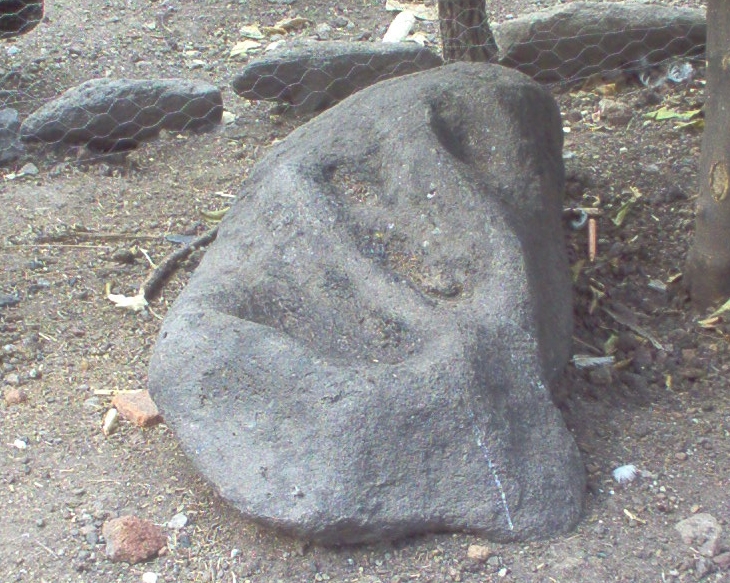
dinosaur track

Often unexpected finds create the best environment for learning.

When we say that education is an atmosphere we do not mean that a child should be isolated in what may be called a ‘child environment’ specially adapted and prepared, but that we should take into account the educational value of his natural home atmosphere both as regards persons and things and should let him live freely among his proper conditions. –Charlotte Mason

I asked my 10-year-old son what he thought he has learned by residing in México. His immediate response of “that to get things, you have to suffer” was not what I was expecting. But he’s right. Everything is more difficult here, harder than you might imagine. So how can I, his mother, provide an atmosphere for education when just meeting the basic necessities of life takes so much time and effort?

How do I create an atmosphere for learning?

I provide options for investigation.

I am a teacher and as such have a natural tendency to provide my son with stimulating games and books at a variety of levels. When my son asked me what happened to the dinosaurs, I had a book already in my home library that offered a variety of theories. It was quite advanced scientifically so, I had him skim what was presented there, allowed him to ask me questions about things he didn’t understand and then asked him what he thought the answer to his question might be. When he said he still wasn’t sure, I was pleased to say that neither is anyone else. Did he learn something from his investigation? Most definitely. When we found a dinosaur print in La Yacata, he went back to the same book to try and identify the dinosaur that made the print. Again, he wasn’t sure that he had the correct answer, but finding the one right answer wasn’t the point in the educational experience.

I allow my son to be involved in economic decisions.

Each of our various business ventures has been family efforts. My son has a stake in what we decide to embark on and therefore, has a say in the matter. He also has obligations to make the venture as success as well. When we had the Crap Shoppe, he learned, mostly from his abuelita (grandma) about doing business and negotiation. I could trust him to make sales while I ran to the store or went to teach a class. This has served him well. He has just started his first outside-of-the-family job. He works from 9:30 to 12 Wednesdays in the mercado (market) selling plastic bags to the merchants. He takes a cart and goes store to store offering his wares. He works along with the nephew of the owner, but after the first day, he told the owner that since he did all the work, he should receive a percent of the sales rather than a fixed amount. The truth was in the pudding since when the nephew went alone on Saturday, he sold next to nothing. My son now gets 10% of the sales.

I set an example.

Adapting to this new life has not been easy for me. I make social blunders all the time. It requires every bit of my focused attention to pick up the cultural nuances and make sense of them. I have stumbled along paths that are not remotely what I had in mind when the journey began. And I have learned from it all. I have pointed out to him that even those people who make me uncomfortable, laugh at my errors or are downright mean, have taught me something. In fact, these people have been some of my best teachers. And that as long as I don’t give up, I haven’t failed. As he moves towards adolescence, with the desire to fit in and just be one of the crowd, I hope that my example will serve him well.

I learn from my son.

We work hard for every little bit we have, and no, things don’t come easy. There are hundreds of small disappointments that make a bit of success so sweet. When I am tempted to grumble and curse about a late night walk home because of a flat tire, my son says, “Mom, have you ever seen the stars look so beautiful?” and I can look at it as the grand adventure that it is.

Creating an atmosphere for education is not providing high-tech teaching material in a child-centered classroom. Rather it is providing an environment that fosters questions and inspires wonder. Nothing new has ever been discovered, invented or learned without it.

*****************


disclosure

7 Comments

Filed under Carnival posts, Education, Parenting Challenges and Cultural Norms, Teaching

Homeschool variation

scarlet king snake

Red touches yellow kills a fellow. Red touches black, a friend of Jack.

As an educator, I have always been concerned about my son’s education. I felt, since the moment he was born, that my principle task as a mother was to help him learn to be a well-adjusted, happy and successful man, no matter where he might live.

When we arrived in México, my son was 4 years old, and according to his Spanish-speaking grandparents, he didn’t speak any Spanish. However, he did understand everything he heard. In order to jump start his language acquisition, we decided to send him to a bilingual kindergarten. I found a position with a private school, and he attended with me. We both liked this arrangement since Mommy was his teacher for 1/2 the day. His Spanish improved immensely.

At 5, we needed to make some decisions about schooling. We planned to make México our permanent home, not just a 2 or 3-year stint. It was evident that there would be things I just wouldn’t be able to adequately teach my son about Mexican culture and language. Thus began our homeschool variation.

My son attends public elementary school from 2 pm in the afternoon until 6:30 pm. His normal subjects include Spanish, Math, Science, Mexican Moral Values, Physical Education and Mexican History, with brief sessions of music, art, and computer classes. So my mission was to supplement these courses with those that I thought he might need. We began a home study course in the mornings and on weekends.

I left Spanish alone. A native teacher is always better than a foreigner. At 10, he speaks Mexican Spanish fluently, without a trace of an American accent. He also is the top reader in his class, having been elected several years in a row to represent his school at various reading competitions.

Math, other than learning the terms in English, again was something I didn’t need to focus too much on since numbers are easily understood in digit form in either language. Anyway, I wasn’t much help with the metric system, having learned the English measurement system when I was a girl. His dad does most of the teaching for this subject. Having worked in both the United States and México, he is able to use both measurement systems well. He and our son used hands-on math in the construction of our home.

I added World History to his morning agenda, using interesting books or fun activities like word searches or hidden picture books. I also had him play Civilization on the computer, which really was his favorite lesson by far. If you’ve never played the game, the idea is for you to grow a civilization from the hunter/gatherer stage to a scientifically advanced one. Your scientific and military advancements depend on the civilization you choose. I think, for this reason, he never complained when we had to gather vinas (a bean type plant) or cut grass for the animals. He imagined he was gathering, just like in the game. Now that his reading ability has caught up to the textbooks I brought with us, he enjoys comparing what he learned from the game to the information in the books.

In line with our world culture study, we recently added Bible lessons as well. We can really relate to some of the early biblical accounts as we too have sheep and goats and have to haul water and make good trades. I found Semana Santa (Holy Week) a good time to present the life and times of Jesus since there are live reenactments of the trial and death in this very Catholic nation. He also is my assistant in designing Spanish Bible games for a local Christian church.

Science has been the easiest by far. We live off the beaten path and every day provides opportunities to study native flora and fauna. I remember the day we saw a dung beetle rolling its dung with his hind legs. Having only ever seen that creature on TV, we were very excited to be sure. We watched it for awhile, then raced home to do more research in the bug encyclopedia.

On another nature walk, we came across a snake that my son was able to identify as a non-venomous scarlet king snake, not its poisonous cousin the coral snake, from his readings. Then there are the butterflies of México, every size and hue imaginable. After the rains, butterflies can be found in groups of hundreds. You can literally walk through clouds of butterflies. No museum trip can match the wonder of that.

With the native vegetation, I am as an avid a student as my son. I have been unable to locate any composite books on plants of México, so am always full of questions for my husband and my in-laws. What is the medicinal value of this or that plant? Is it edible? What animals eat it? Which are poisonous? Can it be made into a tea? How do you eat it, raw or cooked?

We also began our mini-ranching about the time our son started school, so he has had hands-on experience with a number of different animals, much more learning intensive than a day trip to the petting zoo. He has helped with births and hatchings, with daily care and milking, with the selling and butchering. He has learned, along with us, about the interconnectedness of the environment. For example, the horses eat grain then poop. The chickens eat the flies and the undigested grains and lay eggs. We eat the eggs, which gives us the energy to plant the grain that the horse eats. He has also seen the agonizing results of improper or inadequate care and learned how we have a responsibility to our animals to provide adequate food and shelter and what benefits we receive in return.

Of course, his daily homeschool curriculum includes liberal doses of English. He helps me design exciting language games, reads, does his (in his opinion ‘not so fun‘) daily grammar or spelling activity, and uses the language every day with his father or me or my other ESL students. He speaks English without a Mexican accent, although he often spells as if the word were phonetically Spanish. We’re working on that.

With non-academic courses such as physical education, music, art, and computer literacy classes, most Mexican public schools do not have a lot of funding for intensive year-long classes, but they do provide sessions as teachers become available.

My son had an art class working with barro (clay) which is a traditional medium for many everyday items still made and used here in México today. He is also learning Zentangle design from a student of mine in exchange for English classes.

He has had a few flute classes, but he never mastered that well. So now, he takes Mommy piano lessons on Saturday and is progressing nicely.

Our daily lives, with its many activities, provide ample physical activity for a growing boy. For instance, my son’s job is to fill the barrica (barrel) using the hand pump so that we have water to wash with. We tease him about how the girls in his class must notice how muscular he has become because of this daily task. We also love to take family bike rides to the next town and back.

And he has had access to a computer from an early age in our home. We have recently been able to get internet service, and the whole world has opened up for him with the click of a button.

I wish I could provide more for my son. The area that we live in is so backward regarding technology and at times, culturally. But I hope that I am providing enough that wherever he may go, he will have enough knowledge to survive and succeed.

After all, as Joseph Campbell says, “Wherever you go, there you are.” and that should be enough for anyone.

**************************

disclosure

6 Comments

Filed under Education, Parenting Challenges and Cultural Norms

First world parenting in a third world country –What to pack?

When we made the decision to relocate to central México, our son was only 4 years old. He had been in a preschool, but since we left in January, he didn’t finish out the year. I wasn’t too concerned with his education at that age since he did Mommy school every day. However, I realized that down the line there would be things that he would need to learn, and I wasn’t sure that I would have the resources in México to teach them.

So the first step in ensuring his future educational needs were met, was to decide what to pack. We had limited space. What didn’t fit into the back of the truck or trailer, did not get packed. So that meant, some darling school supplies, like a mini-desk, did not make the cut. He would grow out of it before we could say, Jack Robinson. But a full-size desk and chair set did get packed. He would grow into it.

Then for books and activities. That was easy. Everything I had. I would be able to use it for our son and then again for any classes I might teach in México. I also scoured Goodwill and yard sales, looking for any books that might be useful. One day while shopping I can across How To Juggle: 25 Fantastic Juggling Tricks and Techniques to Try! and happily added it to my cart. My little guy said to me, ‘But mom, I don’t know how to juggle. Why are you buying me this book?’ To which I replied, ‘One day you may want to learn how to juggle and then we will already have the book.’ Well, 6 years later, he still hasn’t mastered juggling, but it does provide him with hours of entertainment.

To make more room, I left most of my college textbooks behind, a fact I regret now as some of my students are advanced level and could have used those books. Then, before you know it, my son will also be able to read at that level, and here I am without the books.

I also brought quite some VHS tapes I had. As I haven’t been able to find a VHS player, I finally disposed of them this past year. Wasted space.

And then there were his toys and future toys. We were planning on remaining in México permanently, and I wasn’t sure how many times I would be able to return to the US to purchase new things, so this was it. Most of the stuffed animals were left behind. A full tote of action figures and animals was in. Another tote full of blocks. Some more advanced creativity enhancers like Building Cards: How to Build Castles found a space. I also bought him a Medieval Castle. However, it remained in its packaging until we had our own place.  Once we had moved to La Yacata, the castle was an incredible toy.  My son spent hours planning battles in imaginative play.

Of course, his Spidey lovey Marvel The Ultimate Spiderman Pillowtime Pal
also came along, complete with his own blanket and chupon (pacifier) (the lovey’s blanket and pacifier that is). Taking care of a doll would be a good educational experience for daddyhood down the line.

I also brought a suitcase full of preschool and elementary educational software which I used at the learning and teaching in as well, until Windows 7 made them obsolete. Now I can only use them on my own antiquated computer, but that works for us.

As a last minute purchase, we bought a portable DVD player and some cartoons for the 5-day road trip. We still use that player, connected to the cigarette lighter in the truck, because no electricity in La Yacata means no electricity. So 2 thumbs up on that buy. Anytime we come across National Geographic piratas (pirated movies are the only type available here) we snatch them up for an excellent family evening of learning.

You can find other suggestions for what to pack on my Resources for a life well-lived in Mexico page under Useful Items and many useful links to educational sites on the Schooling page.

*************************

disclosure

2 Comments

Filed under Education, Parenting Challenges and Cultural Norms