Tag Archives: atozchallenge

Surviving a Jawhole disaster in La Yacata

miserable-flooding-is-a-fact-of-life-in-mexico-citys-impoverished-iztapalapa-borough-1401737787

A jaw hole is a hole in which dirty water or sewage is collected. And yes, there are apocalyptical disasters involving sewage, and not just in third-world countries either.

London, UK. 1878. The local sewage system still in use today had formed large mud banks of waste in the Thames River. The steamer Princess Alice sunk in the middle of the Thames and 650 people died from drowning in the raw sewage.

Louisville, Kentucky, USA. February 13, 1981. Two miles of road were destroyed when hexane vapors illegally discharged into the sewers caught fire and caused a series of explosions.

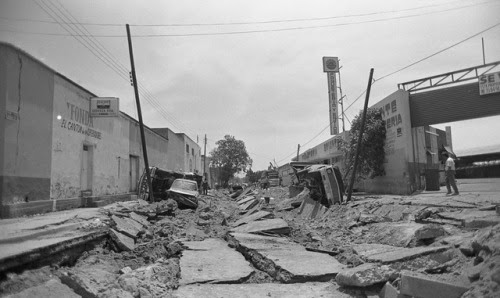
Guadalajara, Jalisco, Mexico. April 22, 1992. Two hundred fifty-two people were killed, 500 were injured and another 15,000 people were left homeless after gas explosions in the sewer system destroyed 5 miles of streets. Strong gas smells had been reported by residents four days previous to the disaster, however, city officials felt it was not necessary to evacuate the area.
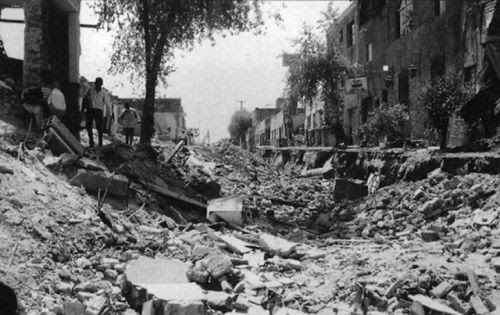
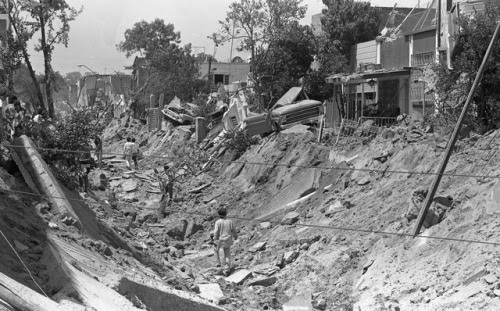


Um El-Naser, Gaza. March 27, 2007. Seventy percent of the village’s homes were submerged in 2 meters of raw sewage when the earthen wall of a cesspool sewage pool collapsed. Five people were killed, including two babies, an elderly woman, and a 15-year-old girl, 20 more people were injured. The collapse was due to sand theft from the areas around the embankment. The sand had been sold to building contractors.

Edinburgh, Scotland. April 20, 2007. A pump failed at the city’s sewage processing plant and caused millions of liters of waste to flow into the Firth of Forth for days. It was devasting to the local fish and wildlife.
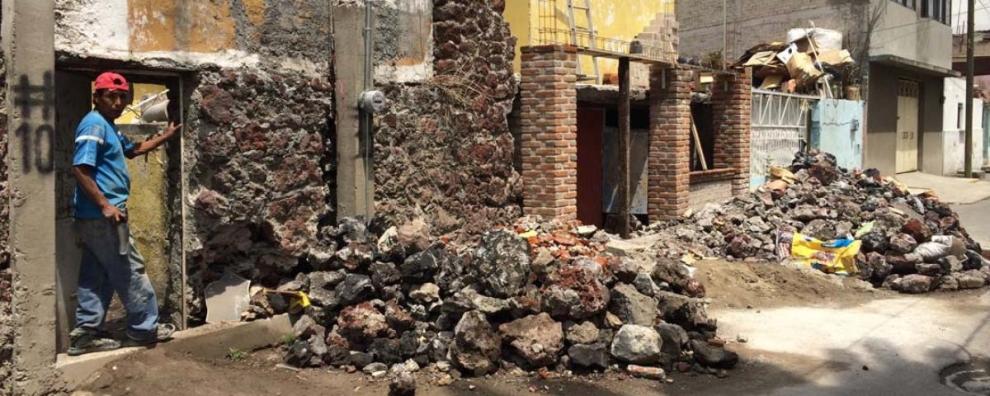
San Isidro and La Providencia, Mexico. April 2011. Three children were injured and more than 200 homes were flooded when a sewage pipe cracked.

So what about La Yacata? Well, we aren’t connected to the main sewer line. (See You can Lead a horse to water, sewage, and electricity) Although we reuse quite a bit of our greywater for our garden, our toilet and shower drains are connected to a pipe that connects to the drenaje (drainage) out to the road. To no one’s surprise, the pipes in the road are not the appropriate size. These smaller than requisite pipes run down the road and swerve to the left and open out to the arroyo (an open drainage pit or jaw hole). The little towns up the road, Caricheo, Pamaceo, La Ordeña, Las Peñas, all have the same jaw hole. The sewage goes away–to where I’m not exactly sure.

One of our neighbors once mentioned that he likes to stand under the pipe and bathe during the rainy season. EWW! Be that as it may…

We have a beginning of an environmental disaster on our hands. Our neighbor has pigs. (See Hate Thy Neighbor) He shovels the pig poop into the sewer pipes. The sewer pipes are not designed for human poop much less pig poop. Pig poop has backed up into the sewer pipes and has been oozing out of the open sewer pipe of the house down the street. Our house is above the pig farm, so the poop hasn’t reached us yet, but if it does, boy am I going to pitch a fit!

Our plan is to call the Departamento de Ecologia before that happens. I’m sure the neighbor won’t be happy with us, but hey, poop is icky!  And I hope the road doesn’t collapse over the sewer one day like happened to this poor woman in India!

https://youtu.be/wOPQqTjYcD4

****************************


10 Comments

Filed under Carnival posts, Construction, La Yacata Revolution

Surviving an Impact from an asteroid in La Yacata

Asteroids hit the Earth all the time. Usually, they are little rocks and hardly anybody notices, however, it’s estimated that over the last 600 million years, the Earth has been struck by at least 60 asteroids with a diameter of 3 miles or more. There are at least 3 craters left from these mega-impacts that are linked to major extinction events on our planet. The most famous mass extinction event was that of the dinosaurs 66 million years ago.

Seems like ancient history right? Well, there have been other catastrophic asteroid related disasters since then. In 1490, stones fell like rain killing more than 10,000 in the Ch’ing-yang district of China ranging from the size of goose eggs to water chestnuts. Scientists believe this stone shower was a result of an asteroid that exploded within the Earth’s atmosphere.

Then there was the meteor explosion near the Stony Tunguska River in Yeniseysk Governorate in Russia on June 30, 1908. Scientists believe a meteor burst just 6 miles from the Earth’s surface. The result of this explosion was the destruction of 80 million trees over an area of 830 square miles.

Russia was hit yet again on February 15, 2013, around the area of Chelyabinsk Oblast. The resulting explosion had 20-30 times more energy than the atomic bomb that exploded over Hiroshima. The meteor burst more than 18 miles above the surface of the Earth and produced extensive ground damage. Officials reported that 1,491 people were injured, most from shattered glass from windows that exploded. The intense light from the explosion was estimated at 30 times brighter than the sun and caused at least 180 cases of eye pain and 70 cases of flash blindness. About 20 people were injured by ultraviolet sunburn.

Will it happen again? Probably. Scientists are currently monitoring an asteroid called Apophis as it travels across the universe. It’s about the size of 3 football fields. In 2029, it will pass really close to some of Earth’s communication satellites in space, but there is a risk that it will orbit back in 2036 and actually hit the planet. If Apophis enters the Earth’s atmosphere, it could do so with 750 megatons of kinetic energy and a huge section of Earth would be in the “path of risk” including southern Russia, islands in the north Pacific, the coastlines of California, Mexico, Nicaragua, Costa Rica, northern Colombia, Venezuela and on through the Atlantic Ocean, stopping just before reaching the coast of Africa. In the projected hypothetical impact simulation, Colombia and Venezuela could have more than 10 million human casualties. If Apophis hits the ocean area, scientist forecast a short-range tsunami with a potential destructive radius of 1000 km at a wave height of more than 2 meters for most of North America, Brazil, and Africa, a radius of 3000 km for Japan and a radius of 4500 for Hawaii. I’m not exactly sure what that means, but it sounds scary.

So supposing an asteroid does hit the Earth, what then? The impact will vaporize (yes, you read that correctly) a large amount of the Earth’s crust, throwing rocks into the air for miles. Most of the rock will rain back on the Earth, heating the atmosphere and triggering massive forest fires. The dust from the impact and forest fires will block the light of the Sun for a year or so. Without sunlight, the climate will enter another Ice Age and vegetation will die. Without vegetation, animals, including humans, will die.

Or at least this is what happened 65 million years ago when the Chicxulub Crater in the Yucatan, Mexico was formed. We all know the result of that asteroid impact now, don’t we?

So what can you do to maximize your survival in the event of an asteroid impact? Nothing. Experts agree. (See also Asteroid hits Earth!, How to survive a collision with an asteroid) Although, European scientists suggest staying away from windows. (See What can we do if an asteroid threatens Earth? Europe Starts Planning)

Might as well enjoy life in La Yacata until it happens.

***************************

4 Comments

Filed under Battling Nature, Carnival posts, Safety and Security

Surviving a Hail storm in La Yacata

cam04458-1.jpg

La Yacata also gets hail storms, though not nearly as damaging or deadly as the one mentioned in the news reports below. As you can see from this picture, our goats and most of our chickens found shelter in this hail storm in April 2016.

Hail? How can that be apocalyptical? Well, let’s reference one of my favorite movies The Day After Tomorrow when the Japenese businessman is bludgeoned to death by hail when he stops for a quick saki after work. Try telling that guy a hail storm wasn’t the end of the world!

Then there were the Egyptians who refused to let His people go. “And the hail smote throughout all the land of Egypt all that was in the field, both man and beast; and the hail smote every herb of the field, and brake every tree of the field.” Exodus 9:18-26

One of the visions experienced by the Apostle John in the bible book of Revelation also centers around huge hailstones weighing about 75 pounds falling on the unrighteous. (Revelation 16:21)

Sound too fanciful? Well, let’s look at some hailstorms through history.

In the 9th century, several hundred pilgrims were killed in a hailstorm in Roopkund, Uttarakhand, India. In 1360, a hailstorm outside Paris, France, killed hundreds of invading English soldiers. King Edward III gave up his conquest of France after that. On April 30, 1888, 230 people, 1600 sheep and goats were killed in Uttar, Pradesh, Northern India by hailstones the size of oranges. On February 1, 1936, coconut sized hail killed up to 26 people and some cattle in Settlers, Transvaal, South Africa. On April 1986, 92 people were killed by grapefruit sized hail in Gopalganj, Bangladesh. On July 19, 2002, 25 people were killed and hundreds injured in a hailstorm in the Henan Province in the People’s Republic of China.

How about in Mexico?

Golf-ball sized hail destroyed crops in San Martín Texmelucan, Puebla on May 15, 2010. In Tepeji del Rio, Hidalgo 7 feet of hail accumulated on May 13, 2013, killing 7 people. Ping-pong ball sized hail destroyed the avocado crop in Michoacan in the worst hail storm in 40 years on March 25, 2015. On May 26, 2015, a severe hailstorm in Saltillo, Coahuila claimed one life and caused massive damage. On August 18, 2014, and August 30, 2015, massive hailstorms hit Mexico City killing 4 in 2015 when nearly 30 cm of hail accumulated on the streets in about 90 minutes.

So what can be done to prevent a hail storm? Well, in the 18th century, some enterprising Europeans tried to prevent hail by firing cannons into clouds and ringing the church bells. More recently, in the 20th century, Russia and the US attempted to seed clouds (adding chemical particles into clouds from rockets or aircraft) to control hail. There is no scientific evidence that either of these methods works.

Not being able to prevent a hail storm aside, what should you do in the event of hail?

If it begins to hail and you are in a vehicle, pull off the road and STAY INSIDE the vehicle. Of course, odds are high in Mexico that you will be on a bicycle or motorcycle. In that case, drive your vehicle up on the sidewalk and take shelter under an overhanging roof section.

If it begins to hail and you are in a building, STAY INSIDE away from windows. Avoid using electrical devices during a hail storm as well, just to be safe.

If it begins to hail and you are outdoors, COVER YOUR HEAD. Do not get under a tree because the hail might cause branches to fall. On one of our trips to Los Amoles for capulines (See Picking capulines) it began to hail. My enterprising mother-in-law put the bucket meant for the capulines over her head while they double-timed it back to the vehicle. It made and awful racket, with her shrieks and all, but her head was well protected.

cam04457-1.jpg

There’s always one!  This dratted rooster decided to ride the storm out without taking adequate shelter.

The proof is in the pudding–you can survive a hailstorm in La Yacata, providing it’s not that one prophesied in Revelation with 75-pound hailstones.  If that one hits, well, best say your prayers.

***********************


5 Comments

Filed under Battling Nature, Carnival posts, Safety and Security