Category Archives: Native fauna and flora

Picking Tunas

full of tunas

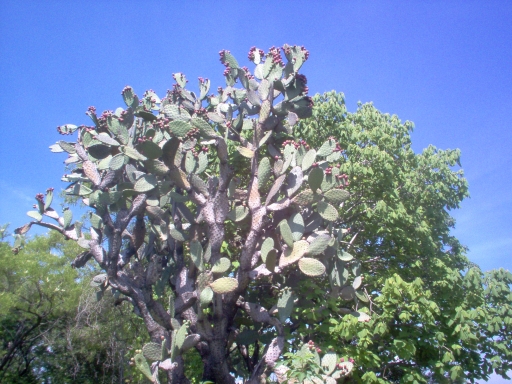
Tunas are not hard to find after the rainy season.


 La Yacata provides for us in many ways you might not expect. Not only do the cactus that grow here give us nopal and pitayas (See Picking Pitayas) but after the rainy season, there are the tunas. Tunas come in red and green and are what might be called prickly pears. As with all things the desert provides, they take some effort to harvest but are well worth it.

IM000163.JPG

Climbing on the top of the truck might get you close enough to harvest tunas–or it might not.

The first step in picking tunas is to find a cactus loaded with them. Once a likely target has been sighted, then the trick is to determine the best way to get at them. Tunas grow at the very tip top of the cactus and obviously you can’t just scurry up its branches like you would an apple tree. The cactus wouldn’t hold your weight and would give you espinas (thorns) in both your shoes and any other part of your body that might be exposed. You also don’t want to try and shake the cactus like you would a small nut tree or risk a rain of thorns.

stick with machete

Attaching a long stick to a machete may help you harvest.

Sometimes, parking below and clambering up on the top of the truck cabin will boost you enough to reach. Other times, if you are fortunate, the cactus will have grown next to some sort of tree you can climb. When all else fails, a long stick with a machete on top might do the trick.
twist with pinchers

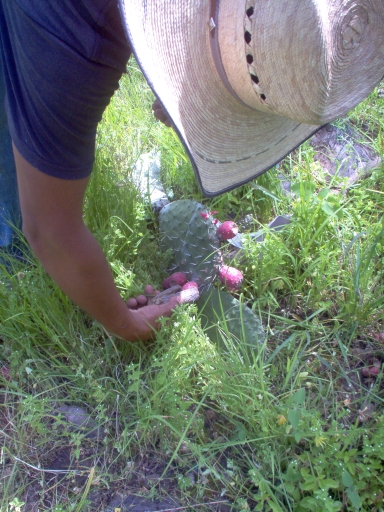
Cutting a small section of the penca (leaf) will allow you to get at the tunas.

With the machete, extended or normal, cut a section of the penca (cactus leaf) that has a good number of tunas. Don’t worry about damaging the plant. Wherever a penca (cactus leaf) falls, another cactus grows.
brush off

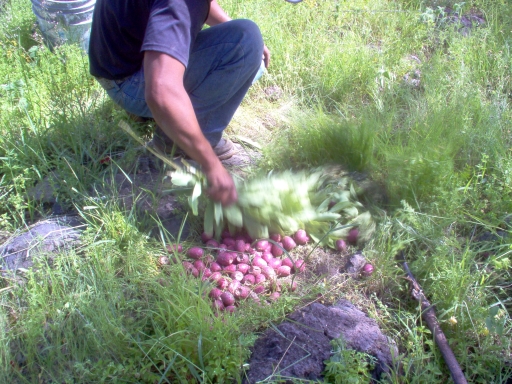
Brush the thorns off the tunas before cutting them open.

With improvised wooden pinchers made from whatever branches may be lying about, twist off the tuna. When you have a pile of them, use a group of leafy branches to knock off most of the espinas (thorns). Once brushed clean, slice the tuna lengthwise with your machete. Using your thumb, pop out the fruit and discard the outside. This process is best done out in the open. The tiny espinas (thorns) that protect the fruit are sharp and painful and get everywhere.

pop out

Slice open and pop out the fruit.


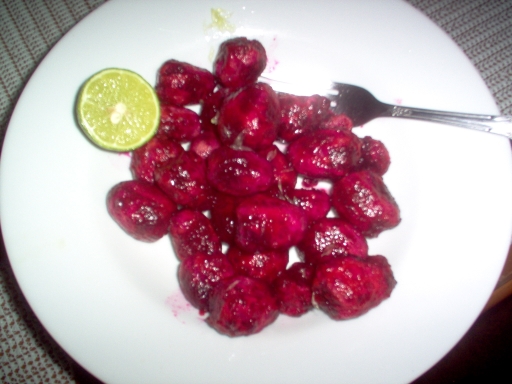
When you have a bunch of this juicy, seedy sweet fruit, add límon y sal (lime and salt) and enjoy.
with limon

Enjoy tunas with a little lime and salt!

Doesn’t this Prickly Pear Margarita look delicious?

PricklyPearMargarita

********************

disclosure

15 Comments

Filed under Native fauna and flora

Las Cuevas en Cerano (The Caves in Cerano)

After we failed at our attempt for buckets of capulines (See Picking Capulines) we decided it was too beautiful a day to waste and continued down the other side of the mountain in Myrtle.

the other side of the mountain

“Let us try to recognize the precious nature of each day.” His Holiness The Dalai Lama

We stopped at a little town for some water and snacks and took it slow, as a good Sunday drive should be.

tienda

My husband mentioned that when he was a boy, he took of Chava Herrera’s herd of goats near our current location and left them to overnight in some caves. There was nothing to be done but go and see the caves.

trail down

We parked Myrtle in the shade, off the side of the road and headed down the path to the base of the mountain. This road was a little more difficult than the capulí trek, at least for me in sandals. There were hundreds of little picky rocks and larger potential ankle breaking rocks and mesquite thorns. Therefore, I took my time. My husband and son, with their work boots we call mata viboras (snake killing boots) had no such problem and soon outdistanced me. My son called back that I should hurry up. I responded with “slow and steady wins the race.” My son said that he and dad were steady and I was just slow.

caves

caves

defaced cave

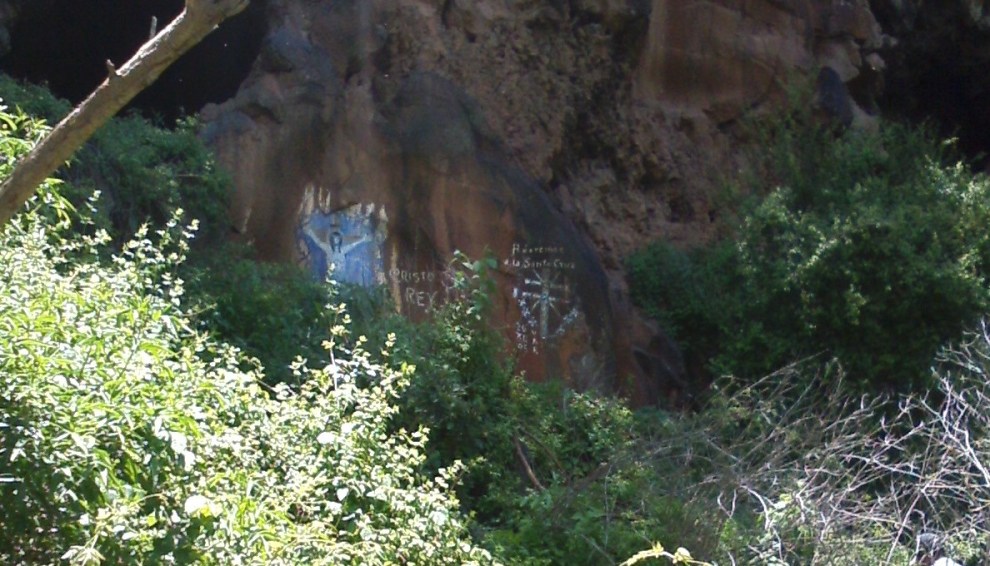
A little graffiti at the base of the caves. It says “Cristo Rey ” Christ Jesus and “Adoremos la Santa Cruz” We adore or worship the Holy Cross.

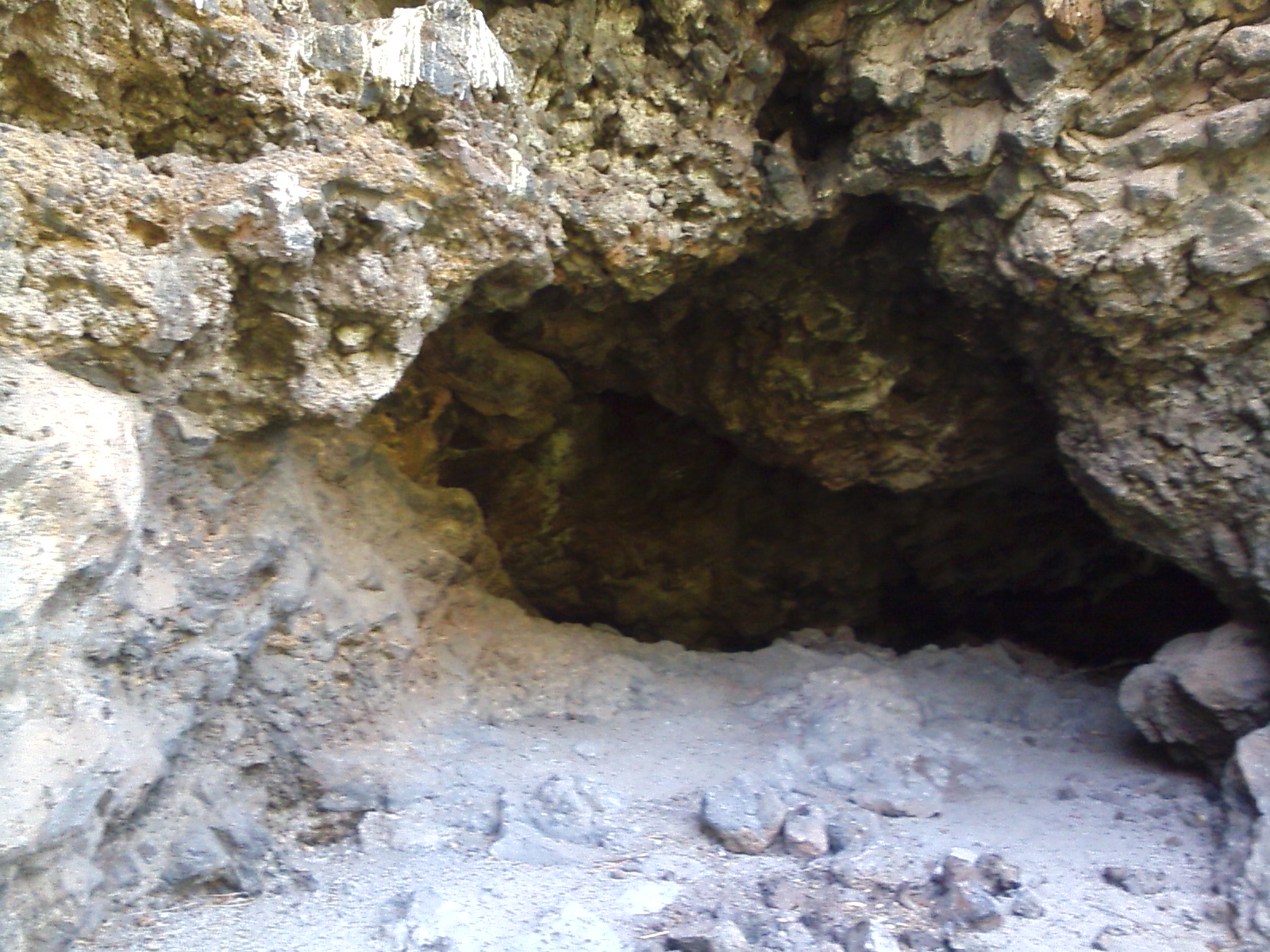
Before too long, we came upon the caves. More than 20 years have passed since my husband used these caves to shelter the goats in his care and according to him quite a bit of the cave has collapsed, so there weren’t as impressive as in his mind’s eye. My son and I, however, were impressed enough.

 caves 2another cave

We headed back up the trail and took Myrtle down to Cerano. We stopped to get gas, just in case (See Driving Hazards–Gas and Illumination) and were passed by 2 policia estatal (state police) vehicles. Three more vehicles joined the caravan in La Calera. We jokingly said we needed to get to La Yacata before they set up their “checkpoint” but lost them at the crossroads between Yuriria and El Moral. We stopped at the store for some goodies but didn’t see any sign of the police.

police hiding

Here they are, parked at the entrance of La Yacata!

However, turning into La Yacata, we nearly ran head on into 3 of the same state police vehicles parked and picnicking. Guess they wanted lunch before starting the fishing. (See Driving Hazards–Mordidas).  Ni modo (whatever), we were done for the day and wouldn’t be venturing across their net to risk getting caught for something or other any more that afternoon.

**************

disclosure

1 Comment

Filed under Native fauna and flora

Picking Capulines

The rainy season hadn’t begun yet, but my husband insisted that the capulines were ready. He said he saw some sellers by the Bodega, their buckets brim full and was impatient for some of his own.

So on Sunday, we went in search of the elusive capulín, (Prunus serotina subsp. capuli), otherwise known as the wild black cherry or capolcuahuitl in Nahuatl. According to my little guidebook Antiguo Recetario Medicinal Azteca, the capulín is useful for the treatment of dysentery, spasms, nervousness and pain caused by abscesses and tumors with the application of a leaf poultice.

Excess should be avoided and care should be taken in the ingestion of the capulín leaf because it seems that wilted leaves become toxic due to the release of cyanide in the wilting process. Ingesting 10-20 lbs of foliage can be fatal. The tablespoon every 2 hours of tea made from 4 fresh leaves per liter for nervousness should be safe enough.

wpid-cam00890.jpg

We had gone once before with my husband’s mother. The trip was longish, and our then 4-year-old son fell asleep, so I stayed in the car with him. Boy, was I glad that I did! Not 20 minutes after they left, there was such a hail storm that it dented the roof of the truck. Eventually, my husband and his mother, and the passel of local kids that had come along to show them the way, came back into sight, drenched to the skin. My mother-in-law had her bucket on her head and was hollering Bloody Murder. There were no capulines to enjoy on that trip.

wpid-cam00885.jpg

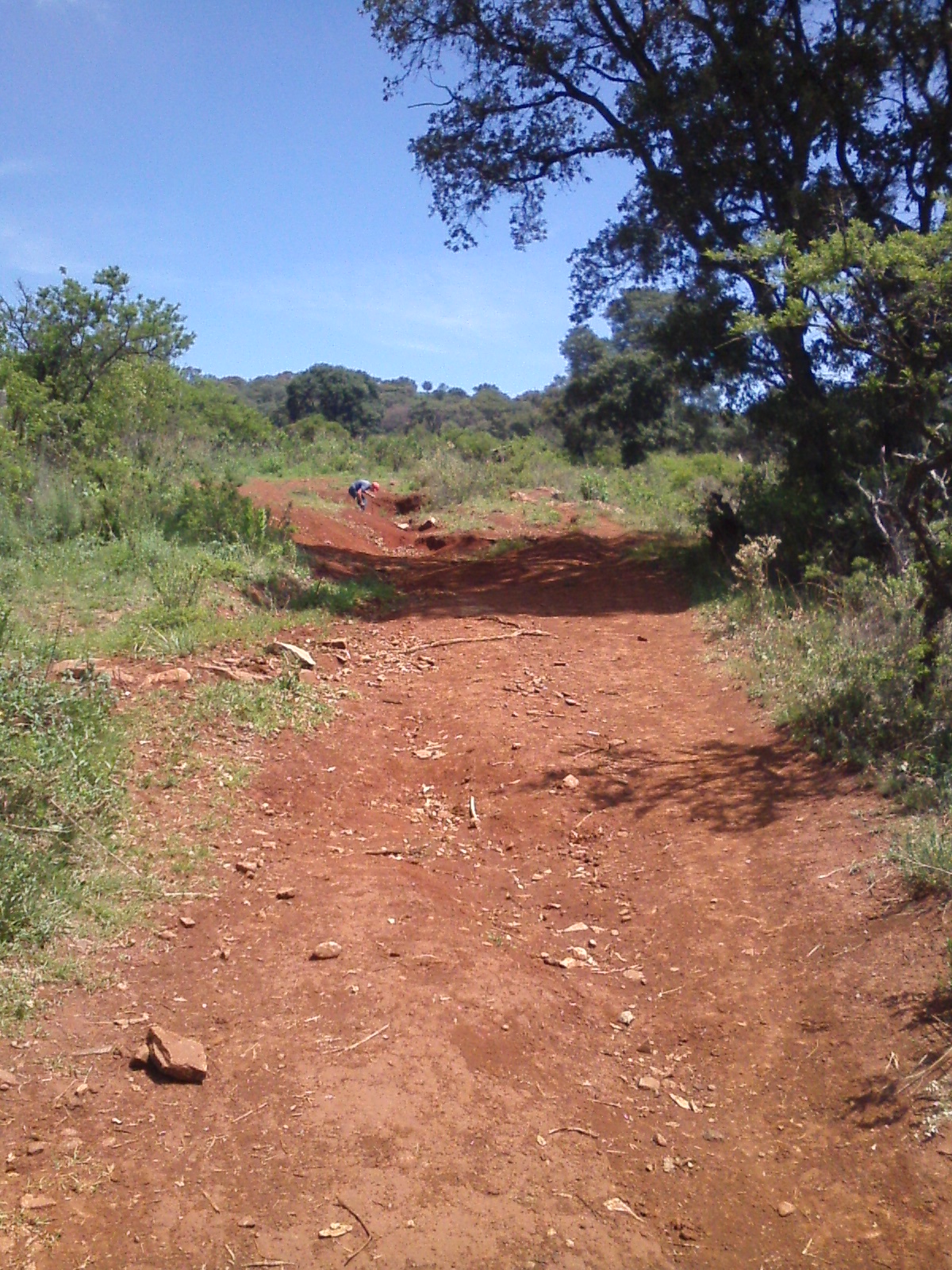
This time, we drove Myrtle up past la basurera (dump) through La Barranca and Santa Gertrudis to Los Amoles, at the very peak of the mountain. We had to leave Myrtle behind when the trail got too rough and hoofed it the rest of the way.  The path was well-traveled, no espinas (mesquite thorns) like there is in La Yacata, and as we were already so far up, it wasn’t as difficult an uphill trek as I thought it might be.

wpid-cam00897.jpgcool rock

The earth in the area was a deep rust color, and the wildflowers were spectacular. My son, who has recently developed a keen interest in rocks, was in seventh heaven with all the new samples he slid into Dad’s backpack.

conversationWe encountered an older man on his horse coming down the mountain, and my husband stopped to chat. It turns out that he knew this man from when he was a boy in Cerano. They talked about trading donkeys and horses, although I don’t think anything will come of it. My husband is pretty pleased with Fiona, our current burra (donkey) and Beauty is due to foal any day now. As my son and I had a shady place to wait, we didn’t mind the rest period.

a little bit sour

That one was a little bit tart!

wpid-cam00919.jpg

Just a few capulines!

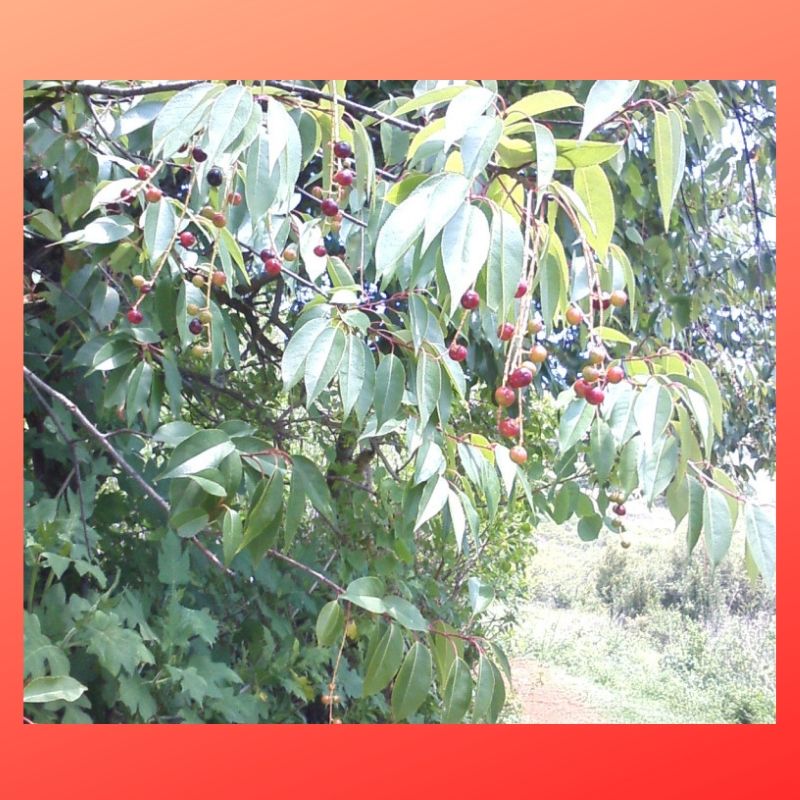
We did finally come across some capulín trees. However, most of the berries were still green. We managed to get a handful to enjoy, though. They taste like mini-cherries and were well worth the hike.

sceneryview

The way back was just as pleasant a hike as the way up. At the risk of repeating myself, how amazing it is to live where the earth’s abundance is so readily found.

*********************************

disclosure

4 Comments

Filed under Alternative Farming, Native fauna and flora, Natural Healing