Category Archives: Native fauna and flora

Natural Healing — Flor de Manita

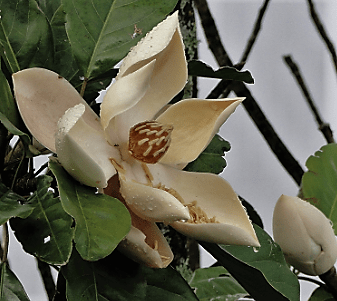
Photo of ”Chiranthodendron pentadactylon” (Mexican hand tree) at the San Francisco Botanical Garden, taken June 2005 by User:Stan Shebs 

I was fortunate enough to find some dried Flor de Manita, one of the ingredients in my favorite relaxing tea blend, with one of the local herb sellers and excitedly began my investigations on its medicinal properties. Flor de Manita (Chiranthodendron pentadactylon) is also known as El Mano de Dragón (dragon’s hand), Macpalxóchitl in Nahuatl, and in English as the Handflower tree or Devil’s hand tree because of the unique shape of its flower. It is native to Mexico and Guatemala and has been used since the time of the Aztecs as a heart tonic and as a treatment for dysentery, epilepsy, and STDs. 

It has antiprotozoal, antibacterial, antimicrobial, and antidiarrheal properties, making it an effective treatment for diarrhea. Flor de Manita extracts also have a vasorelaxant effect, supporting its use as a treatment for susto (fear/anxiety) and espanto (sudden fright).

One traditional consists of making a decoction from the bark and leaves as a wash or poultice for genital swelling and pain. A poultice made from the flowers is still used as a common treatment for hemorrhoids by traditional healers.

Tea for Heart Palpitations

1 tablespoon of each:

  • Flor de Yoloxóchitl (Talauma mexicana)(Mexican heart flower)
  • Flor de pitaya (Selenicereus undatus)(Dragon Fruit Flower)
  • Flor de manita (Chiranthodendron pentadactylon) (Handflower tree)

Boil ¼ liter of water and add ingredients. Steep for 5-10 minutes. Drink daily before breakfast without sweetener.

Tea for Nerves

Equal parts:

  • Flor de Yoloxóchitl (Talauma mexicana)(Mexican heart flower) 
  • Hojas de tila (Ternstroemia lineata) 
  • Hojas de toronjil morado (Agastache Mexicana)(Mexican giant hyssop)
  • Hojas de de hierbabuena (Mentha spicata)(spearmint)
  • Flor de Azahar (citrus aurantium)(bitter orange blossoms)
  • Flor de Manita (Chiranthodendron pentadactylon)(Handflower tree)

Boil 1 liter of water. Add herbs. Let steep for 5-10 minutes. Strain and drink liberally throughout the day.

***

Interested in natural remedies? Uncover herbal remedies from traditional Mexican sources for healing and wellness in the Exploring Traditional Herbal Remedies in Mexico series.
Leave a comment

Filed under Native fauna and flora, Natural Healing

Natural Healing — Palo de Brasil

Haematoxylum brasiletto Photo credit: Jim Conrad

Palo de brasil (Haematoxylum brasiletto) is also called azulillo, palo rojo, Brasilillo marismeño, and in Nahuatl quamóchitl (or cuamóchitl) and hoitzquánhuitl. This tree has yellow flowers and under certain conditions can bloom most of the year. It is native to Mexico and Central America.

In some areas it is known as palo tinto or palo de tinto, however this name leads to some confusion due to the fact that a very similar tree, Palo de Campeche (Haematoxylum campechianum), is also called palo tinto. The misnomer continues when translated into English. Palo de brasil (Haematoxylum brasiletto) is Brasilwood, while Palo de Campeche (Haematoxylum campechianum) is Mexican logwood. Both trees are used to make paint dye (hence palo de tinto). Many herb texts use the two interchangeably, which is incorrect.  

Palo de Brasil has been used traditionally for heart conditions and kidney disease. The Aztecs used the bark as a treatment for diarrhea. In Sonora, twigs are chewed for mouth sores and tooth infections. The bark is combined with licorice root for asthma attacks. A tea made from the branches is a common remedy for depression, fever, and urinary issues. Other areas in Mexico use palo de Brasil as an astringent to clean wounds, treat skin infections and genital warts. 
This tree has anti-bacterial properties and has been shown to be effective against E.coli and Staphylococcus aureus infections. Brazilwood is also used in the treatment of gastric ulcers and cancer in some areas of Mexico. Studies have proven it has anti-cancer properties supporting its use in cancer treatment. Scientists have also discovered that it is useful in the treatment of diseases caused by parasitic protozoan trypanosomes of the genus Trypanosoma such as Chagas disease.

Palo de Brasil Infusion for Kidney Problems

Boil ½ liter of water. 

Add:

12 to 15 grams of palo de Brasil woodchips 

Drink 1 cup 3 times a day after meals.

***

Interested in natural remedies? Uncover herbal remedies from traditional Mexican sources for healing and wellness in the Exploring Traditional Herbal Remedies in Mexico series.

Leave a comment

Filed under Health, Native fauna and flora, Natural Healing

Natural Healing — Yoloxóchitl

Yoloxóchitl (Talauma mexicana)

Yoloxóchitl (Talauma mexicana) is also known as Flor de corazón, Magnolia mexicana, yajlachhi in Zapotec, and Mexican heart flower. It is native to Mexico, Guatemala, and Honduras and in danger of extinction because of deforestation. It’s extremely fragrant white flower was highly prized by the Aztecs for both its aroma and medicinal properties. Interestingly enough, it was also used as a flavoring in chocolate beverages.

The seeds, petals, leaves, and bark are used in a variety of treatments including gout, epilepsy and fever and as a diuretic. The flowers are used in Oaxaca as a treatment for asthma.  However, its main use is for heart issues. In the Zapotec tradition, a petal infusion is the treatment to strengthen the heart. A leaf infusion is used to improve circulation and tone the heart.

 Studies show that Yoloxóchitl (Talauma mexicana) does indeed have both digitalis and diuretic effects. Furthermore, scientists have proven that it can be an effective treatment for asthma. Unfortunately, there has not been much research done on this beautiful flower and with its status as an endangered species, it may soon be lost altogether along with its medicinal benefits.

Heart Tea

  • Yoloxóchitl (Talauma mexicana) 5 grams of the seeds and bark 
  • Valeriana roja (Centranthus ruber) 1 small root 
  • Flor de manita (Chiranthodendron Pentadactylon) 1 dried flower

Allow to steep and drain. Drink one cup per day as needed to calm heart palpitations.

Heart Tonic Infusion

  • 4 tablespoons of Yoloxóchitl (Talauma mexicana) flower cut into small pieces
  • 2 tablespoons of Flor de azahar (Citrus aurantiifolia)

Boil in 1 liter of water for 2 or 3 minutes. Allow to steep for 30 minutes. Drink 2 or 3 cups per day.

***

Interested in natural remedies? Uncover herbal remedies from traditional Mexican sources for healing and wellness in the Exploring Traditional Herbal Remedies in Mexico series.

Leave a comment

Filed under Health, Native fauna and flora, Natural Healing