Category Archives: Mexican Cultural Stories

Mexican Independence Day

September is a particularly patriotic month for México.
salute
It begins with the commemoration of the Niños Heroes (Boy Heroes) on September 13th. Our little school had “la mañanita Mexicana” on  the 13th (which is also the anniversary of the Congress of Chilpancingo or Anahuac when México declared itself independent from Spain in 1813) and in addition to the typical traditions, honored those cadets that died defending the flag at Mexico City’s Chapultepec Castle from invading U.S. forces in during the Mexican–American War in 1847.

In the call and response manner commonly found in the Catholic Church, each teenager’s name was read, and the attendees responded with “Murió por la patria.” (He died for our country.)
The Niños Héroes were:
Juan de la Barrera (age 19)
Juan Escutia (age 15–19)
Francisco Márquez (age 13)
Agustín Melgar (age 15–19)
Fernando Montes de Oca (age 15–19)
Vicente Suárez (age 14)
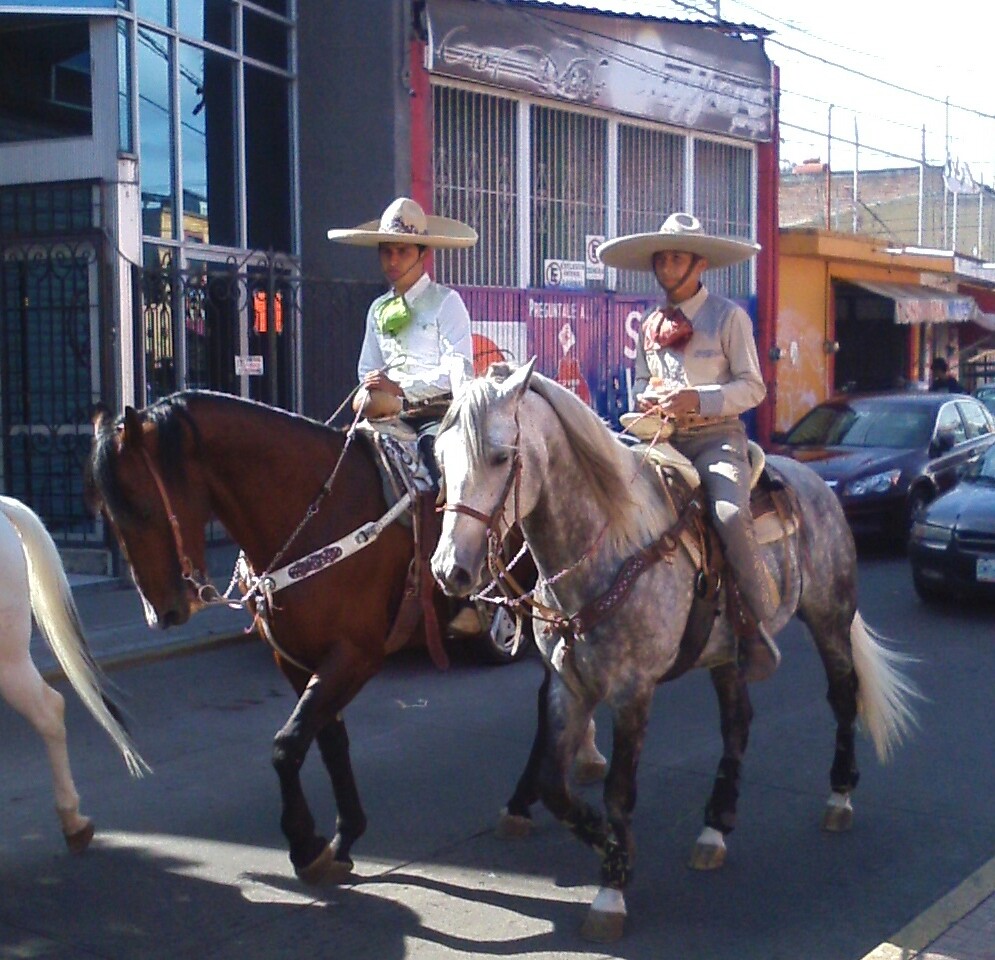
Each town does things a little differently. In Moroleón, in the afternoon on September 14, there is a caminata (mini-parade) of local horsemen from Moroleón to El Ojo del Agua Enmedio (where we go to get our water supply). This year, my husband participated with Beauty.
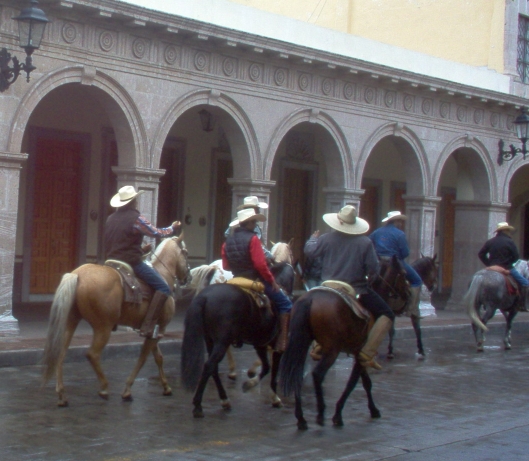
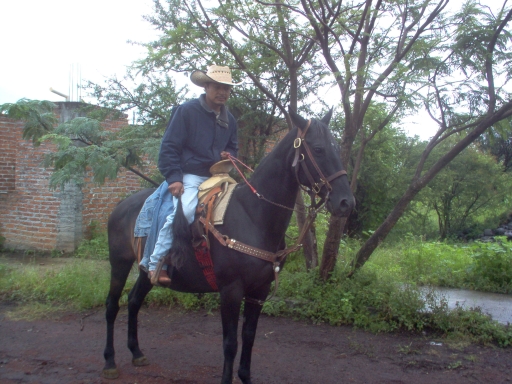
tail end of the caminata

caminata

My husband all ready for the caminata.

El Grito de Dolores (The Shout from Dolores–a small pueblito (town) where Hidalgo made his call to arms speech) on September 15th, marks the official beginning of the Independence day celebration at around 11 p.m. The church bells are rung and the presidente (mayor) of Moroleón recites El Grito (the shout) with attendees responding with “Viva” to indicate their support. independance day
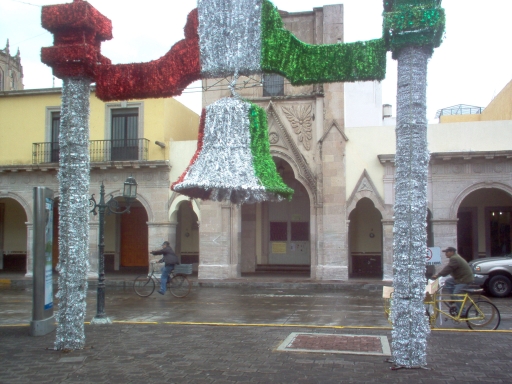
¡Mexicanos! (Mexicans)
¡Vivan los héroes que nos dieron la patria y libertad!
(Long live the heroes that gave us our liberty)
¡Viva Hidalgo!
(Long live Hidalgo)
¡Viva Morelos!
(Long live Morelos)
¡Viva Josefa Ortíz de Dominguez!
(Long live Josefa)
¡Viva Allende!
(Long live Allende)
¡Viva Galena y los Bravos!
(Long live Galena and the Braves)
¡Viva Aldama y Matamoros!
(Long live Aldama and Matamoros)
¡Viva la Independencia Nacional!
(Long live national independence)
¡Viva México! ¡Viva México! ¡Viva México!
(Long live Mexico)

The church bells are rung again and the pyrotechnic show begins.
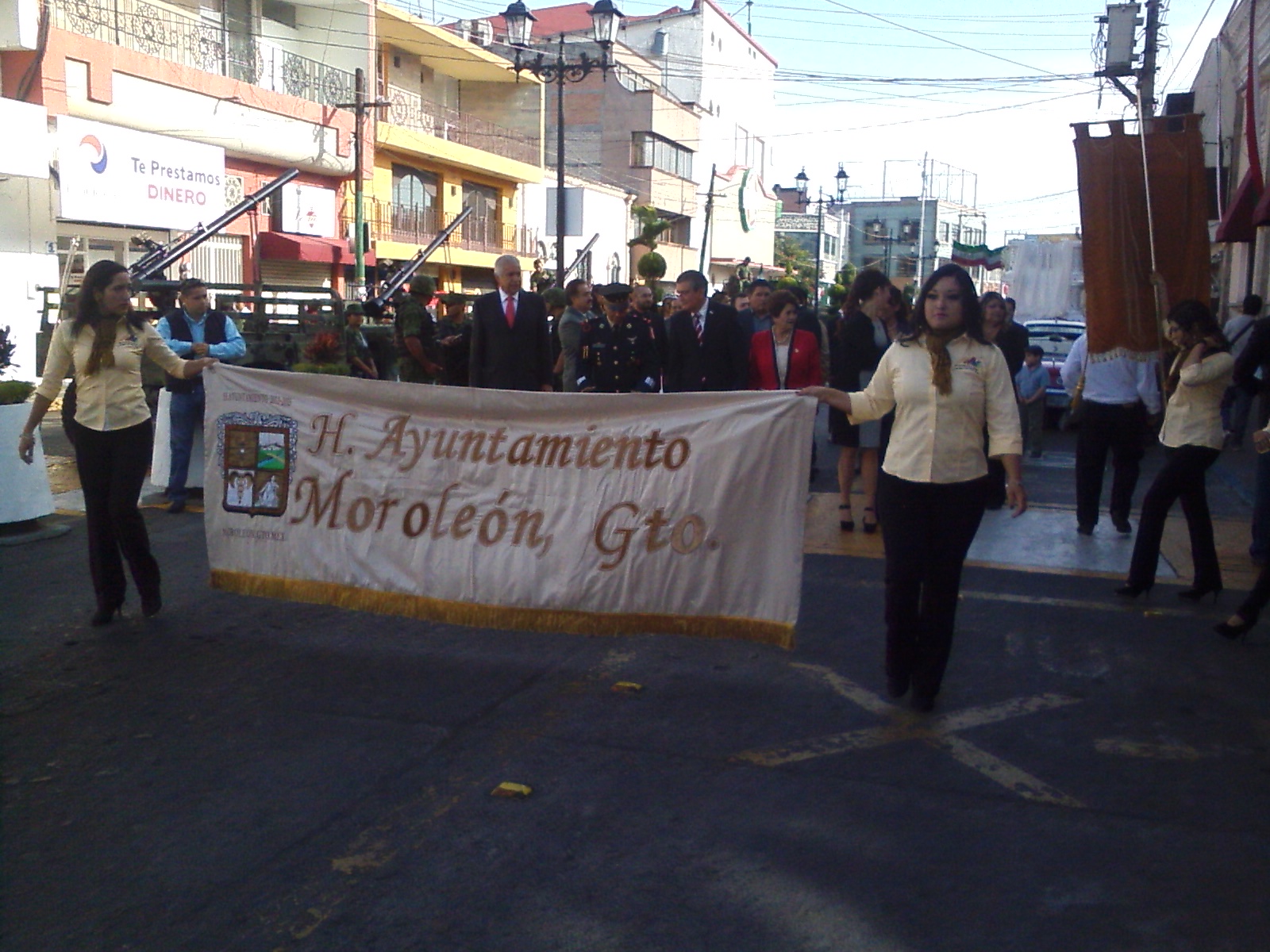
parade

In Moroleón, there is a civic parade in the morning on September 16. The members of the presidencia (City Hall) lead the march with la reina de Moroleón (sort of like the homecoming queen) and her escort of charros (horsemen) finishing it off.
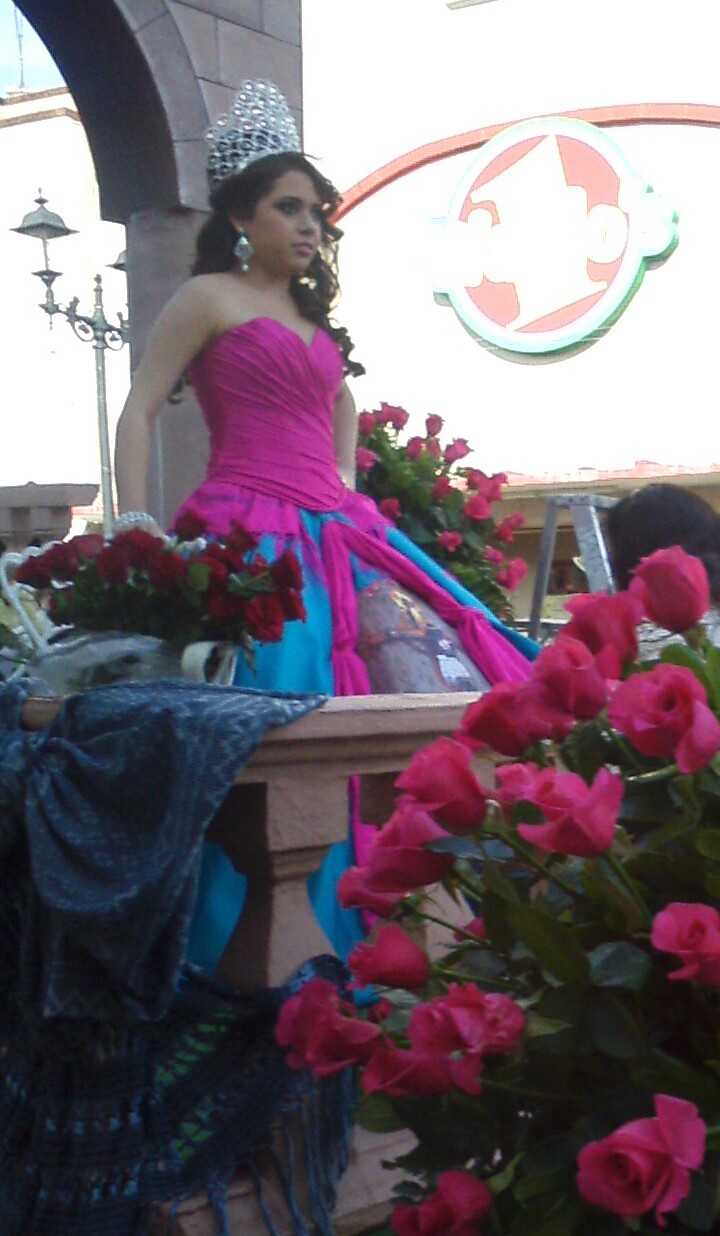
wpid-cam02092-1.jpgwpid-cam02163-1.jpg

The horses, in my opinion, the best part, are at the very end so that marchers don’t have to swerve around poop piles. Most of the civil organizations of the town are represented, from the Down Syndrome club to those of the tercer edad (elderly). Students from the secondarias (high school) and tele-universities and their drum and bugle members also march. It makes for a long and tedious procession.
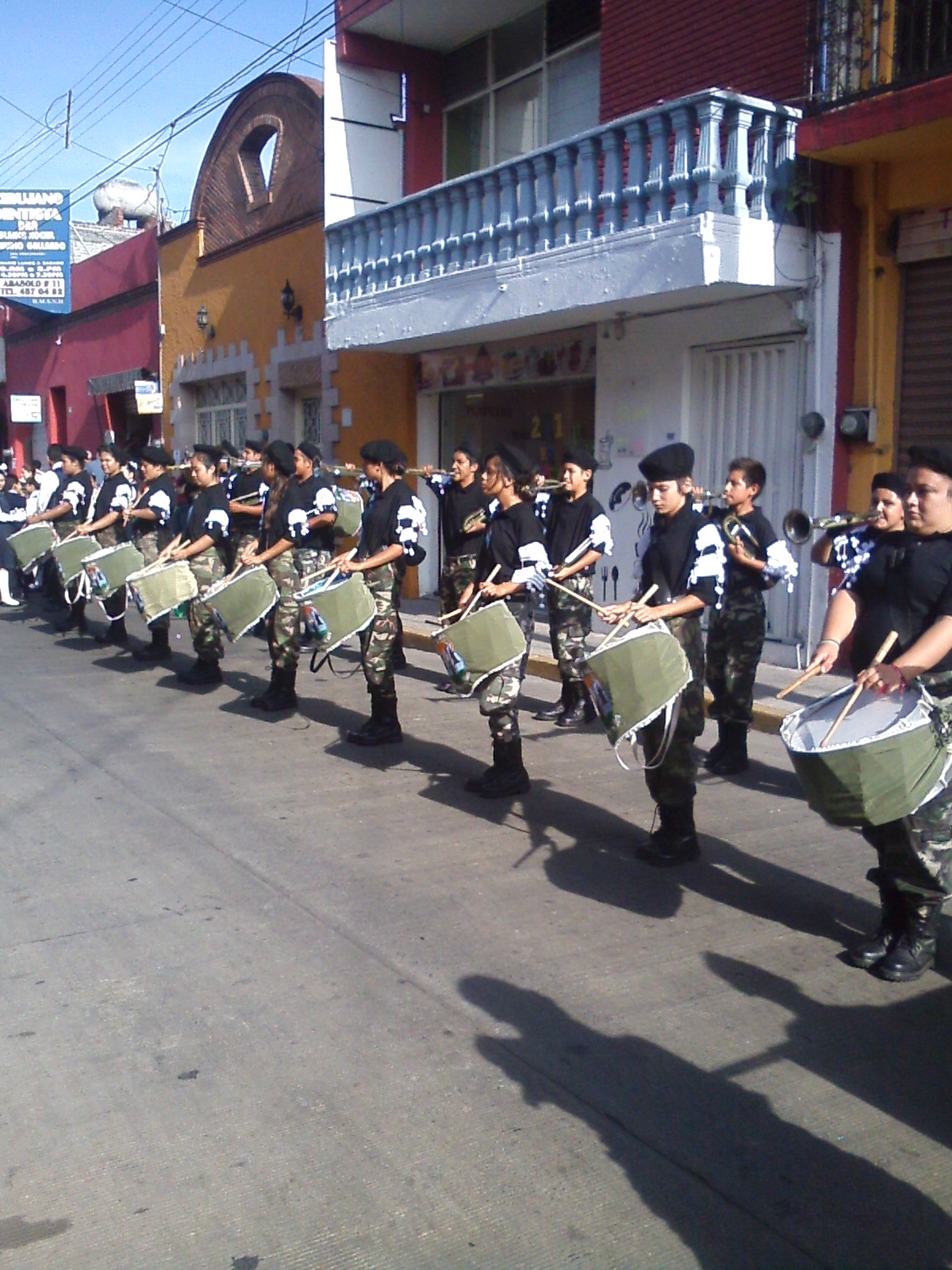
wpid-cam02098.jpg

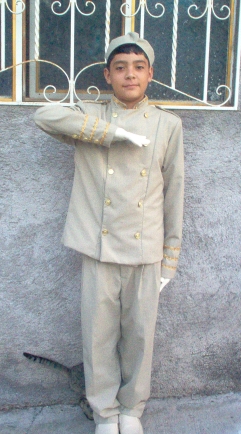
There is a second parade on either the 27th or 28th of the month to mark the day of the Declaration of Independence of the Mexican Empire which happened September 28, 1821, 10 years after the historic “grito.” I’ve mentioned before, things here in México take much longer than anticipated, including the fight for independence. This parade is open to the primaria (elementary) schools in addition to those that participated in the first parade, therefore, an even longer and more tedious procession. Last year my son was chosen to be part of the escolta (honor guard) for his school. As Los Niños Heroes (see above) died defending the flag, in their honor the members of each school’s escolta (honor guard) are the best and brightest with the highest promedio (grade average). Needless to say, I was one proud mama cheering him on!
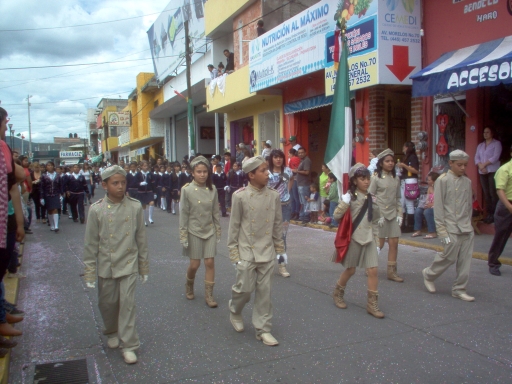
esculta

Each school has an escolta (honor guard) in the parade.

The kinders (kindergartens) also have a parade, but it is much shorter. It involves no more than 3 times around the plaza but even that is tiring for little legs.
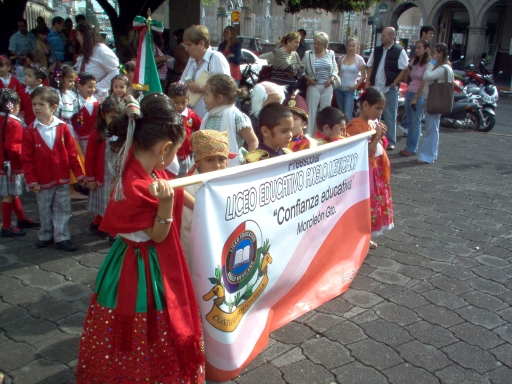
kinder parade
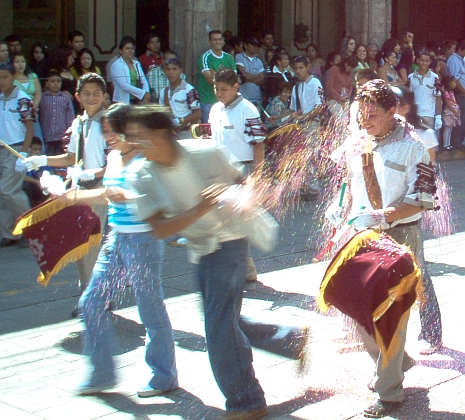
The best part of the parades is the dousing with confetti. Parade marchers that are not honored with the confetti hasta los chonies (all the way to the underwear) experience are those without attentive family or friends in attendance. Bags can be bought for the low, low price of 5 pesos for 2 little bags. I imagine clean up is a drag for the street sweepers though. confetti
If you missed the patriotic events this month, don’t fret. You’ll get another chance in November with the commemoration of the Mexican Revolution!
morelos

If you are interested in learning more about the complicated events surrounding the Mexican fight for independence, you can start by watching Hidalgo La Historia Jamas Contada.
hidalgo

************************

Do you want to learn more about Mexican history?cover holidays
1 Comment

Filed under Mexican Cultural Stories, Mexican Holidays

Women in Mexican History–La Malinche


Welcome to the ‘Look At All The Women’ Carnival: Week 3 – ‘The Eclectic Others’

This post was written especially for inclusion in the three-week-long ‘Look At All The Women’ carnival, hosted by Mother’s Milk Books, to celebrate the launch of Cathy Bryant’s new book ‘Look At All The Women’. In this final week of the carnival our participants share their thoughts on the theme ‘The Eclectic Others’ (the third, and final, chapter in Cathy’s new poetry collection).

Please read to the end of the post for a full list of carnival participants.

***

The Virgen de Guadalupe (Virgin of Guadalupe), a.k.a. Nuestra Reina de México, La Empresa de las Americas and The Protectress of Unborn Children, is the most revered religious and political image in México and her only noteworthy act was to appear on a hill top and instruct a peasant to build a shrine in her honor, make an image on a cloak appear miraculously and speak Náhuatl, oh and somehow also be the ever-virgin dark-skinned mother of Christ. (See  Christmas in Mexico—La Virgen de Guadalupe)

malinche2

I say the position and title of Mother of México belong, not to La Virgen, but to another woman, one reviled in Mexican history so much so that her very name is used to mean traitor, one who prefers foreign to Mexican. (malinchista) Yet, this woman’s life story is one that women, especially Mexican women, can find evidence of a life well-lived despite the circumstances she found herself in.

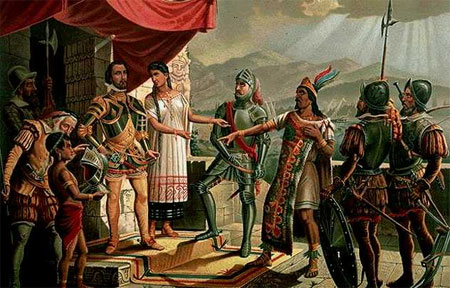
La Malinche, Malinalli, Malintzin, known as Doña Marina to the Spaniards, was born sometime between 1496 and 1501 into a noble family in the Paynalla province of Coatzacoalcos, in the Veracruz region of southern México. She was named “Malinalli” after the Goddess of Grass, and later “Tenepal” meaning “one who speaks with liveliness.When her father died, her mother married again and had a son. In order for the son to inherit her former husband’s estate, Malinalli’s mother sold her to slave traders but told the neighbors that Malinalli had died, even presenting the body of a dead slave girl to bolster the lie.

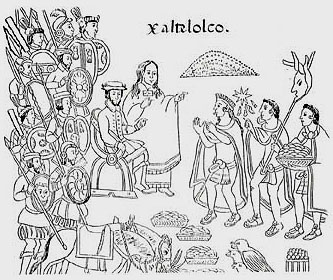
350px-Cortez_&_La_Malinche

In the course of her early slave life, Malinalli learned to speak Mayan in addition to her native Náhuatl. Eventually, she became the property of the Cacique (ruler or chief) of Tabasco. During this period, Hernán Cortés arrived in Tabasco. The Maya gave the Spaniards food, cloth, gold, and slaves, including 20 women, one of whom was Malinalli.

In order for the new Spanish owners to take the women as their own, they were purified through baptism and given Spanish names. Malinalli was given the name Marina at her baptism in 1519. Cortés then gave the newly converted women to the highest-ranking officers. Marina was given to Alonso Hernández de Puertocarrero. After a month, when Alonso Hernández de Puertocarrero returned to Spain at Cortés’ orders, Marina became the property of Cortés.lamalinche-translator

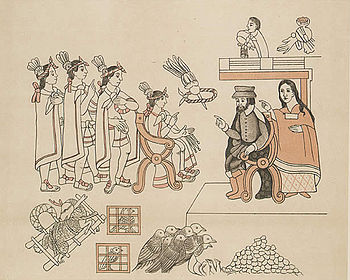
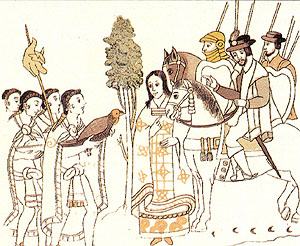
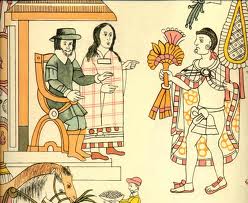
Marina began her career as a translator for Cortés at this point, first through Jerónimo de Aguilar who translated from Spanish to Mayan, then later without intermediary when Marina learned Spanish. She became known as Malintzin, the Nahuatl suffix “-tzin” denotes respect, among the indigenous people they visited and Doña Marina among the Spanish. The title Doña was used to indicate the bearer was a lady, nobly born. Both groups, therefore, recognized that she held a position that was more than a slave.

lamalinche-court

So where did the name La Malinche come from? Cortés was known as Malintzin-é among the indigenous people. Attempting to pronounce this Nahuatl name, Spanish-speakers rendered the soft Nahuatl tzin-é sound as ch; the result was Malinche. As Doña Marina was never far from Cortés, she became known as La Malinche, the feminine version of Cortés’ name. Some scholars argue that Malinche can be translated as Captain and La Malinche is the Captain’s Woman, or perhaps Cortés received his status through Malintzin and the titles should be reversed. He himself gave her some credit when he wrote in a letter to Spain, “After God we owe this conquest of New Spain to Doña Marina.” God, after all, did provide the Spanish with smallpox and greed which led to the decimation of the indigenous people. In comparison, Doña Marina played a much smaller role of translator, negotiator and adviser.

All accounts show that Doña Marina was extremely loyal to Cortés. This does not mean she was a traitor to her own people, however. It is clear from the records of the time that she saved countless indigenous lives by forging alliances between the Spaniards and the native groups. She also actively encouraged the Spaniards to negotiate rather than fight. She was not always successful in keeping the massacres from happening, though.

la malinche

Doña Marina’s role in Mexican history was not limited to the political arena. She had a son by Cortés in 1522. Their son, Martin, was taken from Doña Marina and sent to live with Cortés’ cousin when he was two years old. In 1526, Doña Marina was married to Juan Jaramillo, although whether the marriage was by force or by choice is not clear. After all, Cortés already had a Spanish wife and couldn’t or wouldn’t marry the indigenous mother of his son. Cortés later took a second wife, who bore him a son also named Martin. The second Martin inherited all of Cortés’ estates in Spain and in New Spain after his death in 1547.

In 1527, Doña Marina had a daughter with her legal husband Jaramillo, named María. Her husband remarried the following year and attempted to disinherit their daughter. Although many scholars say that Doña Marina died in either 1527 or 1529, there are some who say that based on letters to Spain, she may not have died until 1551. Perhaps her death was faked and her child taken from her so that someone else would inherit her estates. It wouldn’t have been the first time for either event in her life.

I can only speculate what might have inspired Malinalli through her life’s journey. Perhaps she saw something more than what was and worked with what skills she had to make it real. Perhaps she despised the system that kept her a slave and worked to destroy it, only to find out that she had traded one set of chains for another.

The truth is that she birthed a new people, a new world, a new life, something more than what was before. She should be honored, not reviled for her acts. Like the Goddess of Grass that she was named after, Malinalli bent but did not break in the storm that ravished her country. 

***********************************************

For more information about this incredible woman:


disclosure


***

Look At All The Women is now available to buy from:

The Mother’s Milk Bookshop (as a paperback and PDF) – we can ship books around the world!

and as a paperback from Amazon.co.uk.

It can also be ordered via your local bookshop.

If you’d like to know more about Mother’s Milk Books — our submission guidelines, who we are and what we do — please find more details here:

http://www.mothersmilkbooks.com/

Please take the time to read and comment on the following fab posts submitted by some wonderful women:

‘Heroines and Inspirations’— Cathy Bryant, guest posting at Mother’s Milk Books, shares two of her own powerful, inspiring poems, and the stories behind them.

‘Sensitivity’Marija Smits shares a poem, with an accompanying image, that gives a glimpse into the inner workings of a highly sensitive person.

Georgie St Clair shares her creative female heroines in her post ‘Creative Others: Mothers Who Have It All’

‘The Eclectic Others – Or What Would I Have Been Without You?’ — Kimberly Jamison posts to her blog The Book Word a thank you to the women of literature and history who have been in her life, shaped her life, saved her life and gave her a future.

‘Barbie speaks out’ — Ana Salote at Colouring Outside the Lines shares a platform with feminist icon, Barbie.

‘Her Village’ — An older (much older than most) first-time mother, Ellie Stoneley from Mush Brained Ramblings firmly believes in the old African adage that it takes a village to raise a child. To that end, she has surrounded her daughter with the love, mischief and inspiration of an extremely eclectic bunch of villagers.

Survivor writes about the inspiring life of La Malinche and her place in Mexican history at Surviving Mexico: Adventures and Disasters.

Sophelia writes about the importance of her community as a family at Sophelia’s Adventures in Japan.

17 Comments

Filed under Carnival posts, Mexican Cultural Stories

Battle of the Brujas

Talismans, candles, curses, prayers, tarot readings and more available here at the Bruja store!

Talismans, candles, curses, prayers, tarot readings and more available here at the Bruja store!

Tortilla sales had dropped off drastically and my sister-in-law was worried.  If she couldn’t make a go at the tortilla business, what other line of work would she get into?  She fretted a few days, hoping it was only a temporary problem.  But then the menudo (tripe soup) didn’t sell on Sunday, which was unheard of.

She trotted off to see Chencha.  Last time she went, Chencha told her that her sister L had thrown something at the local (store) that affected her sales.  (See Failing at your own business—Tortilleria).  This time, Checha said that the low sales were caused by a fat, unkempt woman.  My sister-in-law identified her as the woman who sells tortillas around the corner.  I expect this woman might have bad feelings for T, since my sister-in-law makes an awesome tortilla de prensa (pressed tortilla) and I would imagine this woman’s sales had dropped off, eliciting the envy that caused the black magic use and subsequent panteon (cemetery) dirt throwing.

So Chencha prescribed a candle and some spray and T went back to work.  Sales continued to be slow the following week.  When clearing up one afternoon, she discovered 5 yellow manchas (spots) that certainly hadn’t been there the day before.  She used a fibra (scouring pad) and agua bendita (holy water) and scrubbed until the dots were gone.

Later she was talking to me about these problems.  She couldn’t understand why someone would have so much envdidia (envy) as to do these things.  She certainly didn’t feel threatened by the tortilla place around the corner, or the one down the street.  In her opinion, each did what he or she could to get by and as long as her tortillas sold, she didn’t care who else sold tortillas in the area.

I told her that most people didn’t think like that, especially here.  It seems if someone gets ahead, those around him or her become jealous.  There is even a common saying here.  If someone gets something new, or is doing well in business, those that remark on the new purchase or success expect the person to dar el remojo (cut).  Remojo literally means to soak or wet.  So those asking for the remojo (soaking) are asking to be showered with the same splash of success as the new owner.  Once upon a time, the remojo was literally something given by the new owner to those around him or her as a way prevent envy of those who did not have a new item, child, spouse, etc.  It isn’t a practiced custom anymore, per se,  but the expression and the intent remains.

So apparently, T hadn’t fulfilled the requirements of the remojo and the ensuring envidia (envy) sparked these problems.  She placed a sábila (aloe vera) plant at the entrance of her local to absorb the mal vibra (bad vibrations) and bravely carried on.

Her persistence paid off and sales again were steady.  She has since hired a worker to help her meet the demand!

***********************

disclosure

1 Comment

Filed under Employment, Mexican Cultural Stories, Religion