Category Archives: Mexican Cultural Stories

La Llorona Returns

mother1

There have been a rash of horror movies made recently, even an animated cartoon, about the legend of La Llorona (The Weeping Woman). It seems a bit tawdry that this Mexican myth has been regulated to the same genre as The Nightmare on Elm Street and other such slasher movies.

As with any story, there are several versions of this legend. In one version, La Llorona roams the streets weeping for her children who have accidently drowned in the canals. In another version, the children of La Llorona are murdered by their father. In yet another version, La Llorona drowns her children herself in a fit of insanity when the father of the children, a Spaniard, abandoned the family and married another.

mother2

Most experts agree that the basis for the legend most likely comes from the goddess Cihuacoatl of Aztec mythology. She was one of several goddesses of motherhood and fertility and the mother of Mixcoatl.  Myth states that she abandoned her son at a crossroads, but often returned there searching for her lost son.
mother3

La Llorona, Cihuacoatl, or perhaps another aspect of the goddess in the form of Coatlicue, was reported to have appeared prior to the conquest of Tenochtitlan by Hernan Cortes. The Florentine Codex record her words as “Ay mis hijos! Ya se acerca la hora de irnos. Ay mis hijos! ¿a dónde os llevaré? (Oh, my children! It is nearly time to leave. Oh, my children! Where will I bring you?)

mother4

Some believe that La Llorona was actually La Malinche. La Malinche, whose given name was Malinalli, then Marina once baptized, served as interpreter and advisor to Hernan Cortes. She did have two children. Martin was the son of Cortes. Maria was the daughter of Juan Jaramillo. There is no evidence that Malinalli murdered her children. On the contrary, her children were forcibly taken from her when both men abandoned Malinalli to marry titled Spanish women.

mother5

The legend of La Llorona reappears in the 1700’s. In the colonial version, a young indigenous girl is abandoned by her Spanish lover. In a fit of insanity, she drowns her children. When she recovers her senses and realizes what she has done, she drowns herself. She appears before the gates of Heaven where she is asked the whereabouts of her children. She is denied entrance and sent back to Earth to search for them, condemned to spend eternity trapped between the living and spirit world.

bridge

Some versions of the legend claim that La Llorona kidnaps children out at late at night and drowns them. She is said to appear in the late evenings near the rivers and lakes of Mexico City. Hearing the cry of La Llorona is said to be an omen of death.

The name most often given to La Llorona in most versions of the legend is Maria, which is fitting. Maria (Mary) had a son who was forcibly taken, tortured and executed by the state. (John 19) And Maria, in the form of the La Virgen de Guadalupe, is the embodiment of Mexico.

child1

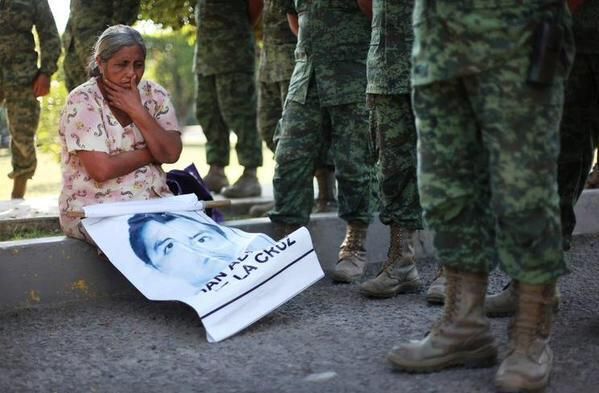
Today, La Llorona’s cry is heard again in Mexico. One year ago, September 26, 2014, Mexico, in a fit of insanity, murdered her children of Ayotzinapa. How long will she weep, searching for her children?

Ah mis hijos!

*****************************************

disclosure

5 Comments

Filed under Death and all its trappings, Mexican Cultural Stories, Safety and Security

Playing Tourist–Guanajuato, Guanajuato

Every now and then we have a chance between disasters to have a mini-vacation or two. Unfortunately, they never seem to be as relaxing as we would like.

gto

Guanajuato, Guanajuato

Some time ago, we had some business to complete in Guanajuato, Guanajuato. Our business was done early, and we had the whole day free. So we pulled over to this side-of-the-road tourist booth to get the grand tour. We followed the guy into town to a parking garage where we could leave the truck and hopped in a minivan with about 10 other people, all Mexicans (except for me) strangely enough.

tourists

Tourists!

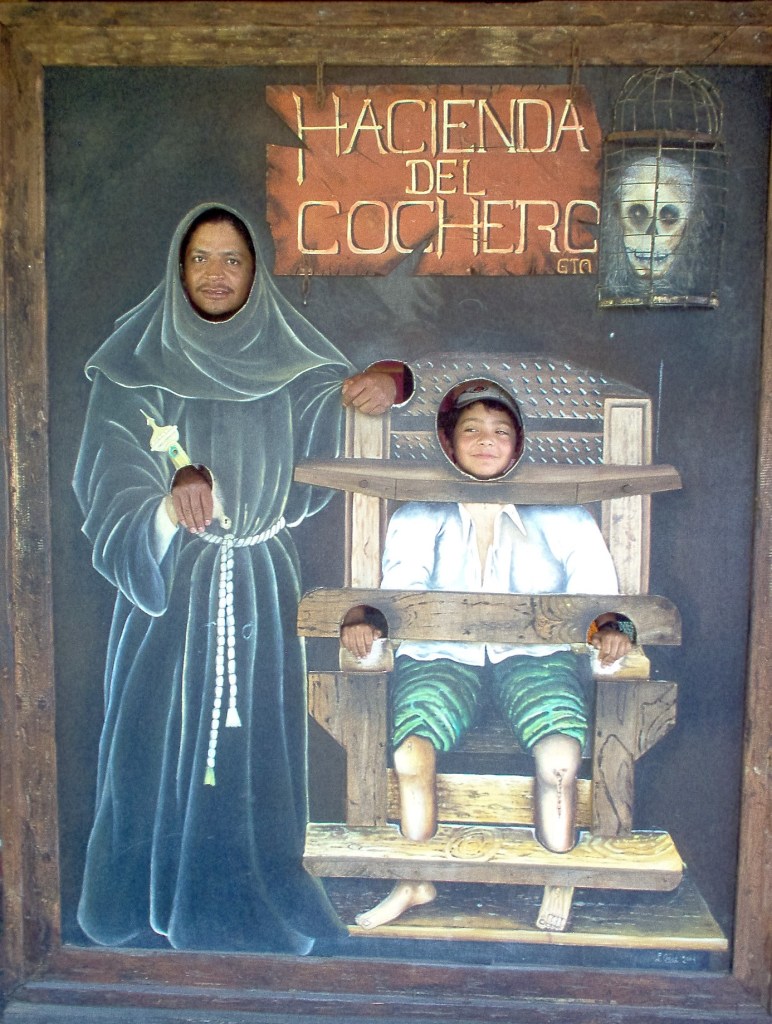
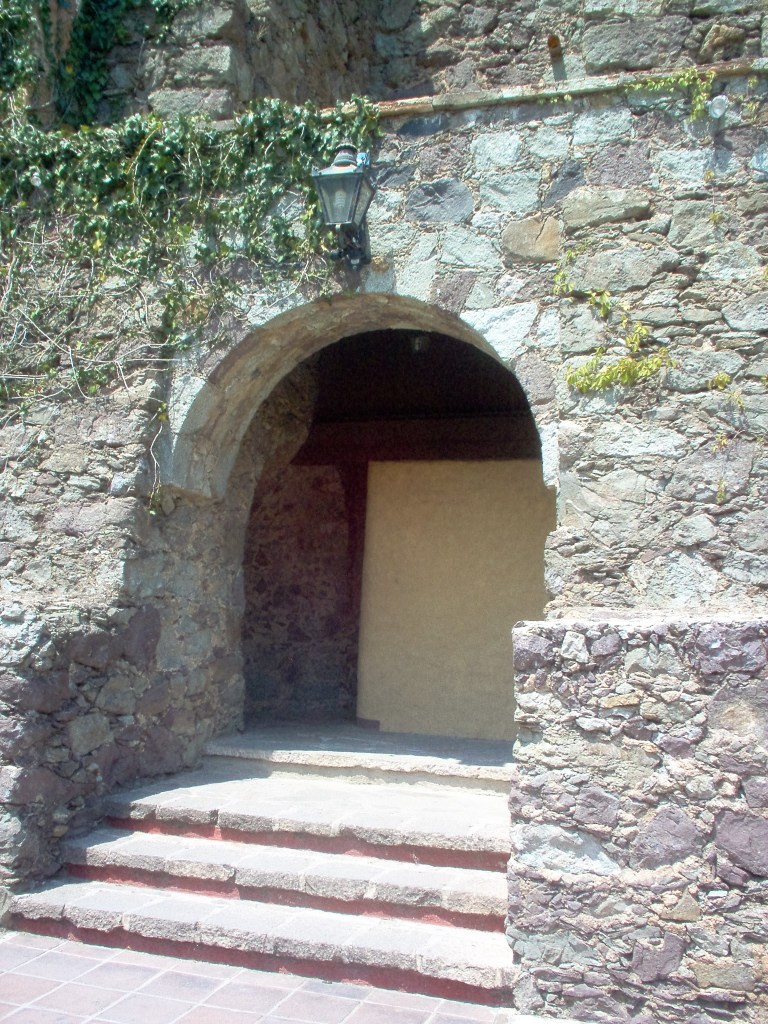
Our first stop was the Museo Ex-Hacienda del Cochero built in the late 1600s. It seemed mild enough from the outside. However, we were in for a surprise. Our guide, dressed in monk robes, led us from a beautiful garden to the dungeon to see the devices the Spanish Inquisition used to torture infidels, indigenous, political dissenters and anybody else that was in need of torture.

torture

Chained to the wall!

We saw iron maidens, chastity belts, guillotines, garrotes, hanging cages, the rack, and even a person’s remains that had been walled up alive. Our guide explained that some of the mummified remains (I wasn’t sure here if these were really mummified remains or just props) were identifiable as witches because of the red skirt and artifacts they were buried with. There was even a graveyard in the back. I guess they had to put the bodies somewhere. All this torturing supposedly went on without the neighbors knowing anything about it for years due to the thickness of the stone walls.

thick walls

The walls were 2-3 feet thick and kept the screams from bothering the neighbors.

So we were a bit creeped out by that, but surely the next stop would be better.

mummy

Yep, it’s a real mummy.

Nope–we headed to the Museo de las Momias de Guanajuato. Yep, mummies. Lines and rows of naked, crumbling mummies. It seems between 1865 and 1958, the local government required relatives of interred patrons to pay a tax to provide maintenance for the tombs. Those who had no family members, or whose family members did not pay the tax were dug up. The grave diggers discovered that the bodies had been naturally mummified due to the unique soil composition of the area. They started charging a few pesos for entrance into the shed where the bodies were stored. Eventually, the present museum was constructed.

So basically, it was horrible. The clothes had been cut off most of the mummies to cut down on the stench–although most still had their shoes on. There was a horrible section of infant corpses and the mother and child buried together after dying in childbirth, and the woman whose final resting position gave rise to the speculation that she had been buried alive. And did I mention the rows of glass cases with the naked men and women left without a shred of dignity between them?

outside mine

Outside the mine in GTO.

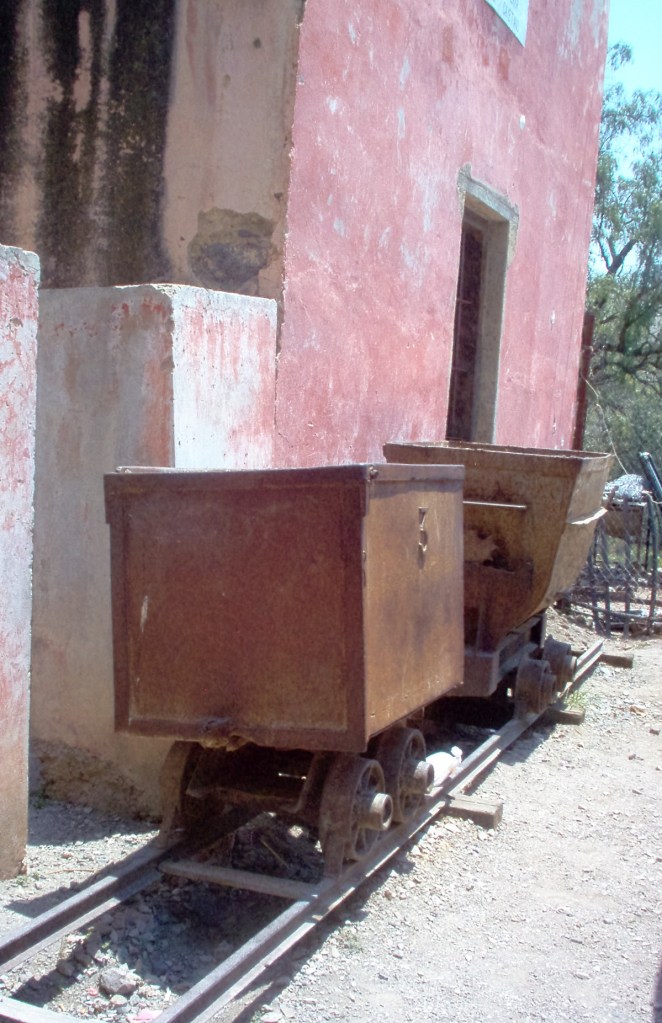
We hurried through that museum and waited outside with the tour van driver. Next stop, the San Ramon Boca Minas, silver mines where the Spanish exploited the indigenous men, women, and children for private gain! By this time, we were out of money, so couldn’t go on the tour, which was a disappointment as it seemed the only one worth taking.

cheesy smiles

Outside the sweet shop.

The tour van also took us to a regional sweet shop and an artesian store, which would have been more exciting for us if we had any funds to purchase anything. After all, each museum was about 35 pesos, plus the tip for the tour guide and the bus guide and the parking garage where we left the truck. It added up. We did take a picture or two though as mementos.

pipila

Pipila

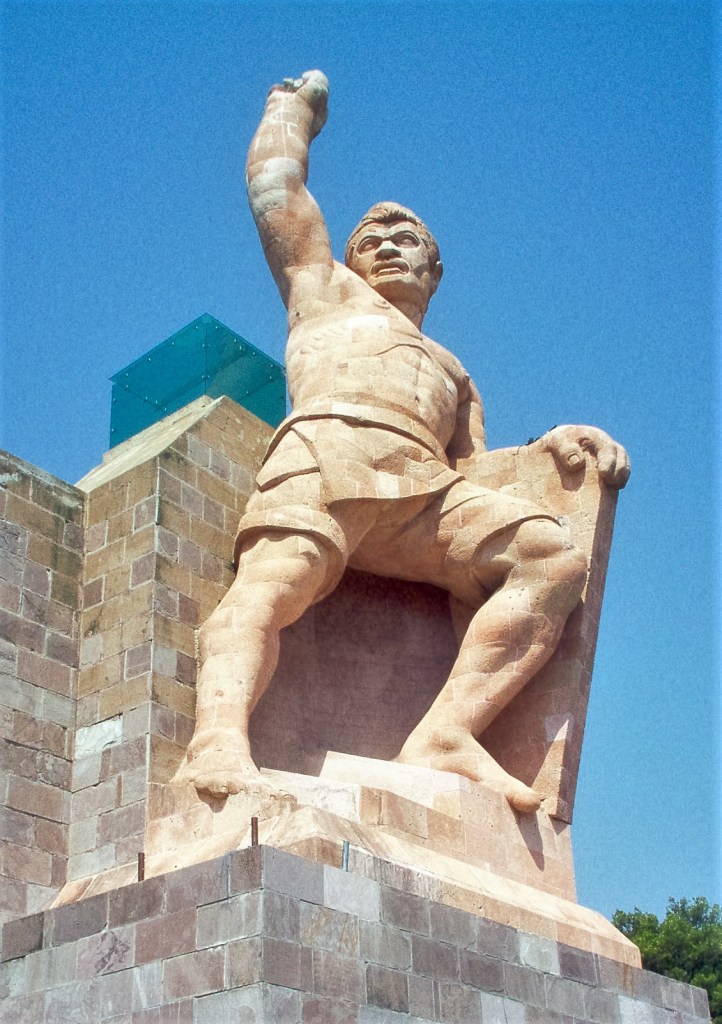
The driving tour also took us past the giant statue of El Pipila. This statue was in honor of Juan Jose de los Reyes Martinez Amaro. He was a miner who became a revolutionary hero when he carried a giant stone on his back to protect him from musket fire and used a tarred torch to set fire to the door of the granary known as the Alhondiga de Granaditas. Once the door was destroyed, the rebels entered the storehouse and killed every single man, woman, and child who had taken refuge there. This occurred on September 28, 1810.

heads

Alhondiga de Granaditas

We were also driven past said building where the blood from the massacre could still be seen as late as 1906 on the pillars and main staircase. The morbid history of this building did not end there. The revolutionary leaders Miguel Hidalgo, Ignacio Allende, Juan Aldama and Jose Mariano Jimenez, were executed by the Spanish firing squad on July 30, 1811, and their heads hung on the four corners of the Alhondiga de Granaditas for 10 years, the time it took for Mexico to finally win its independence from Spain. In 1867, the Alhondiga de Granaditas was converted into a prison by the reigning French emperor Maximilian. It remained a prison until it was converted into a museum in 1958.

gto 1callejon

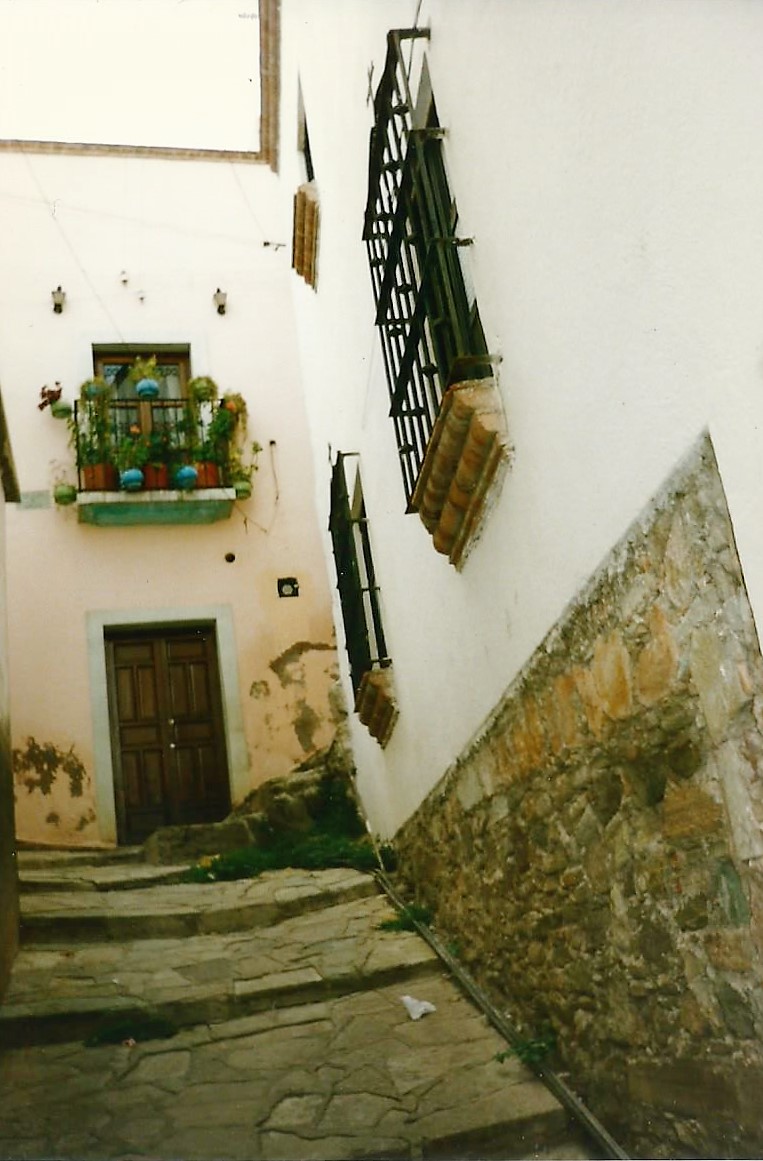
Thus ended the tour. This wasn’t the Guanajuato I remembered! I had visited the city as an exchange student some years ago and was charmed by the picturesque architecture and romantic stories like the Callejon del Beso. I even took the walking tour of the callejones (alleys) carrying a jug of sangria and listening to mariachis. After all, Guanajuato is a UNESCO World Heritage Site! I guess it just proves the truth that for every beauty there is an equally ugly underside.

student singers

Student singers

charming gto

Charming Gto.

**********************


disclosure

4 Comments

Filed under Mexican Cultural Stories, Mexican Holidays, Tourist Sites in Mexico

Harvesting cactus

I love cactus! It has a fresh, green taste that is all its own. And it can be found right in our little community, no trip to the fruteria (greengrocers) necessary. We’ve even planted some cactus in our backyard, however, it will be YEARS before they are big enough to harvest from.

nopal

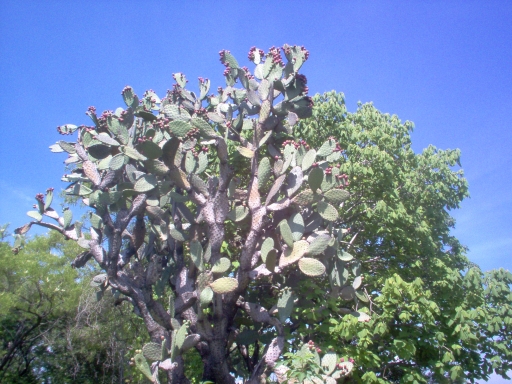
The nopal (cactus) is one of the fundamental symbols of Mexico.  It is considered la planta de vida (life-giving plant) as it seems to never die.  Fallen pencas (leaves) form new plants, therefore an apt symbol of the life-rebirth cycle found in the most ancient of Mexican myths.full of tunas

According to legend, the first nopal (cactus) grew from Copil‘s heart, son of Malinalxochitl, the moon, and Chimalcuauhtli.  Copil had attempted to murder his uncle Huitzilopochtli, the sun, because he had abandoned his mother.  According to legend, Huitzilopochtli defeated his nephew and removed Copil’s heart, which was later buried. The next day, the first nopal appeared, complete with the thorns of a warrior and flowers that blossomed with the love Copil had shown in defending his mother. This nopal (cactus) was discovered by the wandering Aztecs.  Atop the nopal was an eagle, devouring a serpent, over a lake, the sign the nomads had been waiting for.

flag

To have la cara de nopal (the face of a cactus) is to say that one’s indigenous ancestry is evident.  My husband has a decided cara de nopal and that isn’t a bad thing.

cara de nopal

Yes, I’m pocho (a Mexican who has turned his back on his ancestry usually living in the US) but I haven’t been able to get rid of this cara de nopal (Mexican face).

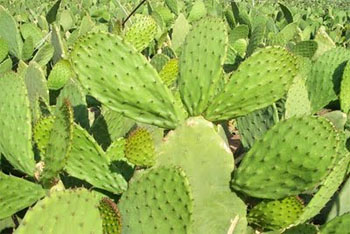
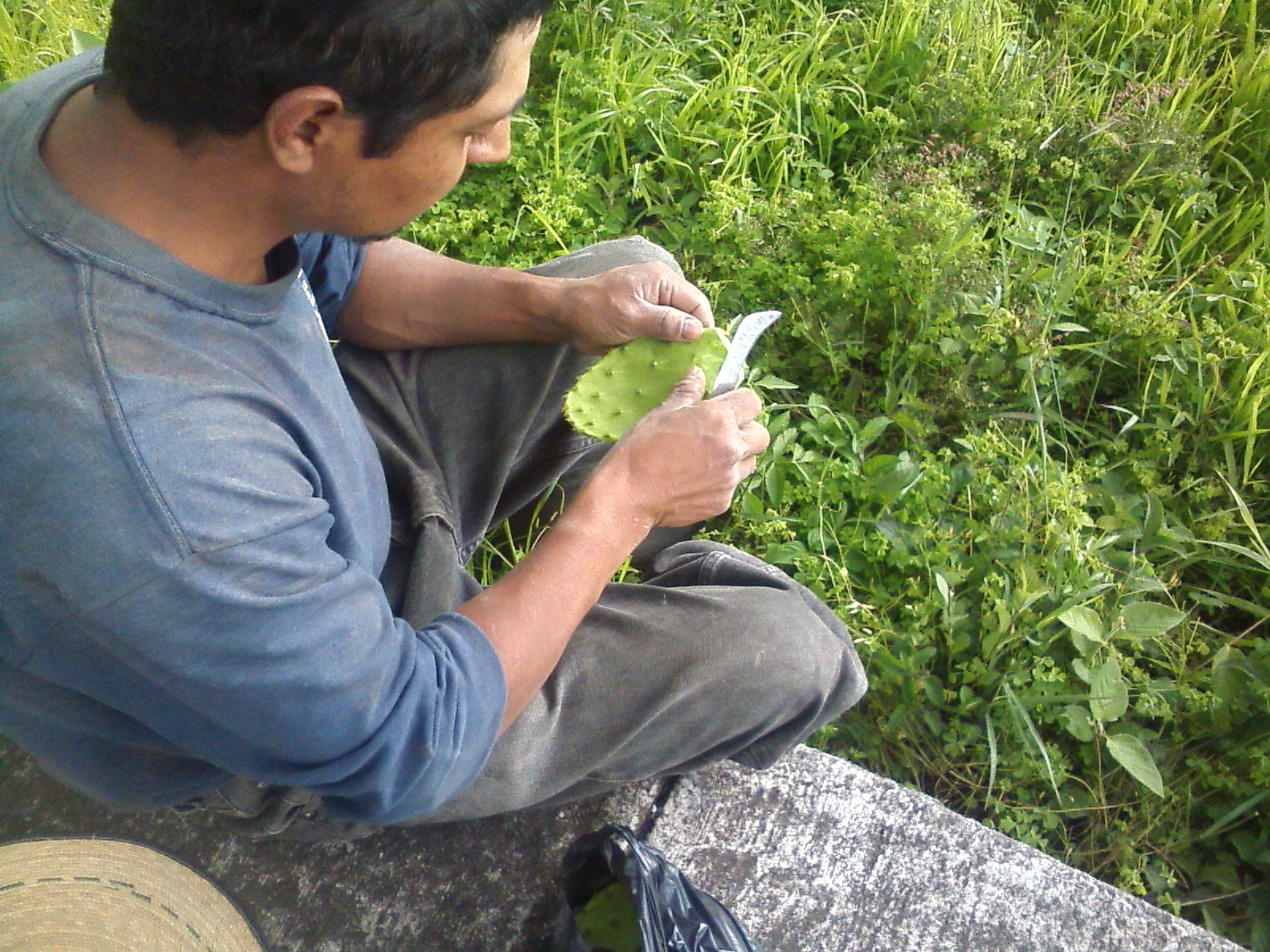
There is a technique however to harvesting. The pencas (leaves) should be a light green. Older pencas can be eaten, but they tend to have a bitter taste. The penca should be cut at the base, and handled gingerly. It is a cactus after all and there are espinas (thorns).

nopales to harvest

Once a good number have been collected, it’s time to despina (remove the thorns). It isn’t a terribly difficult process and practice makes perfect. The base of the thorn is cut, away from the cutter, and discarded. The outside edge is also skinned off. My husband always does this outside–less clean up involved. And that’s pretty much it. The cactus is ready for cooking.

dethorning cactusdethorning side

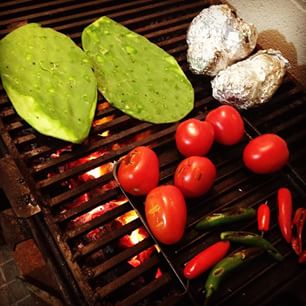
Cactus can be cooked as an entire leaf on the comal (griddle) or cut into pieces. It can be boiled or basted in tripa (intestine) juice, which is my favorite manner of preparation. It can be eaten warm or cold, used like a tortilla around cheese–a nopaldilla if you will–eaten as a salad with tomato and chili, or with beans and onions or ..well you get the idea.

boiled nopal

roasted nopal

nopales

A nice size bag of the nopales, tomato, onion and yellow chili mixture can be bought from the corner vendor for 10 pesos. Fast-food at its best!

Cactus also provides fruit in season, tunas (See Picking Tunas), the heart of Copil. Just more evidence that even in the desert, “the Earth provides enough for every man’s need” –Mathama Gandhi.

*****************************

disclosure

8 Comments

Filed under Mexican Cultural Stories, Mexican Food and Drink, Native fauna and flora