Category Archives: Employment

Declaring Solvency

thoreau-grasshopped

Oh, you say, but you live in México and everyone knows things are so much cheaper there. But the truth is, they aren’t. For example, a loaf of bread costs $24 pesos, a liter of milk $11 pesos, and a stick of butter up to $8 pesos, a bag of sugar $16, an ice cream cone costs $15 pesos etc and the average wage is less than $50 per hour.

Oh, but you don’t have very many expenses then, you might say. But that isn’t true either.

We have accumulated a little bit of debt. Last year, my moto fell to pieces and we had to buy a new one on credit, which wasn’t easy to obtain. However, making prompt and weekly payments of $315 pesos, my moto will be paid for in 14 weeks! Yippee!!

We have regular expenses such as tortillas (now $14 pesos per kilo), gas for the vehicles which every month is more expensive, clothing and shoes for a growing pre-teen and during the dry season, feed for the animals. Then there are the occasional expenses such as my current quest to become a Mexican resident (See Getting Legal–Trip 1 and Trip 2). And finally, there are emergency expenses like last week when my husband accidentally sliced open his arm with the machete while cutting grass for the horses and had to get stitches.

Since employment is iffy at best (See The Working Man) for my husband and I, becoming self-sufficient has been essential to our survival.

We have been able to eliminate some expenses entirely.

We have no running water, so we bring our water from nearby springs in water storage containers instead of supporting the Pepsi and Coke companies that sell water in garafones (water jugs) here. (See Water Woes) We do not have electricity, so we don’t have that bill to worry about. We use a power converter from our truck battery to run or charge the occasional electric appliances we use, like the blender for salsa, or the laptop and DVD player. Not having a refrigerator also means only buying what can be consumed in a day, so no prepared frozen foods for us.  (See Simple Living)

We have been able to reduce some of our daily expenses to next to nothing.

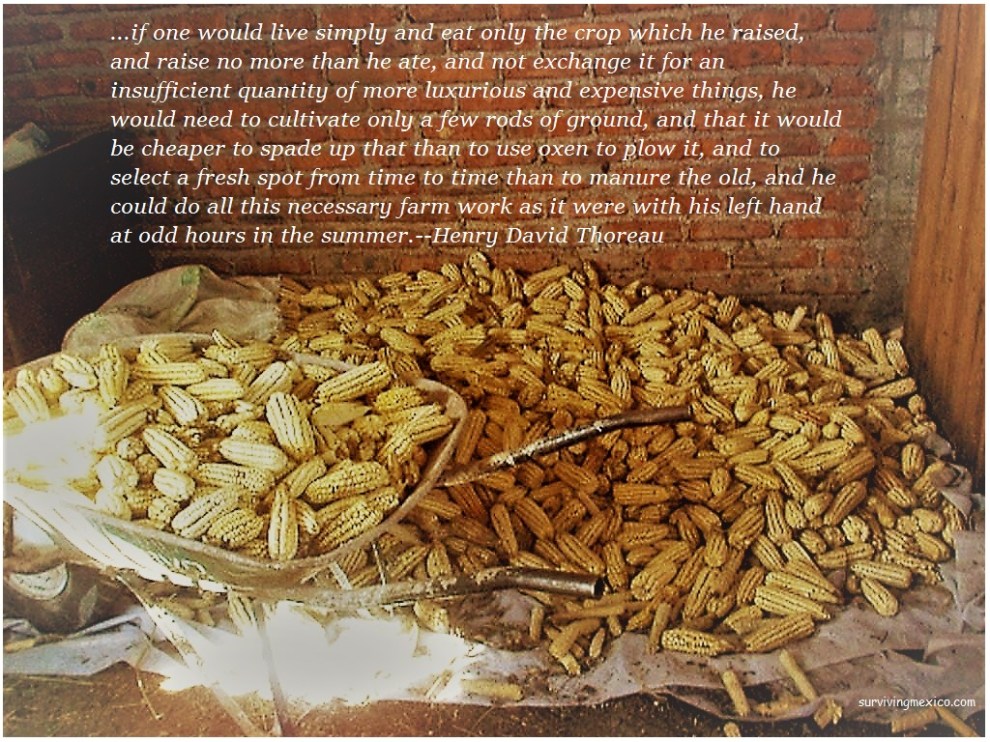
live simply corn.jpg

Our mini-orchard provides us with limones (limes), duraznos (peaches), guayabas, naranjas (oranges), chayotes, chillimoyas, and moras (blackberries) in season. La Yacata provides us with nopales (cactus), pitayas, (See Picking Pitayas) and tunas (See Picking Tunas) in season. Our goats provide us with meat and milk (See Separating the Sheep and the Goats) and our poultry (See Why did the chicken cross the road) with eggs and meat. We plant maiz, calabaza and frijol (corn, squash and beans)–the three sisters–for both us and our animals. We have also recently decided that our weekly loaf of Bimbo bread was a luxury item, so now we make our own, cutting our expenses from $24 pesos for one processed loaf to $15 pesos for 2 loaves of home-baked organic goodness.

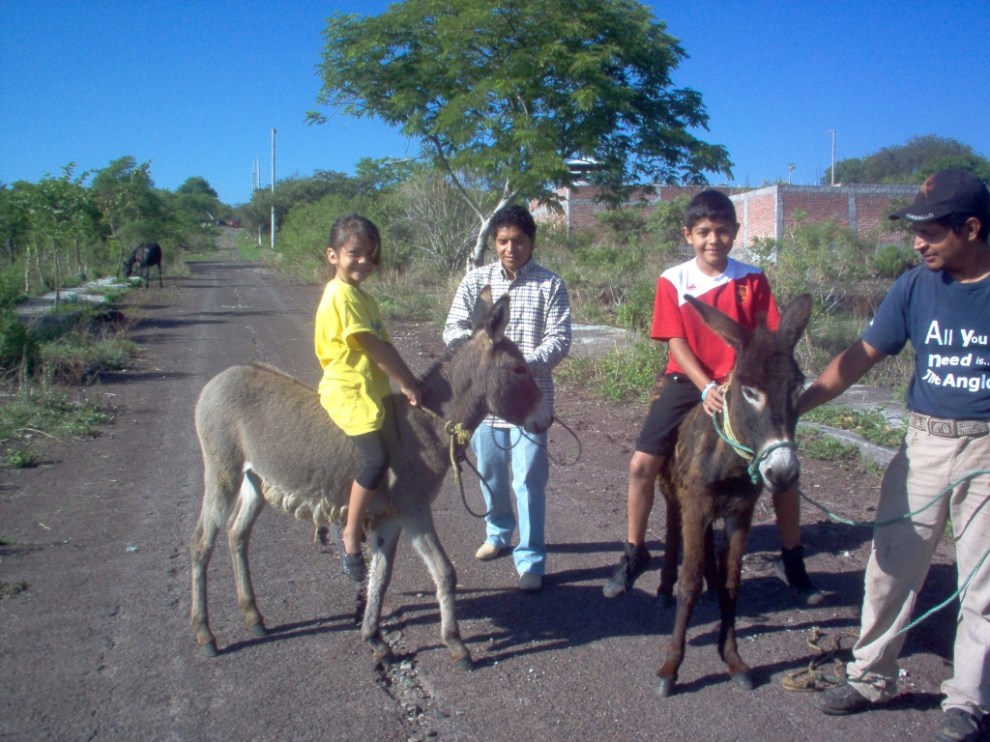
donkey riders

It would be some advantage to live a primitive and frontier life, though in the midst of an outward civilization, if only to learn what are the gross necessaries of life and what methods have been taken to obtain them–Henry David Thoreau

Our wardrobes have been reduced to a few serviceable sets of clothing that are replaced when needed. Our cleaning supplies have been reduced to soap and water, a broom, a mop, a rag, and bucket. Our entertainment expenses consist of board games, horse or donkey rides (See Donkey Races in La Yacata), long walks, bike rides, visiting friends and relatives, reading, gardening and the occasional incidental adventure or two, all of which cost next to nothing.

When we moved to México, we decided to make a fresh start and live within our means. It has been an ongoing process and one that hasn’t been easy. It has required a rethinking of our lives, not just how we spent our money, and reclassifying many things that we thought were essentials as luxuries. (See Forcibly Green-Obligatory Organic) Our diet, our spending habits, and our family has changed dramatically in the 7 years we have been here. I can’t say that it’s been a bad thing becoming solvent.

***********************************************************************


disclosure

5 Comments

Filed under Alternative Farming, Carnival posts, Employment, Homesteading

Failing at your own business–Tianguis Flea Market

tiangus cerano

The tianguis in Cerano.

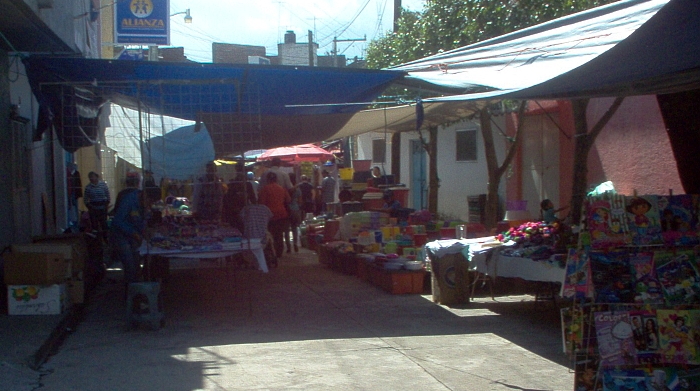
My son has a birthday coming up and we thought to rework his room to reflect his almost-a-man age. So he and I went through his things and took out the younger stuff–like the Bob the Builder suitcase, the Spidey posters, the itty bitty reclining chair and the like, to make room for other more manly decor. But, as funds are tight, we needed to sell the rejected items to buy other items. This meant a trip to Cerano for the Sunday tianguis (flea market).

So we loaded up the truck and headed out early Sunday morning. My husband secured us a puesto (spot). It was a pretty good spot, right next to the ice cream store at the corner of the callejon (alley) that goes to the church. We were up on the bridge that crosses the arroyo (open sewer drain), so by 2 pm the smell was a bit strong, but by then we had done all the business we had hoped to and more, so we left.

The first to greet us after we had our puesto assigned was Cowboy. He hangs about the tianguis asking for handouts and helping merchants unload for a few pesos. Although I hadn’t been to Cerano in over a year, he remembered my name and rushed over to help us unload. My husband gave him 10 pesos for his efforts.

Business was slow but steady in the morning. I let my husband do all the negotiating and just kept an eye on the merchandise. It isn’t like a yard sale, where the prices are ticketed and you pay the price on the ticket. An interested person asks the cost of the item. My husband responds with a price. The potential buyer thinks it over. My husband asks what price would be acceptable. The potential buyer names a price substantially lower than the proposed price. My husband responds with a negative and then points out the special features of the object of interest. Then he names a price 10 pesos lower than the original price. The potential buyer may name another price. My husband may say ‘ni para mi ni para ti’ and offer a different price. This continues until they agree on a price or my husband says the price they want to pay is too low and the deal ends. Occasionally someone walking by will hear the price my husband names and snatch the object at that price, stealing it away from the negotiating buyer. It’s all the same to us.

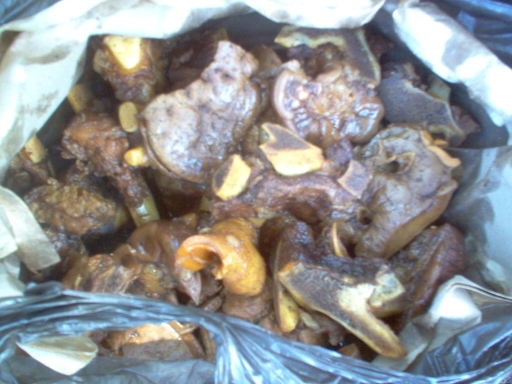
carnitas de res

Carnitas de res, a speciality from Cerano.

After misa, (mass) things started to get busy. While my husband did his salesman thing, my son and I went to the carniceria (butcher shop) that sells carnitas de res (fried cow pieces). Carnitas are typically made from pig and are not on my list of favorite things to eat, but these carnitas de res make going to Cerano something to look forward to. My husband bought tortillas from the 13-year old son of his cousin who died last year from inhaling light bulb filaments (I’m still not sure I understand that) and we chowed down.

Oh, did I mention that my husband is from Cerano? Cerano is a small town about 30 minutes from Moroleón and as different as being on Venus. The population is said to be about 4,000 and most of them I swear are relatives of his. Well, look that the logistics. My mother-in-law came from a family of 9 children, children of Mama Vira and Papa Rique. Her father Papa Rique also had a lady on the side who had 9 children. My mother-in-law had 11 children, although none live in Cerano at the moment. Her sister Lucia had 9 children, all of which live in Cerano. Her daughters all have 3 children each, some of which live in Cerano. My mother-in-law’s other sister, Tía Lena, the dwarf who owns the bar, has 4 daughters who have a variety of children. Another sister, Tía Jesus (yes, Jesus) has 3 girls. Basically, a good portion of the town reflects my husband’s features, some so closely that at a distance I have mistaken identity. One day, one of his cousins was at the house of the relatives that we were visiting, but without a shirt. I went to scold my husband for taking his shirt off, when I realized, just in time that this person was quite a bit younger than my husband, and wait, wasn’t him at all.

My husband, having lived there until he was 13, can identify and tell the stories of nearly all the residents. One man came along and wanted to buy a palo (shovel) because it would be useful if he were attacked. I thought this was a bit strange until my husband explained that this man was the uncle of Cowboy. OK. All in the family right?

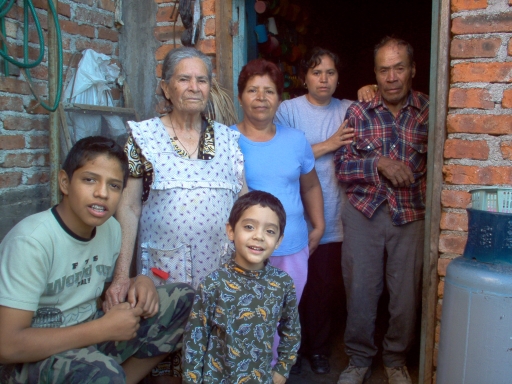
cerano gang

From left to right– A, Mama Vira, my mother-in-law, Tia Jesus, Papa Rique and my son in the front

Mama Vira, Papa Rique and Tia Jesus stopped at our puesto to visit with us. We shook hands all around–our customary greeting. They looked over our things. My husband gave Mama Vira $20 for tortillas and I gave Tia Jesus a flowered comforter that we had out to sell. They shook hands all around again and left, happy with the day’s acquisitions.

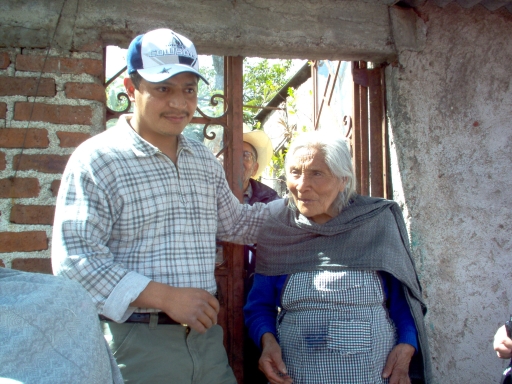
cerano gang 2

My husband and Mama Sofia with Tío Felipe lurking in the background

Mama Sofia, the mother of my husband’s father, also passed by. She greeted me amiably enough on her way to buy meat for lunch, but wouldn’t look our way on the way back. Seems she hasn’t forgiven my husband for nearly choking the lights out of her husband, Tio Felipe (not the father of my father-in-law Porfirio who died after being kicked by a burro some 50 years ago) after Felipe had given her a beating. Felipe has tried various times over the years to murder Mama Sofia. I think she recovers out of spite.

Well, sales went well overall. We had $600 take home after paying for the puesto, cleaning fees, ice cream, carnitas, the family handouts and gas for the truck, which is more than I earn in 2 days teaching. It doesn’t pay to go every week, but once every few months is a nice afternoon’s work. Now on to remodeling.

*********************

disclosure

9 Comments

Filed under Employment

Failing at your own business–Taxi service

After dinner, last week, my husband began by saying I should hear him out about this plan he has and I immediately perked up and took notice. What new plan was this??? So he started with “There is this group of women and they would pay $100 each. . .” I thought perhaps he was talking about a tanda, which is a sort of chain savings plan where a number of women contribute a portion of their weekly earnings, paying it to the designated hostess and receiving it the week of her own hosting. I tuned out of the conversation for a bit while I tried to think of the word tanda and came back to full attention when my husband started making hugging and kissing pantomimes. What was he talking about?

His sister L, he continued, wanted to visit her young boyfriend (see Parenting challenge–Independence vs. safety) who is currently serving a five-year stint in the bote (jail) near Valle de Santiago on Sunday for a visit. She asked if my husband would drive her there in the truck. She had a group of 9 ladies or so that also wanted to go to visit their significant others and they would pay $100 pesos each for the ride. My husband pressed me to agree by saying we could drop them off at the jail, then go to the tianguis (flea market) in Valle and spend the day leisurely enjoying the shopping and refreshments with the profits of the trip.

I reminded him that every single one of his sister’s plans has caused problems for us. Her last move gave my husband a hernia, her involvement in some of our money making schemes has cost us money and so on. As recent as a week previously, she and the strapping Cornhusker-grown wife of M were brawling in the streets while my husband was trying to close a deal on the burra (donkey)  and he pretended he didn’t know either of them. How could any idea of hers be a good idea?

What if she was planning on breaking her man out of jail? I could just picture them, 9 cholos climbing out of the wrenched jailhouse bars that had been tied to the hitch of the truck, holding their pants in one hand and hopping in the back of the get-away vehicle (driven by my husband) with police and their Uzis firing after us.

As it appeared I wasn’t going to agree, my husband played his trump card. Well, if that did happen, he said, it would be something interesting for me to write about on my blog. OK. I’m in.

This was one time that the reality didn’t live up to my imagination. We got up at the unearthly hour of 4 a.m. Sunday morning so that we could take care of the animals before we left. We began the pickup round for inmate wives and families at 5 a.m.

I have privileged status, being the wife of the driver, so I sat in the front seat. My son, however, was ousted to the back of the truck so that a wife and baby could be in the front. I also was given a baby, a little tike about 3 months old, to hold. Although the driver is required to wear a seatbelt, no one else in the vehicle is subject to that law. Therefore, we held the babies in our laps. Fortunately, neither baby was fussy, so it wasn’t as difficult as it might have been.

jail

The State Penitentiary outside Valle de Santiago

We arrived at the Ceresa (State Penitentiary) about 7 a.m. The ladies hurried to the gate, leaving their children behind in my care, to get their ficha (number). They came back 20 minutes later or so, happy. All of them had scored numbers between 30 and 40, so they would be towards the head of the line. Then they scattered again to hunt down pan (bread) sold by local vendors. They came back with 2 to 3 bags each. These sweetbreads were to leave with their incarcerated significant other for breakfast for the week. There seems to be a concern that the inmates aren’t fed, but I think that’s just not true. I’ve seen some recently released men and they are in no way starving–in fact they were some of the fattest men I came across in Mexico. But then again, maybe their wives and mothers are very conscientious about their weekly visit.

After the bread rush, the ladies rushed to the gate for a second time to claim their credenciales (visitor’s passes). Each lady has her own laminated card, complete with her name and picture, the name of the inmate she is visiting, and the relationship to the inmate. My husband’s sister is not married to her young cholo, so I asked to see her card. She is listed as being G’s concubina (concubine). I had no idea that being a concubine was a legal status here in México. Well, I expect that makes it easier for her to request conjugal rights.

So by then the sun had come up, so the ladies began to primp and preen as any girl might before a hot date. Gel and blush, combing hair and brushing teeth, even a quick change of shirt, something more feminine. I shamelessly eavesdropped while they worked on themselves and each other.

So I learned about the trip last week to see the hombres encuarados (nearly naked men) and some mean gossip about two other ladies that didn’t travel with us. I was especially interested in what their men had done to be in the carcel (jail) in the first place, but I didn’t know them well enough to ask. However, my husband’s sister was free with her own gossip. The one girl with the 2 kids that sat next to me was the daughter-in-law of the lady who gave us donuts. They were here to visit a man who was in for 7 years for beating another man to death with a stone in La Yacata. (Hmm, must have been before we moved there.) The mother of the baby I held during the trip was there to visit her man who had been arrested for selling drugs, like G. The older lady was there to visit her husband who was in year 7 of a 12-year sentence, but my husband’s sister didn’t know for what. And the last lady was there to visit her husband who was in for 30 years for kidnapping an elderly man and holding him for ransom.

Enough gossip, it was time to line up. They left their jackets, cell phones and purses in my care. My husband helped them carry their babies and bags of food to the line. They were called in by groups of 10. We waited until we were pretty certain they had all been admitted and then went to look for breakfast.

Even by rural standards, there was nothing nearby that even resembled a store or restaurant. We stopped at a place that had a few tables set up in the yard desperate to eat. The only thing on the menu was carnitas (fried pork) which is not what I really wanted for breakfast, but the pico de gallo and salsa were very good.
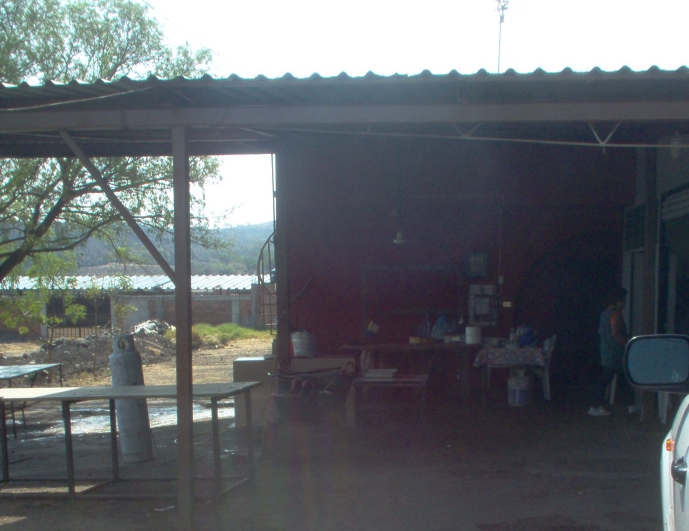
carnitas express

Breakfast of champions in Puebla Nueva

So then we went in search of a gas station. We didn’t have to wait in line and they had free and clean bathrooms.

getting gas

Waiting in line at the gas station in Villa Nueva

We couldn’t afford to drive around and waste gas, so we went back to jail and parked under a mesquite tree outside the compound to wait for our passengers. With the heat and the owls hooting in the palm trees, I soon fell asleep.

Patience is a virtue that we have learned to perfect in México. My husband has taken up smoking to help him to wile away these long waiting periods and keep him calm. My son has learned to bring his rechargeable games (DS or PSP) when we expect something like this to happen. I bring my notebook to record everything for posterity. So went the afternoon. No shopping, no escaping cholos, nothing but the heat and an occasional passing vehicle.

traffic

My siesta was disturbed by the passing traffic.

So at 3 p.m. we entered the prison compound again. My husband went to wait by the door when he saw ladies beginning to trickle out. I was approached by some other lady, not one that had traveled with us who said that she was the friend of Mari (I still don’t know which one was Mari) and that she was going to leave these 2 benches with us to take back to Moroleón. I said, sure. Then she went back for 2 more. About 30 minutes later, our passenger ladies came out loaded with things. My husband moved the truck closer to the door. The ladies were peeved that there were already furniture items in the back because that meant less room for their own things.
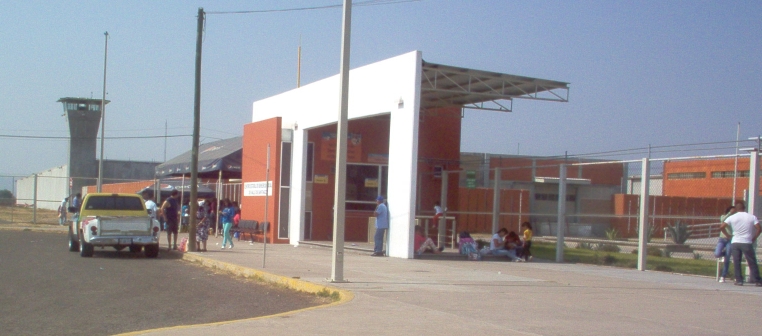
front door

Front door at the Ceresa

They had large wooden framed paintings of the Virgen of Guadalupe, several more benches, a large TV stand, a child’s desk, two children’s hat stands and some little end tables. My husband’s sister had a centerpiece sized paper swan that she was all paranoid about having damage. (I guess her man isn’t as talented as some and that was the best he could come up with.) After a bit of maneuvering of babies, women and furniture bits, we were finally loaded and left the compound at 5 p.m.

The significant other ladies all sported nice collections of hickeys that they did not have in the morning. I suppose it makes sense that since their men can’t be there to make sure the ladies aren’t stepping out during the week, that they mark their territories with hickeys during visiting hours.

One under way, I asked that lady in the front about the furniture. It seems there is quite a prison industry going on. The inmates that wish to work are given materials and a weekly wage (about $700 pesos per week) and make these items. Their wives and mothers then come and pick up the items and sell them in their hometowns. The inmates also make shoes that can be ordered through by catalog.

I was amazed. $700 pesos a week! I expect that the families of many of these inmate workers are earning more now that their men are behind bars than they were before. Work is scarce in this area. Crime does pay after all.

So we made it back to Moroleón before it began to rain, made the drop offs and arrived home about 7 p.m. After we fed and watered the animals, I asked my husband how much money he had made with this venture. He ruefully admitted that he only had $300 pesos free and clear, after gas and tolls. It hadn’t been a good money-making plan after all but it did make a good story.

***********************

disclosure

3 Comments

Filed under Employment