Category Archives: Education

Learning and Teaching Summer Course–Year 2–Teaching Agriculture

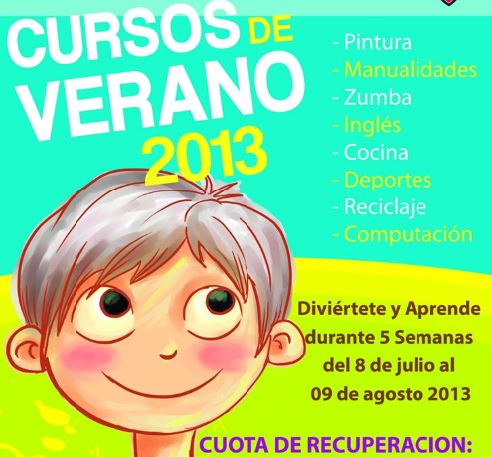
summer course 2013

I had an incredible inspiration for how I wanted to teach English for the second summer course. The owners of the school had bought the vacant lot next door, and it would be just the thing to plant.. All my teaching would be centered around the hands-on growing activities. I was so excited!

searching for corn

We had enough students to divide the class into two. Ages 4-8 were in one class. Ages 9-13 in another class. We offered music, P.E., art, and computer classes as well. I had to make some modifications for the difference in the age groups, but not much.

toiliet paper seedlings

So we planted. We planted starter seeds in toilet paper tubes. We planted test plants (one with no sun, one with no water, one with too much water, one well cared for) in soda bottles. We planted corn, beans and squash (See also Planting with the three sisters) in the vacant lot. We also planted sunflowers, but they didn’t really grow.

plowing

We brought Fiona, our donkey, to till up the lot. My husband, son and I actually came the day before to work the land because the dirt was packed down. The kids didn’t care that they weren’t actually breaking ground. They loved following Fiona around.starters

Then we planted, watered, weeded, added fertilizer when the plants yellowed and tromped merrily through the mud every other day. On inside days, this was the rainy season, after all, we learned about plant parts, discovered the difference between fruit and vegetables, attended to our indoor seedlings, learned about beneficial insects and the growing process, sang and generally had a good time. When our seedlings were ready, we transplanted them into pots they had made in art class.

transplant

The final day of class we invited the parents to see what we had learned. Each child received a sprouting tomato plant to grow in their backyard. Since the corn was not yet ready for harvesting, we invited everyone back in October for a Harvest Festival, which was another smashing success. We played wheelbarrow, rode Fiona, picked and toasted our very own corn, had sack races and enjoyed ourselves immensely.

wheelbarrow

It may seem strange that this type of activity was so enjoyable to semi-rural Mexican children. It just so happens that this particular group of students were townies, at least, 2 generations removed from the farmers their grandparents were. Moroleon had an industrial boom some time back and now all the adults work in clothing factories, not in the fields. In just one generation, the children had lost their connection to the natural world and oh the joy in rediscovering it!

************************************

disclosure

1 Comment

Filed under Education, Teaching

Learning and Teaching Summer Course–Year 1–The Thematic Approach

As summer approaches, it’s time to consider if I will teach a summer course for the fourth year, or if I will take the summer off. It has been a great way to supplement my income during the vacation period and up until now, my son could attend with me. This year, however, he has reached the cut-off age of 13 and although he has volunteered to be an assistant, I think that our time might best be spent in other educational activities.

The first year that I taught English during a 5-week summer course was extremely challenging. I had 22 students that ranged in ages from 5 to 13. All my students were ESL learners with an extremely mixed level of English abilities. Therefore, I had to be creative with my English language teaching approach.

I decided to use a thematic approach. Each day would have a different topic. All activities would be centered on that topic. There would be a variety of activities so that all the students could participate to the best of their abilities. It would be fun because, after all, this was a summer course.

pirate kid

One day our theme was pirates. We sang (I played the piano) some rousing pirate songs. We learned pirate words. We talked about commands in English grammar. We role-played. We made eye patches and hooks. We designed a pirate ship. We made treasure maps. It was great!

farmer kid

Another day our theme was farming. We sang Old MacDonald and played the Farmer in the Dell. We talked about present tense. We planned our gardens and farms. We talked about animal sounds and names. It was great!

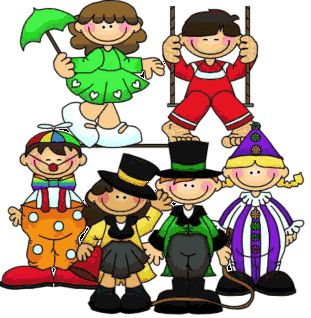
circus kids

Yet another day was about the circus. We talked about conditional tense and imagined “If I were in the circus, I would…. ” We sang The Man on the Flying Trapeze. We drew clowns. We made a construction paper big top. We learned circus words. It was great!

And so on and so forth. I must admit it took an incredible amount of planning for each class, but the result was well worth the effort. The school also offered music, P.E., cooking, art, and computer classes to round out the day. Those students that attended were disappointed when our summer course was finished. And that’s the way a good summer course should make a student feel.

*****************************************


disclosure

4 Comments

Filed under Education

May Holidays in Mexico–El Dia del Estudiante–Students’ Day

In Mexico, it is more dangerous to be a student than a drug trafficker.

In Mexico, it is more dangerous to be a student than a drug trafficker.

El Dia del Estudiante (Students’ Day) commemorates the violent beating of students by police in a protest march in 1929 at the National University in Mexico City (UNAM). The protest was over political involvement at the University and the day has been kept as a reminder of the educational freedoms fought for over the years.

tlatelolco-1968

Tlatelolco massacre 1968

Violent student repression did not end in 1929 in Mexico. The Tlatelolco massacre occurred on October 2, 1968, in Mexico City, 10 days before the opening of the 1968 Summer Olympics. It remains unknown how many students and civilians were murdered by military police. Official reports and eyewitness accounts cite anywhere from 30 to 300 deaths with more than 1,300 arrested, many of whom were never heard from again. In light of events in 2014, this holiday has come to the forefront nationally in Mexico. In case you live under a bushel basket or only believe what the news reports, here’s why.

teacher protest

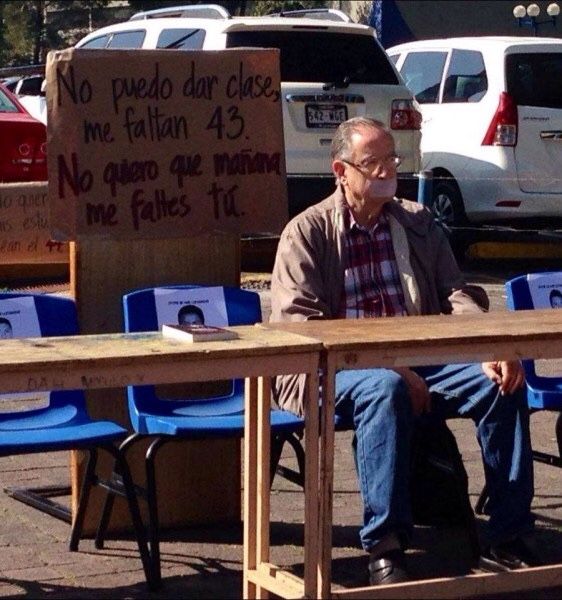
The teacher daily set up 43 empty desks in memory of the missing students of Ayotzinapa. The sign behind him reads “I can’t teach class, I’m missing 43.  I hope that tomorrow, I’m not missing you.”

A group of students from Raul Isidro Burgos Rural Teachers College arrived in Iguala, Guerrero for a protest march.  A group of university students from Raul Isidro Burgos Rural Teachers College of Ayotzinapa traveled to the small town of Iguala, Guerrero for an organized protest march on September 26, 2014. This particular school has a history of social activism, including protest marches, road closures, demonstrations, and rallies. These public manifestations are designed to draw attention to the difficult living situation and lack of educational opportunities the people in Guerrero have.

Police officers aggressively confronted the protesting students as they arrived in Iguala. In the shooting that followed, 6 people were killed and 25 wounded.

Forty-three students were taken to the police station in Iguala, then to the police station in Cocula. Once in Cocula, they were transported to the town of Pueblo Viejo and turned over to the local members of Guerreros Unidos (United Warriors), a gang involved in drug trafficking. The students have not been heard from again.

found student

In memory of Alexander Mora Venancio

At the insistence of desperate parents, the matter was investigated. Searchers discovered a mass grave near Iguala on October 5, 2014. Later, four more mass graves were found in the area. On December 6, 2014, the body of one student was positively identified through DNA samples. Forty-two families still wait for information about their sons.

At least 80 people have been arrested. More than half of those detained were police officers. The mayor of Iguala and his wife have also been arrested. Investigators discovered that the mayor’s wife is related to the leader of the Guerreros Unidos (United Warriors). However, she was released from police custody due to lack of evidence.

justicia

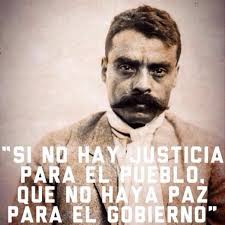
During the Mexican Revolution of 1910, one of its principle leaders, Emiliano Zapata, declared that “If there is no justice for the people, there should be no peace for the government.” With this motto in mind, families, teachers, fellow students and friends have joined together in nationwide protest marches and demonstrations demanding justice for the missing students of Ayotzinapa.

protest
The President of the Mexican Republic, Enrique Peña Nieto, has instructed the Mexican people to return to their homes and forget about this incident. He warned that continued demonstrations would be stopped with military force. As a result, each protest march since the disappearances has been met with violent police opposition. Despite this, the Mexican people continue demanding radical governmental reform, one protest at a time.

prof killed

Profesor Claudio Castillo Peña, asesinado por el estado Mexicano. Professor Claudio Castillo Peña was murdered during a protest march by Mexican federal troops.

So much for educational freedom in Mexico.

Ayotzinapa

Mexican saying which translates as “They wanted to bury us, but they had forgotten we were seeds.” Original artwork by Clau Guzes

May is quite the month here in Mexico. Every time you turn around there is another celebration! For other Mexican May holidays see: El Día de los Trabajadores, Conmemoración del Escuadron de Pelea 201, El Dia de La Santa Cruz y El Dia del Albañil, La Batalla de Puebla, Natalicio de Miguel Hidalgo, El Dia de la Madre, El Jueves de la Ascensión, Pascua de Pentecostés, El Día del Maestro, and El Dia del Estudiante

************************

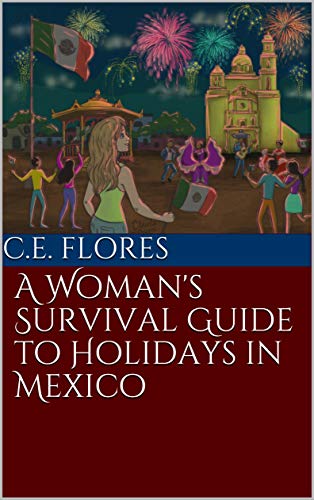
Learn more about holidays in Mexico!

cover holidays

17 Comments

Filed under Death and all its trappings, Education, Mexican Holidays