Category Archives: Cultural Challenges

Showering in Rural Mexico

Today I’d like to talk about showering in Mexico because odds are you won’t get the luxury of a bath unless you are willing to sit in a horse trough in rural Mexico. 

We have a shower and we have hot water, but that hasn’t always been the case. So here are some showering things you might need to know about before stripping down.

C on the shower knob stands for caliente (hot) and F is frio (cold). And even though the hot water control should be on the left side and the cold on the right, that may not be true for the shower you are using. 
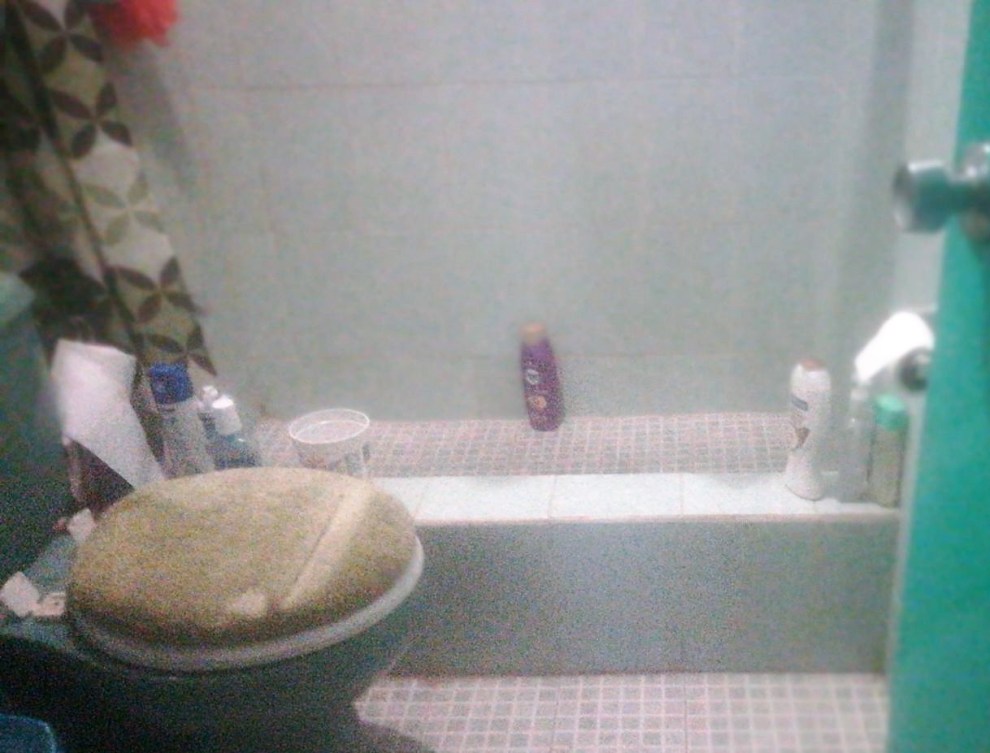
bathtub ledge

Showers are often built with small ledges that you can trip over if you aren’t careful. This is so water doesn’t spill out onto the floor. Our shower has a sort of reverse engineering. The shower is slightly lower than the bathroom floor and the floor is angled toward the center drain. Not all showers have that sloping and sometimes you can get quite a bit of water build up around your feet.

If you run out of water during your shower, mid-shampoo, hopefully, there is a barrica (barrel) of rainwater that someone can bring you a bucketful of to rinse out those soapy locks. Running out of water happens more often than you might imagine.

tinaco

Houses have tinacos (those ugly black round storage containers on the roof) that if you are connected to the town water supply will fill when the water is on. The thing is, water may only run two or three days per week. The tinaco is supposed to store enough water to get you to the next delivery. That’s not always the case. 

If you know ahead of time that there isn’t any water for a shower, you can take a bucket bath. When the occasion calls for it, my husband has been kind enough to heat water on the stove to take the chill off my bucket bath. Most homes have at least one enormous aluminum pot that will quickly heat water for your absolutions. Some have electric water heating devices. Just make sure to unplug it before testing the water temperature with your hand.

heating up water

The typical water application device for a bucket bath is a plastic bowl that we call a scooper. It’s the same plastic container that is used for washing clothes when it’s done with a washboard setup. 
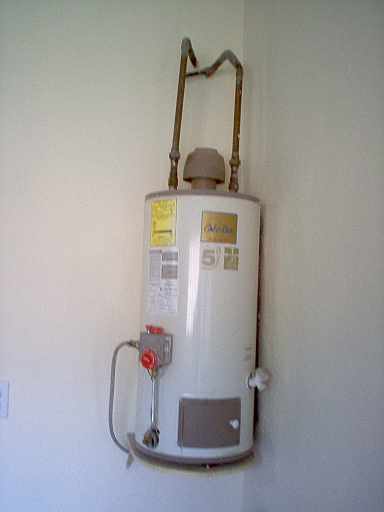
water heater

If you have enough water for showering, then you’ll need to decide if it’s worth the effort to turn on the boila (gas hot water heater) or not. I’m a little afraid of it, having had my eyebrows singed before. 

The procedure for lighting the boila is as follows:

  • Turn the red switch to Piloto (pilot).
  • Push down the red button 10 or 15 times in rapid succession.
  • Open the portal.
  • Light a match.
  • Hold down the red button.
  • Wave the match around inside near the pilot light contraption until it whooshes. 
  • Slowly release the button. 
  • If the flame begins to waver, press the red button firmly down again.
  • When the flame is steady, turn the red switch to Abierto (open)
  • Close the portal.
  • Back away quickly.

After you have successfully lit the boila, then you need to wait around for about 20 minutes until enough water is warm enough for a shower. 

Make sure to turn the boila off after your shower. The contraption is gas-powered. If it is not vented properly, the gas can kill you or at the very least cause carbon dioxide poisoning if left on for an extended period of time.

electric water heater

I’ve also had the dubious pleasure of showering under an electric shower head. Although I loved every minute of the hot water on demand, it still made me very nervous. Water and electricity aren’t exactly the best of friends. However, if it is installed correctly and in working order, then there is no risk of electrocution. 

solar heater

The newest rage in our area is the solar water heater. It mounts on the roof and connects both to the tinaco and pipes that lead into the house. Many people who have this setup say that the water comes out boiling and even the knobs are too hot to touch. Yikes! We choose not to get a solar water heater because there are occasions when we don’t have water in the tinaco. If there isn’t water to run through the solar heater at all times, it can burn up the components. 

If it seems too much effort to get hot water, take heart. If your black tinaco is on the roof, the water is a comfortable shower temperature in the early afternoon. 

Most showers are set up on a gravity system. If the tinaco isn’t far enough from the showerhead, you may not get a lot of water pressure. Rinsing long hair might be complicated with the trickle-down effect. During the rainy season, the rain may be coming down harder than the water comes out of the showerhead. Feel free to take advantage of the heavenly shower Mother Nature has provided outdoors. 

rub a dub dub

Bathing children is somewhat simpler. Babies can fit into the sink off the side of the lavadora (washboard). Small children can splash about in the laundry tub. And several children fit nicely in a horse trough, which comes in metal and plastic for your bathing pleasure. 

Now I’ve heard that there are hot water on demand setups, but I’ve never been to a house that has one. I’ve also been to a plomería that had not just bathtubs, but jacuzzis, so they do exist too. These are just things outside of my own experience in this area of Mexico. 

So there you go! Tips for showing in rural Mexico. Follow these and you’ll be squeaky clean in no time!

Tell me, how do you shower?


1 Comment

Filed under Construction, Cultural Challenges, Homesteading, Water issues

International Women’s Friendship Month

September is International Women’s Friendship Month. So how do these international friendships typically pan out? Sometimes not so well, sadly.

Living in rural Mexico often means isolation for women who have chosen to come with their husbands to the lands of their ancestors. Friendships with other women are slow in developing, if ever. And yet, women need the support of a tribe of their own, not just the husband’s sister or aunt or cousin. 

Studies have shown that deep, abiding friendship between women can counteract stress–and moving to a new culture is certainly rift with that. Women have an innate drive to communicate, which moving to an area where a new language is spoken can inhibit. Friendships occur over shared experiences, beliefs and values–things that are not found in the new environment these women have settled in. 

Friendship can help women combat loneliness, improve their chances of surviving breast cancer, and generally help create a satisfying quality of life, no matter where a person lives. 

So why is it so hard to foster friendship in a new country?

Unfortunately, we have an inherent bias built into our perceptions that takes deliberate effort to overcome. We tend to choose friends who look like us, have a similar background, and social values. When we are faced with making connections with people who neither look like us nor have a shared history, we need to work more at finding commonality than we would otherwise. And while we immigrants to Mexico may be driven to find connections, the women that live in our village with long-time established friendships, are not. 

So where does that leave us? Depressed, lonely, and ill. Online friendships sometimes help with the worst of this, but virtual buddies can’t ever replace an actual friend. 

In June, I was able to visit my hometown for the first time in 10 years. I stayed in the home of my best friend since third grade. I thought that it was just me, who had been living in relative isolation for so long, that most enjoyed our time together. So I was surprised when my friend said that she really missed the company of women, both her girls were grown now. 

at shannons

We talked about the growing Amish community in the area and whether they had a better support system than most women. After all, they have shared values, a common background, activities, and history. Since that society of women is closed to non-Amish for the most part, we weren’t able to do more than speculate.

Bringing these thoughts back with me to Mexico, I started to feel less resentful of the women who refused to befriend me. The closed society of women here is no different than the Amish community in Pennsylvania. Which of course, makes it difficult for interlopers like myself to establish deep and abiding friendships. 

shopping with e

So where does that leave me? I will continue to enjoy my virtual interactions in the various Facebook groups I am in, including two that I help manage SOTB Bloggers and Women Surviving Rural Mexico, which I invite you to join if you live in Mexico. I will keep trying to be supportive of the women as they struggle with their online presence and daily interactions in Mexico. I will try to remember that I have an internal bias as do the women I come in contact with, so I mustn’t hold it against them. And I will continue to cherish the friends that I have no matter the distance between us. 

How have you made and maintained your friendships with other women?

2 Comments

Filed under Cultural Challenges, Uncategorized

Not Taking The Blame

An actual picture of the elusive chicken feather guy rounding up his animals in the morning.

The other night, the horse guy, as opposed to the chicken feather guy, let his animals out to graze. Up and down the road they went, eating whatever tickled their fancy.

The next morning, the guy whose wife and kid planted some corn on their lot down the road came charging up to the house, beer in hand at 9 am to yell at me. He didn’t get too close. All three dogs got riled up and wouldn’t let him within 100 feet of me. Mr. Aggressive wanted to know if we had goats. We do. I didn’t deny it. He said that the goats ate all his corn. I said they didn’t. He should check with the guy who has sheep right next to his lot. 

So Mr. Aggressive went down to that house and banged on the door. The Borrega guy only comes before and after work so I shouted down that he needed to try at 5 pm or 8 am. You could see the steam rolling out of Mr. Aggressive’s ears. 

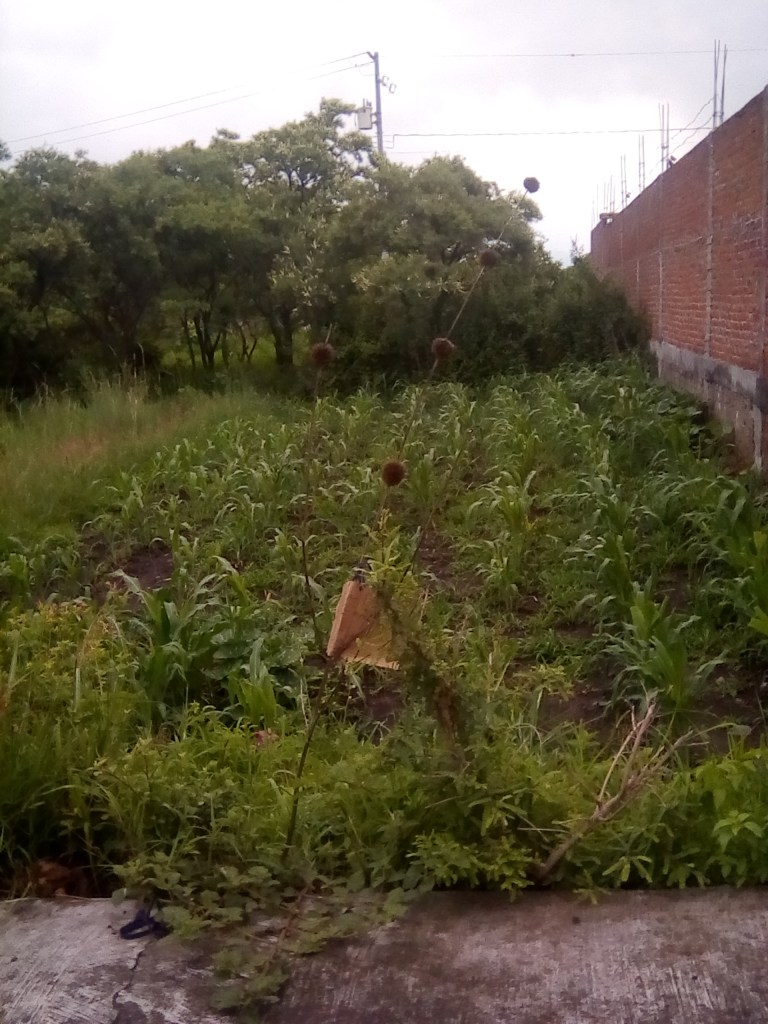
The corn field in question.

Mr. Aggressive went to town for some barbed wire and another beer and went at it. He hammered and drank and drank and hammered for 20 minutes or so. Curious, I decided to mosey on down after he’d left. Sure enough, he put up some sort of wire thing–not exactly a fence. He also nailed up a sign which I couldn’t figure out. Something about putas. If I couldn’t figure out the sign, what makes him think the livestock will stop and read it before helping themselves to young, tender corn shoots?

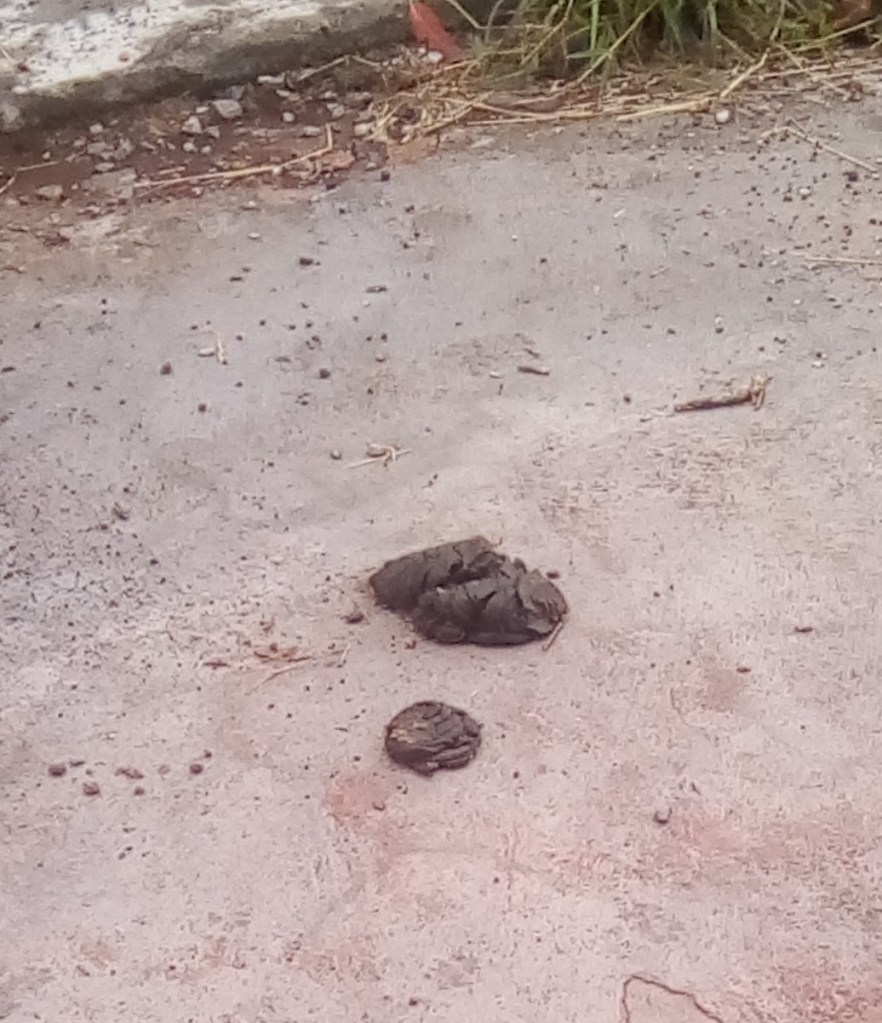
So the next morning, Mr. Aggressive lay in wait for Borrega guy who denied any and all knowledge of any corn eating. Borrega guy also pointed out that the poop right there in front of the lot wasn’t sheep or goat poop, which resemble little rabbit pellets. 

Not sheep, not goat, not even horse.

I’m not sure that the cow patty convinced Mr. Aggressive of anything. Neither the Borrega guy or we have cows. Of course, we could have brought one from another location to divert suspicion I suppose. Last night, the chicken feather guy let his animals out to graze again.

I have to quit rolling my eyes so hard. I’ve nearly given myself eye strain.

eye roll

***

Have you read all of our previous animal adventures?

wwzzcover


Leave a comment

Filed under Animal Husbandry, Cultural Challenges, Homesteading