Category Archives: Cultural Challenges

No spark, All sizzle–cooking without electricity

As the hope in ever getting electricity died a slow, slow death, I began to get rid of my kitchen appliances. (See You can lead a horse to water…electric and sewer but you can’t make it drink) They just collected dust sitting around and took up space. So, it was a reluctant bye-bye to the toaster, refrigerator, crock pot, popcorn maker, beater, bread maker, blender, and microwave oven.

I had mixed feelings about letting some of these things go, but over time, I have come to see that I can still do all the baking and cooking I want despite not having my favorite electrical devices.
cam04290-1.jpg

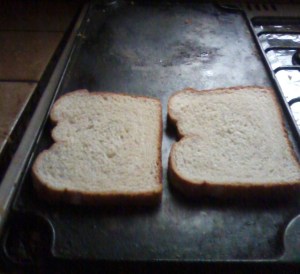
We still have toast every morning, only we toast is on the cast iron Comal. (See COOKING WITH CAST IRON)
cam04332-1.jpg

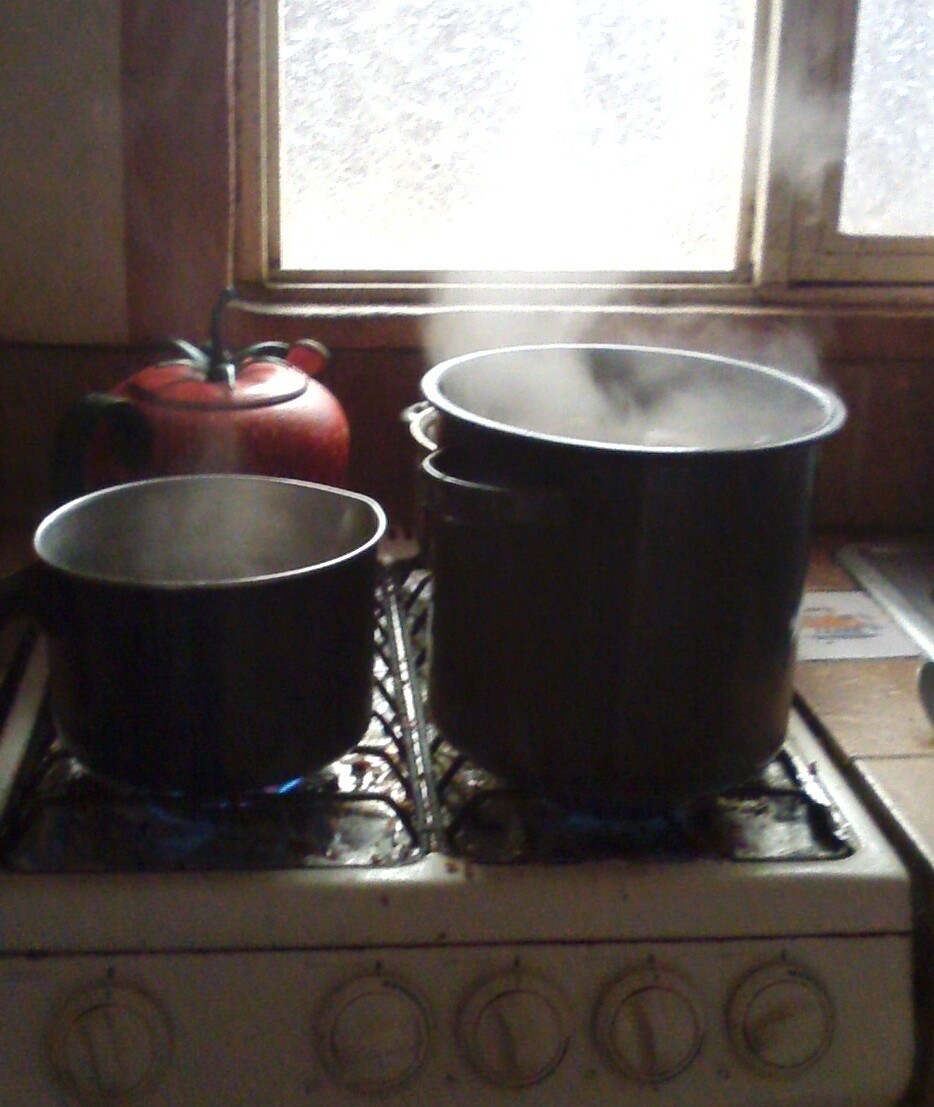
With no crockpot, I still make savory soups and beans, but with my enameled soup pot on the stove or over an open fire. (See What Are the Safest Cookware Options?)  Beans taste mighty good over the open flame!

Without a microwave, food can be reheated on the stove with my enameled and cast iron Cast Iron cookware. My little Strawberry  Teapot also is just the thing for heating water for hot beverages.   We also have a handled Pot with a pour spout for boiling our raw goat’s milk.  (See Let’s Talk About Food in La Yacata)

Microwaves are bad for you anyway.  (See Electromagnetic fields & public health: Microwave ovensMicrowave Oven RadiationMicrowaves Are Bad For You: 5 Reasons Why Microwave Oven Cooking Is Harming Your Health)

I can still make cakes and cookies using a Whisk or Wood Spatula for mixing instead of a beater. It’s good exercise for the upper arms.
cam03040.jpgbaker

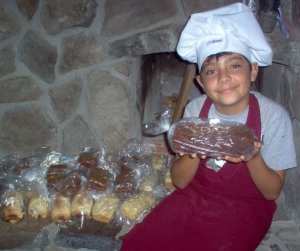
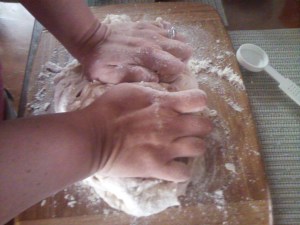
I make fresh bread in the oven with my bread loaf pan set instead of the bread maker, sometimes with my assistant baker. Again, a good upper arm workout!
cam04058-1.jpg

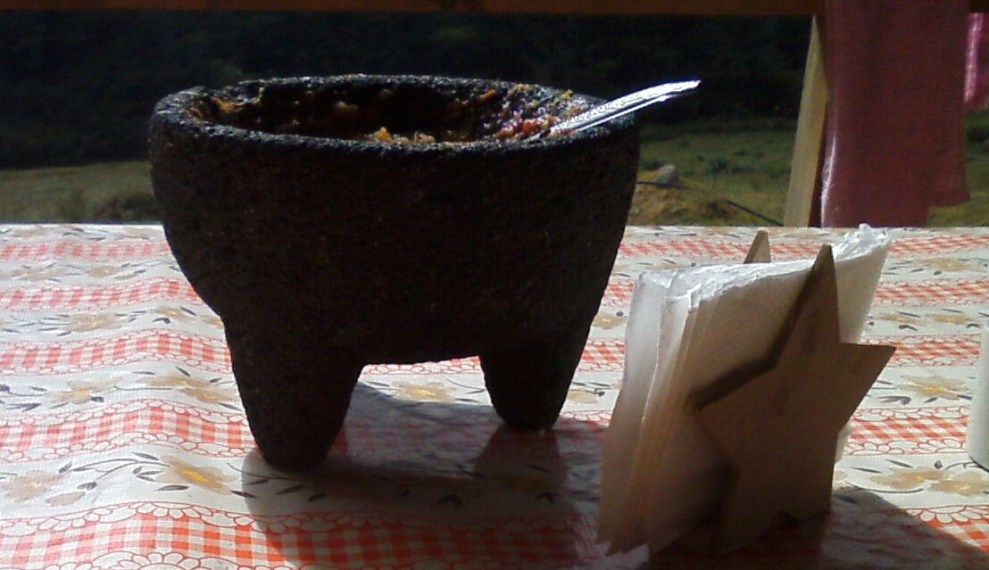
Salsas can be made with the molcajete. More arm exercise! When I need a real puree, I can connect the blender for a minute or so to the truck battery with the ac/dc Power Inverter.

We still have our refrigerator only now it’s a handy, dandy pantry for dry goods. We have fresh goat milk daily as well as freshly laid eggs, so we don’t need refrigeration for those. Our fruit and vegetables we buy weekly and eat fresh. We don’t buy processed food that needs to be in fridge or freezer. Anything that we have left over at the end of the day that won’t keep, we share out among our various animals.
cam04295-2.jpgcam04296.jpg

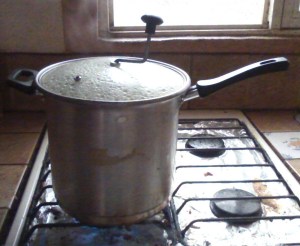
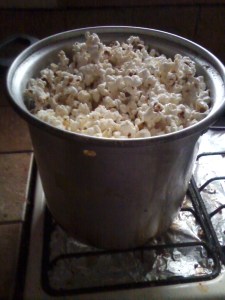
And we can still enjoy popcorn with our Popcorn Spinner Stovetop Popcorn Popper.

We love popcorn. It’s inexpensive, quick and healthy. It helps with the digestion, lowers blood sugar, has been shown to reduce the risk of cancer and a host more good things! (See Popcorn health benefits)

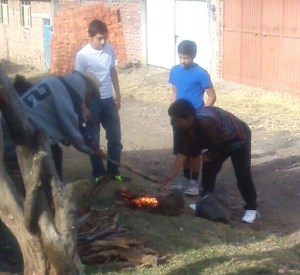
So, all in all, cooking is still possible without electricity.  And, in the worst case scenario, like if zombies invade Mexico and we are unable to procure gas for our stove, well, then we can cook outside with leña (wood) or use our little indoor fireplace. (See Chim, chimney)

Interested in learning more about cast iron cooking?  Check out my ghost blogger post at Backdoor Survival!

********************************


disclosure

14 Comments

Filed under Cultural Challenges, Electricity issues, Homesteading

Growing old


cam04098.jpg

Mama Sofia in front of her home.

Over the holidays, we were able to visit with Mama Sofia, my husband’s grandmother, and her husband, Tio Felipe. Mama Sofia holds a special place in my husband’s heart. When he was homeless at the age of 12, she took him in. The two times he was deported with nowhere else to go, she opened her home to him. How could he not love her? How could we not love her?

We try to get to Cerano every month or so, but sometimes daily life gets in the way and we aren’t able to visit as much as we would like.

cam04088-1.jpg

Mama Sofia with 2 of her 4 children, Pepe and Caro.

We were delighted to see that Mama Sofia’s daughter, Caro, was also visiting from Zamora. She’s quite a lively lady, gets it from her mother I expect. The first time I met Mama Sofia, she was just arriving home with a 10 pound sack of planting soil slung over her shoulder. When my husband tried to take it from her, she got angry.

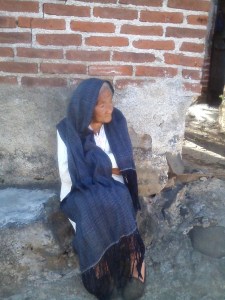
This time, we were sad to see the decline in Mama Sofia as old age takes its due. She is 97 (or 95 or 92 no one is quite sure least of all Mama Sofia herself) or so and life is hard after all.

Mama Sofia is not able to get around to do her shopping, attend mass, or visit with friends, most of who have long since died anyway. Her balance is precarious and she often falls and injures herself in her own home. Her great-grandniece looks in on her daily and brings her the tortillas that Mama Sofia can no longer make. Vendors know to stop by with geletina, gorditas or tacos de canasta. There is a little bitty market right across the street and the owner brings over cooking oil, rice, tuna and pasta. The priest walks over from the church after Sunday mass to give Mama Sofia communion. All these activities keep her mind from stagnating, but there are hours and hours of daylight left to occupy.

Mama Sofia is still able to straighten her rooms, make the beds, sweep the floors and heat some soup.  Her plants are lovely.  The fruit trees provide guayabas, granadas, limones and nisperos.  She doesn’t haul planting dirt anymore, nor does Tio Felipe plant corn.

Both Tio Felipe and Mama Sofia receive a dispensa (government welfare) box every few months for the tercer edad (senior citizen). It has cooking oil, rice, beans, pasta and soap. Picking it up, however, requires a trip to Yuriria, which is nearly too much for Mama Sofia these days. Doctor visits are also pretty much out of the question. The walk to the newly built clinic is long and full of uneven ground. The wait to see a doctor is interminable. When Mama Sofia is ill, the ladies of the family in Cerano take turns caring for her until it passes. Sometimes Caro is able to come and stay awhile. Sometimes she can’t. Life is hard in Zamora too.

cam04095-1.jpg

Toasting peanuts on the comal.

The day of our visit was mild and we sat outside with Mama Sofia on the cemented step. She didn’t say much, just enjoyed the pleasure of having company. Tio Felipe made himself useful and toasted peanuts on the comal. My husband went and bought some chicken and we had a veritable feast.

Too soon, we had to say our goodbyes. The animals need attending to. The roads aren’t safe to drive after dark. There are things that need to be done before we retire for the night. We left, knowing that the days we will be able to visit with Mama Sofia are numbered and promise ourselves that next week, or the week after, we’ll make the time to visit again.

**********************************
disclosure

7 Comments

Filed under Cultural Challenges, Parenting Challenges and Cultural Norms

Las Fiestas en Enero–Jaripeo

feria 2016.jpg

January has come around again, and it’s time for the annual festival in Moroleon. Although the events seldom vary, our own experience with the festival has.

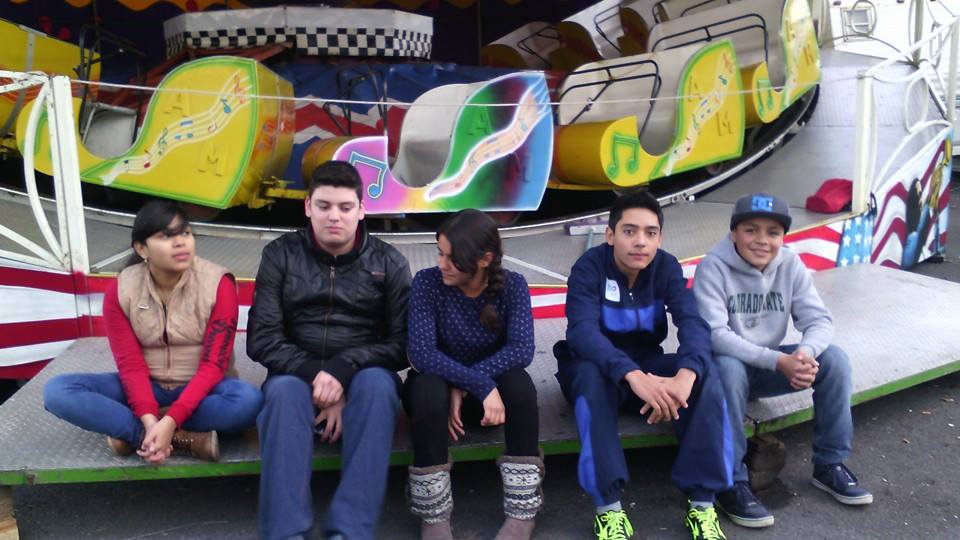
This year, our now 13-year old young man begged and pleaded to go to the fair with his friends rather than with us. Our schedule remains complicated, so he had to wear his school uniform, rather than ‘cool’ clothes, but he said he had fun. The first week was 2 x 1 admission which included unlimited rides and the circus, now with no wild animals performances. They did add the log flume to the ride repertoire, although getting drenched in frigid January temperatures isn’t ideal.

william at the fair

At the fair

I’ve decided that I’m too old for amusement park rides–my equilibrium isn’t what it used to be. My husband has an extremely weak stomach and never was a big fan of rides. So he and I decided we’d enjoy the festivities by going to a jaripeo (rodeo) instead.

When we found out that the jaripeo would be in the Lienzo Charro Nuevo, which was specifically dedicated to el Sr. de Escapulitas, and had free admission–there was nothing more to do but march our little fannies across the road from La Yacata and attend.

Our son decided that he wasn’t interested in attending, so just my husband and I set out.

Even though the rodeo was less than a five-minute walk from our house, my husband insisted we take the truck. Apparently, walking to such events is just not done. Sure enough, we saw several of our neighbors with their trucks there.

My husband clarified that this was not a jaripeo, even though that’s how it was announced, but a charreada–a skills presentation rather than real rodeo, but I didn’t care. The nearest I can figure is a true jaripeo is fairly dangerous to bull, horse, rider, and audience and may result in the death of any of the aforementioned participants. Whereas a charreada seldom results in death, although injuries, sometimes severe, do occur.

The charreada became popular when there were haciendas in Mexico, adapted from traditions brought from Spain in the 16th century. Originally, the charreada was a competition between the families of neighboring haciendas. The charreada is made up of 9 events for men and one event for women, all involving horses and cattle.

I had some mixed feelings watching the charreada. I enjoyed watching the horsemanship and rope tricks. However, I felt sorry for the undernourished yeguas (mares) that were roped and tripped and harassed. Most seemed to be about the same age as our Joey, but so thin and small, with large patches of hair missing from their hindquarters. I asked my husband what happens if one of the horses is injured in the fall. Sadly, they are fed to the lions. Yes, Moroleon has lions at the local zoo. Unmanageable, sick, unwanted, injured horses and donkeys are bought and served up fresh to the small lion pack at Los Areas Verdes.

Partying in honor of Las Fiestas de Enero continued on until the wee hours of the morning on Thursday, Friday, and Saturday nights. We opted to steer clear of that again this year. It’s cold, noisy, smelly and just not a whole lot of fun for us old fogies. The fair is here 2 full weeks and events such as the jaripeos are randomly interspersed in between. The “trastes”(dishes) stand also comes to town but no longer sets up with the circus. It rents an open area near Soriana for their tents now, probably cheaper. Dishes, glasses, pots, pans, cooking utensils, dish towels and the like can be found there. They aren’t less expensive than the regular stores, but there is more of a selection.

I have a special treat for those of you from Moroleon. My friend Claudia and I worked up a little book for children that highlights some of the more interesting historical tidbits about Moroleon.

portada 2The History of Moroleon for Kids (Kindle)

*************************************************

SOTBS Blog Hop Op1Sq

Have a Christmas or New Year in Mexico themed blog post?

Link it up here! An InLinkz Link-up

disclosure

4 Comments

Filed under Carnival posts, Cultural Challenges, Mexican Holidays