Category Archives: Animal Husbandry

Posts related to animal caretaking

Rosie Mula

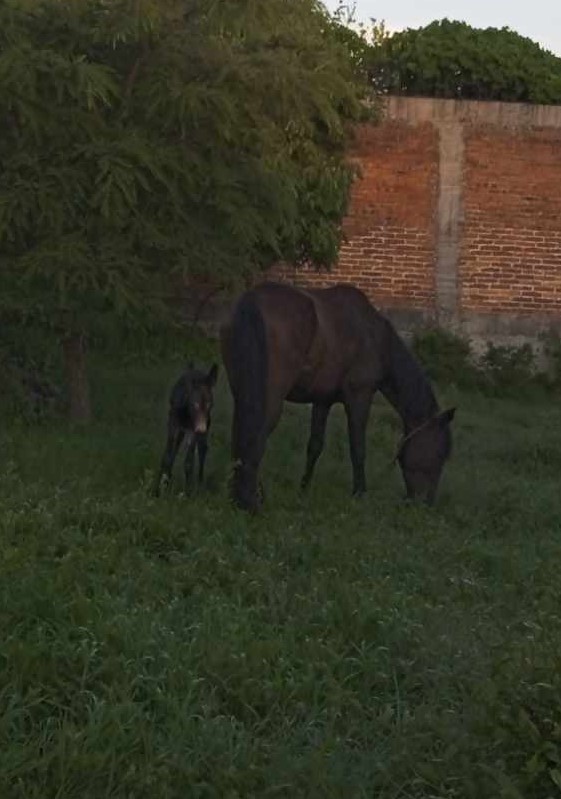
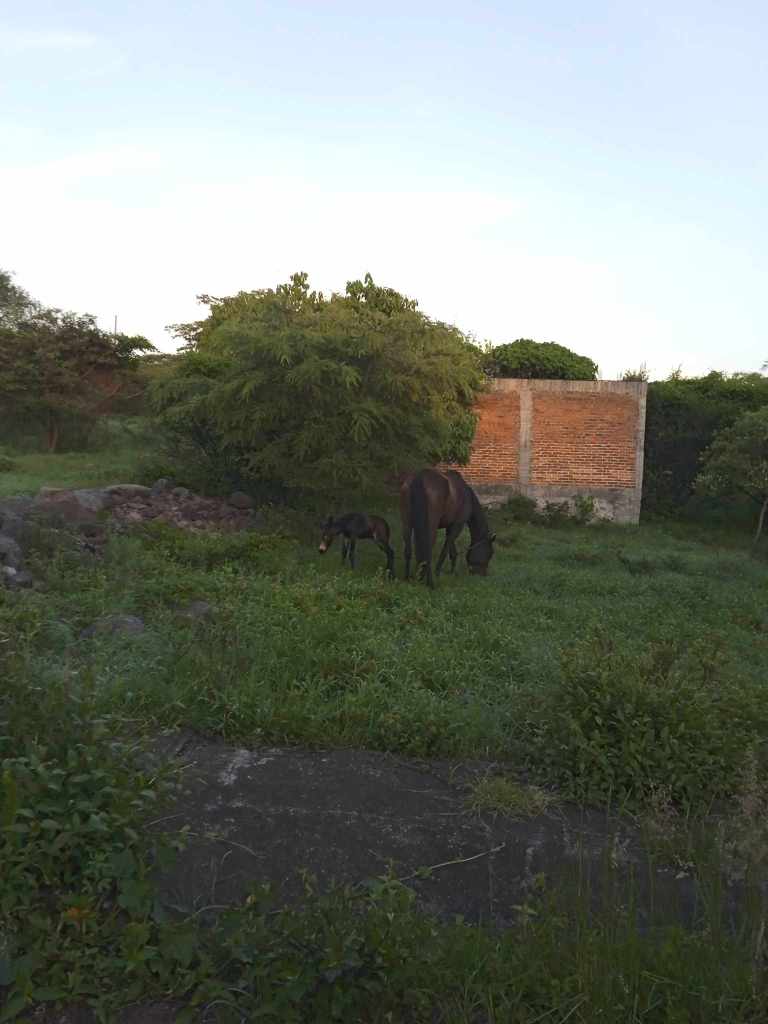
This morning, we were awakened by the sound of a little whinny that did not belong to Lady. It seemed that little Miss Rosie Mula had arrived. 

Obviously, by her surname, you can guess that Rosie is a mule, not a colt. My husband bred Lady to a donkey last year, the date coinciding with one of the annual cabalgatas (community horse rides). He’d been waiting impatiently for three months or more, not completely convinced that Lady was actually pregnant, even though she had the obvious signs of pregnancy, a swollen abdomen and udder. He kept doing the calculations and said that she was way overdue, as horse pregnancies are typically 11 months. Then he did the calculations again and swore that a mare’s first pregnancy always lasts 12 months, just like a woman’s first pregnancy is ten months. I told him he was full of hooey since a human’s pregnancy is always 40 weeks (or ten months), whether it’s the first pregnancy or last. But remember, his mother swore her pregnancies (all 11 of them) only lasted eight months. 

Anyway, I did a little research and discovered that the gestation period for a mare carrying a mule foal is typically around 11 to 12 months, whereas a colt pregnancy is, on average, 340 days. So, Lady’s pregnancy was just as long as it needed to be, which ended up being 12 months and a week if my husband’s calculations were correct, which I’m not entirely convinced they were.

I also learned a little bit more about mules and will share this information with you because I know you’re dying to know. A mule results from breeding a male donkey, known as a jack, to a female mare. Mules typically have the body shape and size of a horse but with long ears, a tufted tail, and sturdy, compact body of the donkey dad. They can vary in size depending on the breeds of the horse and donkey parents but are generally similar in size to horses and come in various colors. 

Female mules, like our Rosie, are called mollies and are generally sterile due to the difference in chromosome numbers between horses (64 chromosomes) and donkeys (62 chromosomes), resulting in mules having 63 chromosomes. This odd number typically prevents the formation of viable eggs or sperm. Although extremely rare, there have been cases of mollies reproducing when bred with a horse or donkey. Hmmm.

Mules are known for their intelligence, patience, endurance, and sure-footedness. They are often considered more cautious and less flighty than horses. They also often have superior strength and stamina than horses of similar size. Lady is an excellent work-horse, plowing the fields until this last week. She’s also incredibly smart. Remember the goat door opening incident? We’ll see how these characteristics develop in Rosie. 

Lady has already proven to have all the hallmarks of an excellent mother. She nickers at Rosie, and Rosie obeys. Over the years, some of our nanny goats have totally failed at motherhood, but not one of our mares. 

It’s always nice to have a baby around, no matter what the breed. 
**********

Want more homestead animal stories? Check out the Animal Antics South of the Border series!
Leave a comment

Filed under Animal Husbandry, Homesteading

Staying Alive Bear-ly

Bear is feeling better!

So wouldn’t you know it, but Bear got sick. Of course, it was the weekend, and by the time Monday rolled around, he wasn’t able to keep any food down. Off to the town vet, we went.

Turns out he was running a fever because he had a parasite, respiratory, and eye infections all at once, poor guy. Although he may have picked up the infections on our walks, after all, coyotes, skunks, foxes, and other stray dogs wander about freely, it’s more likely he had these infections since we got him, and they just got worse because I didn’t know he had them. 

Bear wasn’t feeling well enough to grumble at the moto ride to town, the examination, the shots, or the waiting, although he was alert. The vet had a few signs for pets in adoption hanging up, some kittens, some chihuahuas, and two African albino hedgehogs. 

Every day for a solid week, Bear got a trip to town. During this period, Fuzz stopped eating for whatever reason, so he got a space capsule ride and an anti-parasite pill, just in case. The vet’s daughter made a fuss over him, which he loved, and he took the pill and swallowed it just for her. Whew!

By the following Monday, Bear was feeling better. He fussed a bit at the getting ready to go to town process, and while we waited, a googly-eyed pug stuck out his tongue at Bear, who barked back as if to say, “How rude.”

He got his first set of puppy vaccines and his own record book. The vet estimated he was about 5 months old.

Then George fell out of the second-floor window of my son’s house, and another round pet care began.

***

Enjoy the ongoing animal adventures of one family when they move to central Mexico and try to figure it all out in the Animal Antics South of the Border series!

Leave a comment

Filed under Animal Husbandry

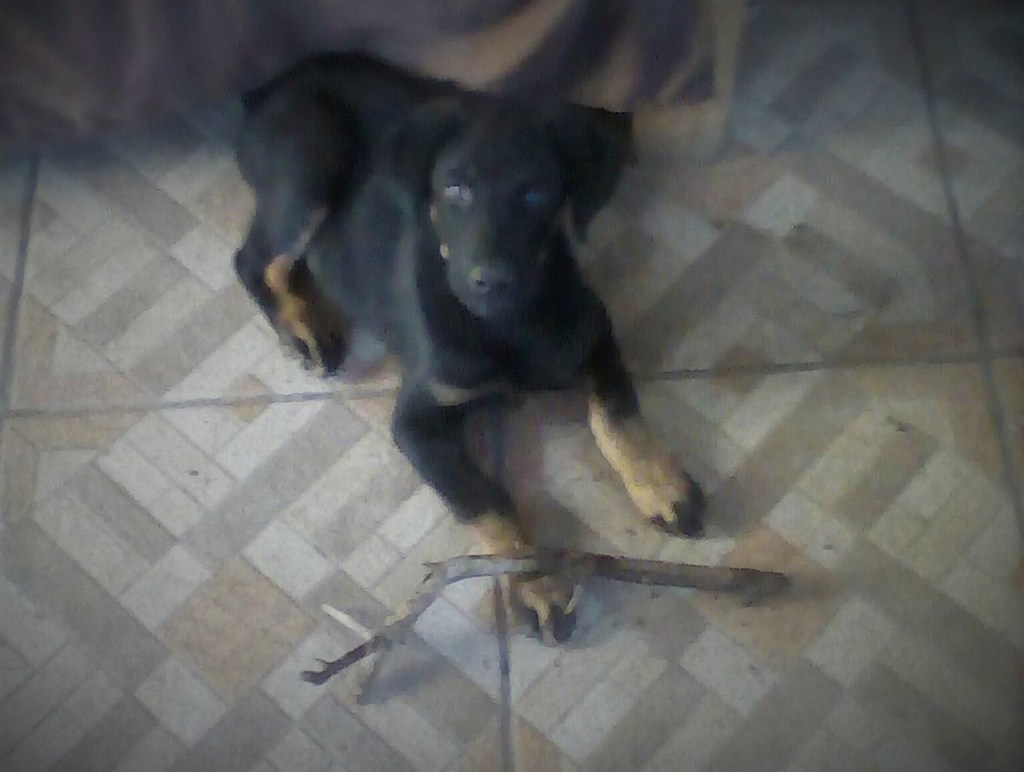
Lil’Bear

Look at the size of those paws!

So a few weeks ago, my husband came home with another puppy. I was not amused. We tried to find a good home for him the first few days, but as soon as he had a name, well, that was it. Canine #5 joined our family. 

He came from Azul, the vet’s compound. His father is Blackie, who is huge and hairy but well-behaved. From what I can tell, he’s also Cocoa and Puppy’s brother from the same mother. Bear (his name because of his HUGE paws) has Puppy’s eyebrows and coloring that Fred has. Fred and George are most likely Puppy’s offspring. So we’re one big happy family. 

Lil’ Bear (or Osito) is still learning his name and where it’s ok to pee and poop and where it’s not. Lots of “clean up on aisle 5” going on. 

He’s also not convinced that taking a walk is something he really needs to do, unlike Cocoa, who could happily take 8-10 short walks a day in any weather.

Lil’Bear wants to go outside and will let me put the harness on (one that Bruce outgrew before it even arrived) but then finds a breezy, shady spot and lays down. The more I tug, the more he turns to dead weight. So I’ve had to modify our walk schedule. Cocoa still gets the majority of the walks. He’s good about keeping me from working too long without a break. Then at least twice a day, Lil’Bear goes with us. He’s our Zen reminder to stop and enjoy nature rather than the brisk and serious patrol duty that is Cocoa’s job. 

As my son is already walking Cerebus, Fred, George, and Bruce (who is technically still a puppy but has outgrown both of the older Puppers). So that means Cocoa and Lil’Bear are my responsibility. 

Lil’Bear is also very fussy when he’s tired. He moans and whines and flips and flops until he settles down for his nap. I had ordered a “cat” bed during the Black Friday sales last year that neither cat felt suitable, and Bear has claimed it as his own. 

He’s not fond of the cats. He has a high-pitched bark that seems to be his “I’m telling on you” bark when they are up on something, and he thinks they shouldn’t be. Fuzz typically ignores him, but Manchas hisses and growls, which just further intensifies Bear’s tattling.

Although Cocoa won’t admit it, he loves having Lil’Bear around. The sacred guarding of the house is no longer Cocoa’s sole responsibility, although Bear is still a rookie. Most mornings, during my exercise routine, the boys are upstairs with me, wrestling like those televised professionals on WWF. It often turns into a session of the zoomies with Cocoa launching himself from my bed over Bear’s head and then racing back. Lil’Bear isn’t quite big enough to jump on the furniture, but I’m sure that’s only a week or two away at most. 

Despite being not quite big enough for the beds, he has discovered that if he pulls the tablecloth, blanket, or mat down, he’ll be rewarded with some sort of prize (the cat’s still full food dish, the cozy comforter that’s way better than his own, or some leftover bits of people food.)

Lil’Bear has also found Cocoa’s discarded (or limbless) toy basket. He loves spreading them about and making those detached monkey arms squeak. Cocoa seems ok with that. He’s too old to play with toys, after all.

So here we are, nearly classifying as animal hoarders in our little ranchito. I hope this is the last puppy for quite some time.

Ma, how could you?

***

From the hilarious antics of their pet rabbits to the unexpected challenges of raising a donkey, Animal Antics South of the Border Series is a true celebration of the joys and struggles of rural life.

2 Comments

Filed under Animal Husbandry