Natural Healing — Zarzaparrilla

Photo credit: makamuki0

Color me surprised when I discovered the Maya her Koh-key (also spelled koke’) was good old fashioned sarsaparilla and a Mexican native plant to boot. Zarzaparrilla is the Spanish term for the Nahuatl herb, Mecapàtli, heralded by Nicolás Monardes in his book Joyfull Newes Out of the Newfound World (1574) in two entire chapters. He recorded information about a tonic from zarzaparrilla root drunk three times daily for two weeks to sweat out illness. Unsurprisingly, both the “sweat it out” cure and zarzaparrilla root juice is found in traditional Mexican remedies today.

Other names include kgentsililh in Totonac, t’ocnal ts’aah in Huastec, bejuco de canasta (also Philodendron longirrhizum), olcacatzin, zarza parra, cabrestillo, alambrillo, diente de perro, uarhocutaracu sapichu in Purepecha, and cocolmeca, although this term is more often employed to refer to Dioscorea mexicana.

Although there may be as many as 350 worldwide species of this plant, the word zarzaparrilla generally indicates one of five varieties of Smilax used medicinally in Mexico; Smilax spinosa, Smilax domingensis, Smilax ornata, Smilax aristolochiifolia, Smilax moranensis. The rhizome from these plants is used interchangeably in remedies for stomach problems, menstrual disorders, adult-onset diabetes, syphilis, rheumatism, blood disorders, skin inflammations, and diarrhea. 

During childbirth, a decoction made with three fingers of zarzaparilla root and nine thorns from the plant, epazote, sweetened with melipona honey is given to the laboring mother. Although I haven’t seen any studies suggesting zarzaparilla causes uterine contractions, it does have analgesic properties.  

As a blood fortifying tonic, an infusion is made with 80 grams of the zarzaparrilla rhizome for each half liter of water. The root should be soaked for at least 12 hours and then boiled in the same water. Drink three cups daily. Smilax aristolochiaefolia has been shown to aid in the formation of blood cellular components in cases of aplastic anemia, while other varieties of Smilax have demonstrated high anti-hemolytic activity, supporting the traditional use as a blood-fortifier.

For rheumatism, two spoonfuls of chopped zarzaparrilla root (Smilax ornata) and three spoonfuls of chopped cola de caballo (Equisetum hyemale) are boiled in one liter of water for ten minutes. The infusion is covered. Strain and drink every two hours. Studies have shown that Smilax ornata contains significant analgesic and anti-inflammatory properties.

Smilax spinosa is an effective treatment for male impotency because of the estrogenic properties it contains. An infusion for male impotency is made from 1 tablespoon of ground zarzaparrilla root in one liter of boiling water. Allow it to cool, strain, and drink three times a day about 30 minutes before meals. 

For menopausal symptoms, try traditional cerveza de raíz (root beer). Add 7 grams of zarzaparrilla root (Smilax ornata), 1 finger-sized piece of jengibre (Zingiber officinale) cut into pieces but not peeled, 1 vainilla (vanilla planifolia) beanpod (already opened) or two teaspoons of vanilla extract, and two star anise (Illicium verum) pods to four liters of water and bring it to a boil. Turn down the heat and add seven cups of honey. Stir until it dissolves. Strain and allow it to cool. To serve, add two or three tablespoons to a glass of mineral water. Stir and enjoy.

Smilax domingensis is an estrogen agonists, found to be useful in osteoporosis and breast cancer prevention. Smilax spinosa root demonstrates anti-neoplastic effects against breast cancer cells.

Smilax ornata is used to treat ringworm infections in some areas of Guatemala and Mexico. Studies have shown that it has fungicidal and fungistatic activities supporting this traditional use. Smilax ornata root also exhibits antifungal activity and has been shown to be useful in the treatment of yeast infections. 

One syphilis treatment calls for zarzaparrilla root (Smilax aristolochiifolia /Smilax morenensis) and the bark of guayacán de América (Guaiacum sanctum). The two are boiled for two minutes and steeped for 10 minutes before straining. It should be drunk in small doses throughout the day. Smilax spinosa has antioxidative, antibacterial, antiprotozoal, and anti-microbial activities. 

As syphilis is a bacterial infection, zarzaparilla’s antibacterial and anti-inflammatory properties are beneficial in treating this and other genital infections. 

A daily tonic infusion for adult-onset diabetes is made with 1 liter of water and 2 grams of zarzaparrilla root boiled for 15 minutes. Strain and drink hot or cold. Smilax moranensis is a α-glucosidase inhibitor, Smilax aristolochiifolia has a proven hypoglycemic effect, and Smilax moranensis inhibits hepatic glucose production, supporting the traditional use for the treatment of diabetes type-2.  

Smilax aristolochiifolia root has been shown to counteract some symptoms of metabolic syndrome, a cluster of conditions that increase the risk of heart disease, stroke, and diabetes, including high blood pressure, high blood sugar, excess body fat around the waist and abnormal cholesterol levels. Studies have shown that the Smilax species are excellent sources of anti-tumor compounds as well. 

El popo is a traditional celebratory beverage that contains zarzaparilla stems found in Veracruz and Oaxaca. It also has pulverized cacao (Theobroma cacao), piloncillo (coned brown sugar), canela (Cinnamomum zeylanicum), anís (Pimpinella anisum), and whole rice. 

***

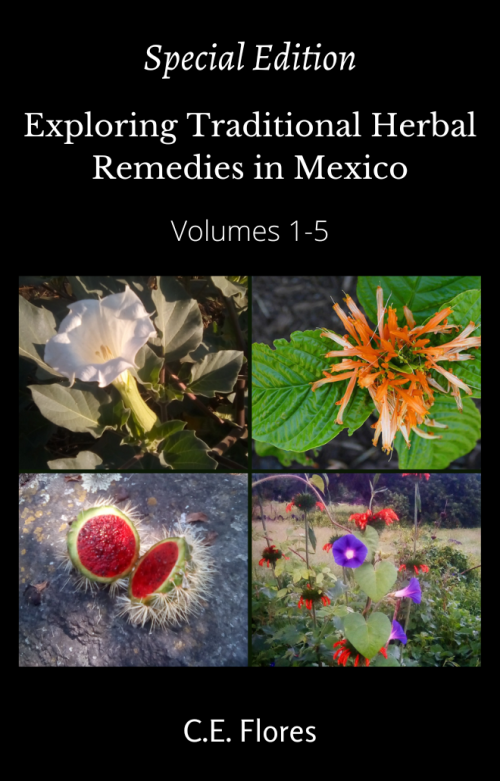
Interested in natural remedies? Uncover herbal remedies from traditional Mexican sources for healing and wellness in the Exploring Traditional Herbal Remedies in Mexico series.

Leave a comment

Filed under Mexican Food and Drink, Native fauna and flora, Natural Healing

Natural Healing — Jalapa

Morning glories (Ipomoea) are native to Mexico and, in many herbal sources, lumped together. However, it’s worth the time and effort to unravel the specific uses. Today’s post focuses on jalapas. 

Ipomoea purga

Ipomoea purga, as the name implies, has been used as a purgative since before the conquest. In Náhuatl, this plant is known as tolómpatl or tlanoquiloni.  In Totonaco, it is called Suyu’. The Spanish gave this plant the names mechoacán, from the state Michoacan, and jalapa (xalapa) after the city in Veracruz where these plants grow in abundance. 

The root, raíz de jalapa, can be either laxative or purgative, depending on the dosage. High dosages of the root can be toxic. To treat diarrhea with stomach cramps, a spoonful of the chopped root is simmered in a cupful of water. As a purgative for intestinal parasites, a teaspoon of fresh or dried powdered roots is added to a cup of water and drunk on an empty stomach. 

Constipation is treated with a cup of water and five grams of powdered root every morning until the person has regular bowel movements. As an appetite suppressant, three grams of the powdered root is ingested in a cup of water one hour before each meal. 

In addition to being a powerful purgative, studies have shown that Ipomoea purga demonstrates cytotoxic and antiproliferative activity, making it a potential compound in the treatment of cancer.

***

Interested in natural remedies? Uncover herbal remedies from traditional Mexican sources for healing and wellness in the Exploring Traditional Herbal Remedies in Mexico series.

Leave a comment

Filed under Health, Native fauna and flora, Natural Healing

The Great Sewer Standoff

This month, our community drama had to do with the sewer line. The issue was urgent and completely solvable, but it became a huge bone of contention among the colonos. Here’s how it evolved. 

The clogged corner

The sewer lines were installed some 30 years ago. While they met the standards at the time, they do not meet current requirements and will need to be replaced. As we have several other projects going on, the sewer line has taken a back seat–that is, until it started causing a stink–literally.

Heavy rains this year, and an accumulation of pig poop, dirt, and even trash caused the drain at the corner of the road behind me to begin overflowing into the street. Disgusting! The person who lived on the corner was understandably distressed. The topic was brought up at the last community meeting, and the issue was assigned to the newly minted Consejo de Honor y Justicia.

The Consejo de Honor y Justicia’s role is to provide mediation between colonos, taking some of the workload from the mesa directiva. Therefore, the job was to assess the severity of the sewer issue, talk to those affected, and endeavor to come up with a satisfactory solution. The mesa directiva could then take the plan and implement it.

Well, they didn’t do that. In fact, the members of the Consejo insisted that resolving said issue was outside of their purview. And thus, the sewer situation became a stand-off. 

Commentary about the sewer was polarized. Some said that it was the responsibility of the person who was putting the pig poop in the drain to pay for it to be fixed. Others asserted that each property owner could do exactly as they pleased and no one could hold them accountable.

There were only two possible culprits when it came to pig poop. One emphatically denied using the sewer to discard their animals’ excrement. The other said that the person who lived on the corner was being “delicate” which makes me suspect that the insulter might know a bit more than she was admitting about the situation. 

Then the comments became more intense, with blame being directed at the Mesa Directiva and specifically Super Prez for the poor state of affairs found in La Yacata. At that point, I decided to step in and clarify some of the information being bandied about. I wrote a historical account of sorts, going back 30 years, about the different issues with the utilities in La Yacata, and posted it to the community WhatsApp group. 

The discharge point was nearly completely blocked.

Without blaming anyone specifically, I reminded everyone that as a community, each colono’s actions affected their neighbors, and situations such as the sewer line should be resolved without name-calling. I also reminded everyone that it is NOT acceptable to dispose of animal feces in the sewer. The sewer is basic and old, and pig poop will stop it up. Things settled down a bit, and the suspected pig shoveling culprit even apologized for her statements. 

Finally, Super Prez stepped in, as the situation could not wait until the next community meeting, and had his workers make a start at unclogging the drain. 

Working on the problem

The sewer will need to be replaced, and it’s on our long list of things to be addressed, although we hope that clearing it out a bit will extend its life just a little longer while we get the current projects sorted out. I’m sure this Sunday’s community meeting will be full of drama as always, but at least the smell has dissipated a bit. 

****

Interested in that historical I provided to the colonos? Check out La Yacata Revolution: How NOT to Buy a Piece of Heaven in Mexico. Available on Amazon!

2 Comments

Filed under La Yacata Revolution