Mexican Independence Day

September is a particularly patriotic month for México.
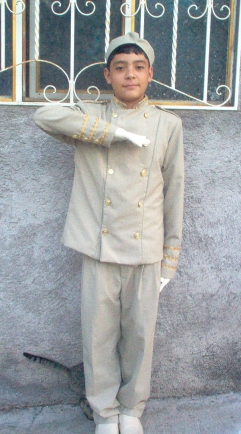
salute
It begins with the commemoration of the Niños Heroes (Boy Heroes) on September 13th. Our little school had “la mañanita Mexicana” on  the 13th (which is also the anniversary of the Congress of Chilpancingo or Anahuac when México declared itself independent from Spain in 1813) and in addition to the typical traditions, honored those cadets that died defending the flag at Mexico City’s Chapultepec Castle from invading U.S. forces in during the Mexican–American War in 1847.

In the call and response manner commonly found in the Catholic Church, each teenager’s name was read, and the attendees responded with “Murió por la patria.” (He died for our country.)
The Niños Héroes were:
Juan de la Barrera (age 19)
Juan Escutia (age 15–19)
Francisco Márquez (age 13)
Agustín Melgar (age 15–19)
Fernando Montes de Oca (age 15–19)
Vicente Suárez (age 14)
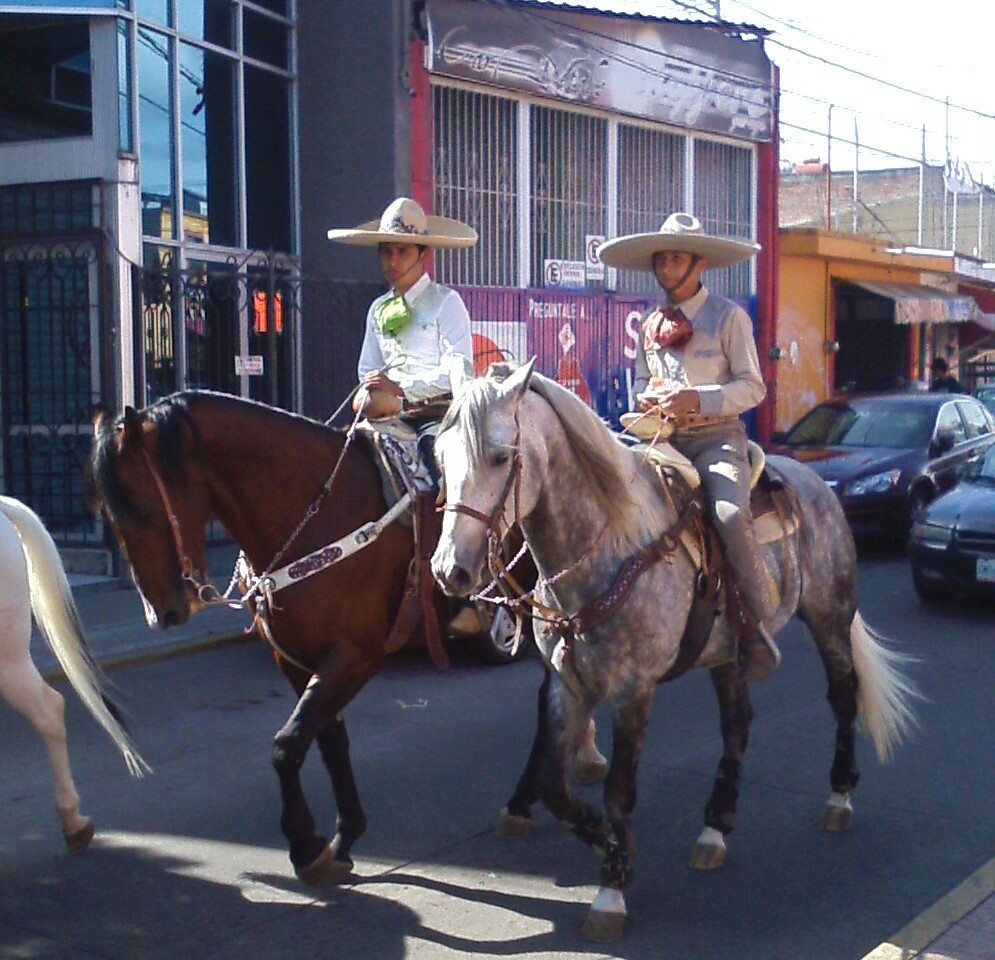
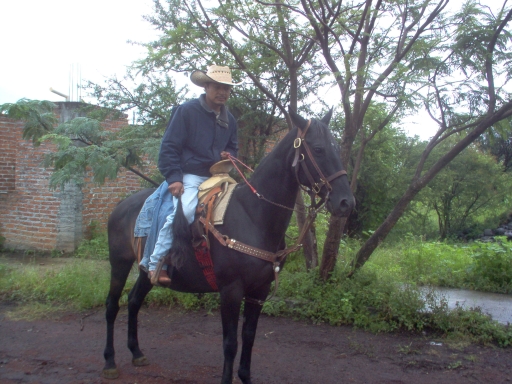
Each town does things a little differently. In Moroleón, in the afternoon on September 14, there is a caminata (mini-parade) of local horsemen from Moroleón to El Ojo del Agua Enmedio (where we go to get our water supply). This year, my husband participated with Beauty.
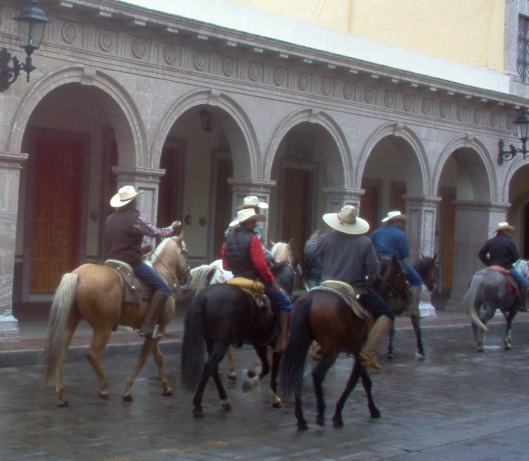
tail end of the caminata

caminata

My husband all ready for the caminata.

El Grito de Dolores (The Shout from Dolores–a small pueblito (town) where Hidalgo made his call to arms speech) on September 15th, marks the official beginning of the Independence day celebration at around 11 p.m. The church bells are rung and the presidente (mayor) of Moroleón recites El Grito (the shout) with attendees responding with “Viva” to indicate their support. independance day
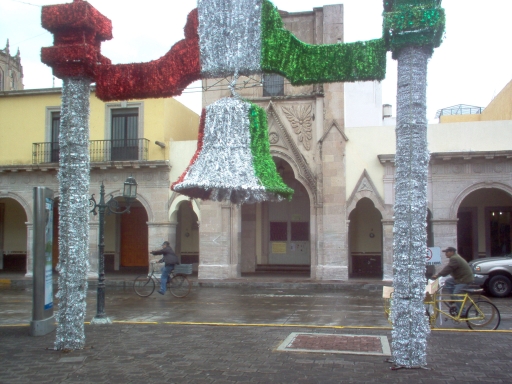
¡Mexicanos! (Mexicans)
¡Vivan los héroes que nos dieron la patria y libertad!
(Long live the heroes that gave us our liberty)
¡Viva Hidalgo!
(Long live Hidalgo)
¡Viva Morelos!
(Long live Morelos)
¡Viva Josefa Ortíz de Dominguez!
(Long live Josefa)
¡Viva Allende!
(Long live Allende)
¡Viva Galena y los Bravos!
(Long live Galena and the Braves)
¡Viva Aldama y Matamoros!
(Long live Aldama and Matamoros)
¡Viva la Independencia Nacional!
(Long live national independence)
¡Viva México! ¡Viva México! ¡Viva México!
(Long live Mexico)

The church bells are rung again and the pyrotechnic show begins.
parade

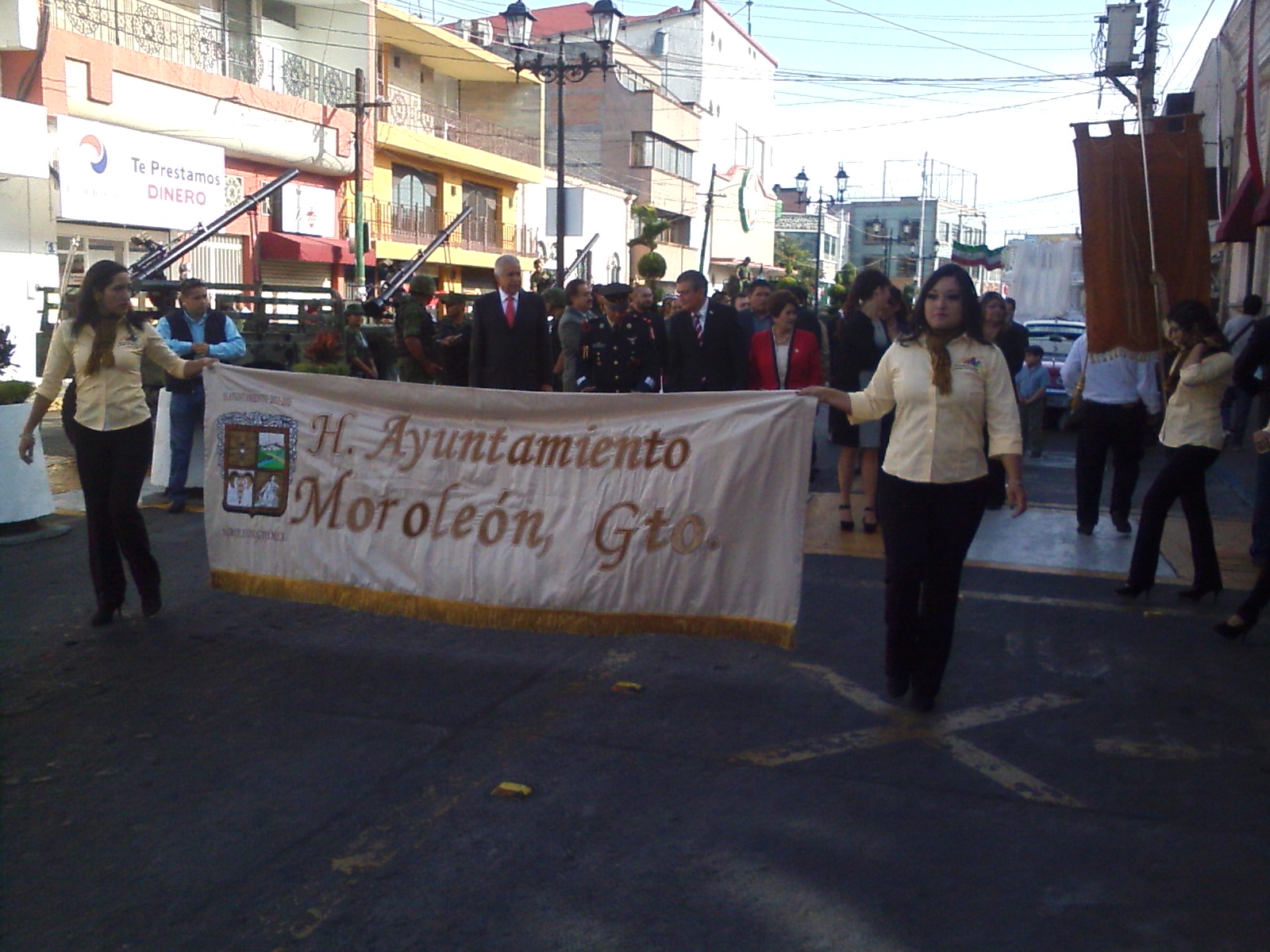
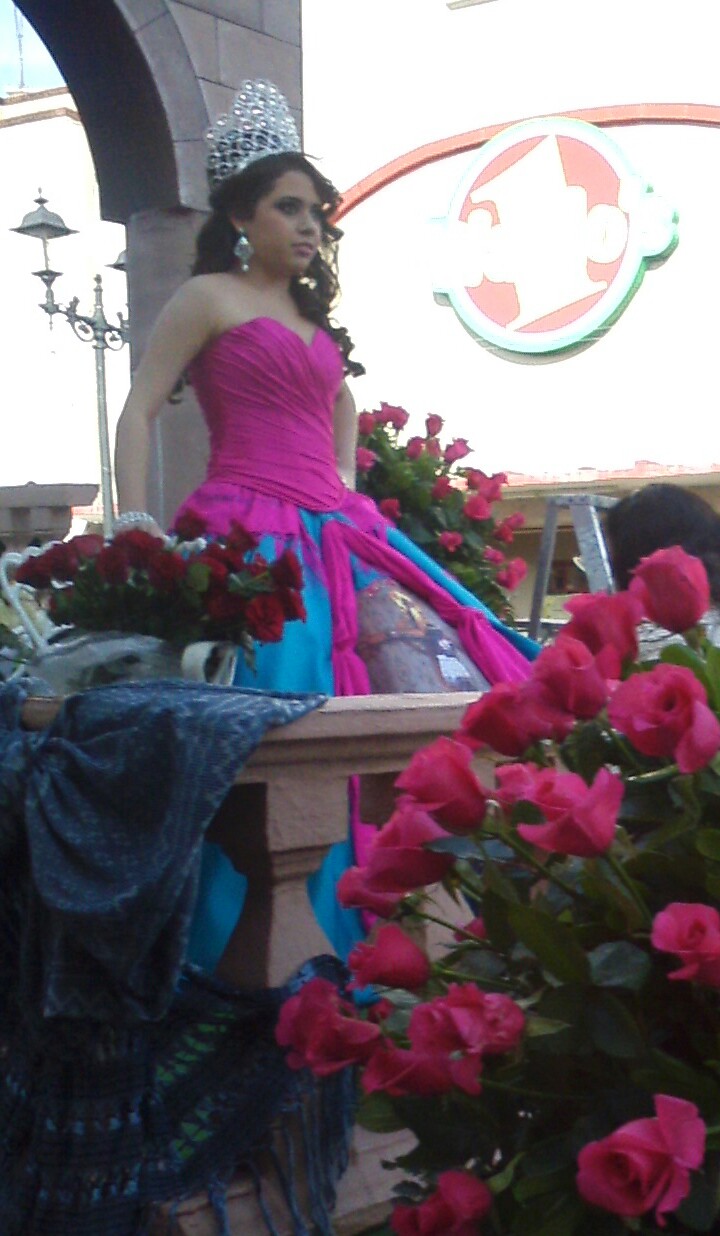
In Moroleón, there is a civic parade in the morning on September 16. The members of the presidencia (City Hall) lead the march with la reina de Moroleón (sort of like the homecoming queen) and her escort of charros (horsemen) finishing it off.
wpid-cam02092-1.jpgwpid-cam02163-1.jpg

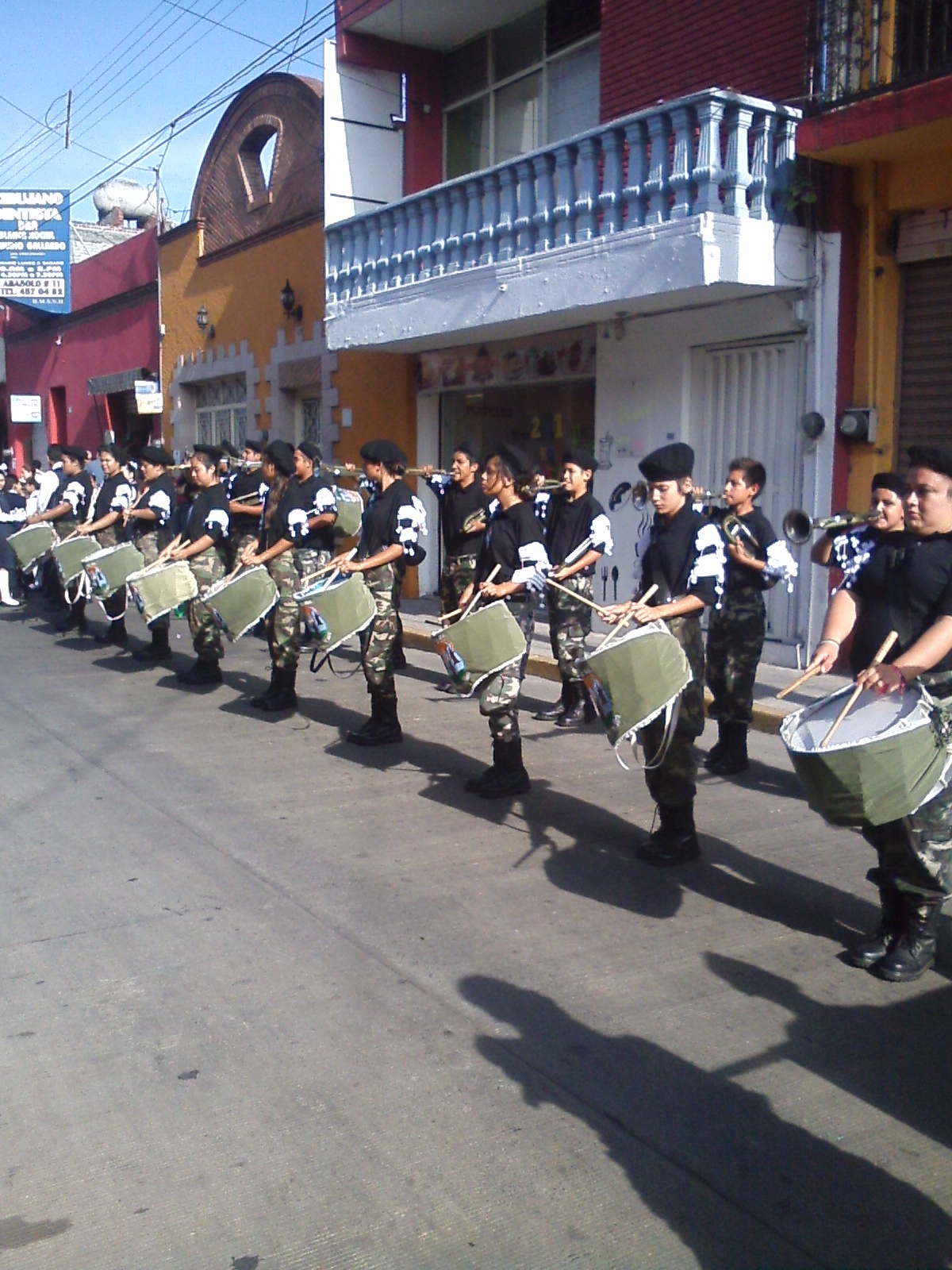
The horses, in my opinion, the best part, are at the very end so that marchers don’t have to swerve around poop piles. Most of the civil organizations of the town are represented, from the Down Syndrome club to those of the tercer edad (elderly). Students from the secondarias (high school) and tele-universities and their drum and bugle members also march. It makes for a long and tedious procession.
wpid-cam02098.jpg

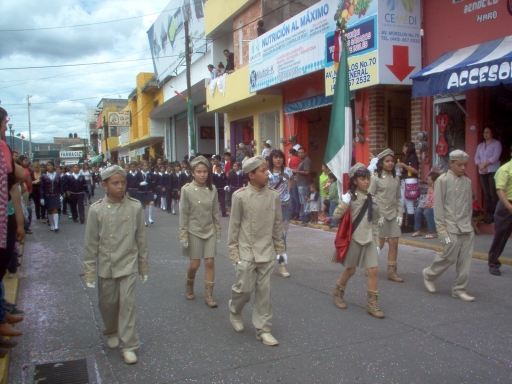
There is a second parade on either the 27th or 28th of the month to mark the day of the Declaration of Independence of the Mexican Empire which happened September 28, 1821, 10 years after the historic “grito.” I’ve mentioned before, things here in México take much longer than anticipated, including the fight for independence. This parade is open to the primaria (elementary) schools in addition to those that participated in the first parade, therefore, an even longer and more tedious procession. Last year my son was chosen to be part of the escolta (honor guard) for his school. As Los Niños Heroes (see above) died defending the flag, in their honor the members of each school’s escolta (honor guard) are the best and brightest with the highest promedio (grade average). Needless to say, I was one proud mama cheering him on!
esculta

Each school has an escolta (honor guard) in the parade.

The kinders (kindergartens) also have a parade, but it is much shorter. It involves no more than 3 times around the plaza but even that is tiring for little legs.
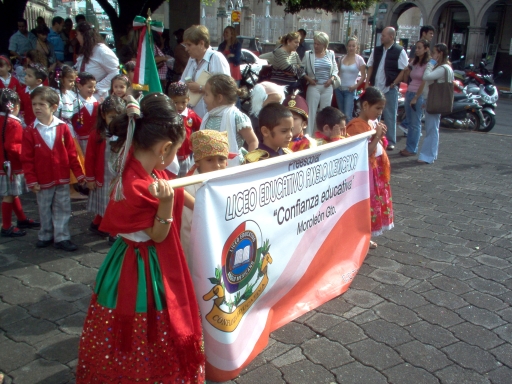
kinder parade
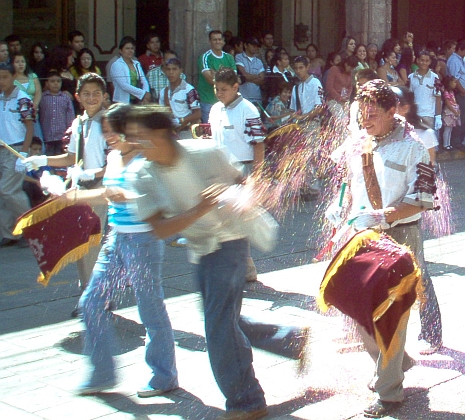
The best part of the parades is the dousing with confetti. Parade marchers that are not honored with the confetti hasta los chonies (all the way to the underwear) experience are those without attentive family or friends in attendance. Bags can be bought for the low, low price of 5 pesos for 2 little bags. I imagine clean up is a drag for the street sweepers though. confetti
If you missed the patriotic events this month, don’t fret. You’ll get another chance in November with the commemoration of the Mexican Revolution!

morelos

If you are interested in learning more about the complicated events surrounding the Mexican fight for independence, you can start by watching Hidalgo La Historia Jamas Contada.

hidalgo

************************

Do you want to learn more about Mexican history?cover holidays
1 Comment

Filed under Mexican Cultural Stories, Mexican Holidays

Building a dream–constructing a life


Welcome to the September 2014 Carnival of Natural Parenting: Home Tour

This post was written for inclusion in the monthly Carnival of Natural Parenting hosted by Hobo Mama and Code Name: Mama. This month our participants have opened up their doors and given us a photo-rich glimpse into how they arrange their living spaces.

***


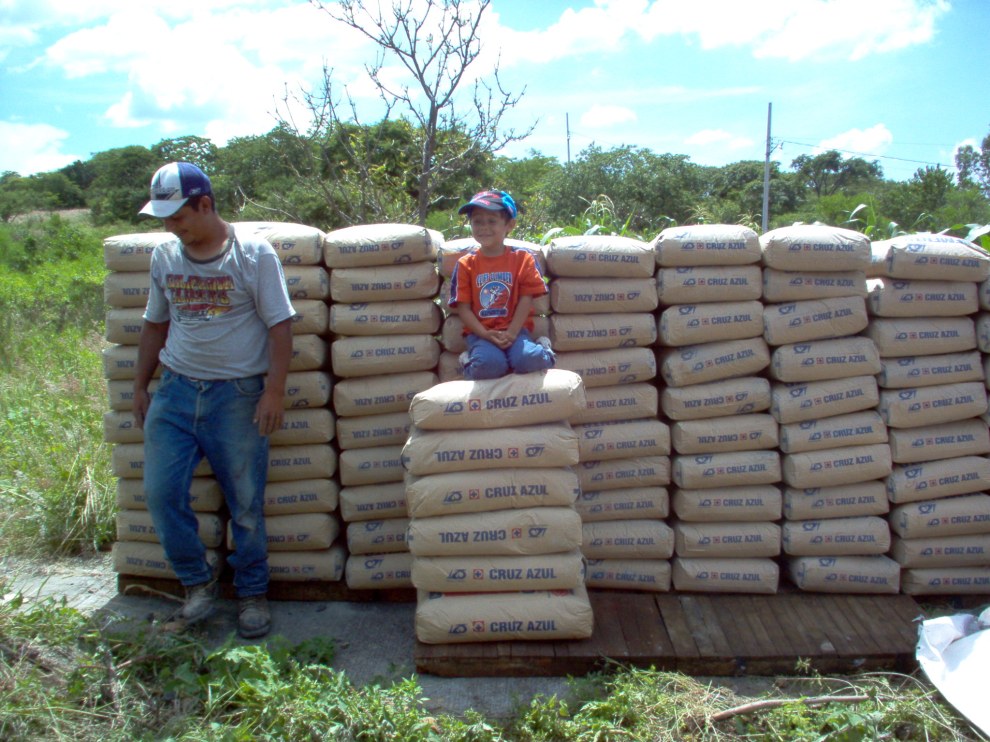
cement

The first of the home building supplies arrive!

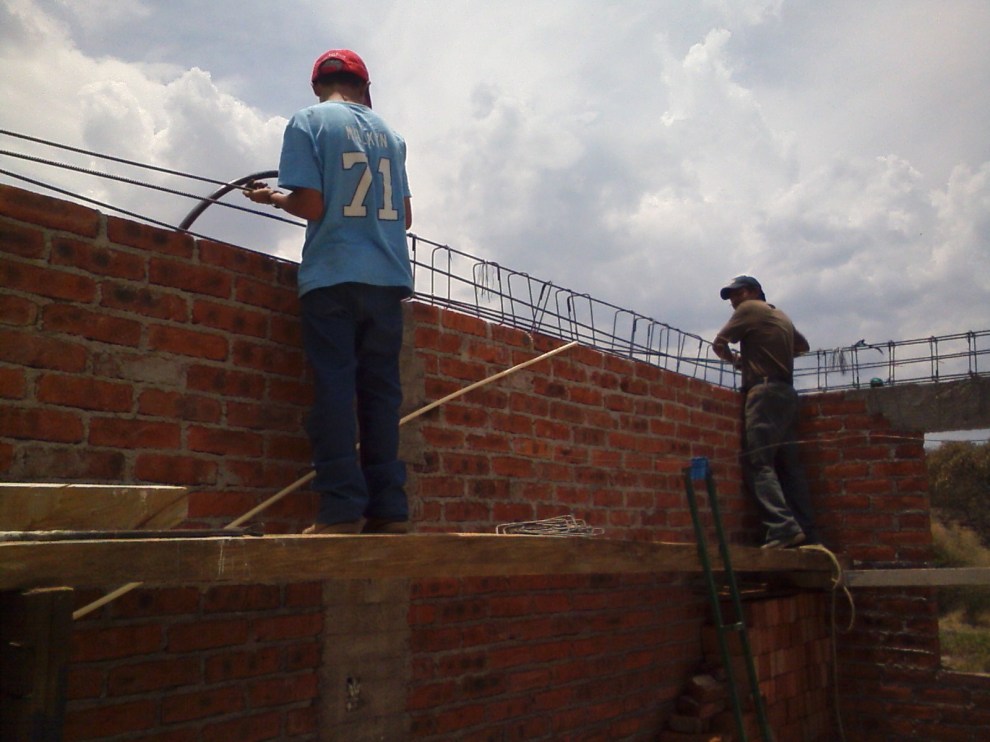
Once we established ownership of our two little lots in La Yacata (See Buying a Piece of Heaven –part 1) we decided to start building our castle in the desert.

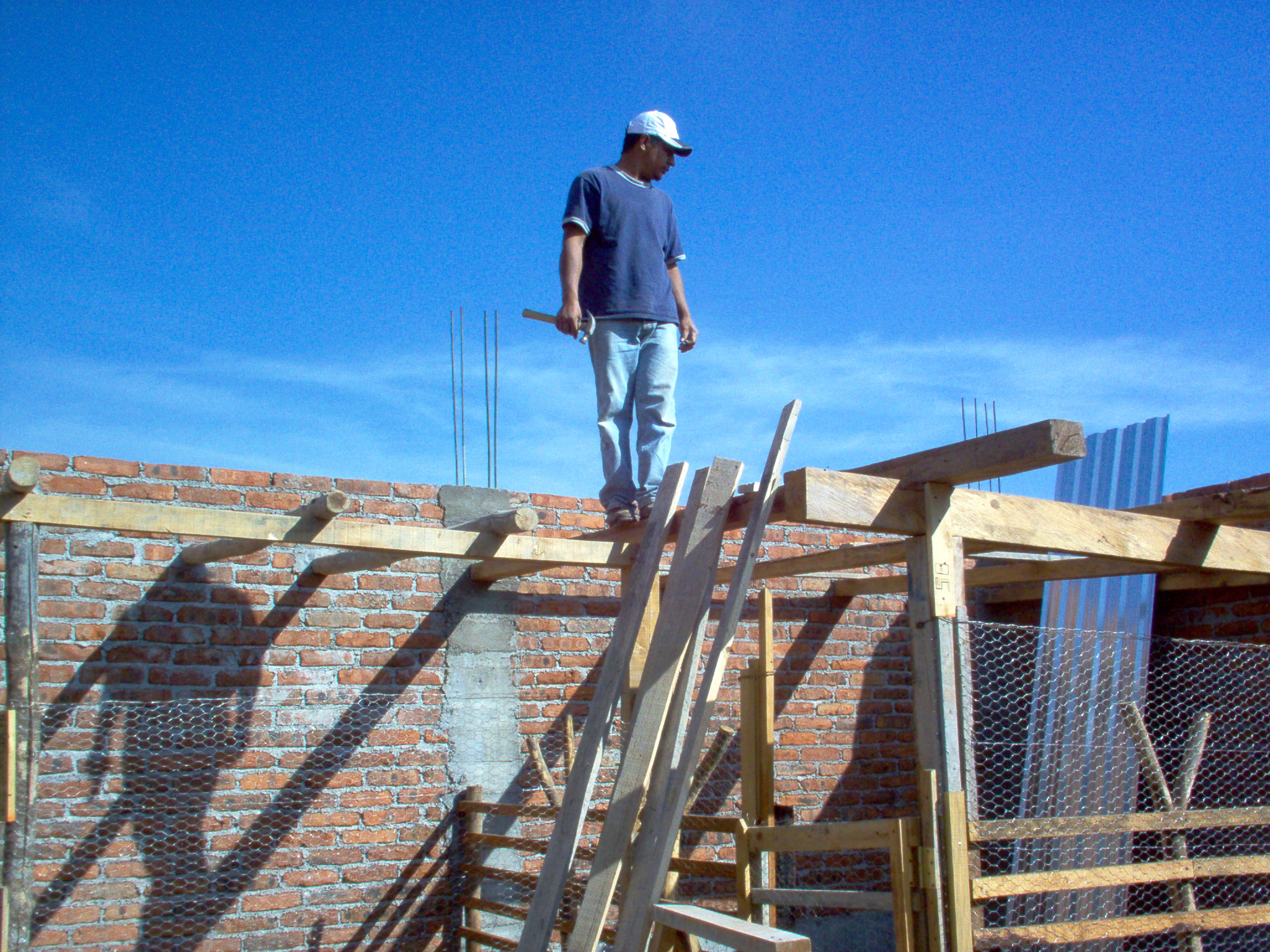
My husband is a builder by trade, but not an architect, so our house and adjacent animal area have undergone several remodels in the 8 years we have lived here. Our home isn’t finished, not by a long shot. However, we determined that we wouldn’t get into debt during construction, so only do what we can afford when we can afford it.

little helper

Our home has been built with love rather than skill!

We began with a kitchen, bathroom, 2 bedrooms, garage and back porch. We enclosed the back porch about a year later and added the laundry room upstairs. We are currently in the process of adding a bathroom and studio apartment, complete with fireplace, on the second floor. The idea is for our home to function as a multi-generational home when the grandkids arrive. As our son is 12, we think we’ll have time to finish it before then.

kitchen

Our finished kitchen

door

Our bathroom door!

floor

Our partially tiled floor

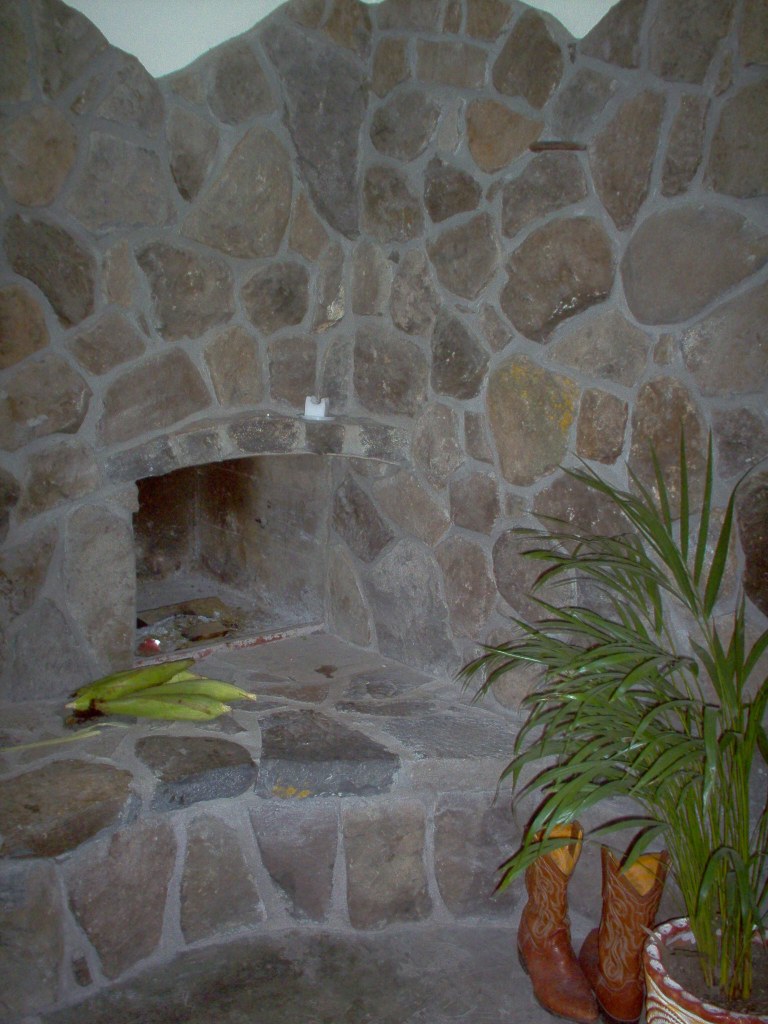
fireplace

Our toasty fireplace

ajibe

The aljibe

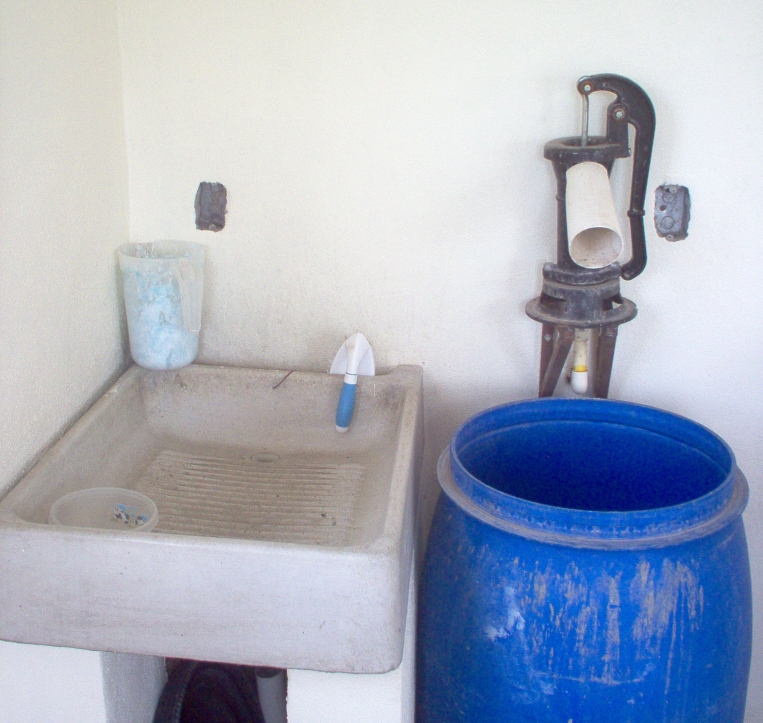
laundry area

Our second-floor laundry area, complete with hand pump connected to the ajibe (dry well).

We had to make allowances for the fact that we have no running water, electricity or sewer system in our neck of the desert and no idea when those things might be installed. (See The beginning of the revolution). Therefore, we designed our home with plenty of natural light, a centrally located fireplace, the aljibe (water storage area) and means to recycle our gray water.

builders

Working on the second floor!

We used brick made in a little town nearby and stone from our own backyard for our lovely fireplace. Wood is dear here, so we weren’t able to put doors on the rooms until recently, and we still don’t have a bedroom door, but at least now the bathroom has one. We have also been able to tile the kitchen, bathroom, and bedrooms and hope this year to finish at least the downstairs. As a special treat for me this year, my husband and son made me a bookcase. I can now boast of having the first library in La Yacata!

library

My library

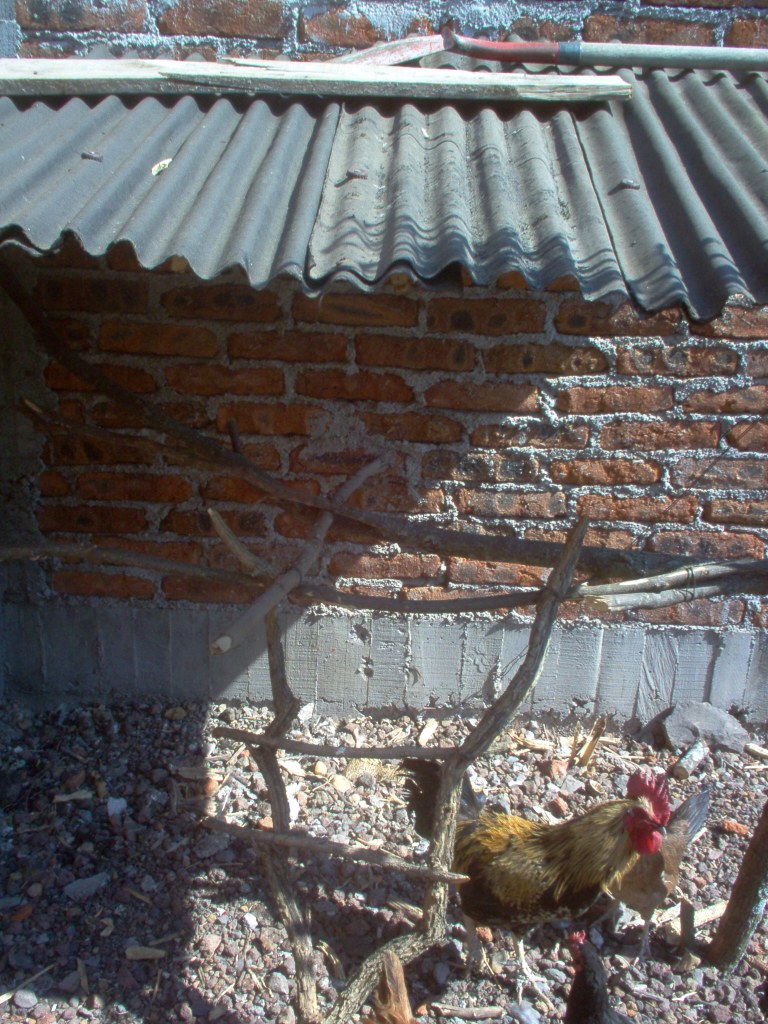
As our animals are an integral part of our life here, as much attention as we have given our home has gone into their sheltering. Miss Piggy had her own bungalow, Mr. & Mrs. Muscovy and family had their own swimming pool, the chickens have their own swing, the goats their own corral, and the horses their own stalls. Kitty is the queen of the backyard and Chokis the puppy is king of the barn. Right now, only poor Fiona the donkey is left without a proper space to call her own, a situation which we are trying hard to rectify.

chicken swing

The chicken “swing.”

goat corral

Goat area

swimming

Duck pond

entrance

Horse area

Miss Piggy

The bungalow

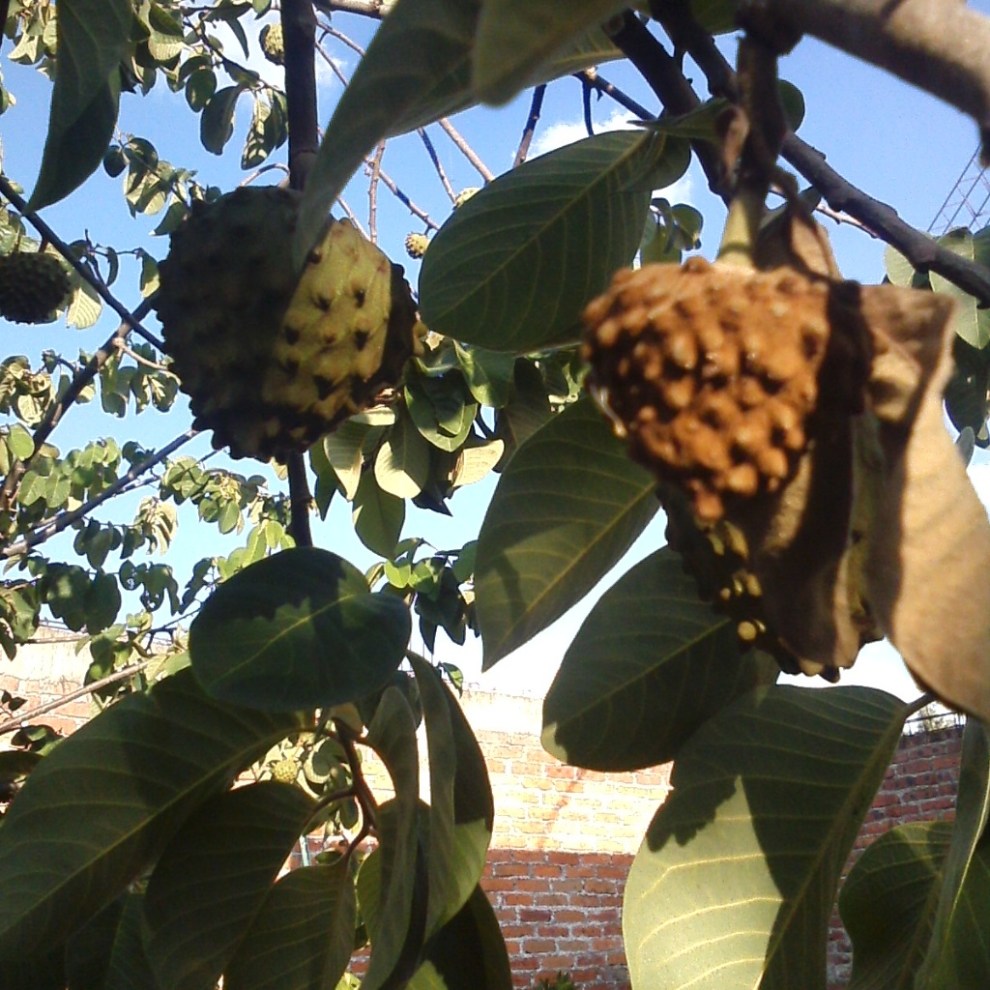
 Our backyard also has undergone some changes. When our son was smaller, he had a clubhouse/swingset. When he was quite done with it, we removed it and planted more fruit trees as part of our quest for self-sufficiency. As a growing pre-teen, he enjoys the “free food” as much as he did the swing!

swingset

Clubhouse

chirimoyo

One of our ever producing fruit trees

Building our own home has not been easy, but it has its own rewards.  We built this house as a family, we constructed our new lives in Mexico as a family, and we continue to remodel both our home and our lifestyle as we try to get it right.  And if we never get it finished, well, it’s the journey, not the destination after all.

builder


***


disclosure

Carnival of Natural Parenting -- Hobo Mama and Code Name: MamaVisit Hobo Mama and Code Name: Mama to find out how you can participate in the next Carnival of Natural Parenting!

Please take time to read the submissions by the other carnival participants:

(This list will be updated by afternoon September 9 with all the carnival links.)

  • Being Barlow Home Tour — Follow along as Jessica at Being Barlow gives you the tour of her family’s home.
  • Dreaming of a Sisters Room — Bianca, The Pierogie Mama, dreams, schemes and pins ideas for when her younger daughter is ready to move out of the family bed and share a room with her older sister.
  • Building a life — Constructing a dream — Survivor at Surviving Mexico-Adventures and Disasters shows you a glimpse inside the home her family built and talks about adaptions they made in constructing their lives in Mexico.
  • Why I’m Sleeping in the Dining Room — Becca at The Earthling’s Handbook welcomed a new baby but didn’t have a spare bedroom. She explains how her family rearranged the house to create Lydia’s nursing nest and changing room in spaces they already had.
  • Our Home in the Forest — Tara from Up the Dempster gives you a peek into life lived off-grid in Canada’s Yukon Territory.
  • natural bedding for kids — Emma at Your Fonder Heart shows you how her family of 3 (soon to be 4) manages to keep their two cotton & wool beds clean and dry (plus a little on the end of cosleeping — for now).
  • I love our home — ANonyMous at Radical Ramblings explains how lucky she feels to have the home she does, and why she strives so hard to keep it tidy.
  • Not-So-Extreme Makeover: Sunshine and Rainbows Edition — Dionna at Code Name: Mama was tired of her dark, outdated house, so she brightened it up and added some color.
  • Our little outdoor space — Tat at Mum in search invites you to visit her balcony, where her children make friends with wildlife.
  • Our Funky, Bright, Eclectic, Montessori Home — Rachel at Bread and Roses shows you her family’s newly renovated home and how it’s set up with Montessori principles in mind for her 15-month-old to have independence.
  • Beach cottage in progress — Ever tried to turn a 1980s condo into a 1920s beach bungalow? Lauren at Hobo Mama is giving it a try!
  • Conjuring home: intention in renovation — Jessica at Crunchy-Chewy Mama explains why she and her husband took on a huge renovation with two little kids and shares the downsides and the ups, too.
  • Learning At Home — Kerry at City Kids Homeschooling helps us to re-imagine the ordinary spaces of our homes to ignite natural learning.
  • My Dining Room Table — Kellie at Our Mindful Life loves her dining room table — and everything surrounding it!
  • Sight words and life lessons — The room that seemed to fit the least in Laura from Pug in the Kitchen‘s life is now host to her family’s homeschool adventures and a room they couldn’t imagine life without!
  • A Tour of Our Church — Garry at Postilius invites you virtually visit him in the 19th-century, one-room church where he lives with his spouse and two kids.
  • Preparing a Montessori Baby-Toddler Space at Home — Deb Chitwood at Living Montessori Now shares the Montessori baby-toddler space she’s created in the main living area of her home along with a variety of resources for creating a Montessori-friendly home.
  • The Old Bailey House — Come peek through the window of The Old Bailey House where Erica at ChildOrganics resides with her little ones.
  • My New House Not-Monday: The Stairs — Claire at The Adventures of Lactating Girl shows you her new laminate stairs in her not-so-new-anymore house.
  • To Minimalist and Back Again — Jorje of Momma Jorje shares how she went to the extreme as a minimalist and bounced right back. Read how she finds it difficult to maintain the minimalist lifestyle when upsizing living space.
  • Our Life As Modern-Day Nomads — This family of five lives in 194 square feet of space — with the whole of North America as a back yard. Paige of Our Road Less Traveled guest posts at Natural Parents Network.


17 Comments

Filed under Animal Husbandry, Carnival posts, Construction, Water issues

Picking Tunas

full of tunas

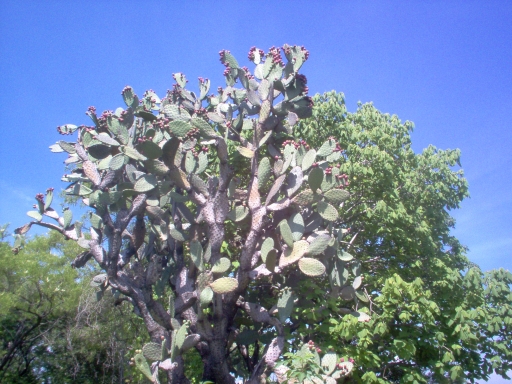
Tunas are not hard to find after the rainy season.


 La Yacata provides for us in many ways you might not expect. Not only do the cactus that grow here give us nopal and pitayas (See Picking Pitayas) but after the rainy season, there are the tunas. Tunas come in red and green and are what might be called prickly pears. As with all things the desert provides, they take some effort to harvest but are well worth it.

IM000163.JPG

Climbing on the top of the truck might get you close enough to harvest tunas–or it might not.

The first step in picking tunas is to find a cactus loaded with them. Once a likely target has been sighted, then the trick is to determine the best way to get at them. Tunas grow at the very tip top of the cactus and obviously you can’t just scurry up its branches like you would an apple tree. The cactus wouldn’t hold your weight and would give you espinas (thorns) in both your shoes and any other part of your body that might be exposed. You also don’t want to try and shake the cactus like you would a small nut tree or risk a rain of thorns.

stick with machete

Attaching a long stick to a machete may help you harvest.

Sometimes, parking below and clambering up on the top of the truck cabin will boost you enough to reach. Other times, if you are fortunate, the cactus will have grown next to some sort of tree you can climb. When all else fails, a long stick with a machete on top might do the trick.

twist with pinchers

Cutting a small section of the penca (leaf) will allow you to get at the tunas.

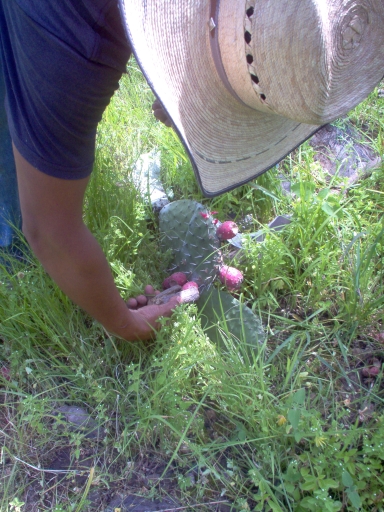
With the machete, extended or normal, cut a section of the penca (cactus leaf) that has a good number of tunas. Don’t worry about damaging the plant. Wherever a penca (cactus leaf) falls, another cactus grows.

brush off

Brush the thorns off the tunas before cutting them open.

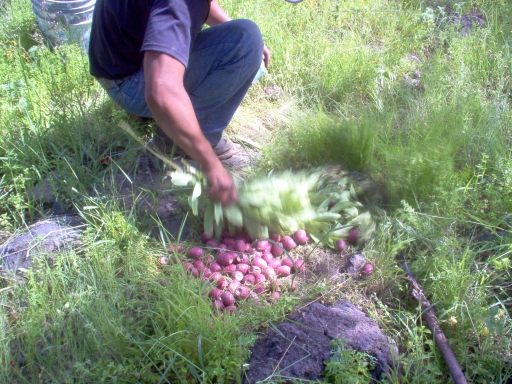
With improvised wooden pinchers made from whatever branches may be lying about, twist off the tuna. When you have a pile of them, use a group of leafy branches to knock off most of the espinas (thorns). Once brushed clean, slice the tuna lengthwise with your machete. Using your thumb, pop out the fruit and discard the outside. This process is best done out in the open. The tiny espinas (thorns) that protect the fruit are sharp and painful and get everywhere.

pop out

Slice open and pop out the fruit.


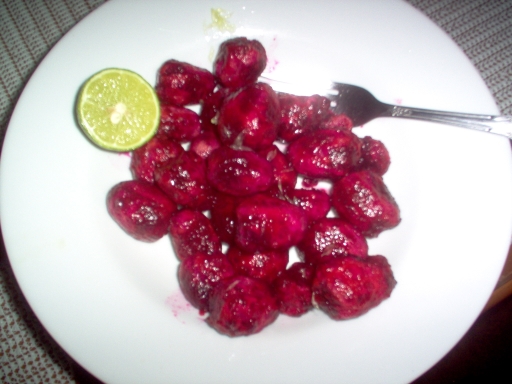
When you have a bunch of this juicy, seedy sweet fruit, add límon y sal (lime and salt) and enjoy.

with limon

Enjoy tunas with a little lime and salt!

Doesn’t this Prickly Pear Margarita look delicious?

PricklyPearMargarita

********************

disclosure

15 Comments

Filed under Native fauna and flora