
A few months ago I answered an ad shared in one of the expat groups I belong to on Facebook. The textbook company was looking for someone who spoke Spanish and English fluently and was living in Mexico. I went ahead and filled out the application.
Much to my surprise, not only did someone contact me, but I made the final cut to be one of 15 participants. I say I made the cut, but really my son and sister-in-law made the cut. I was just the contact person. From the start, I suggested that they use my son instead of me. He’s much better looking and speaks Spanish better than I do. Plus he’s had video experience. I suggested my sister-in-law T because she makes tortillas, an integral part of traditional Mexican cuisine. The textbook author was thrilled with my suggestions.
During the course of the next few weeks, the textbook author, film crew and I exchanged a number of emails. I had my son get a haircut and got one myself, not that I planned to be in any of the footage, but I wanted to look presentable. Boy was that a mistake! I don’t know what the hairdresser did. I ended up with hair sticking up all over the place looking like I had escaped from an asylum. Nothing I tried made it any better. It was even too short to pull up. Then to add to my ugliness, the day before the film crew was scheduled to arrive, I conked my head on the bathroom door which left a large purple lump on my forehead. Thank goodness I was not the star otherwise it would have been a disaster rather than just embarrassing.
Our house also needed some last minute work. Although the upstairs was coming along nicely, we still had gaping holes where the electric sockets were supposed to go. So that required a bag full of supplies and 2 days with the electrician, who we were able to get to come between binges, fortunately. Every single outlet and switch was tested. Only one wire had been damaged by wasps and needed replacing. We are now ready for the next step–a solar electric system!
The camera guys, a father and son duo, arrived a day before we expected them. I had a long lunch break between shifts, so we were able to sit down to huevos rancheros and have a pow-wow. Filming began at 6 am Monday morning at my sister-in-law’s tortilla shop. This meant I had to make sure my son was up and present at the tortilla shop before then. If you’ve ever raised a teenager, you’ll understand all the drama involved in that.
The sound guy had been delayed so it was just the two camera guys. My sister-in-law was a little cranky because she was ready to do the next step in the tortilla making but had been waiting on them but things went pretty smoothly after that. They even convinced the guy who mills the corn to let them shoot footage of that too. After making sure everyone had some freshly baked pan(bread) from the panaderia(bakery) up the street, I headed back to my house, letting them do their thing with the tortilla filming.
The camera crew, now with a coordinator, and my son arrived around 9 am for some more filming at my house. Since the topic was “quehaceres” (chores), the camera followed my son around while he did the dishes, swept the floor, mopped the floor, made his bed, folded his clothes, put his clothes away, and straightened his room.

The backside of the filming crew.
Around lunchtime, the sound guy finally arrived. We headed downtown to see if they could get some shots of my son buying a gift. Traffic was so bad that I really don’t know if they were able to get anything usable from the hot trek around el centro. They got permission to film a short shot outside El Templo del Senor de Esquipulitas, the main church. We were able to get the present, a statue of the Virgin for my sister-in-law, at the shop next door.
Later, we all trooped down to my sister-in-law’s for some more filming. Unfortunately, her brother B informed us that since he was going to bath and eat, there would be no filming in the house. I suggested they film where she makes her tortillas and we went over there. However, all the neighbors were gawking and it made my sister-in-law uncomfortable, so we headed back to my house.
The afternoon was long. There were some questions my sister-in-law answered alone and others that she and my son answered together. Finally, everyone was dismissed for a much later start the next day.
On Tuesday, filming didn’t start until 2 pm. That didn’t mean we were idle in the morning though. First, we had to wait for the water truck and fill the tinacos (water storage containers) and ajibe (dry well). Much to my delight (not), my husband came home with a new rooster the day before and all morning our old rooster and the interloper had a macho crowing contest lasting for hours. I told my husband the rooster had to go, so he took it and came back with one of the zombie babies, which would have been fine but the zombies are pack animals and just having one caused a plethora of pitiful bleating. Fortunately, she ran out of steam and settled down before the film crew arrived.
We also had to head to the market to find some more gifts and pick up some cactus for lunch. Then, the house needed some cleaning and everyone needed baths since there was water to do so finally. Then we had to go and pick up the cake and meat. Then I had to drop my son off for some more filming. After that, I headed back to town for some ice, while my husband started up the flames for the cookout.
Another trip was made to town to find some decorations for the birthday party we were staging for the cameras. We were planning on having a party anyway, since my father-in-law, my brother-in-law B, my sister-in-law T and I all had birthdays in March but since the camera crew was here, it was included in the video segment. So back to the decorations, I went to 3 different places and couldn’t find a single thing that said Feliz Cumpleaños–everything was in English! Finally, I found something at Waldo’s and went to T’s house to pick her and the remaining food items up.

We had invited about 15 people to our pretend party, letting them know that the camera crew would be there ahead of time. We had a grand total of 8 actually show up. That worked. Of course, we were still in mourning for Mama Sofia, and nearly everybody wore black to the “party” but what can you do?
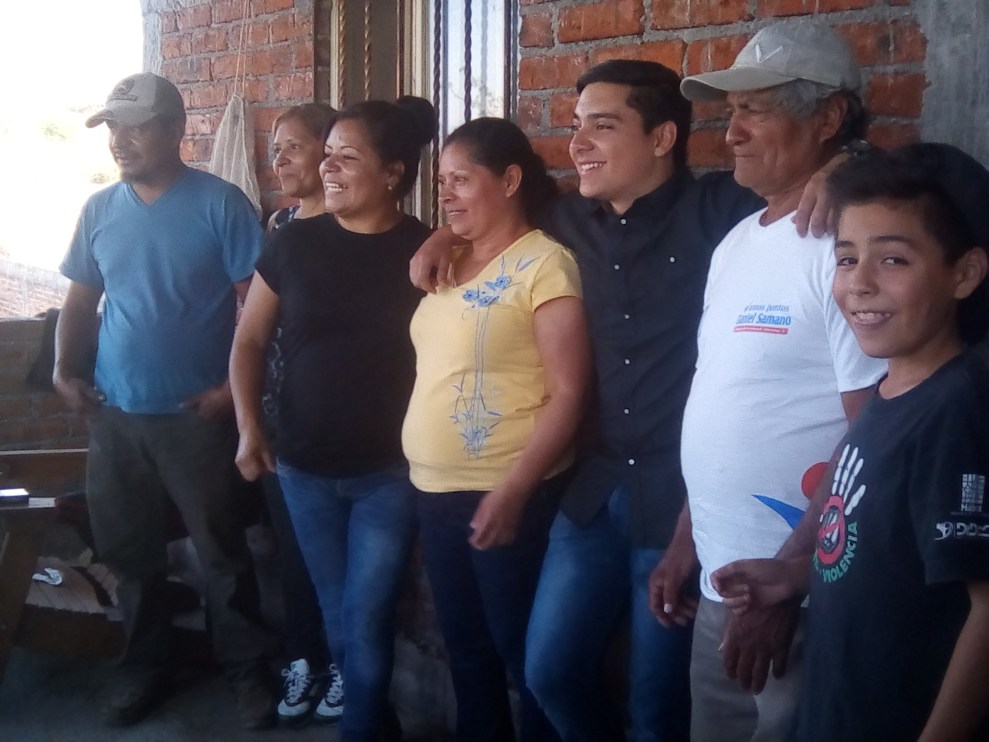
Then my father-in-law said he didn’t want to be filmed. The camera guy was totally shocked, but later I explained it was because he doesn’t have many teeth left and he didn’t want anyone filming him eating, which was reasonable. He didn’t have any problem later after everyone had eaten and in fact, had a good time despite the cameras rolling.
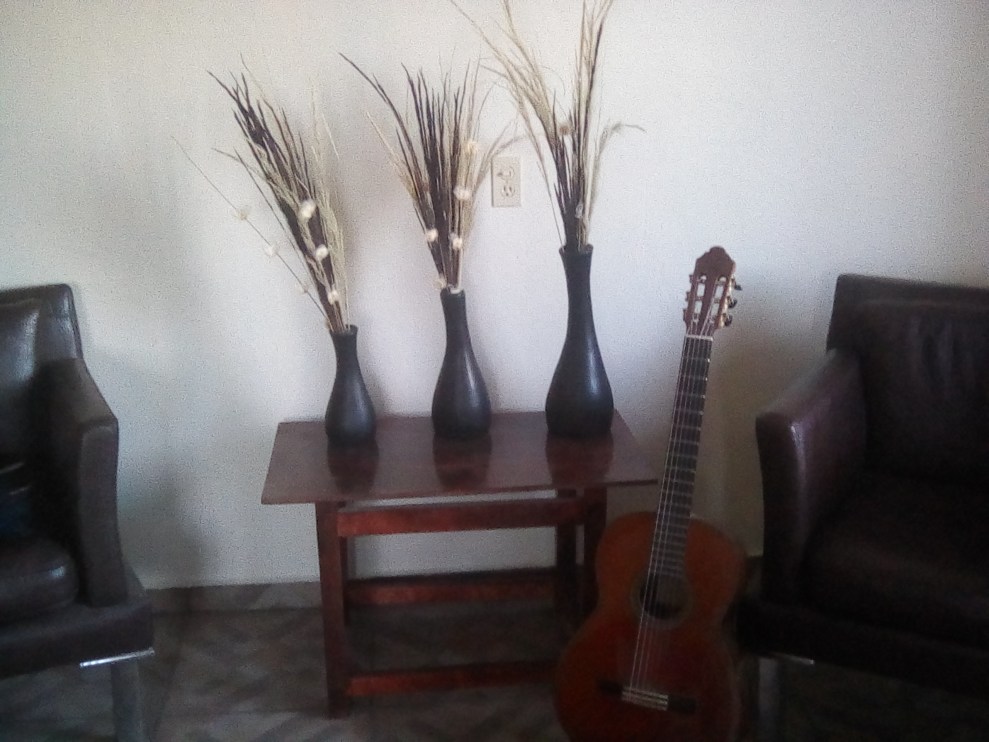
We did the whole singing of Las Mañanitas thing, although it was probably the worst rendition in the history of the song. Then there was the “mordida” (cake bite which often ends in a face smashed into the cake). My sister-in-law and I were passed over in favor of a smeared father-in-law. We also each received a gift, which isn’t traditional in my husband’s family but we added it just for the staged event. I LOVED what my sister-in-law got me–three brown ornamental jars. They are the perfect addition to our newly remodeled upstairs.
There were some more recorded question sessions for my sister-in-law, this time standing outside in the desolate landscape that is La Yacata at the moment. And some beer for the rest of us. I accidentally tipped over my beer on the sound guy and was worried he’d be electrocuted with all the wires he had on. He just laughed at me. Have you noticed I am a bit clumsy?
Things wrapped up around dusk and everyone packed up to go. I had to take my sister-in-law home and cover the leftovers before dropping exhausted into bed.
So why would I consider the video filming a failure as far as businesses go? Well, I had to take 2 days off from my regular work without pay, buy the food, party supplies, and run my sister-in-law and son around town. While there is monetary recompense for the video rights, half will go to my sister-in-law and half to my son, leaving me poorer than I began. Oh well. It was fun!