The Girl who Inspired a Revolution

In honor of International Women’s Day, and in light of Yalitza Aparicio Martínez’s moment in the sun at the Oscars, I’d like to talk about an illegitimate, indigenous girl from Cabora who inspired a revolution and became a saint.hummingbirds daughter
Teresita Urrea was born on October 15, 1873. Her birth name was Niña García Noña María Rebecca Chávez. Her father, Tomás Urrea, was the hacienda owner of Rancho de Santana, Ocoroni in Sinaloa, Mexico and her mother, Cayetana Chávez, was a 14-year old Tehueco servant on the ranch.

In 1880, Urrea moved his ranch to Cabora, Sonora because of some issues he had with Porfirio Diaz. After arriving in Cabora, Teresita had some sort of fit and lapsed in and out of cataleptic states for several months.

She began to do healings as a curandera shortly after she recovered, mostly ministering to the poor, downtrodden indigenous people of the area. People came to her for healings which she performed in the name of the Virgin de Guadalupe.

The Mayo and Yaqui referred to her as La Santa de Cabora which angered the Catholic church officials. The press got wind of all this and started to include regular articles about Teresita in the Mexico City newspaper El Monitor Republicano.  Her legend became intertwined with the events that led up to the Mexican Revolution of 1910 beginning around this time.

Drought prompted the Tarahumara village of Tomochic, Chihuahua to ask for her intervention with the powers that be. While she was there, the village inhabitants had a violent confrontation with federal officials after the auspicious battle cry ‘Viva la Santa de Cabora!” or so the story goes.

Teresita and her father were exiled from Mexico by Porfirio Diaz in May 1892 as the cause of the indigenous insurrections. They were escorted to the border by the Eleventh Regiment and Twelfth Battalion of the Mexican army led by General Abraham Bandala.

After she was exiled, Teresita’s name and sainthood continued to be the rallying call for the Tomochitecos. Federal troops finally destroyed the village and killed at least 300 villagers. The Mayo also united under her banner and attacked Navajoa, Sonora after their lands had been seized by the government.

Meanwhile, Teresita and her father settled in El Bosque near Nogales, Arizona. Teresita began practicing her healing arts again.

In 1895, she was living in Solomonville, Arizona where Lauro Aguirre and Flores Chapa were publishing an anti-government newspaper called El Independiente. In 1896, the two journalists published a pamphlet which referred to the Tomochic rebellion and called for the overthrow of the Mexican government. Flores and Chapa were arrested and tried by the United States government. During the trial, Teresita was named as an accomplice in the drafting of the pamphlet calling for equal rights for all. After the men were acquitted, Teresita moved to El Paso, Texas where again Aguirre was publishing newspapers. She was featured in newspapers in El Paso as “an apolitical spiritual healer.”

In 1896, a group of 60-70 Yaquis and Tomochis attacked the customs house in Nogales, Arizona under the protection of La Santa de Cabora calling themselves “Teresitas”. It was rumored that some carried a picture of Teresita over their hearts as protection.

The Mexican government demanded Teresita extradited back to Mexico, still blaming her for the uprisings. Teresa made a public statement in the El Paso Herald on September 11, 1896, denying she had anything to do with the attack in Nogales.

The Mexican government made at least 3 attempts on her life. Teresita married, Guadalupe Rodriguez, a Yaqui miner, in 1900. Guadalupe tried to kidnap her to return her to Mexico the morning after their marriage. He was arrested, declared insane, and sent to live in an asylum. They were divorced in 1904.

Teresita went on the road with her healing. She signed a contract with either a San Francisco publisher or pharmaceutical firm, sources are unclear which. She performed in public in several large cities, including St. Louis and New York. A conflict over charges the tour promoters had been exacting from those who came to see her ended her contract.

She had a daughter in 1902.  In 1904 she had a second child. Not much is known about the father of these children. She died of tuberculosis on January 11, 1906, and was buried in Clifton, Arizona where her father is also buried.

Whether or not Teresita actively incited the indigenous to revolt against the oppressive regime of Porfirio Diaz, the idea she embodied was an inspiration to thousands. Just four years after her death, Mexico entered a long and bloody civil war.queen
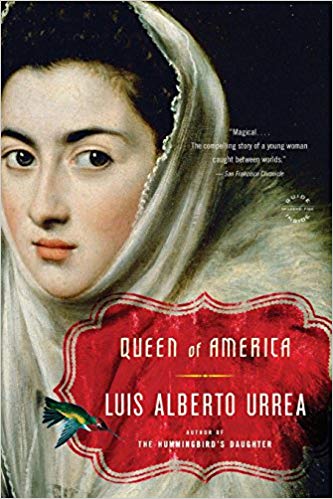
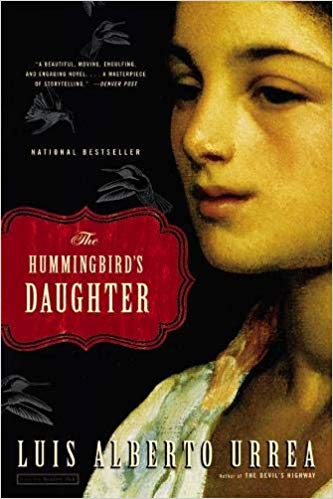
If you are interested in reading more about Teresita’s life, you can read Teresita by William Curry Holden, La insólita historia de la Santa de Cabora by Brianda Domecq, The Astonishing Story of the Saint of Cabora, The Hummingbird’s Daughter and Queen of America written by Teresita’s relative Luis Alberto Urrea.

You can also read my review of The Hummingbird’s Daughter here.


5 Comments

Filed under Mexican Cultural Stories, Religion, women in Mexican History

Women in Mexican History–Josefa Ortiz de Dominguez

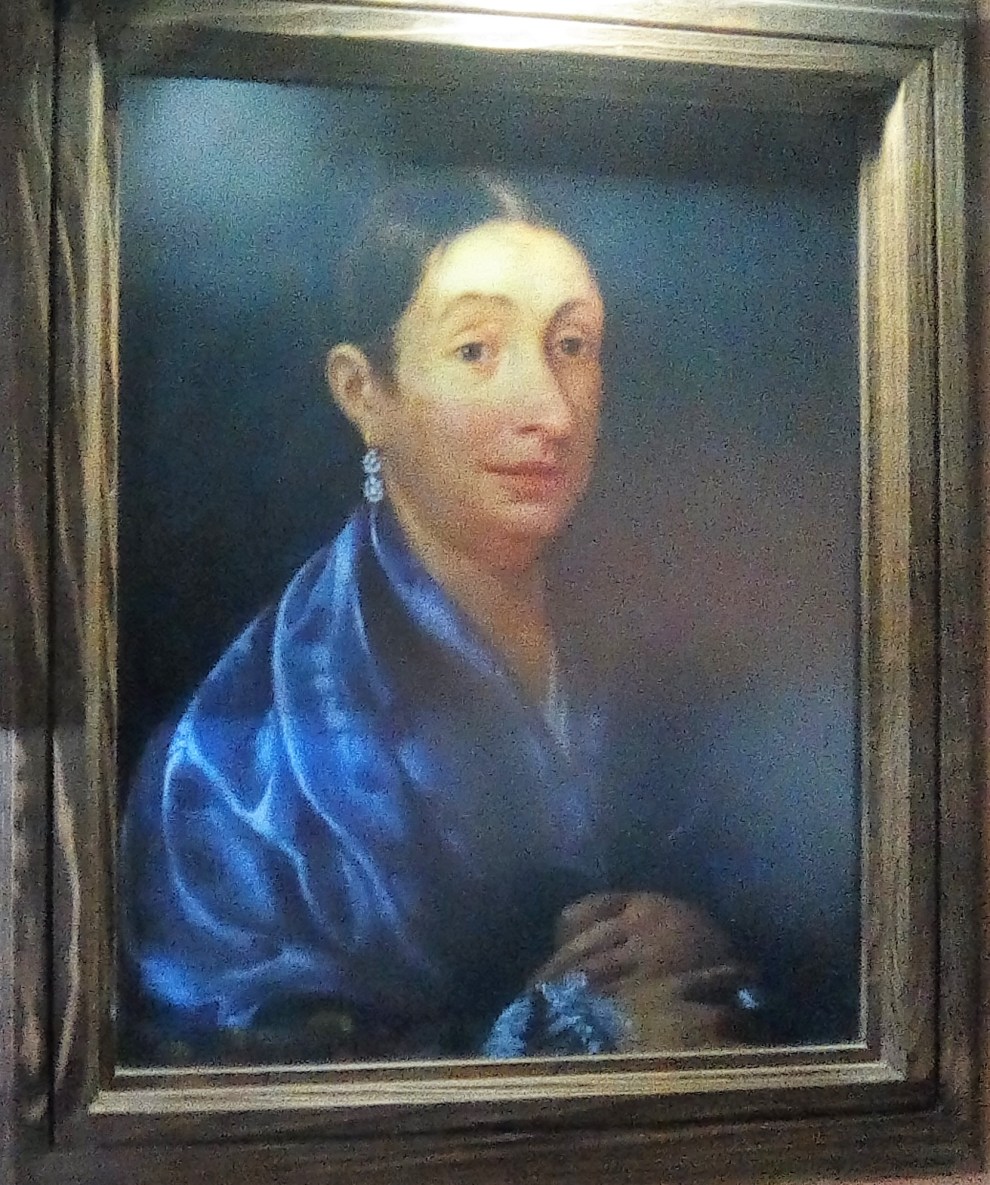
IMG_20180711_125059

María Josefa Crescencia Ortiz Téllez-Girón de Dominguez

One of the very few women mentioned in Mexican history is Josefa Ortiz de Dominguez. She was born María Josefa Crescencia Ortiz Téllez-Girón on April 19, 1773, in Valladolid which is now known as Morelia, Michoacan. Her father, Juan José Ortiz Vasquez, a captain of Los Verdes regiment, was killed when she was an infant. Her mother, Manuela Téllez-Girón, died soon after. She was raised by her older sister, Maria Sotera Ortiz.

She attended the Colegio de las Vizcaínas in 1789. There she met her husband, Miguel Dominguez, a widower with 4 children, who had toured the school with a group of officials one day. They secretly married in 1791, less than a year after they met. Josefa was 18 years old and Miguel was 35.

In 1802, Miguel was appointed chief magistrate (Corregidor) of the city Queretaro and brought his growing family there to live. Josefa and Miguel’s married life was reported to be happy and they had 14 children together. Their children were Maria Ignacia (1792), J.M. Florencio (1793), Mariano (1794), Maria Dolores (1796), Miguel (1797), Maria Juana (1799), Maria Micaela (1800), Remigio (1801), Maria Teresa (1803), Maria Manuel (1804), Maria Ana (1806), J.M. Hilarion (1807), Maria Magdalena (1811) and Maria del Carmen (1812).

img_20180711_125107.jpg

Josefa with fellow conspirators Hidalgo and Aldama.

Both Josefa and Miguel, despite his position, were sympathizers in the Mexican revolution movement. They often hosted political meetings attended by Miguel Hidalgo and Ignacio Allende, and aided in the collection of weapons. The revolution was planned for December 8, 1810, however, on September 13, the plot was betrayed.

Josefa’s husband Miguel was ordered to apprehend the revolutionaries. He locked Josefa in her room to keep her out of harm’s way and prevent her from warning the other. She still managed to get a message out, pieced together with cut out letters from printed text to hide her involvement. This message was eventually taken to Miguel Hidalgo who subsequently moved the date of the revolution up and gave his rousing speech in Dolores (El Grito de Dolores) in the evening of September 15.

On September 16, both Josefa and her husband were arrested. Miguel, because of his government position, was released the following day. However, Josefa (known as La Corregidora) was not released until October 22, 1810. She was pregnant with her daughter Maria Magdalena (born March 14, 1811) during her incarceration.

In December of 1813, Josefa’s husband turned her over to authorities for her role in the rebellion against Spain. She was confined to the Santa Clara Convent in Queretaro for a time, then sent to Mexico City to stand trial. She was found guilty and sent to the Santa Teresa Convent. She was released into her husband’s custody in April 1814 because of poor health. She miscarried her 15th child shortly after her release.

She was arrested again on December 22, 1815, and sent to the Santa Catalina de Sena Convent. She was finally released on June 17, 1817, after swearing an oath that she would no longer participate in any acts of rebellion against the Spanish crown.

She died from pleurisy on March 2, 1829, in Mexico City. Her patriotic acts and sacrifices earned her a place in the roll call of El Grito Mexicano recited each year during the Independence celebrations. ¡Viva Josefa Ortiz de Dominguez!

*****

Do you want to learn more about Mexican holidays and traditions?

Then check out A Woman’s Survival Guide to Holidays in Mexico!


4 Comments

Filed under Mexican Holidays

New Additions

Well, that pregnant goat my husband bought last finally gave birth–and to triplets no less. Two boys and a girl as cute as can be. They are just as lovely as Chiveta–making them way better looking than the kinder boys we have running about.

One of the boys is Spot because he has yep you guessed it, a spot on the back of his neck. The other we really haven’t named, except to say Not Spot, so maybe that’s his name. We can only keep one of them anyway, so best not to get too attached. The girl we’ve decided to call Bunny, which was also the name of a lovely twin that got goat-napped a few years ago. Let’s hope that doesn’t happen again.

Meanwhile, he’s gone and bought a pregnant mare. Our horse Lady is just 2 years old and won’t be ready to breed for a while. I’m pushing my husband to wait to breed her until she is three, but she may go into heat this summer.

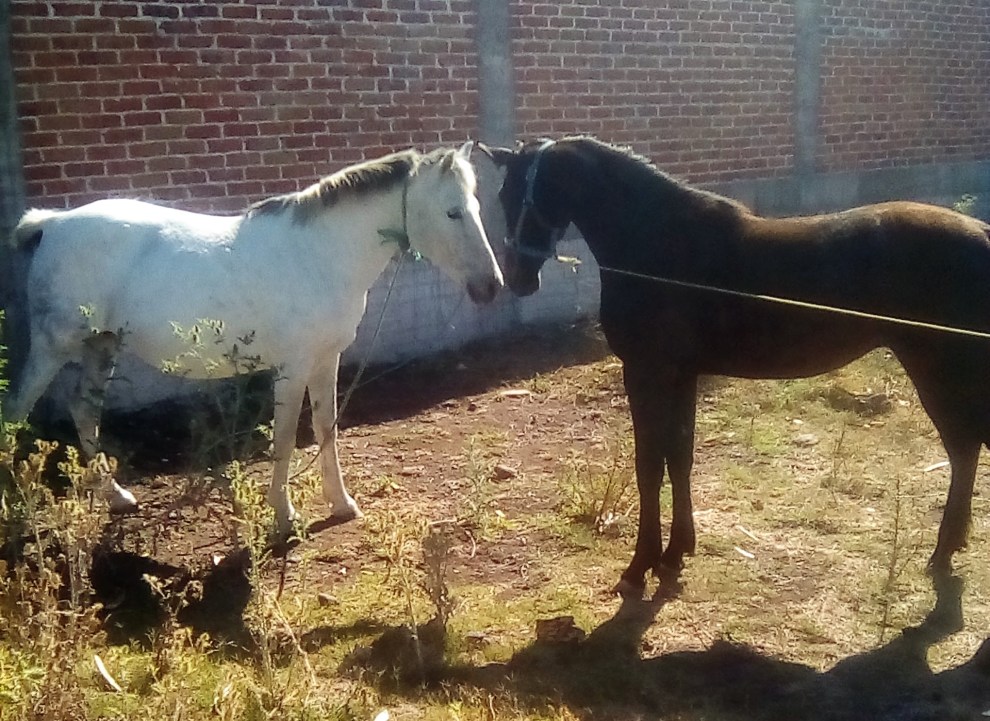
Anyway, back to the new horse. The guy up the hill had 4 horses which he let run semi-wild in an overgrown area. He’s decided 4 is too many so wanted to sell one. My husband immediately decided this was the horse for him. I asked him to wait until I saw it, so Sunday afternoon, he dragged me hither and yon to hunt down the horse. Eventually, she and her herd buddies were located and my husband brought her to the fence to meet me.

I estimate she’s about 10 years old, although the owner is saying she’s only 8. A lady never tells her age anyway. This is her third pregnancy and it’s quite advanced. I think she’ll have her foal before the month is out, but my husband says not yet. I also think it will be a boy. So we’ll see what happens there.

She’s a nice docile horse. My husband says she “my” horse but that’s not really true. She and Lady have decided that they can be friends. Since I’m in charge of the naming around here, she’s been christened Cookie. She’s mostly white with a salt-and-pepper mane and tail with black freckles all over her face.

My husband had to go and get her that very afternoon even though he hasn’t finished paying for her because he was concerned there wasn’t any water where she was being kept. And it’s been SO hot the past few days. He and my son led her down to our house and she drank 3 buckets of water, so she was thirsty.

Our population explosion isn’t quite finished. We are still waiting for the pregnant ewe to give birth. My husband keeps saying any day now.

*******

Would you like to read more about our animals?

Check out Wascally Wabbits and Zombie Babies: Animal Antics South of the Border

3 Comments

Filed under Animal Husbandry