Natural Healing — Zapatilla del Diablo

Photo credit: Dinesh Valke

The fifteen or so Pedilanthus species, all of which are native to Mexico, were merged as a Euphorbia subgroup. Different herbal resources, depending on their publication date, may therefore refer to this unique plant as either Pedilanthus tithymaloides or Euphorbia tithymaloides. Subspecies of this plant are identifiable by their leaves. Some are variegated or tinted pink, white or red, or even uniquely shaped. Unlike many plants, this species is able to thrive in toxic waste sites and landfills. Planted near a doorway, it is believed to ward off evil spirits. 

Euphorbia tithymaloides is known as zapatilla del diablo (devil’s slipper), pilicxitl, redbird flower, Devil’s backbone, and slipper spurge. The pink or reddish flower resembles a slipper. 

The sap, stems, roots, seeds, and leaves are toxic. However, it is a common ingredient in the treatment of isihuayo, also known as caída de matriz. Zapatilla del Diablo is applied topically with hot stones, warm oil, or ash above the area the uterus is believed to be anchored to the body in order to settle the womb back in place after delivery or accident. Isihuayo is believed to be a “cold” condition that benefits from “hot” treatment. Zapatilla del Diablo is considered a “hot” plant and is often used in conjunction with steam baths and hot stones to restore the body’s equilibrium

A tincture made from the sap is used to treat scabies, skin cancer, STDs, warts, and dental pain. Diluted sap is given as a remedy for intestinal worms and gastritis. However, the toxic properties can cause irritation and bleeding, so it should be used with extreme caution. A leaf and sap decoction is applied topically as a poultice for fractures and wounds. A leaf infusion is prescribed as a sedative, for headaches, and for respiratory ailments. A few drops of the infusion are placed on a cotton ball and inserted into the ear canal for earache. As a gargle, it is used to treat sore throat. 

An infusion is given to a laboring mother when delivery is taking an excessive amount of time to hasten things along. Because it causes uterine contractions, it should never be ingested during pregnancy. It’s also recommended for menstrual cramps.

Studies have shown that pedilanthus tithymaloides inhibits herpes simplex virus type 2 infections. Zapatillo de diablo has antibacterial, antifungal, anti-inflammatory, antibiotic, antimalarial, antimicrobial, antiseptic, antihemorrhagic, antiviral, anti-parasitic, and antitumoral. It is emetic, provokes vomiting, and is abortive. It also has demonstrated antimycobacterial activity against Mycobacterium tuberculosis. The leaves are toxic to the Culex quinquefasciatus mosquito’s eggs, larva and pupa.

***

Interested in natural remedies? Uncover herbal remedies from traditional Mexican sources for healing and wellness in the Exploring Traditional Herbal Remedies in Mexico series.

Leave a comment

Filed under Health, Native fauna and flora, Natural Healing

The Naming of the Roads

Would you believe 28+ years after the formation of La Yacata there were still no road names? Properties were identified by manzana (block) and lote number. Now for someone like myself, who takes endless walks around the fraccionamiento with Cocoa, identifying isn’t an issue. But as we were moving into the urbanization phase of our community growth, we now needed to buck up and choose some road names. 

I suggested that we use plants because, well, duh. I love plants. Super Prez was on board with that, so my husband and I made a list of plants that were found in La Yacata. Some, like cazahuate (Ipomoea arborescens) were immediately rejected as they are also insults. To call some a cazahuate in this area is to imply they are stubborn and unable to be reasoned with. 

I sent Super Prez a list of possibilities (with their botanical names because I’m a nerd). He sent a plan with about half of my list, the other half with extremely elevated names (in my opinion) like Maple and Cipres. I said as much and he sent a revised list with the names of more common trees. The road I lived on was to be called Tejocote, the Mexican crabapple. I had some problems pronouncing it, mixing up the j and the c, but it would do. 

The owner on the parallel road to me objected to Mesquite and requested Olivo. I thought Acebuche would be more apt as it is the native olive tree, but Olivo was added to the plan. Then, the lady down below didn’t like Frailes and requested Abedul, so that change was made. 

We could have saved ourselves the trouble because when we turned in the list to Desorrollo Urbano, they rejected all but two. Then gave us a list to choose from made up of plants and trees. Many of the names just didn’t roll off the tongue and we had gotten attached to the names we had chosen, so we were a bit put out. Not all of them were horrible. I liked Nopal and Copal and Tejocote was still on the list. 

Thus, Super Prez submitted yet another list, this time with plants rather than trees, and our road name changed to Trigo (wheat); the three other main roads became Maiz, Centeno, and Amaranto. The upper roads were aromatic and medicinal plants like Romero and Melisa. I have to admit that I was a little jealous. Trigo didn’t seem as pretty to me as some of the others, but as long as our road has a name, I’d find a way to deal with it.

However, the road name approval process seemed long and drawn out when it wasn’t an outright rejection. It could have been that the person we’d been dealing with in Desarrollo Urbano (Planning) was moved to another department because he’d had issues with the brother of the mayor or something. So this new guy was taking forever and a day for simple paperwork, perhaps at the behest of the powers that be. 

We went ahead and started using the names even if they weren’t official. However, at some point, we would need the official numbering and street names so we could have an official address for the electric bill. We got around the requirement with the initial 43 installations since the applications had been taken directly to the main CFE office in Guanajuato, and we didn’t have to go through the local office. 

Not having official numbers really set off the regional CFE office and prevented additional colonos from having electricity installed when they applied. It was also necessary for the neighbor’s store permit, and boy, did I want a store in La Yacata. 

The powers that be in the Presidencia said they couldn’t issue the official numbers until the cambio de uso de suelo (zoning change) was done. That paperwork had also been submitted months ago, and although several of the required departments had finished their studies, we were still waiting on the environmental impact study. 

Anyway, somewhere along the line, Desarollo Urbano suggested the Super Prez create the numbering system. After all, up until a few years ago, he had his own road paving company and knew the procedure, which involved measuring distances from the corner with a rolley measurer thing. So he did. 

***

Want to find out how it all began? Check out La Yacata Revolution: How NOT to Buy a Piece of Heaven in Mexico, available on Amazon.

2 Comments

Filed under Construction, Electricity issues, Getting Legal

First Disasterous Billing Cycle from CFE

Now that we had electricity, we went shopping! We bought a fridge, having not had one for the 19 years we’ve lived in La Yacata. We also bought a TV, but since I didn’t want anyone using my internet when I was teaching, we had to get a DVD player, which was fine since we’ve accumulated an expansive movie library over the years. All of which meant we used electricity. 

Anyway, the day came to pay the piper. In this case, the flutist tooting their merry little tune was CFE, and they wouldn’t make it easy for us. To be fair, we didn’t have street signs up yet. The signs had been ordered but had not yet arrived. And then, to complicate matters, the numbers used to input the connections into the CFE system were lot numbers, not house numbers (because, again, we had applied for the official numbers, but they had not yet been granted). However, how hard would it have been to ASK someone when the CFE bill delivery crew came to deliver the bills? ANYONE would have sent them along to me, and I could have helped them organize the pile of 43 recibos. 

But wait, there weren’t 43 recibos. At best, eight bills were delivered, haphazardly, I might add. They were stuck on the muretes (metered posts) rather than slid under the doors. I went around and collected them so they wouldn’t blow away in the wind, then sent messages to the owners that they could pick up their recibos from me. 

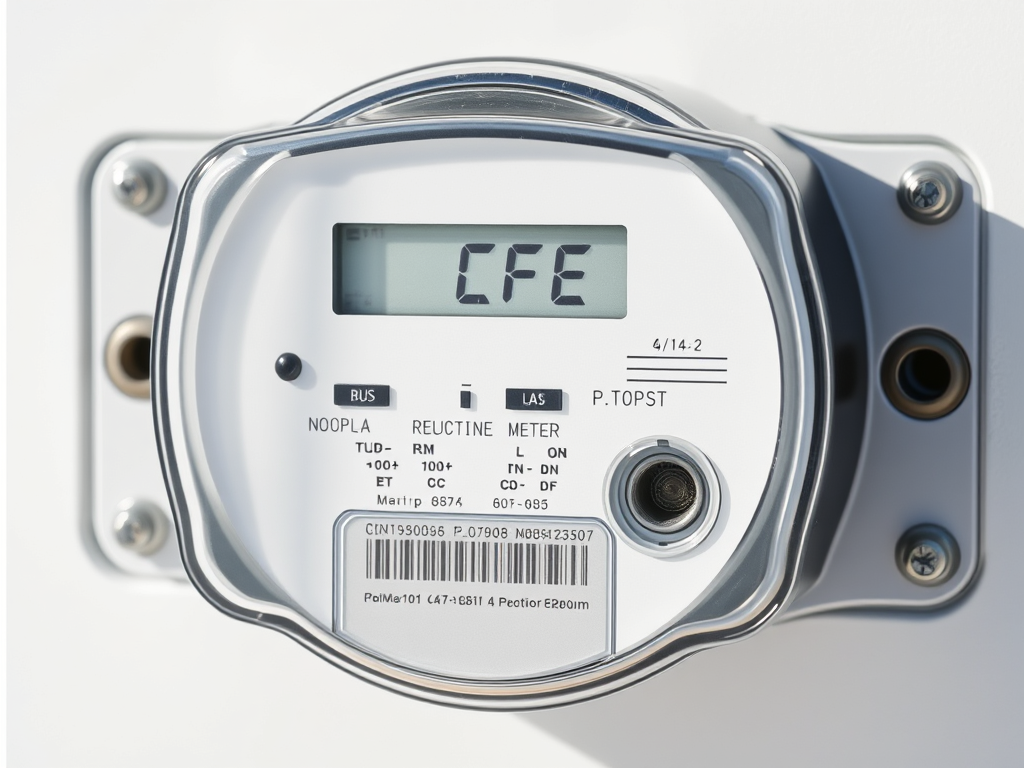
So what happened to the rest? I didn’t get a bill. My son didn’t get a bill. My sister-in-law didn’t get a bill. My father-in-law didn’t get a bill. Well, I was going to have to go and find out. So I took pictures of all the meters and the list of names of those included in the program and marched my fanny down to the local CFE office. 

The lovely lady at the desk couldn’t tell me what happened to the rest of the recibos. Apparently, this sort of shenanigans wasn’t unheard from the local office (See ¡Les cortan la luz! Denuncian que CFE dejó de entregar recibos sin avisarles). She could provide me with duplicate bills from the names on the list I gave her. Well, that was something. She went through the list, one by one, printing out these duplicados. There were eight that weren’t in the system. I showed her the pictures of the meters. She took pictures of my pictures from my phone and sent them on to the Salvatierra office. One had the wrong name attached to the meter entered into the system, and the name owner had paid the bill for the meter owner, which also needed to be addressed.

She implied the eight missing meters were serious issues, giving me the impression that she believed they were stolen and installed illegally. Well, CFE installed them, so if they were stolen, that would be CFE’s bad, not the colonos of La Yacata, but whatever. 

I took the duplicados and filed them away (which turned out to be a blessing later). Instead of having them pick up these duplicates, I sent messages to the 43 colonos explaining that if they had not received a recibo they would need to take a photo of their meter and go to the CFE office to get a copy of their account information AND PAY IT.

The amount on all the recibios was 235 pesos to cover the deposit for the connection. Some people squawked about the price, but for the colossal investment CFE made, stringing the wires from the intersection, five transformers, 20+ new posts, connecting the individual houses, and providing the meters, 235 pesos was NOTHING.

I went to pay ours, my son’s, my sister-in-law’s, and my father-in-law’s. While I was in line at the machines to pay, another colono who was at the CFE office asked me to pay theirs and gave me the cash so he could get back to work. I guess I don’t have any work or anything, but whatever. I paid them all. 

But, wouldn’t you know it, four individuals forgot to pay their bill. Not surprisingly, CFE had NO trouble finding La Yacata to cut off their service. Those individuals would have to make arrangements with CFE to reestablish service. There wasn’t anything more I could do for them. 

The second billing cycle bills should be arriving this week in La Yacata. We shall see how it goes.

****

Start from the beginning with La Yacata Revolution: How NOT to Buy a Piece of Heaven in Mexico, available on Amazon.

1 Comment

Filed under Electricity issues