
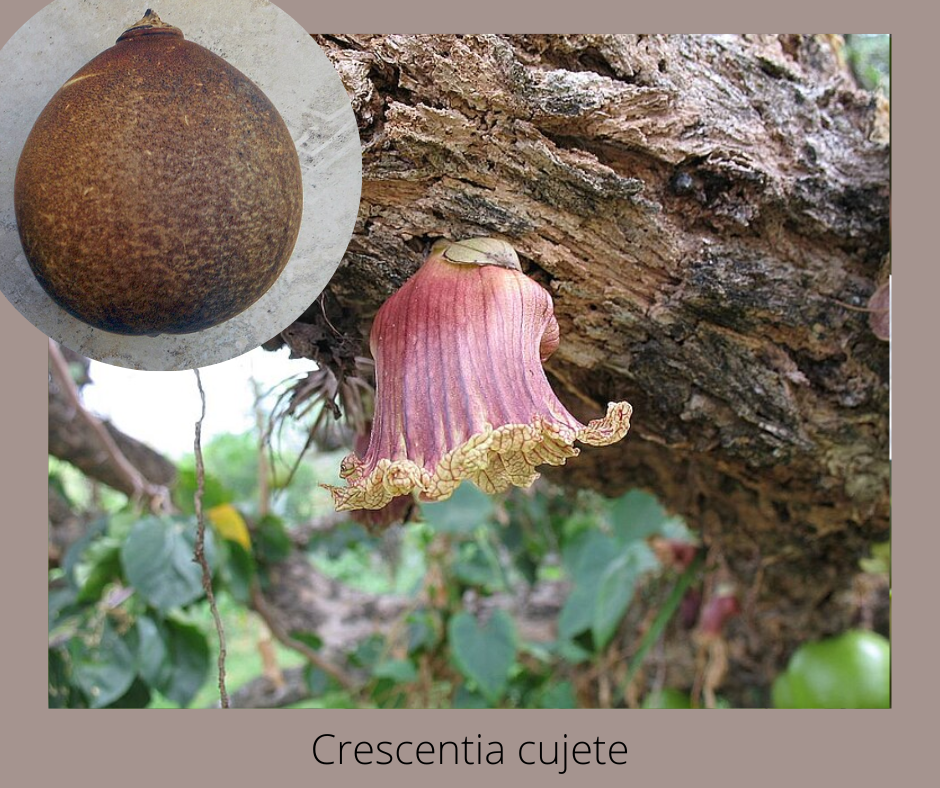
Other names for jícara (Crescentia cujete) include totuma, güiro, luuch (Maya), maxat kgax (Totonaco), and guito-xiga (Zapoteco). In English, it’s most often known as the calabash tree. Botanical synonyms include Crescentia acuminata, Crescentia arborea, Crescentia cuneifolia, Crescentia angustifolia, and Crescentia fasciculata.
Jícara is mostly found in the tropical areas of Mexico and is extremely drought-resistant. Its fragrant flowers open at night and are pollinated by bats and nocturnal insects.
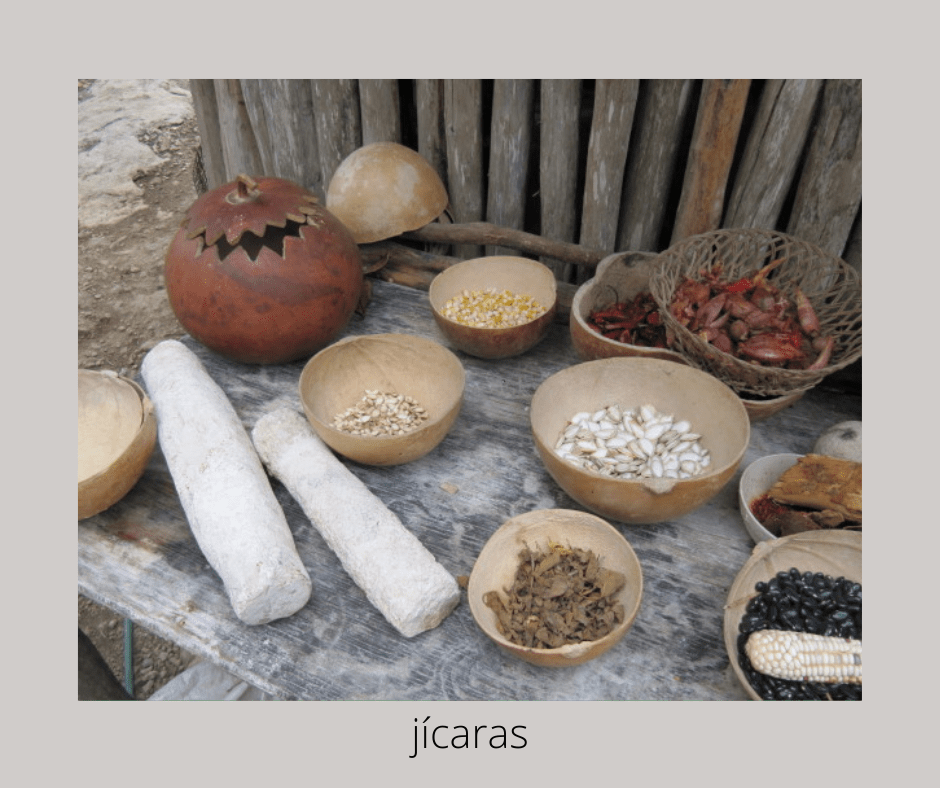
In Tabasco, the fruit shell is the traditional receptacle for the fermented cacao (Theobroma cacao) and maíz (Zea mays) beverage pozol. Carved bowls, spoons, and cups made from the shell are called jícaras. The wood from the trees emits no smoke when burned and is often made into animal yokes and boats. The seeds are roasted and ground with cacao (Theobroma cacao) and cinnamon (Cinnamomum zeylanicum) to prepare a medicinal beverage.
In traditional medicine, a fruit decoction is prescribed for diarrhea, stomachache, colds, bronchitis, cough, asthma, fever, sores, anemia, and urinary tract infections.
For breathing issues, boil two tablespoons of the fruit pulp in ½ liter of water. Drink three cups a day. For stomach issues, make a decoction with the leaves and drink three times a day before meals. In the states of Hidalgo, Puebla, Veracruz, and Yucatán, a syrup is made for respiratory diseases, including whopping cough (chichimeca) and tuberculosis, by making a hole in the fruit shell, extracting most of the pulp, and then pouring sherry (sometimes wine) into the nearly empty receptacle. The hole is sealed and left to ferment for a month.
For spleen issues, the fruit is consumed in combination with nopales (Opuntia ficus-indica), and in cases of a split or injured hand, jícara fruit pulp is beaten with the affected hand.
The fruit pulp is eaten as a highly effective laxative and rubbed on topically to treat skin infections caused by fungi, such as ringworm and athlete’s foot. The fruit pulp has also been shown to be an effective tick deterrent due to its acaricide activity.
Studies have shown that Crescentia cujete fruit, bark, and leaves have antimicrobial, antioxidant, anti-inflammatory, and antibacterial properties. The fruit extract effectively reduces fever and demonstrates significant anti-bacterial activity.
***
Are you interested in natural remedies for healing and wellness? Discover a treasure trove of traditional Mexican herbal remedies in the ‘Exploring Traditional Herbal Remedies in Mexico‘ series. Learn about the rich history and cultural significance of these remedies and how they can benefit your health. Get your copy today!


_2-06575.jpg)

_bowls.jpg)