
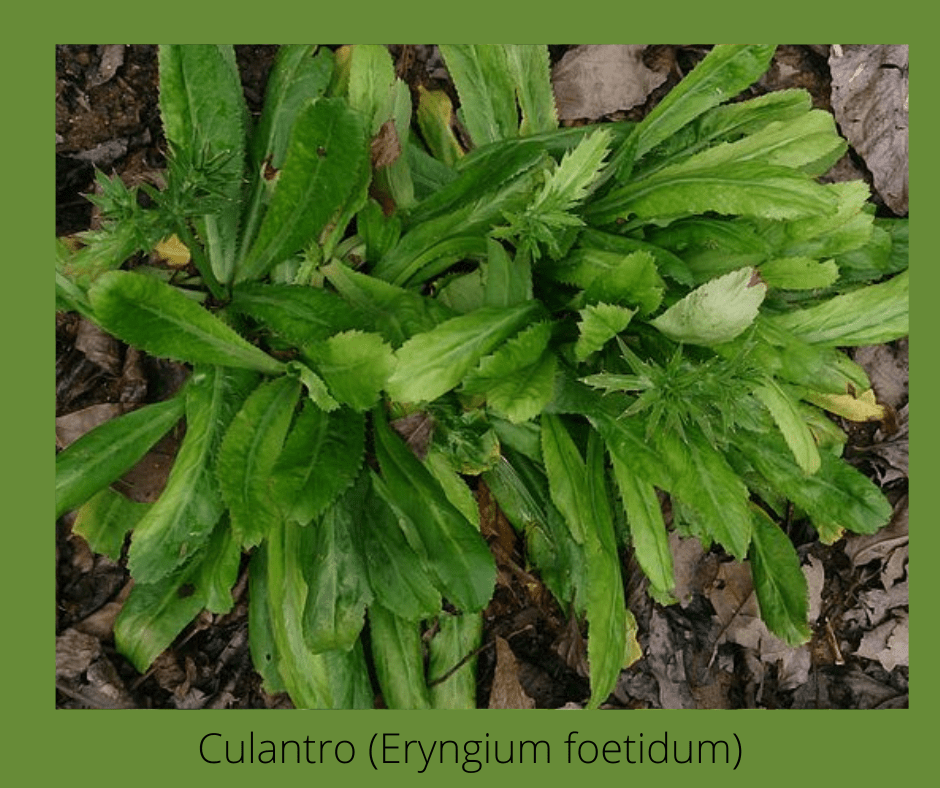
Culantro is also known as cilantro habanero, cilantro de monte, cilantrón, and cilantro camino although it is not related to Coriandrum sativum. Other names include chillangua, culantro coyote, alcapate, escorzonera, tlipotón, samat (with the spelling variant xamat, and spiritweed or Mexican coriander in English.
Although native to tropical Mexico, and Central and South America, this green has become popular worldwide. It can be added as a flavoring or eaten as a vegetable when tender. Chopped fresh leaves are often added to white rice and beans to add flavor.
In general, culantro is used for digestive issues, including diarrhea, dysentery, meteorism (abdominal swelling caused by gas), intestinal parasites, and lack of appetite. It is also used to treat certain gynecological conditions such as amenorrhea and hemorrhaging. In some areas of Mexico, a root infusion is given to speed up delivery or assist in expelling the afterbirth.
Culantro is antibacterial, antimicrobial, anti-inflammatory, anti-convulsant, antioxidant, and anthelmintic. The leaves have shown potential for cancer risk reduction as part of a regular diet. It also shows significant anti-venom activities, especially against Bothrops asper venom.
As a food source, culantro is high in crude fiber, fat, beta-carotene, and riboflavin. The leaves contain phytosterols and appreciable amounts of iron, zinc, copper, manganese, vanadium, and cobalt.
***
Interested in natural remedies? Uncover herbal remedies from traditional Mexican sources for healing and wellness in the Exploring Traditional Herbal Remedies in Mexico series.

 Surviving Mexico
_7.jpg)